

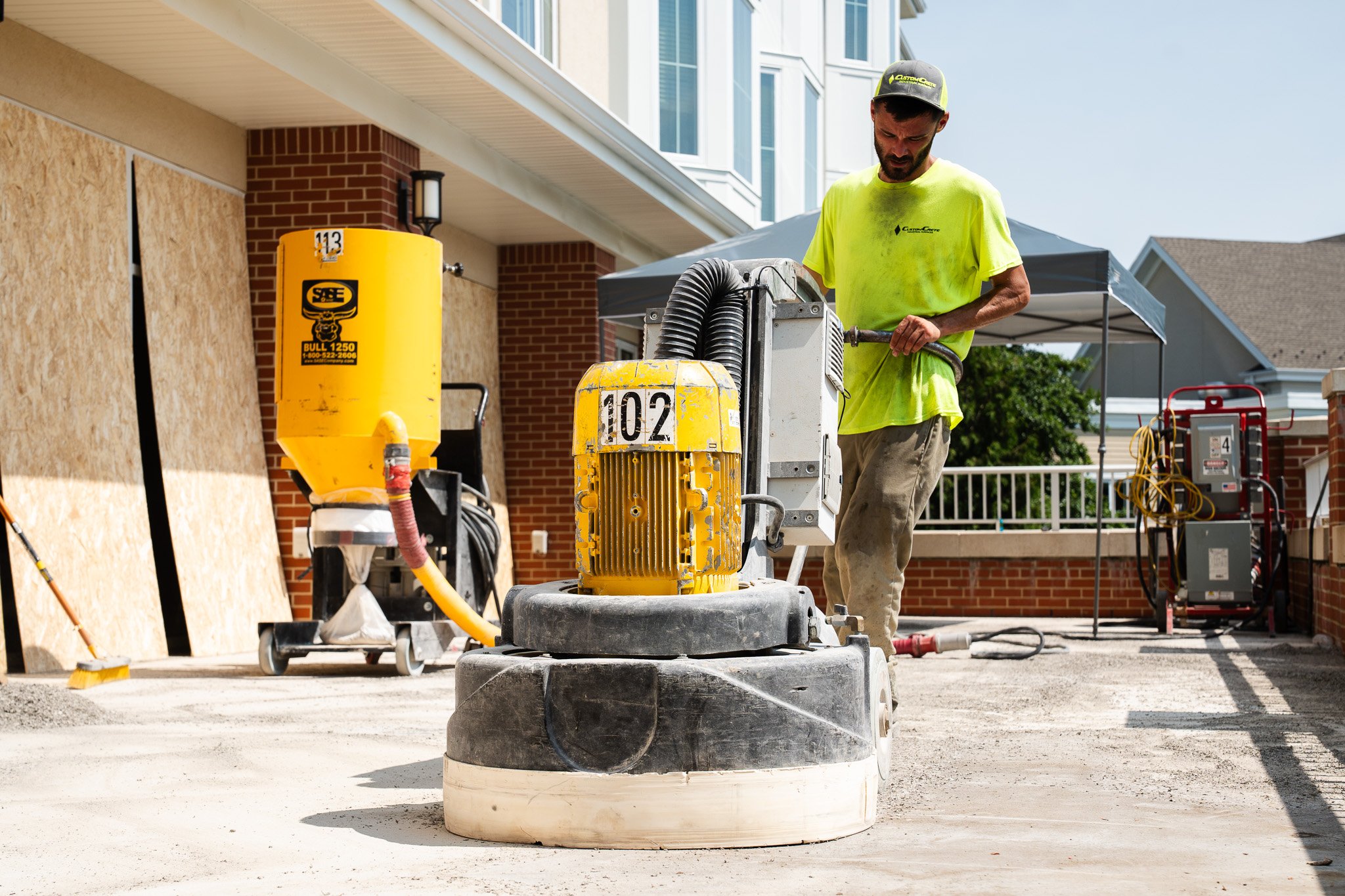
Most dust and noise during concrete flooring installation happen during surface preparation, while odor depends on the flooring system being installed. Grinding and shot blasting can be loud and generate debris, but professional dust-control equipment can significantly limit airborne dust. During coating installation, noise is usually much lower, while some flooring materials produce temporary odors as they cure.
For facilities trying to remain operational during a flooring project, these factors can be just as important as cost and installation time. Knowing what to expect can help you plan around employees, customers, equipment, and production.
At CustomCrete, questions about concrete flooring installation often come from facility managers trying to understand how disruptive a flooring project will be before scheduling the work.
How Much Dust Does Concrete Floor Preparation Create?
Most dust is created during concrete surface preparation, particularly when diamond grinding the slab.
Grinding can produce fine concrete dust, but professional grinders are typically connected to industrial HEPA-filtered vacuum systems and shrouds designed to capture dust at the source. Additional containment may be used to keep the work area separated from the rest of the facility.
Shot blasting generally contains debris within the equipment, where the steel shot is recycled and removed material is collected.
While these methods greatly reduce airborne dust, concrete preparation should not be considered completely dust-free.
How Loud Is Concrete Flooring Installation?
Surface preparation is typically the loudest part of the project. Industrial grinders, vacuums, shot blasters, and other preparation equipment can produce significant noise.
For occupied facilities, louder work may be scheduled at night, over weekends, or completed section by section to reduce disruption.
Once coating installation begins, noise usually decreases significantly. Mixing equipment creates some noise, but applying coatings with rollers, squeegees, or trowels is relatively quiet.
Do Concrete Floor Coatings Smell?
Some do, but the amount and type of odor depend heavily on the flooring material.
Epoxy flooring and urethane cement typically has no or a mild odor. Many polyaspartic and polyurethane products can have relatively low odor, although formulations vary.
MMA flooring is known for having a strong, distinctive odor during installation, but it also cures very quickly. Polished concrete generally produces little coating-related odor because it does not rely on a traditional resinous coating system.
Removing or grinding an existing coating can also release odors from materials already on the floor.

Can Dust, Noise, and Odor Be Reduced?
Yes, but they usually cannot be eliminated completely.
HEPA-filtered vacuums, containment, ventilation, careful product selection, and scheduling can all reduce the impact of concrete flooring installation on an occupied building.
For sensitive environments, it is important to discuss these concerns before work begins. The contractor can then explain which parts of the project will create the most disruption and how they can be managed.

Final Thoughts
Expect the most dust and noise during concrete surface preparation and significantly less during coating application. Odor varies by flooring system, ranging from very little with polished concrete to stronger temporary odors with certain resinous flooring products.
Understanding these factors before installation makes it easier to plan around employees, customers, and normal operations.
For more information about what to expect during a flooring project, visit CustomCrete’s Learning Center. If you're planning a project and want to understand the expected dust, noise, odor, and downtime for your facility, you can also request a quote.