

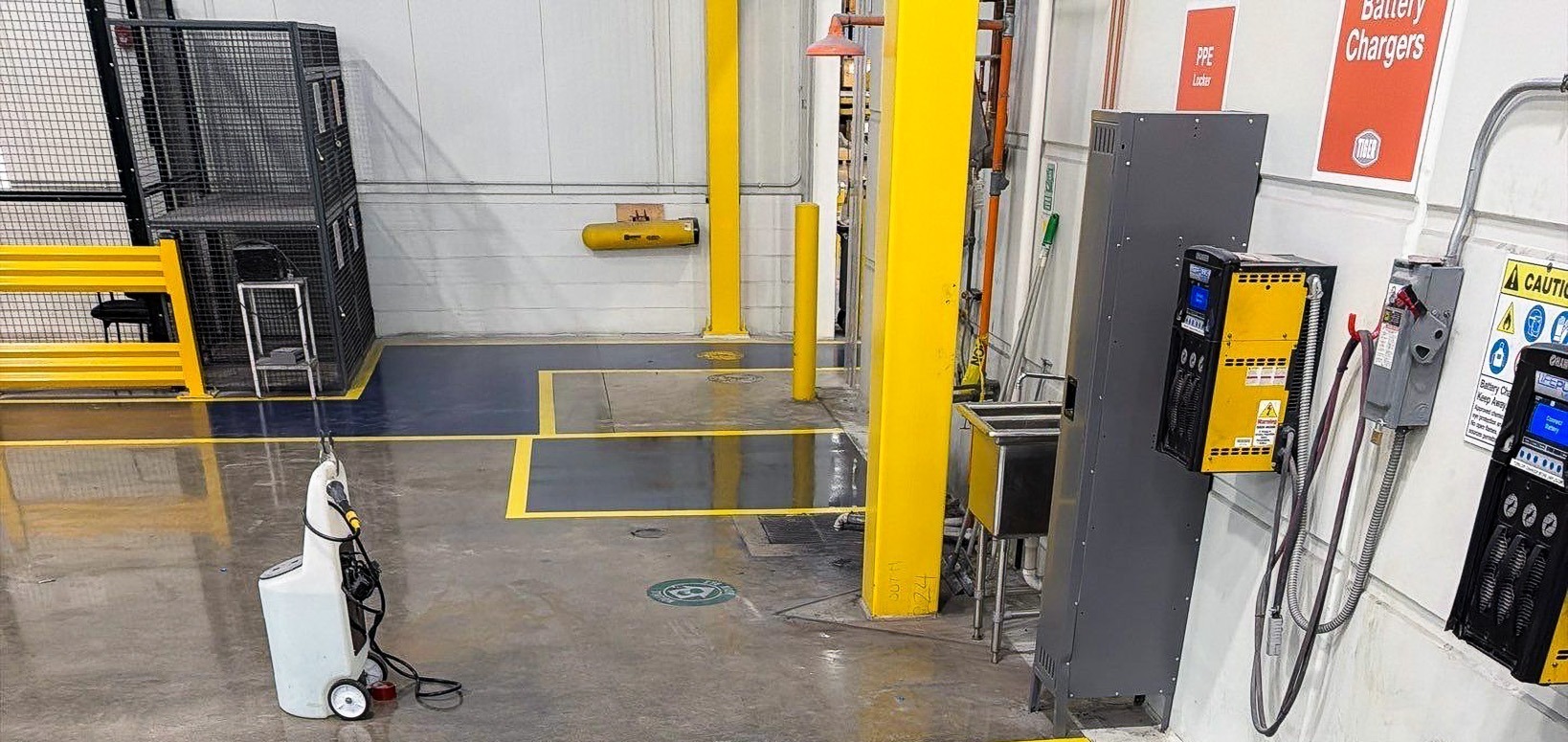
Battery charging areas create one of the toughest environments for industrial concrete floors. Even small amounts of sulfuric battery acid can damage concrete over time, and repeated exposure can eventually wear down even high-performance flooring systems.
For facilities with dedicated forklift battery charging stations, a battery acid resistant film coating can provide an additional layer of protection beyond a traditional acid-resistant floor coating. Instead of replacing an entire flooring system when it begins to show signs of wear, this specialized sacrificial film is designed to protect the underlying coating, making future maintenance faster and more cost-effective.
With nearly 20 years of experience and more than 1 million square feet of industrial flooring installed, CustomCrete helps facility managers determine when specialized flooring systems make sense based on real operating conditions. This guide explains what a battery acid resistant film coating is, how it works, and the signs that your facility may benefit from one.
Key Takeaways
- A battery acid resistant film coating adds a sacrificial protective layer over a battery acid-resistant novolac epoxy floor.
- It is designed specifically for battery charging areas where sulfuric acid exposure is common.
- The film helps extend the life of the underlying flooring system and can be replaced without removing the epoxy beneath it.
- Facilities with dedicated forklift battery charging banks often benefit the most from this specialized system.

What Is a Battery Acid Resistant Film Coating?
A battery acid resistant film coating is not a traditional floor coating. Instead, it is a specialized polyethylene film installed over a cured battery acid-resistant novolac epoxy floor.
The novolac epoxy provides the primary chemical barrier, protecting the concrete from sulfuric acid and other corrosive substances. The polyethylene film acts as a sacrificial wear layer that shields the epoxy from repeated acid exposure.
The film is bonded to the cured epoxy using an acrylic pressure-sensitive adhesive, creating an additional protective surface in areas where battery acid leaks or drips are most likely to occur.
Because the film is designed to absorb the wear instead of the epoxy, it can eventually be replaced while leaving the underlying flooring system intact. This approach can reduce future maintenance costs and minimize downtime compared to replacing the entire epoxy system.
Why Isn't Battery Acid Resistant Epoxy Always Enough?
Novolac epoxy flooring systems are among the most chemical-resistant flooring options available and perform exceptionally well in battery charging environments. However, even these systems experience wear after years of repeated sulfuric acid exposure.
Battery acid may drip during charging, maintenance, or battery replacement. While the epoxy protects the concrete, repeated contact can gradually discolor the coating and reduce its service life.
A battery acid resistant film coating helps preserve the epoxy by preventing much of the acid from reaching the coating in the first place. Instead of exposing the epoxy directly to years of repeated acid contact, the replaceable film absorbs that exposure.
The result is a flooring system designed for longer service life and easier maintenance.
Signs Your Facility Could Benefit from Battery Acid Resistant Film Coating
Not every facility requires this specialized flooring system. However, several conditions indicate that adding a battery acid resistant film coating may be worth considering.
You Have Dedicated Forklift Battery Charging Stations
Facilities with stationary battery charging banks experience concentrated acid exposure in a relatively small area.
Because charging takes place in the same location every day, small battery acid drips can repeatedly contact the same section of floor. Over time, this consistent exposure creates much different conditions than the occasional chemical spill elsewhere in a facility.
Battery Acid Leaks Occasionally Occur
Even well-maintained batteries can leak small amounts of sulfuric acid during charging, maintenance, or battery changes.
Individual spills may seem insignificant, but repeated exposure over months and years can shorten the life of a flooring system if additional protection is not provided.
Your Existing Battery Charging Area Shows Discoloration
Discoloration around battery charging stations often indicates that acid has repeatedly contacted the flooring surface.
While discoloration does not necessarily mean the floor has failed, it may signal that the protective coating is experiencing ongoing chemical exposure. Installing a battery acid resistant film coating can help protect future flooring systems from this type of wear.
Floor Replacement Would Create Significant Downtime
Replacing an acid-damaged flooring system often involves removing the existing coating, preparing the concrete again, and installing an entirely new system.
For facilities that operate around the clock or rely on continuous forklift traffic, this downtime can become expensive.
A sacrificial film provides an alternative approach by protecting the underlying epoxy, making future maintenance much less disruptive.
You Want to Maximize the Life of Your Flooring Investment
Some facilities choose a battery acid resistant film coating simply because they want the longest possible service life from their flooring investment.
Adding a replaceable protective layer helps preserve the primary flooring system and may reduce the frequency of major flooring repairs over the life of the facility.
How a Battery Acid Resistant Film Coating Is Installed
Proper installation is critical to the performance of the system. Each layer serves a specific purpose, working together to protect the concrete from battery acid exposure.
Step 1: Prepare the Concrete Surface
The concrete is mechanically prepared to achieve a Concrete Surface Profile (CSP) of approximately 2 to 3.
This creates the proper surface texture for the novolac epoxy to bond securely with the concrete and provides the foundation for the entire flooring system.
Step 2: Install the Battery Acid-Resistant Novolac Epoxy
Once preparation is complete, a battery acid-resistant novolac epoxy system is installed across the charging area.
This coating becomes the primary chemical barrier, protecting the concrete from sulfuric acid while providing a durable, seamless flooring surface.
Step 3: Allow the Epoxy to Fully Cure
Before the protective film can be installed, the epoxy must fully cure according to the manufacturer's specifications.
Allowing adequate cure time ensures the adhesive used for the film achieves proper bond strength and long-term performance.
Step 4: Install the Polyethylene Film
After the epoxy has cured, the polyethylene film is installed using a wet application method.
The installer carefully positions the film over the battery charging area before rolling it into place to remove trapped air and ensure proper adhesion. Once installed, the battery charging racks are positioned over the protected area, where the film provides an additional layer of defense against battery acid exposure.
Why This System Simplifies Future Maintenance
One of the biggest advantages of a battery acid resistant film coating is that it separates the wear layer from the primary flooring system.
Without a sacrificial film, years of acid exposure may eventually require removal and replacement of the novolac epoxy itself.
With a battery acid resistant film coating, the replaceable polyethylene layer absorbs much of the chemical exposure. When the film eventually reaches the end of its service life, it can be replaced while leaving the underlying epoxy protected.
This can significantly reduce maintenance costs, minimize downtime, and extend the overall life of the flooring system.
Is a Battery Acid Resistant Film Coating Right for Every Facility?
No. Most warehouses, manufacturing facilities, and commercial buildings do not require this level of protection.
A battery acid resistant film coating is typically recommended only for areas where forklift batteries are regularly charged and sulfuric acid exposure is expected over many years.
Evaluating the type of batteries used, charging procedures, maintenance practices, and long-term operational goals can help determine whether this specialized system provides value for your facility.

Final Thoughts
A battery acid resistant film coating provides an additional layer of protection in one of the most demanding environments found in industrial facilities. By combining a battery acid-resistant novolac epoxy with a replaceable sacrificial polyethylene film, facilities can better protect their concrete floors from repeated sulfuric acid exposure while simplifying future maintenance.
If your facility has dedicated battery charging stations and you're evaluating long-term flooring solutions, understanding how this specialized system works can help you make a more informed decision.
If you're considering a battery acid resistant film coating for your facility, request a quote from CustomCrete to discuss your battery charging area and determine whether this specialized flooring system is the right fit for your operation.
