

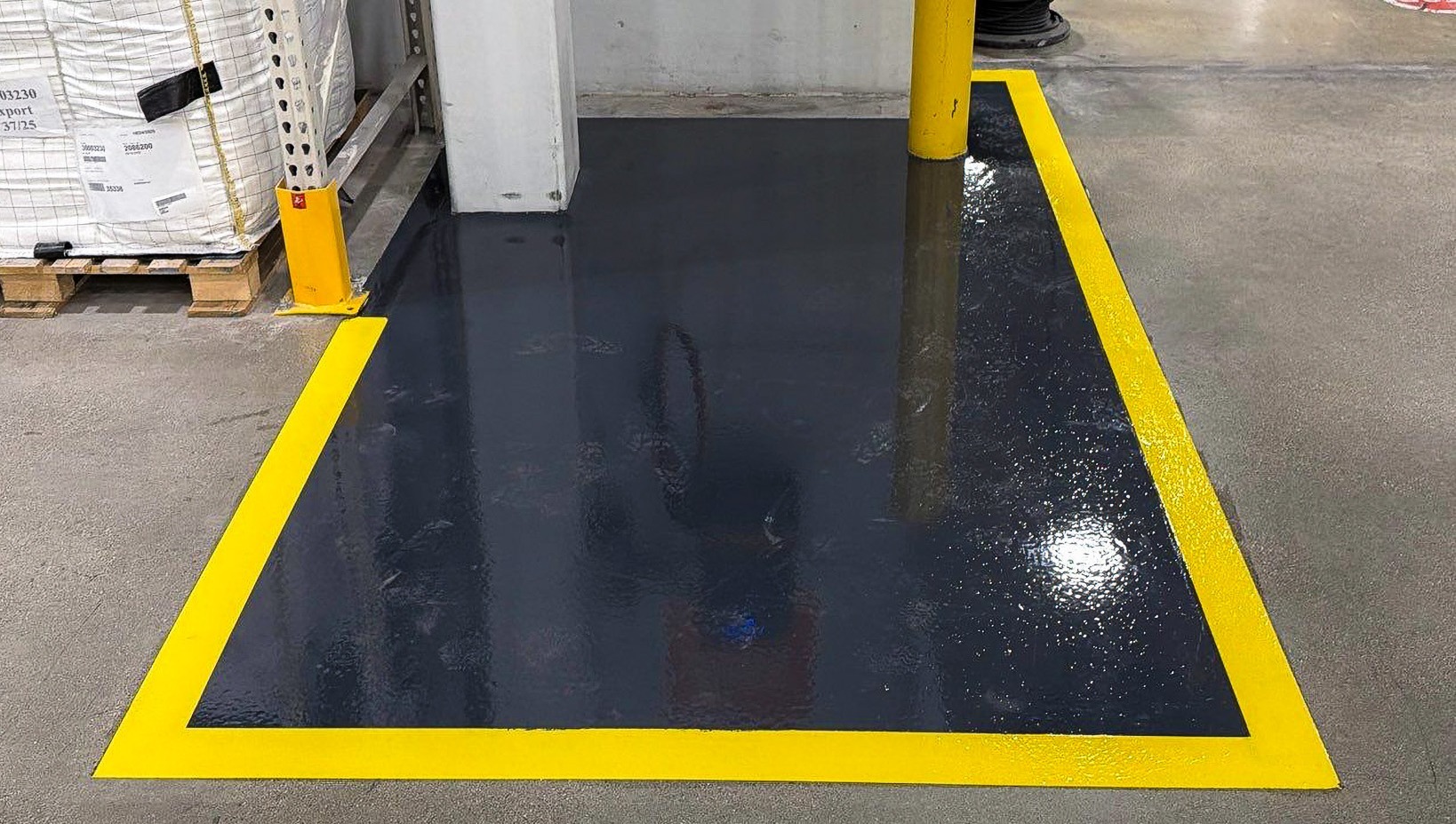
Battery charging areas create one of the harshest environments for concrete floors. Even small amounts of sulfuric acid from lead-acid batteries can slowly deteriorate concrete and damage many traditional floor coatings. While chemical-resistant epoxy systems provide an important first layer of defense, some facilities require an additional level of protection in areas where battery acid exposure is frequent.
This is where a battery acid-resistant film coating comes into play. Rather than replacing a chemical-resistant flooring system, this specialized sacrificial film is installed over an acid-resistant coating to provide another barrier against battery acid. If the film becomes damaged or discolored over time, it can often be replaced without removing the underlying flooring system.
With nearly 20 years of experience and over 1 million square feet installed, CustomCrete has installed specialized flooring systems for industrial facilities where chemical resistance is critical. This guide explains what a battery acid-resistant film coating is, how it works, and when facilities should consider using one.
Key Takeaways
- A battery acid-resistant film coating provides an additional sacrificial layer of protection over a chemical-resistant flooring system.
- These films are most commonly installed in battery charging areas rather than across an entire facility.
- Combining a chemical-resistant coating with a protective film can extend floor life and simplify long-term maintenance.

What Is a Battery Acid-Resistant Film Coating?
A battery acid-resistant film coating is a durable protective film installed over an existing battery acid-resistant flooring system, typically a novolac epoxy or other high-performance chemical-resistant coating.
The film acts as a sacrificial barrier between spilled battery acid and the underlying floor.
Unlike a traditional coating, the film is designed to absorb the wear caused by repeated acid exposure. If it becomes stained, damaged, or worn, it can often be replaced while leaving the underlying flooring system intact.
This creates multiple layers of protection for concrete in areas exposed to sulfuric acid.
Why Battery Acid Is So Damaging
Battery charging stations commonly use lead-acid batteries that contain sulfuric acid.
If acid leaks or spills onto unprotected concrete, it can:
- Attack the cement paste
- Cause surface erosion
- Create pitting
- Weaken the slab
- Shorten the lifespan of the flooring system
- Deteriorates most floor coatings
Even chemical-resistant coatings may gradually discolor or wear after years of repeated acid exposure.
Adding a battery acid-resistant film coating helps reduce direct contact between the acid and the flooring system below.
How the System Works
A battery acid protection system typically includes several layers.
First, the concrete is mechanically prepared and repaired as needed.
Next, a high-performance acid-resistant coating—often a novolac epoxy—is installed to protect the concrete from chemical attack.
Finally, the battery acid-resistant film coating is applied over the cured flooring system in areas where battery acid exposure is expected.
Rather than replacing the coating itself, the film becomes the first surface that encounters spills, splashes, and drips during battery maintenance or charging operations.
Why the Film Is Usually Installed Only in Battery Areas
One common misconception is that every floor in a facility requires this specialized protection.
In reality, battery acid-resistant film coating is typically installed only in designated battery charging or battery maintenance areas.
These areas experience concentrated exposure to:
- Battery charging
- Battery changing
- Acid leaks
- Electrolyte spills
- Maintenance activities
The remainder of the facility often performs well with standard epoxy, urethane cement, or other flooring systems because those areas are not routinely exposed to sulfuric acid.
Installing the film only where it is needed helps control project costs while still protecting the highest-risk locations.
Benefits Beyond Chemical Resistance
A battery acid-resistant film coating offers several advantages beyond protecting against sulfuric acid.
These benefits include:
- Additional protection for the underlying flooring system
- Easier replacement if the surface becomes damaged
- Reduced long-term maintenance costs
- Extended service life of the flooring system
- Better appearance in high-exposure areas
Rather than repeatedly replacing damaged coatings, facilities may only need to replace the sacrificial film after years of use.
Facilities That Commonly Use Battery Acid-Resistant Film Coatings
These specialized systems are most often found in facilities with dedicated battery charging operations.
Common examples include:
- Distribution centers
- Warehouses
- Manufacturing plants
- Logistics facilities
- Charging stations
- Battery maintenance rooms
Any facility operating large fleets of electric forklifts or industrial battery systems may benefit from additional acid protection in these designated areas.
Is a Standard Acid-Resistant Coating Enough?
For many facilities, a high-performance acid-resistant coating provides sufficient protection.
However, facilities that experience:
- Frequent battery changes
- Large battery charging banks
- Regular sulfuric acid exposure
- High maintenance activity
may benefit from the added protection provided by a battery acid-resistant film coating.
The decision depends on the severity and frequency of acid exposure rather than simply the size of the building.
Factors to Consider Before Installation
Before selecting a battery protection system, facility managers should evaluate:
- The number of battery charging stations
- Frequency of acid exposure
- Existing floor condition
- Cleaning procedures
- Long-term maintenance expectations
- Use of forklifts or walkways (Note that it can not withstand heavy foot traffic or forklifts)
Understanding these conditions helps determine whether an acid-resistant coating alone is sufficient or whether an additional protective film provides greater long-term value.
Final Thoughts
A battery acid-resistant film coating provides an additional layer of protection for concrete floors in areas exposed to sulfuric acid and other corrosive chemicals. Rather than replacing a chemical-resistant flooring system, it works alongside it by serving as a sacrificial barrier that helps preserve the underlying coating.
Because battery charging areas experience much harsher conditions than most other parts of a facility, this specialized protection is typically installed only where it is needed—not across the entire floor.
To learn more about selecting the right solution for your facility, read the next article: CustomCrete FAQ: What Is the Best Battery Acid Resistant Film Coating for Facility Flooring?