

When evaluating a flooring contractor, many facility owners focus on what the warranty covers. While that is important, understanding what a warranty does not cover is equally valuable.
A flooring warranty is designed to protect against specific workmanship and installation-related issues. However, no warranty can cover every situation that may affect a floor throughout its lifespan. Concrete is a complex building material, and many factors that influence floor performance are outside a contractor's control.
With nearly 20 years of experience and over 1 million square feet installed, CustomCrete believes transparency is an important part of building trust with clients. Understanding warranty exclusions helps facility managers set realistic expectations and make more informed decisions when investing in a flooring system.
This article explains what the CustomCrete warranty does not cover and why these limitations are common throughout the flooring industry.
Key Takeaways
- The CustomCrete warranty focuses on workmanship and installation-related issues.
- Many flooring failures are caused by factors outside a contractor's control.
- Understanding warranty exclusions helps facility managers avoid surprises and better protect their flooring investment.

Why All Flooring Warranties Have Exclusions
Every flooring warranty has limitations.
This isn't because contractors are trying to avoid responsibility. Rather, it reflects the reality that flooring performance depends on many variables beyond the installation itself.
Factors such as:
- Building movement
- Moisture conditions
- Concrete quality
- Maintenance practices
- Equipment traffic
- Chemical exposure
can all affect a floor over time.
A warranty is intended to address installation-related issues, not every possible condition a floor may encounter throughout its life.
Normal Wear and Tear
One of the most common exclusions in any flooring warranty is normal wear and tear.
Industrial and commercial floors experience daily abuse from:
- Forklifts
- Foot traffic
- Pallet jacks
- Equipment movement
- Cleaning procedures
Over time, some degree of wear is expected.
Even the most durable flooring systems will eventually show signs of use. Scratches, surface wear, loss of gloss, and minor cosmetic changes are often considered normal aging rather than warranty issues.
The CustomCrete warranty does not cover the natural wear that occurs as a floor ages and is used for its intended purpose.
Improper Maintenance
Flooring systems require ongoing maintenance to perform at their best.
If a floor is:
- Neglected
- Cleaned improperly
- Exposed to inappropriate chemicals
- Maintained contrary to manufacturer recommendations
performance issues can occur that are unrelated to installation quality.
For example, allowing aggressive chemicals to remain on a floor for extended periods may damage the surface regardless of how well it was installed.
Because maintenance is controlled by the facility owner after installation, it falls outside the scope of the CustomCrete warranty.
Abuse or Misuse
Industrial flooring systems are designed for specific applications and operating conditions.
Problems caused by:
- Unintended use
- Excessive loading
- Physical abuse
- Improper equipment operation
are generally not considered workmanship-related issues.
For example, repeatedly dropping heavy metal objects onto a floor may cause damage that no flooring system can completely prevent.
The warranty is designed to cover installation-related concerns, not damage caused by misuse.
Moisture Vapor Transmission
One of the most important exclusions to understand involves moisture.
Concrete is naturally porous, and moisture can move through a slab long after construction is complete.
Excessive moisture vapor transmission can contribute to:
- Bubbling
- Blistering
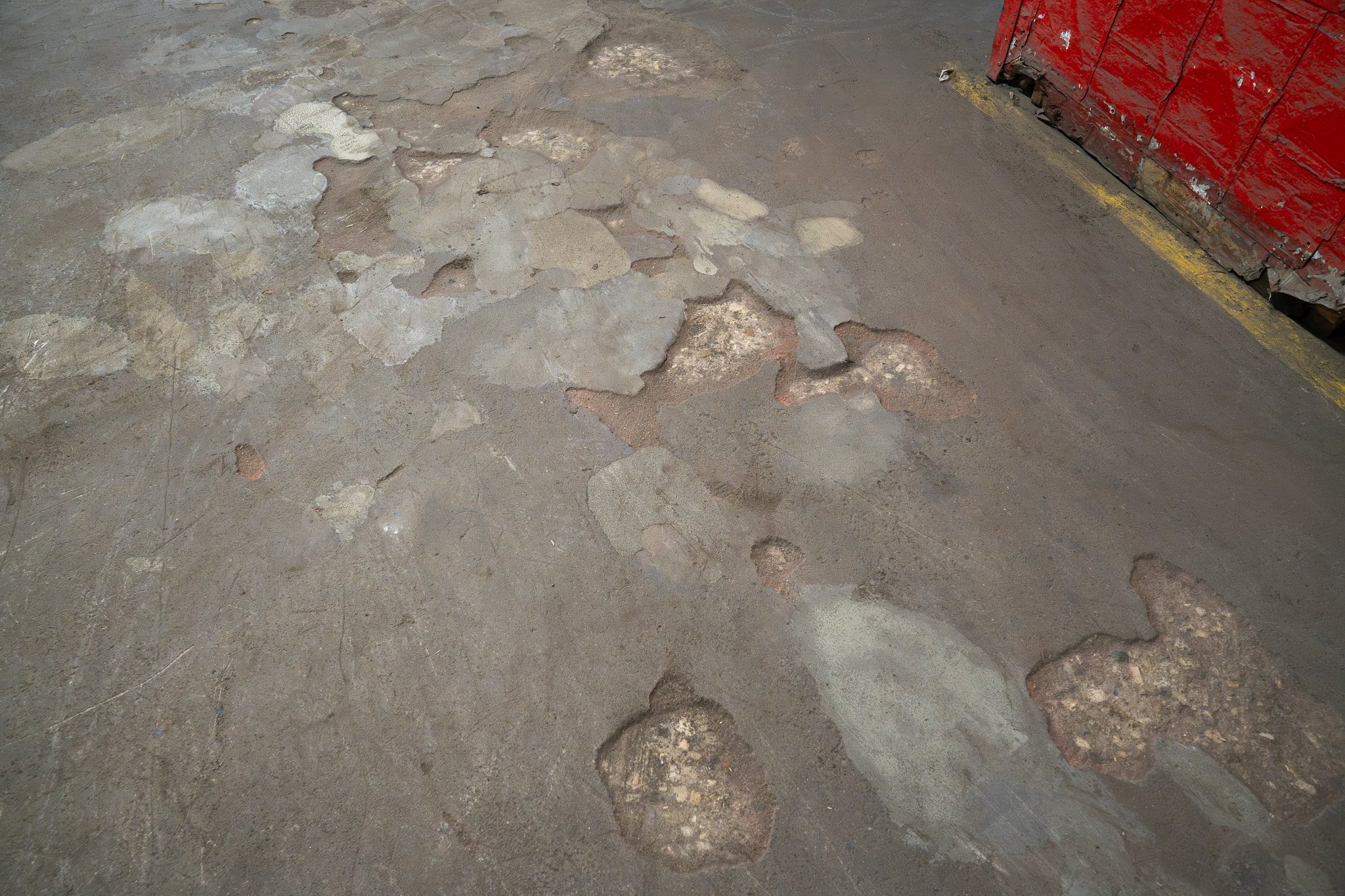
- Delamination
- Adhesion loss
While moisture testing helps identify risks before installation, future moisture conditions can change due to:
- Groundwater changes
- Building modifications
- Environmental conditions
- Slab characteristics
Because these factors are outside the contractor's control, moisture vapor transmission is typically excluded from warranty coverage.
Existing Concrete Conditions
Not all concrete slabs are created equal.
Many facilities have older slabs with:
- Hidden cracks
- Structural weaknesses
- Contamination
- Previous repairs
- Unknown construction history
Even with proper preparation, some existing slab conditions may not become fully apparent until after installation.
The CustomCrete warranty does not cover failures caused by underlying concrete defects that are unrelated to workmanship.
Oil and Subsurface Contamination
In manufacturing plants, automotive facilities, and industrial environments, contaminants can penetrate deep into the concrete over many years.
Examples include:
- Oil
- Grease
- Hydraulic fluids
- Chemical contamination
Even extensive grinding may not completely remove deeply embedded contaminants.
If contamination later affects adhesion or coating performance, it may be related to the slab's history rather than the installation itself.
For this reason, subsurface contamination is generally excluded from warranty coverage.
Structural Movement and Building Settlement
Concrete naturally moves over time.
Building settlement, slab movement, and structural shifts can contribute to:
- Cracking
- Joint movement
- Surface stress
Because these conditions originate from the building structure rather than the flooring installation, they are typically not covered under the CustomCrete warranty.
This is true throughout much of the flooring industry.
Why Understanding Exclusions Matters
Warranty exclusions should not be viewed as negatives.
Instead, they help define the difference between:
- Workmanship-related issues
- Conditions outside a contractor's control
Understanding this distinction helps facility owners:
- Set realistic expectations
- Plan maintenance properly
- Protect their flooring investment
- Better evaluate contractor proposals
Transparency about warranty limitations is often a sign of a contractor being honest about how flooring systems perform in real-world environments.
What the Warranty Does Cover
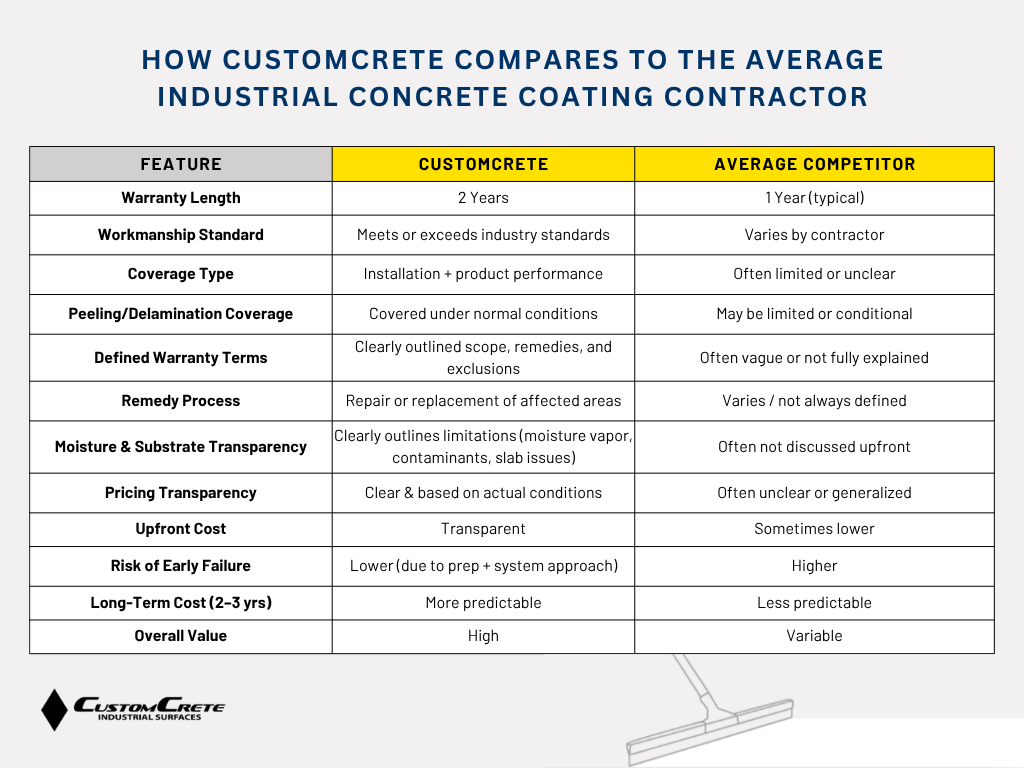
While this article focuses on exclusions, it is important to remember that the CustomCrete warranty exists to support clients when workmanship-related issues occur.
The warranty is designed to provide confidence that installations are completed according to industry standards and that support remains available if qualifying issues arise.
Understanding both coverage and exclusions provides the most complete picture of what a flooring warranty actually means.
Final Thoughts
The CustomCrete warranty is designed to protect against installation and workmanship-related issues, but like all commercial flooring warranties, it cannot cover every condition that may affect a floor throughout its lifespan.
Normal wear, improper maintenance, moisture vapor transmission, structural movement, contamination, and existing slab conditions are all examples of factors that fall outside a contractor's direct control.
Understanding these limitations helps facility managers make more informed decisions and better protect their flooring investment over time.
To learn more about what warranty coverage actually means and how CustomCrete supports clients after installation, read the next article: What Our 2-Year Warranty Really Means for Your Facility.
