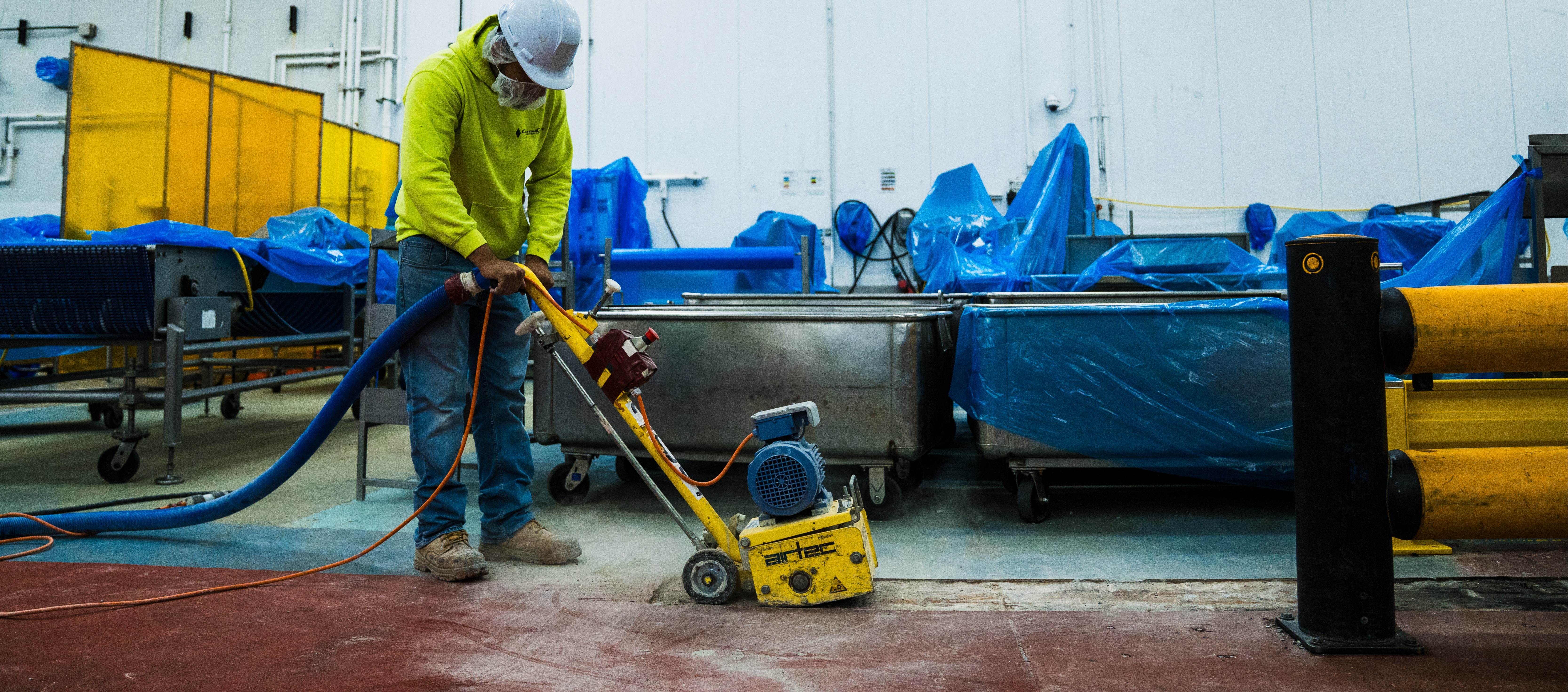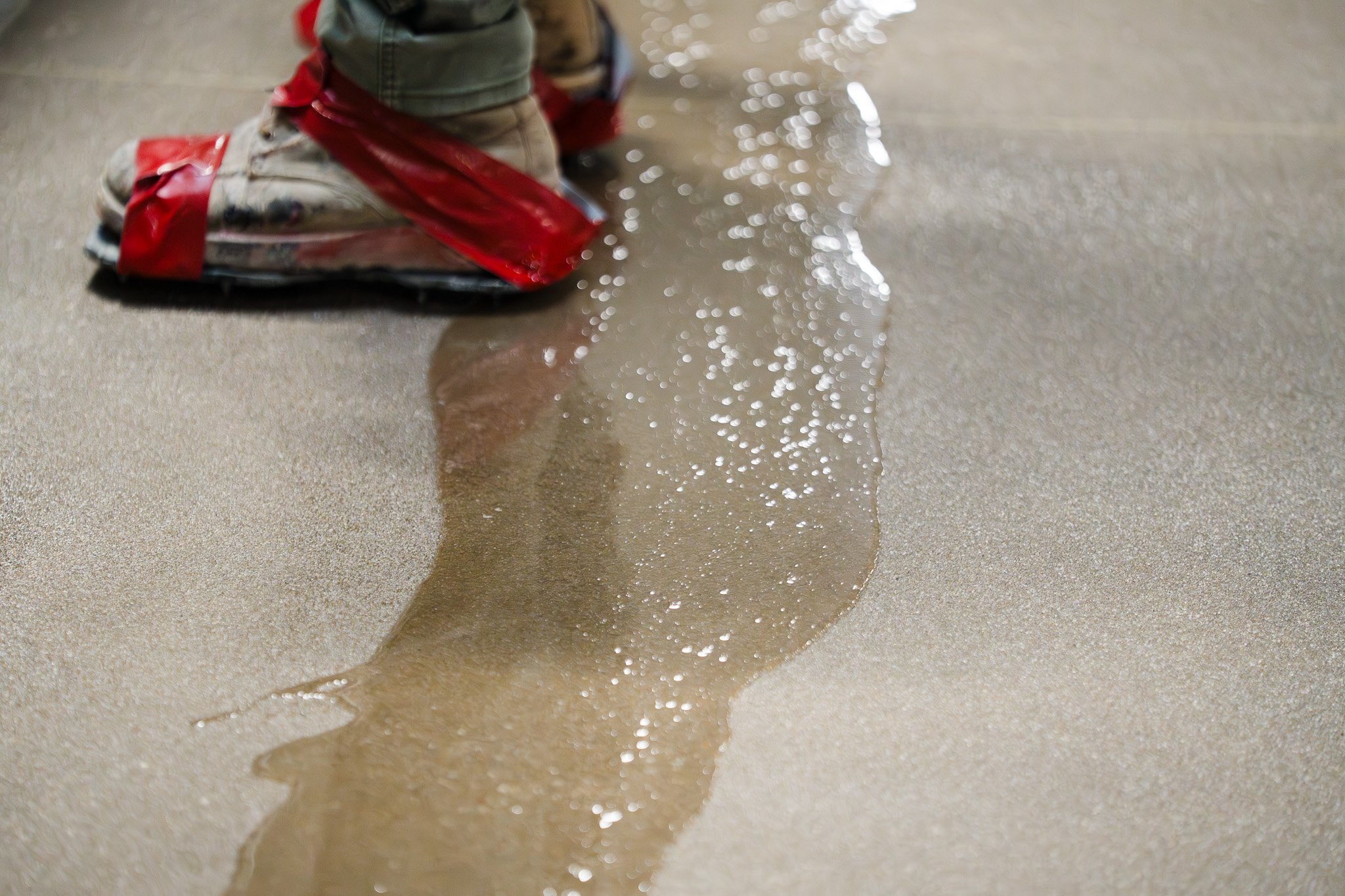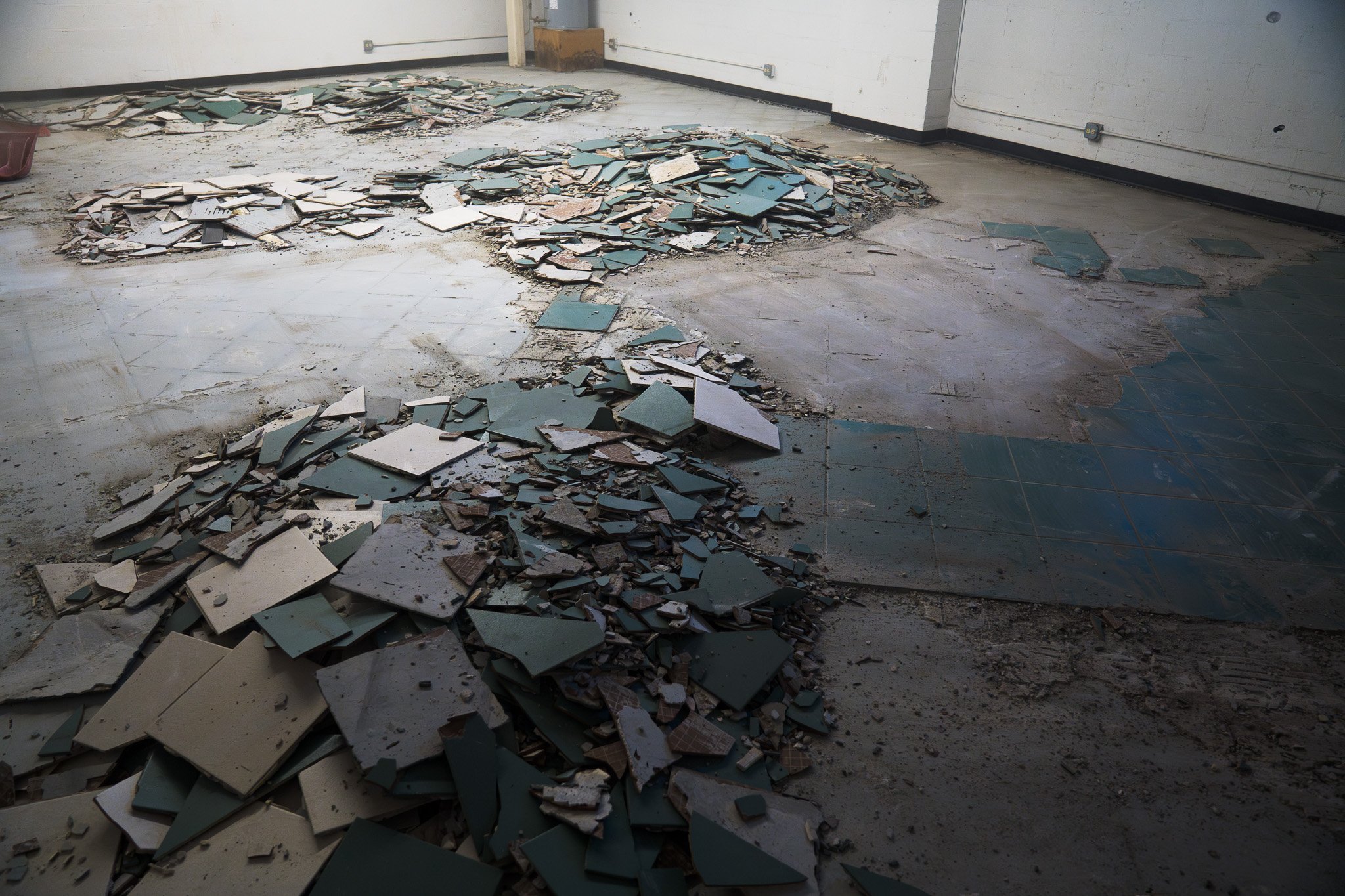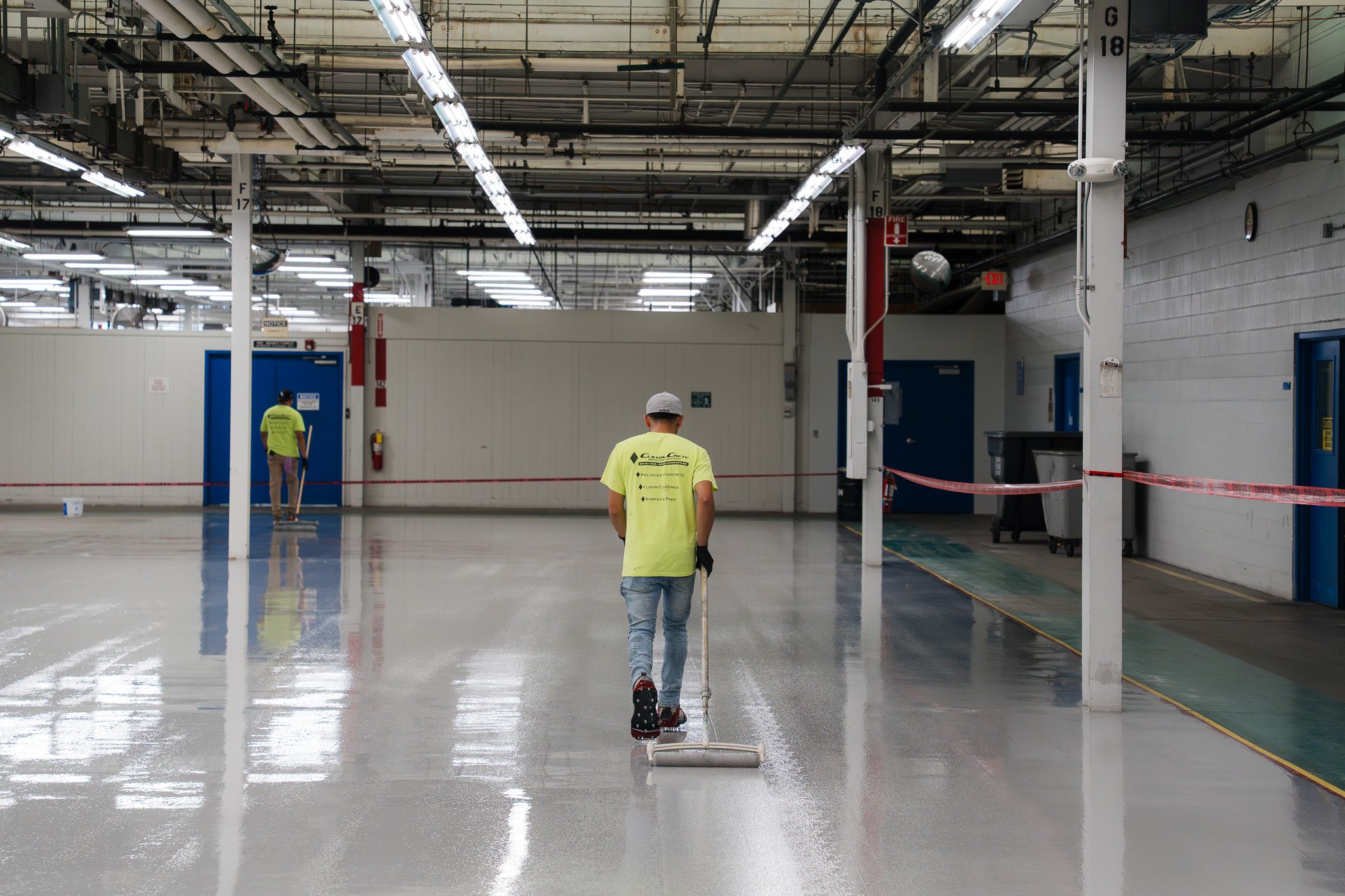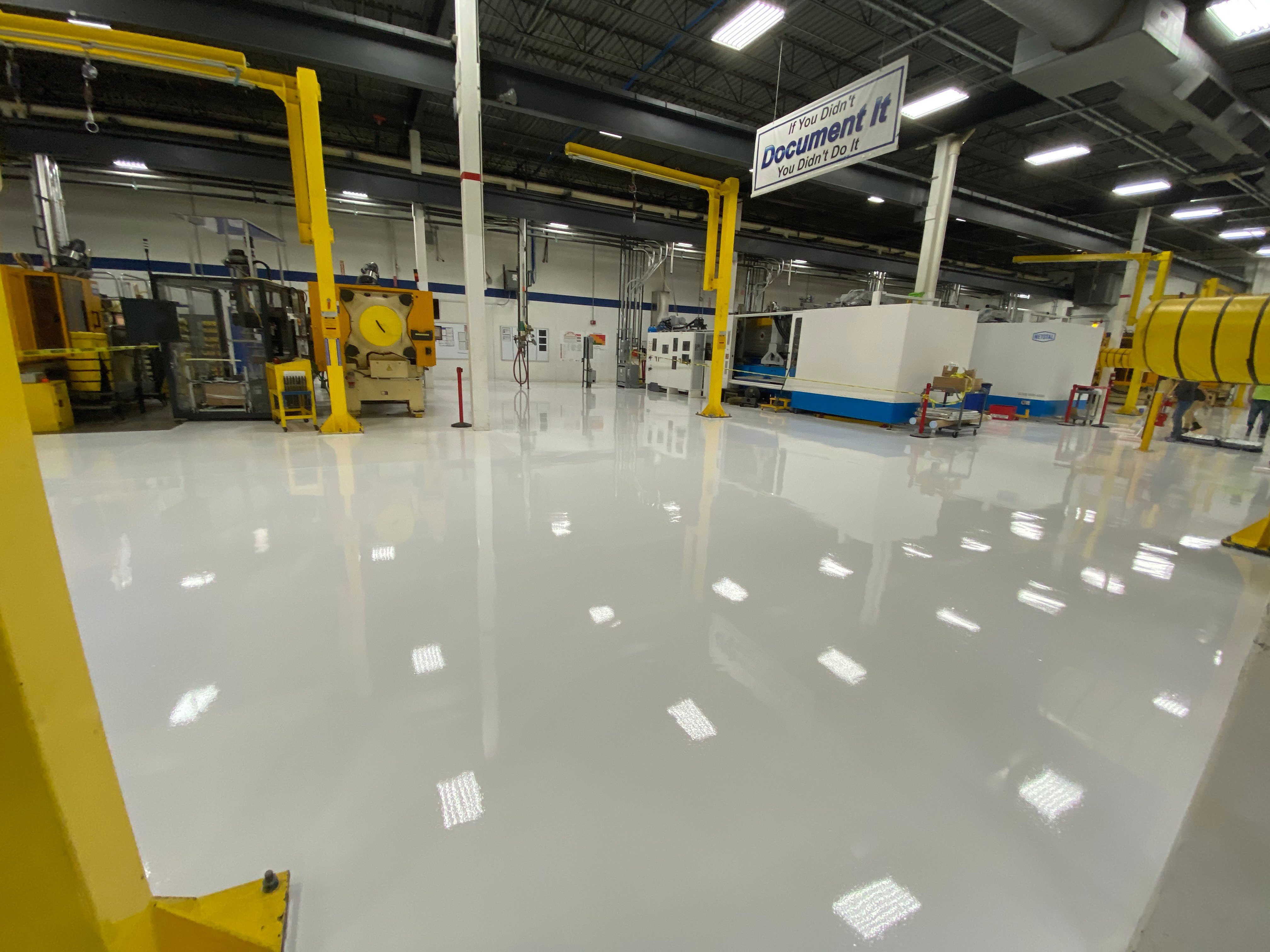

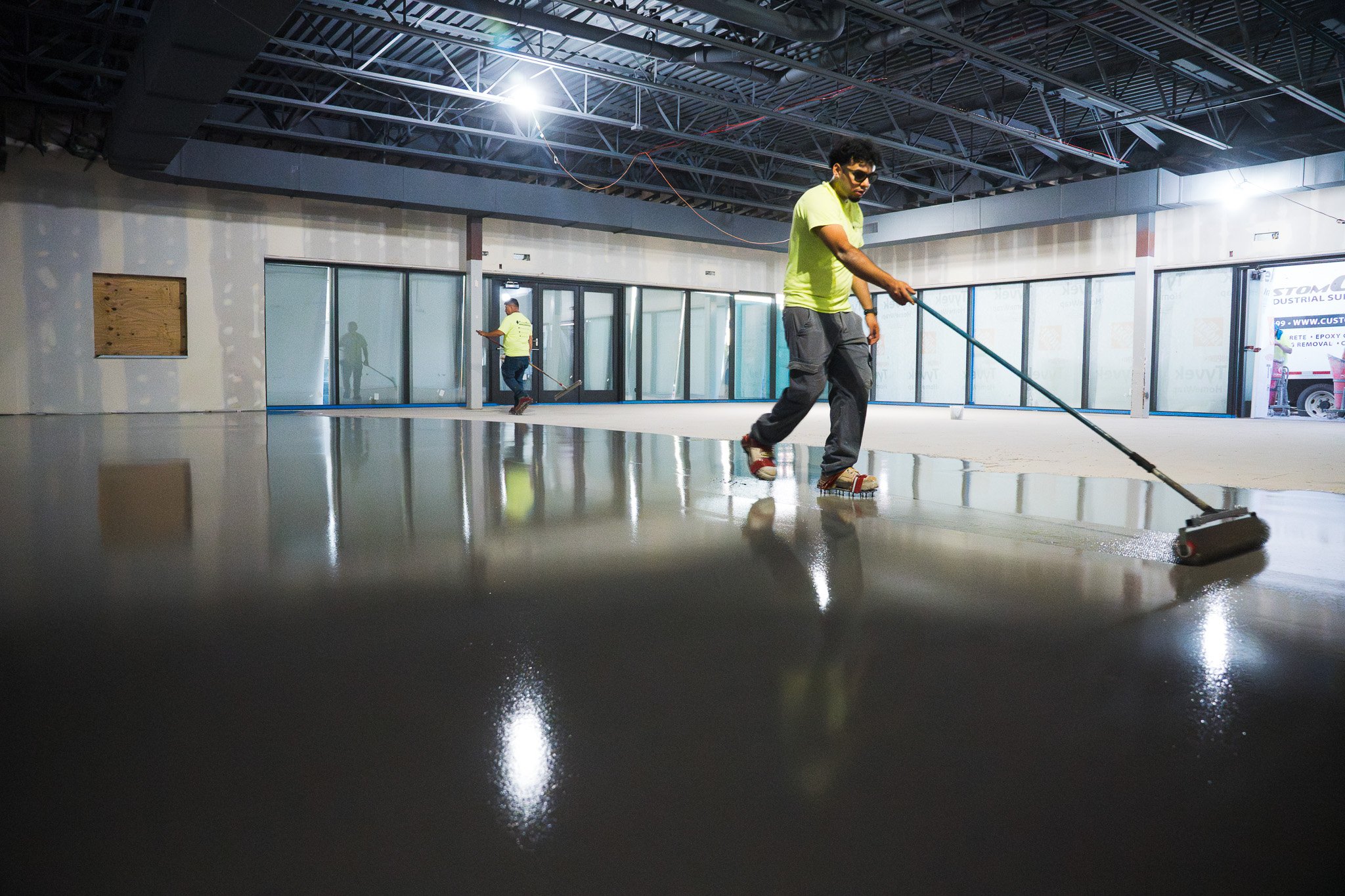
Milwaukee’s industrial sector is built on manufacturing, logistics, food production, and high-traffic distribution—all environments where floors endure constant stress. From freeze-thaw cycles to chemical exposure and forklift traffic, facilities across the region face unique challenges that can weaken concrete surfaces over time. Understanding the root causes of these issues helps decision-makers plan smarter repairs, improve safety, and select longer-lasting Milwaukee concrete coatings that match their operational needs.
With decades of experience working in Wisconsin manufacturing plants, warehouses, and cold-storage environments, CustomCrete has seen firsthand how local conditions impact floor performance. Below, we break down the most common flooring challenges in Milwaukee facilities and what causes them.

Climate-Driven Damage from Freeze–Thaw Cycles
Milwaukee’s long winters create the perfect conditions for concrete deterioration. When moisture penetrates the slab and freezes, it expands—causing cracks, spalling, and surface flaking. Repeated freeze–thaw cycles accelerate this wear, especially in loading docks, warehouse entrances, and unconditioned production spaces.
Without protection, these small cracks widen over time, creating tripping hazards, equipment vibration, and costly repairs. The right Milwaukee concrete coatings help block moisture intrusion and prevent this cycle of freeze-thaw damage, but many older facilities still operate with bare, unprotected concrete.
Signs of Freeze–Thaw Damage
- Surface flaking or chipping
- Cracking along joints or high-traffic pathways
- Uneven or rough patches
- Weak spots that crumble under foot or wheel traffic
Addressing moisture at the surface and below is key to stopping further seasonal deterioration.
Heavy Machinery Wear and Impact Damage
Industrial facilities in Milwaukee often rely on forklifts, pallet jacks, conveyors, and manufacturing equipment that put tremendous pressure on concrete floors. Over time, this constant movement causes abrasion, rutting, and microcracks. Dropped tools or equipment can also leave dents or impact fractures.
Bare concrete simply isn’t engineered to withstand years of these forces without reinforcement. This is where protective systems—such as epoxy, urethane cement, or polished concrete—become valuable, as they distribute weight and improve impact resistance.
Common Machinery-Related Flooring Problems
- Worn or polished-smooth traffic lanes
- Cracks forming under forklift routes
- Spalled joints from hard wheels or constant turning
- Vibrations loosening surface particles and creating dust
When untreated, these issues make floors unsafe, uneven, and difficult to maintain.
Chemical Exposure and Surface Degradation
Manufacturing, food production, and automotive facilities all work with chemicals that can damage unprotected floors. Oils, solvents, acids, and cleaning agents penetrate porous concrete, leaving stains—or worse, gradually breaking down the surface. This weakens the floor structurally and poses safety risks.
Spills that are not cleaned quickly can seep deep into the slab, making repairs more complex. Choosing Milwaukee concrete coatings that match the chemical demands of your environment helps prevent long-term deterioration.
Indicators of Chemical Damage
- Permanent staining
- Soft or chalky surface areas
- Surface discoloration
- Peeling or delaminating old coatings
Chemical resistance varies between epoxy and urethane cement, making system selection critical.
Moisture Problems and Vapor Transmission
Milwaukee’s humid summers contribute to another major flooring challenge: moisture vapor transmission (MVT). Even if a slab looks dry, moisture from below can migrate upward, pushing against coatings or sealers. This often results in bubbling, peeling, or debonding.
Older buildings—especially those in industrial districts near the riverfront—are more susceptible to moisture issues due to aging concrete or poorly installed vapor barriers. Without proper testing and moisture mitigation, even the highest-quality coating system can fail.
Warning Signs of MVT
- Blisters or bubbles in coatings
- Damp or dark spots that return after cleaning
- Efflorescence (white, powdery deposits)
- Adhesion failure in patches or large areas
Proper testing and system selection help control moisture before repairs or coatings are applied.
Slippery Surfaces and Safety Risks
Slip hazards are one of the leading causes of workplace injuries. Milwaukee facilities that deal with oils, wet processes, or temperature-controlled environments frequently struggle with slick floors.
Bare concrete becomes especially slippery when smooth or polished down by forklift traffic. Installing coatings with built-in texture or traction aggregates improves grip while still allowing for efficient cleaning.
Conditions That Increase Slip Risks
- Cold storage or food production washdowns
- Areas near dock doors exposed to snow melt
- Smooth, burnished, or worn concrete
- Oil or coolant overspray in manufacturing areas
Failing to manage slip resistance leads to injuries, operational slowdowns, and OSHA concerns.
Dusting and Surface Breakdown
Concrete contains fine particles that can loosen over time, creating a dusty surface. This “dusting” is common in older Milwaukee warehouses and manufacturing plants where floors were never sealed or hardened.
Dusting affects indoor air quality, increases housekeeping costs, and can damage sensitive equipment or finished goods. Industrial-strength densifiers, sealers, or Milwaukee concrete coatings help contain dust and strengthen the floor surface.
Dusting Problems to Watch For
- Gray powder appearing after sweeping
- Dust accumulation on equipment or products
- Smooth patches where surface paste has worn away
- Floors that feel chalky or weak under foot
Left untreated, dusting worsens and leads to deeper structural issues.
FAQ: Milwaukee Flooring Challenges
- What is the biggest cause of industrial floor failure in Milwaukee?
Moisture—either from freeze–thaw cycles or vapor coming up from below the slab—is one of the most common and damaging issues. - How do I know if my floor needs a coating?
If you see cracks, dusting, stains, peeling, or slippery areas, it’s a good sign your floor could benefit from a protective system. - Can repairs be done without shutting down operations?
Many coating systems can be installed in phases or during off-hours to minimize disruption. Professional installers will guide you through scheduling options.
Final Thoughts
Milwaukee’s industrial facilities face a combination of climate-driven wear, heavy machinery use, chemical exposure, and moisture challenges that can weaken even the best concrete floors. Understanding these issues early helps facility managers plan proactive maintenance, improve worker safety, and choose durable solutions that match local conditions.
If you're ready to explore your next steps, continue learning with our related article: “Choosing Between Epoxy, Urethane, and Polished Concrete in Milwaukee” for a detailed breakdown of the best system for your facility’s needs.

Topics: