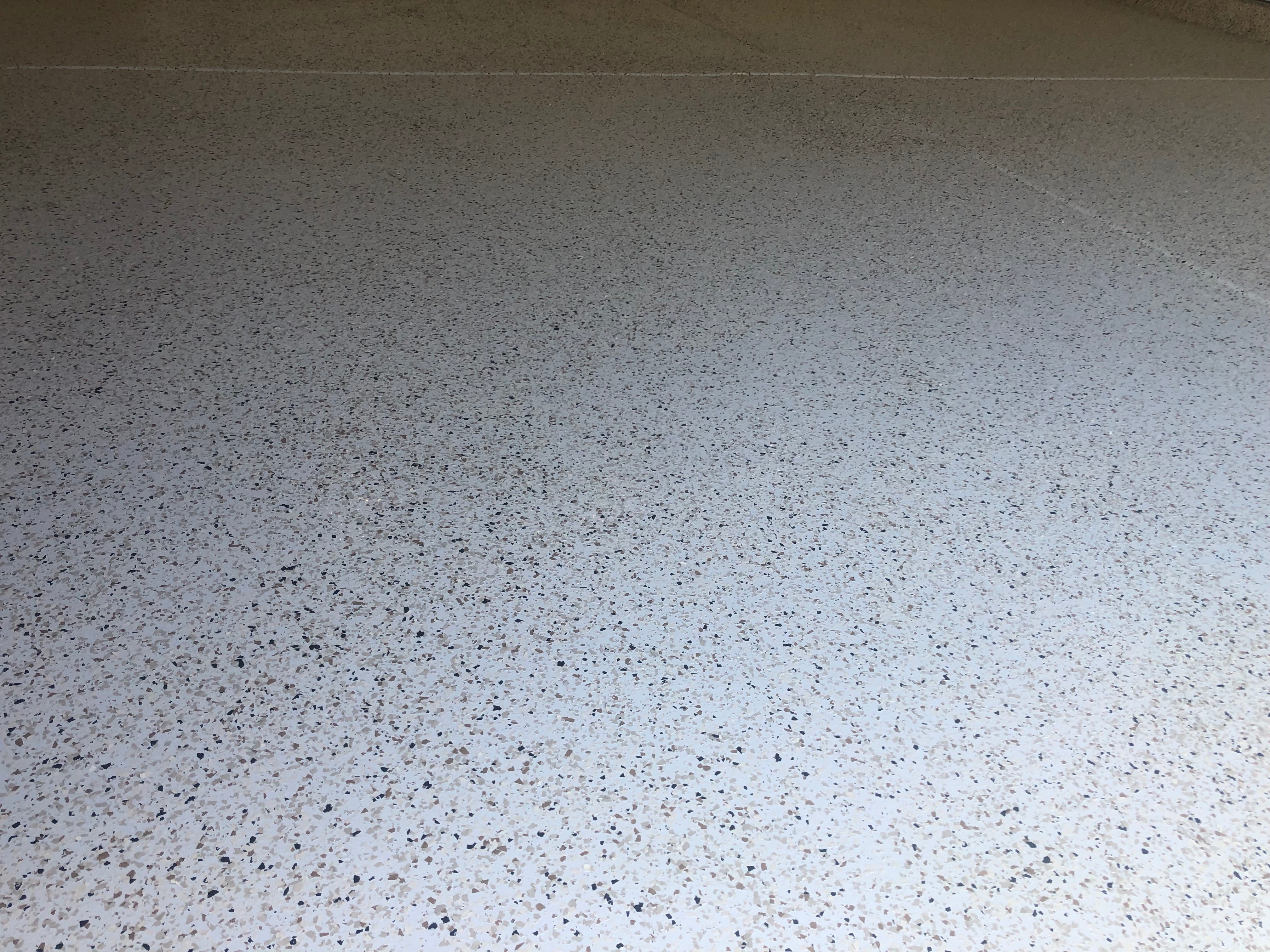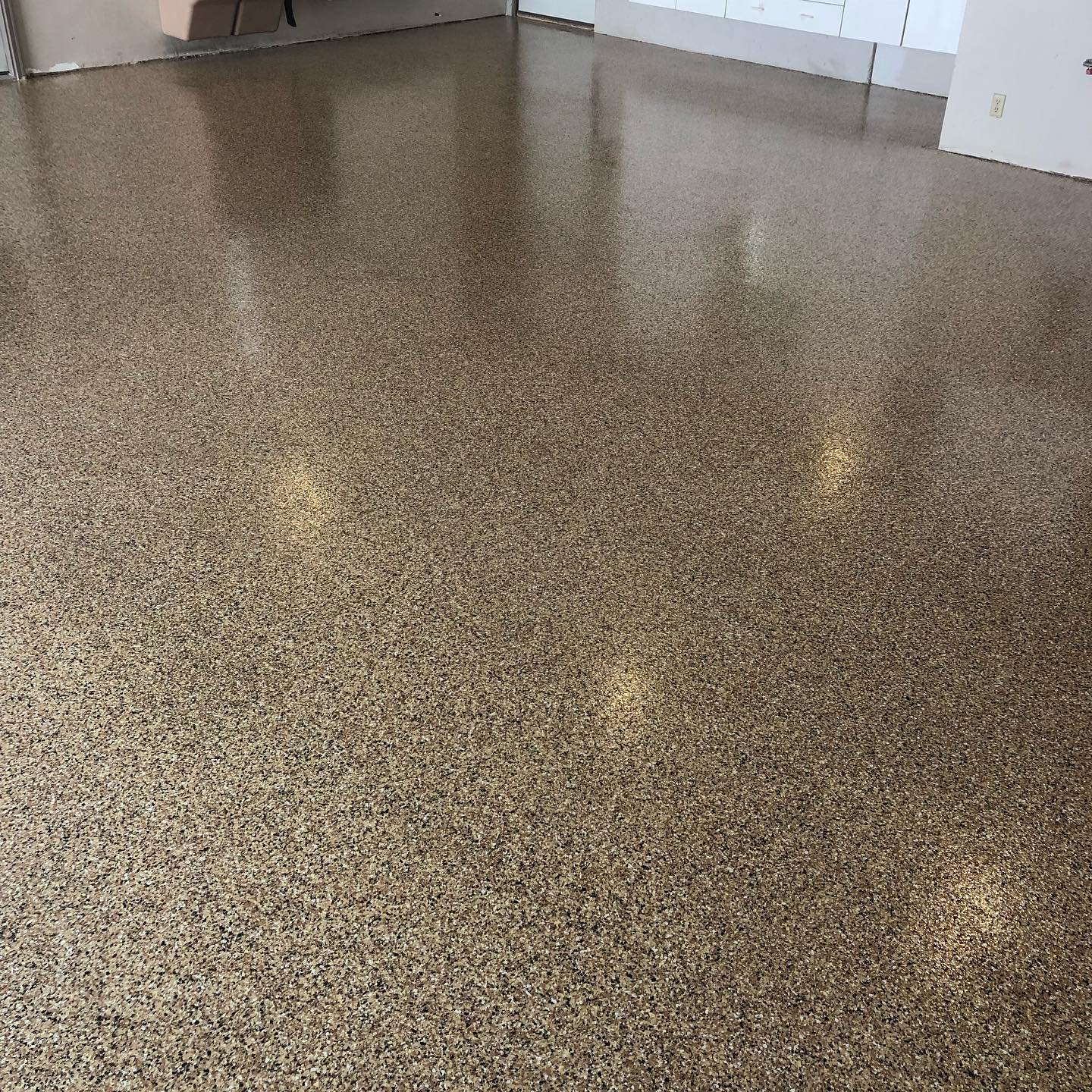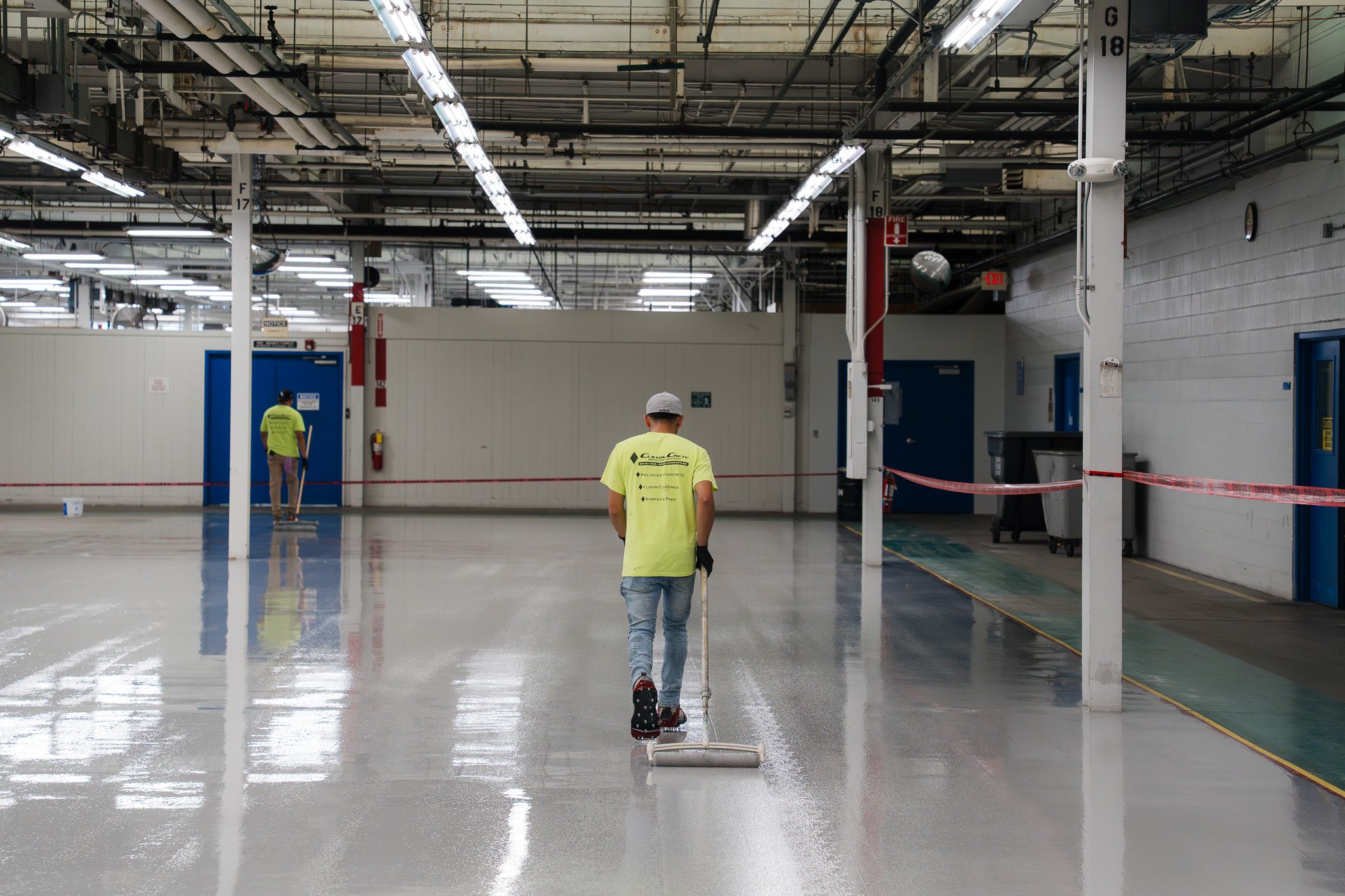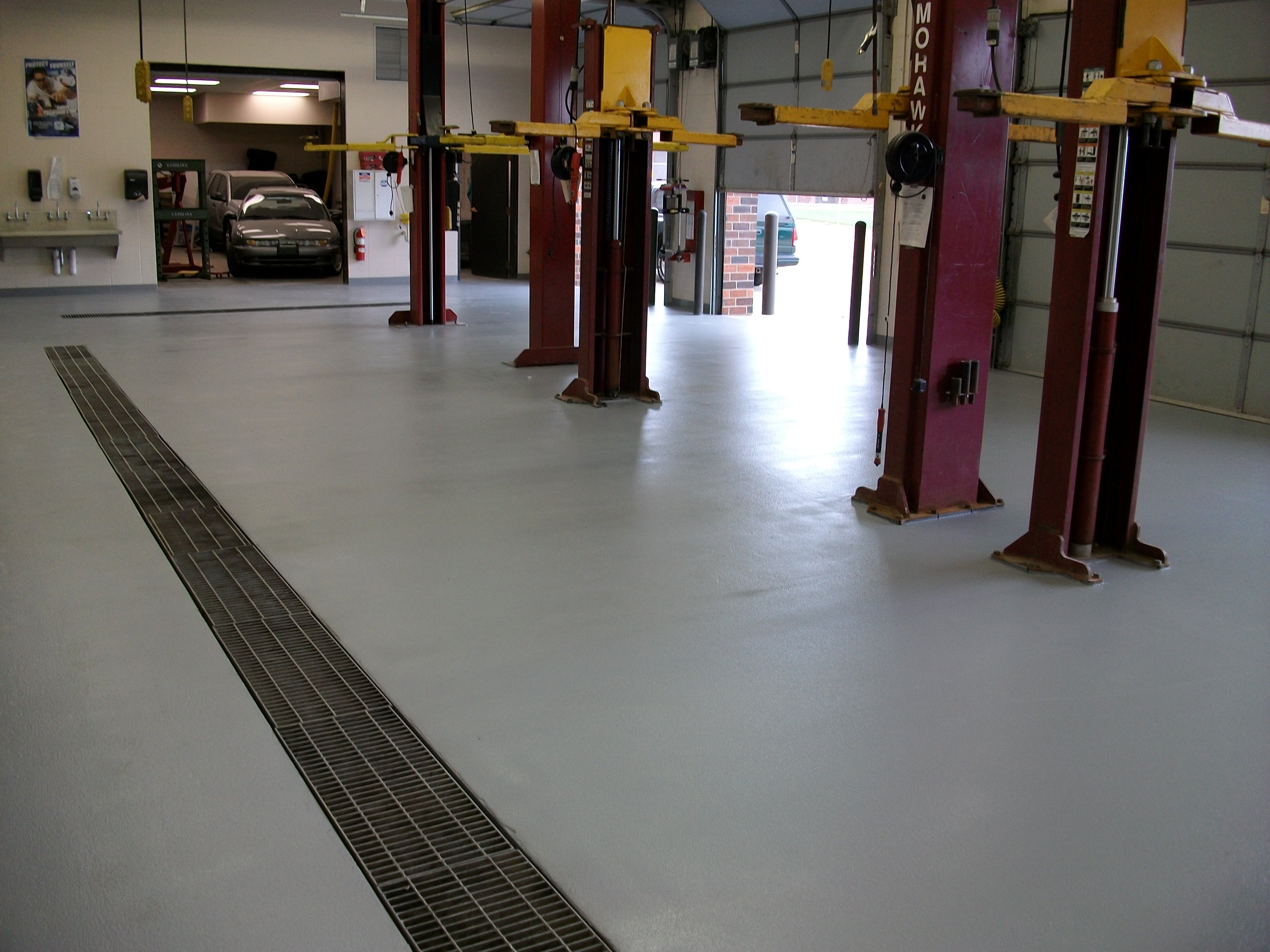


The biggest difference between industrial vs residential concrete coatings is not just the coating itself. Industrial projects usually require more extensive surface preparation, repairs, testing, thicker systems, additional layers, and stricter installation planning because the finished floor has to withstand heavier traffic, chemicals, equipment, and more demanding operating conditions.
With nearly 20 years of experience and over 1 million square feet installed, CustomCrete has worked with concrete floors in environments ranging from lighter-use spaces to demanding commercial and industrial facilities. Understanding how installation changes between these two settings can help you evaluate why project scope, timeline, and cost may be very different.

Key Takeaways
- Industrial concrete coatings often require more preparation, repairs, testing, and system layers than residential coatings.
- The installation process is based on what the finished floor must withstand, not simply whether the project is labeled residential or industrial.
- Heavier traffic, chemicals, moisture, thermal changes, and operating schedules can all affect the coating system and installation process.
Surface Preparation Is Often More Extensive on Industrial Floors
Surface preparation is important for both residential and industrial coatings. In either setting, the coating needs a clean, sound, properly profiled concrete surface to bond correctly.
The difference is often the condition and scale of the slab.
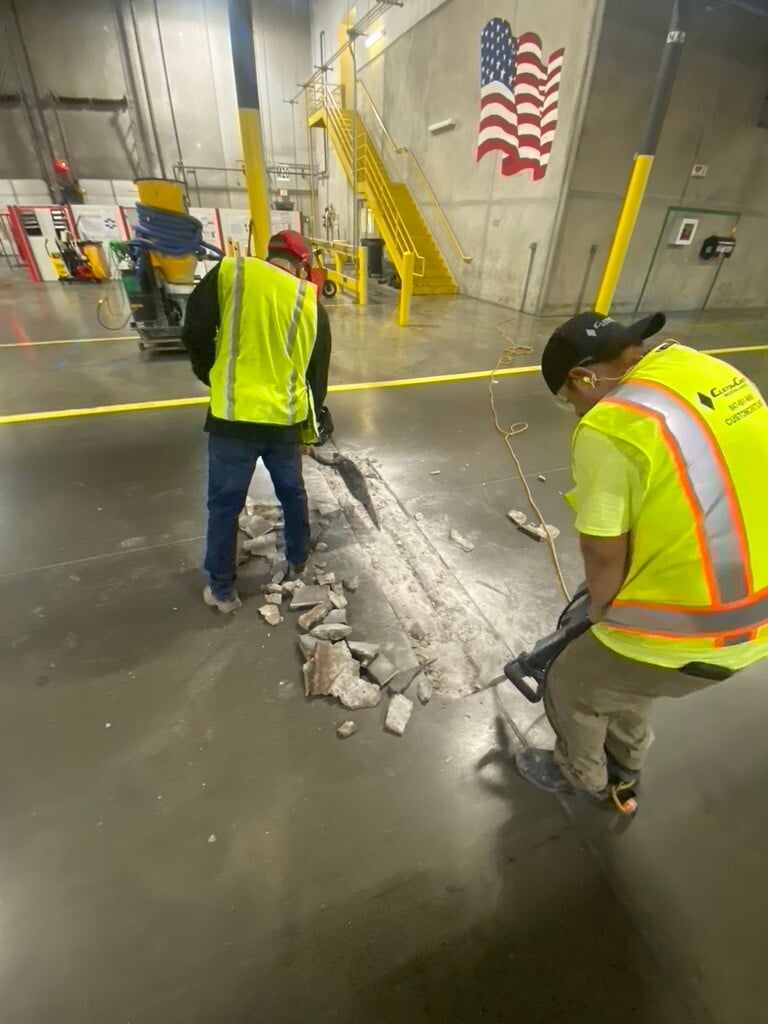
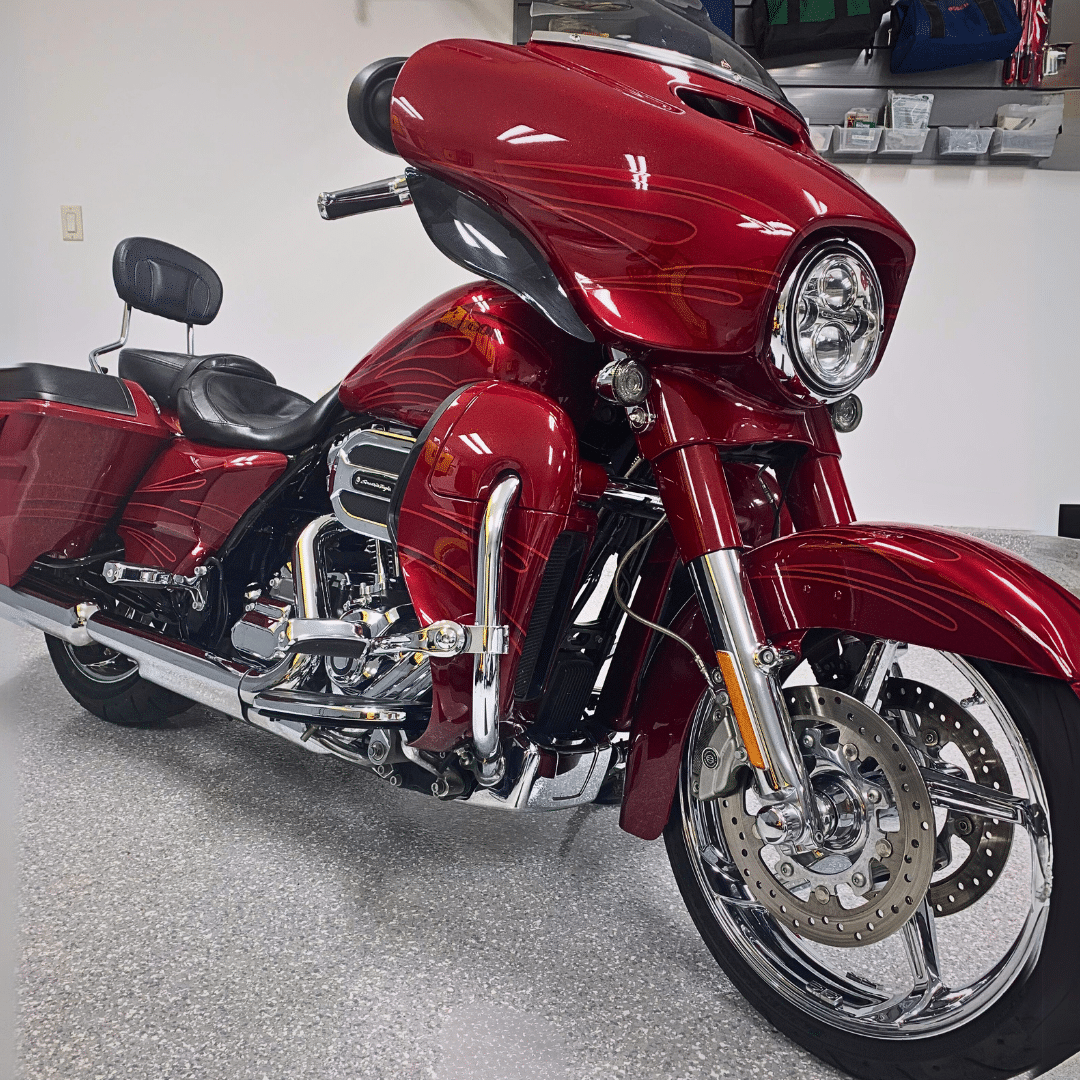
A residential garage may require grinding to remove contaminants, open the concrete surface, and prepare it for a coating. An industrial facility may also require grinding, but larger projects can involve shot blasting, scarifying, shaving, coating removal, adhesive removal, or a combination of methods.
Industrial slabs may also have years of forklift traffic, oil exposure, previous repairs, old coatings, production residue, or other conditions that need to be addressed before installation can begin.
Concrete Repairs Can Be More Complicated
Cracks, spalls, joints, and damaged concrete can appear in any slab, but industrial environments tend to place more stress on the floor.
Heavy equipment, dropped materials, carts, forklifts, and manufacturing operations can create deeper or more widespread damage. Before installing a coating, deteriorated areas may need to be patched, cracks treated, and joints evaluated.
The repair process also has to match the expected use of the floor. A small cosmetic crack in a residential garage and a damaged joint in a forklift aisle present very different concerns.
This is one reason industrial vs residential concrete coatings shouldn't be compared by coating material alone. The amount of concrete restoration required before the coating is installed can significantly change the project.
Moisture Testing May Become More Important
Moisture can affect the bond and long-term performance of resinous flooring systems in both residential and industrial environments.
On larger commercial or industrial projects, moisture testing may receive more attention because the financial impact of a coating failure can be much greater. Depending on the flooring system and project requirements, contractors may evaluate slab moisture before selecting primers, moisture mitigation products, or coating materials.
The exact testing method depends on the project and manufacturer requirements. If elevated moisture is found, the solution isn't simply to apply more coating. A moisture vapor barrier or another system adjustment may be required before the finished flooring is installed.
Industrial Systems May Be Thicker and Have More Layers
Residential concrete coatings are often designed around needs such as appearance, abrasion resistance, easier cleaning, and typical vehicle or foot traffic.
Industrial systems may need to handle much more.
Depending on the facility, a system can include primer, build coats, aggregate broadcasts, urethane cement, chemical-resistant layers, membranes, line striping, or specialized topcoats. Some systems are intentionally built thicker to withstand impact, abrasion, chemicals, or thermal conditions.
That doesn't mean every industrial floor needs a complicated multi-layer system. A warehouse with light traffic may have very different needs than a food processing facility or chemical manufacturing plant.
Each additional layer should have a purpose.
Material Selection Depends on the Environment
Residential coating choices are often influenced heavily by appearance, maintenance, UV exposure, and normal vehicle traffic.
Industrial material selection is more likely to involve operational questions. What chemicals will contact the floor? Will forklifts travel across it every day? Does the facility use hot-water washdowns? Is the floor exposed to thermal shock? Does it need added slip resistance?
These conditions can lead contractors to consider epoxy, urethane cement, polyaspartic materials, specialized chemical-resistant systems, or combinations of different products.
The correct material is based on the operating environment rather than the word “industrial” alone.
Cure Schedules and Downtime Require More Planning
Cure time matters on any coating project, but downtime can be much more complicated in an operating facility.
A homeowner may be able to avoid using a garage for a few days. An industrial facility may need to coordinate installation around production schedules, shifts, deliveries, or equipment movement.
Some projects are completed in phases so portions of the facility can remain operational. Others may require weekend or shutdown work.
Temperature, humidity, product chemistry, coating thickness, and manufacturer requirements can also affect cure and recoat schedules. Returning a floor to heavy traffic too early can compromise the system, so installation planning needs to account for both application time and final cure.
Equipment and Safety Requirements Can Change
A residential project may use grinders, vacuums, mixing equipment, rollers, and standard coating tools. Industrial projects can require larger grinding equipment, shot blasters, industrial vacuums, material handling equipment, or specialized preparation tools.
Safety planning can become more involved as well.
Contractors may need to work around active employees, forklifts, production lines, chemicals, restricted areas, or facility-specific safety procedures. Dust control, ventilation, access, traffic management, and coordination with facility personnel can all become part of the installation process.
These requirements affect both how the work is performed and how long the project takes.
The Finished Floor Has a Different Job
Perhaps the clearest difference between industrial and residential installation is what the completed floor is expected to survive.
A residential garage may see passenger vehicles, storage, occasional spills, and foot traffic. An industrial floor might experience forklifts, steel-wheeled carts, chemical exposure, impacts, washdowns, temperature changes, or continuous daily use.
Installation needs to reflect those demands from the beginning.
Surface preparation, repairs, thickness, materials, number of layers, and cure schedules all work together. Installing a residential-style system in a demanding industrial environment simply because it is faster or less expensive can lead to premature wear or failure.
Final Thoughts
The comparison between industrial vs residential concrete coatings goes far beyond choosing a different coating product.
Industrial installations often involve more extensive preparation, moisture evaluation, repairs, thicker systems, additional layers, specialized equipment, stricter safety planning, and more complicated cure schedules. These differences exist because the finished floor may be expected to handle significantly greater traffic, chemicals, impacts, and operating demands.
At the same time, not every industrial facility needs the most complicated system available. The installation should be designed around the actual condition of the concrete and how the space will be used.
If you're planning a commercial or industrial concrete flooring project, request a quote from CustomCrete. Evaluating the slab, operating conditions, and performance requirements can help determine which preparation methods and coating system make sense for your facility.

Topics: