
When comparing polyaspartic vs epoxy garage floor coatings, neither material is automatically better for every garage. Polyaspartic coatings generally cure faster and offer better UV stability, while epoxy can provide excellent adhesion, durability, and more working time during installation, often at a lower material cost.
In fact, some garage flooring systems use both materials rather than choosing only one.
With nearly 20 years of concrete flooring experience and over 1 million square feet installed, CustomCrete has worked with resinous flooring systems designed for many different environments. This article compares the major differences between epoxy and polyaspartic so you can understand where each material may fit.
Key Takeaways
- Polyaspartic generally cures faster and has better UV stability than standard epoxy.
- Epoxy typically provides more working time during installation and can be a cost-effective base or build coat.
- Both can be durable garage flooring materials, and some systems combine epoxy with a polyaspartic topcoat.

What Is the Difference Between Epoxy and Polyaspartic?
Epoxy and polyaspartic are both resinous materials used to protect concrete, but their chemistry and performance characteristics are different.
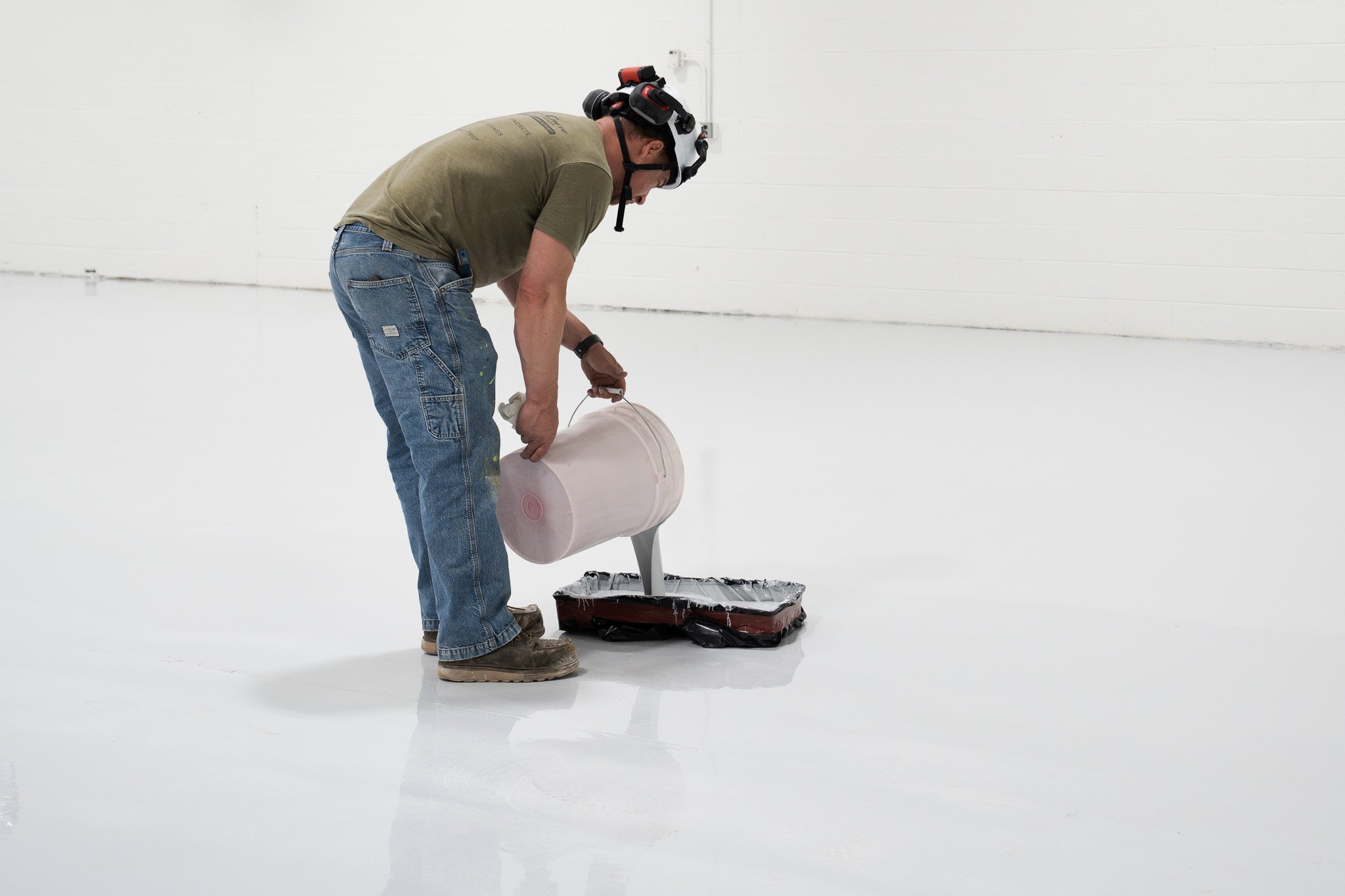
Epoxy has been used for decades in residential, commercial, and industrial flooring. Depending on the product, it can provide strong adhesion, good chemical resistance, and a durable surface. Its longer working time can also give installers more time to apply the material and decorative elements.
Polyaspartic is a type of polyurea technology known for fast curing and good abrasion and UV resistance. These properties have made it a common choice for garage floors, particularly as a protective topcoat.
However, performance varies by manufacturer and formulation. Comparing the actual products and complete flooring systems is more useful than assuming all epoxies or polyaspartics perform identically.
Which Has a Faster Installation and Cure Time?
One of the biggest differences in the polyaspartic vs epoxy comparison is cure time.
Polyaspartic materials can cure much faster than traditional epoxy products. Depending on the system and jobsite conditions, this may allow multiple coating steps to be completed in a shorter period and the garage to return to service sooner.
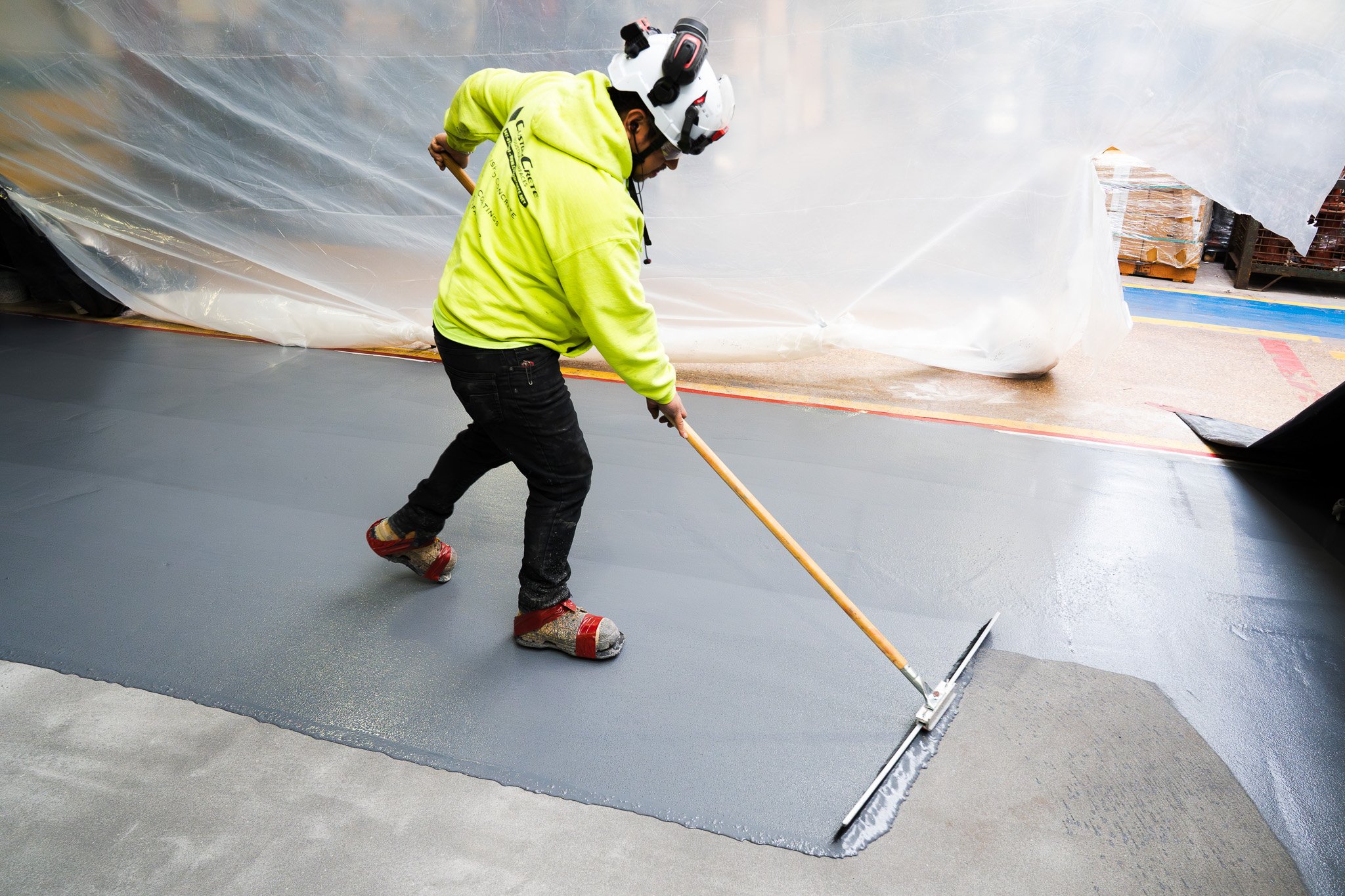
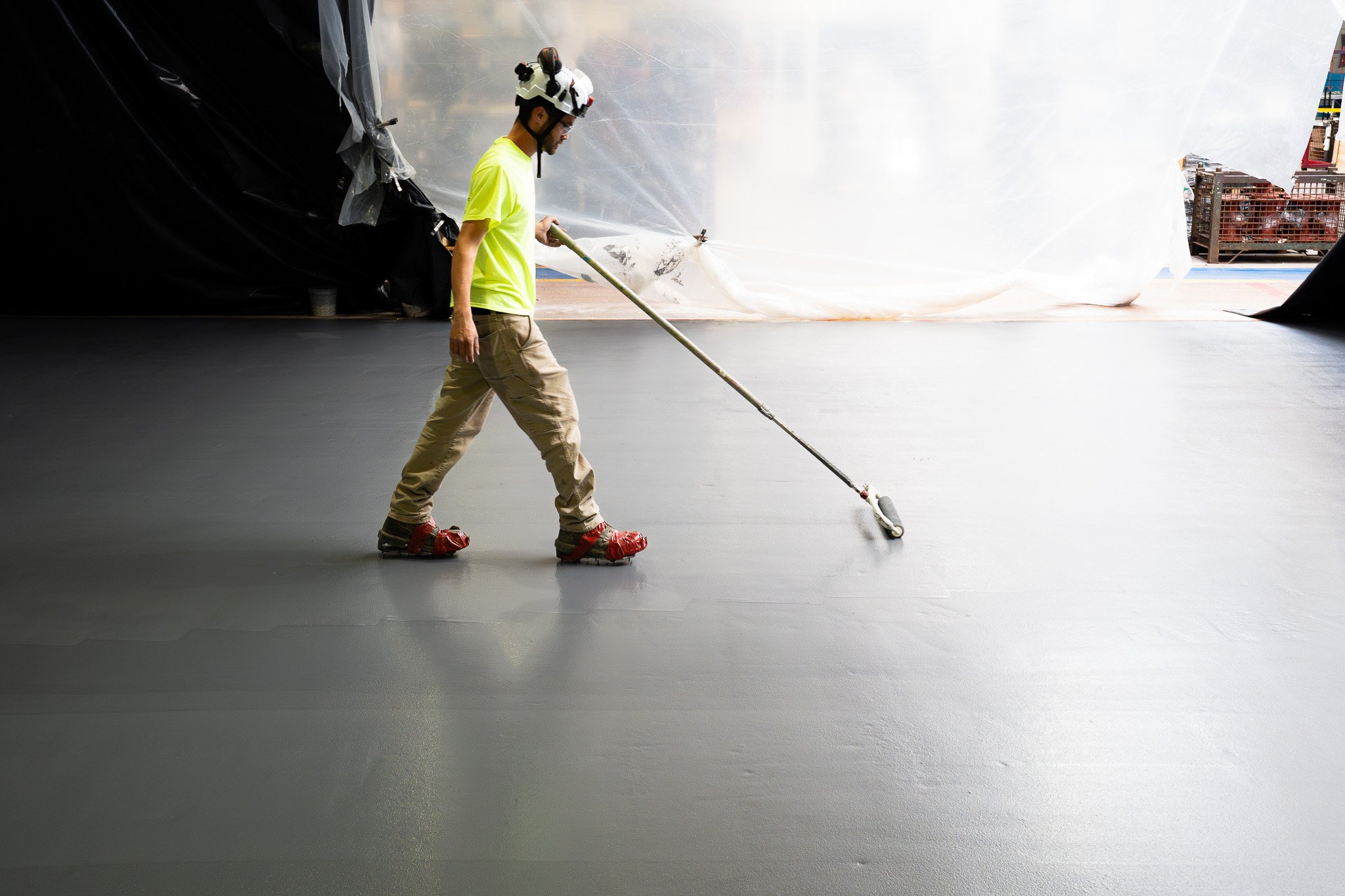
Epoxy generally cures more slowly. While that increases downtime, the longer working time can be helpful during installation. Installers have more time to spread the coating evenly and work with decorative materials before it begins to set.
Temperature, humidity, product formulation, and coating thickness can affect cure times for either material. Homeowners should follow the manufacturer's requirements before walking, storing items, or parking vehicles on a newly coated floor.
Is Polyaspartic More UV Stable Than Epoxy?
Polyaspartic generally has an advantage in areas exposed to sunlight.
Standard epoxy can discolor or amber with prolonged UV exposure. This may be particularly noticeable near garage doors where sunlight regularly reaches the floor. The change is primarily an appearance concern, but it can become significant over time.
Polyaspartic products are commonly selected for their improved UV stability. This makes them useful as topcoats where maintaining color and appearance is a priority.
One solution doesn't necessarily require choosing one material for the entire floor. A garage flooring system may use epoxy underneath for its bonding and build characteristics and a UV-stable polyaspartic material on top.
Which Is More Durable?
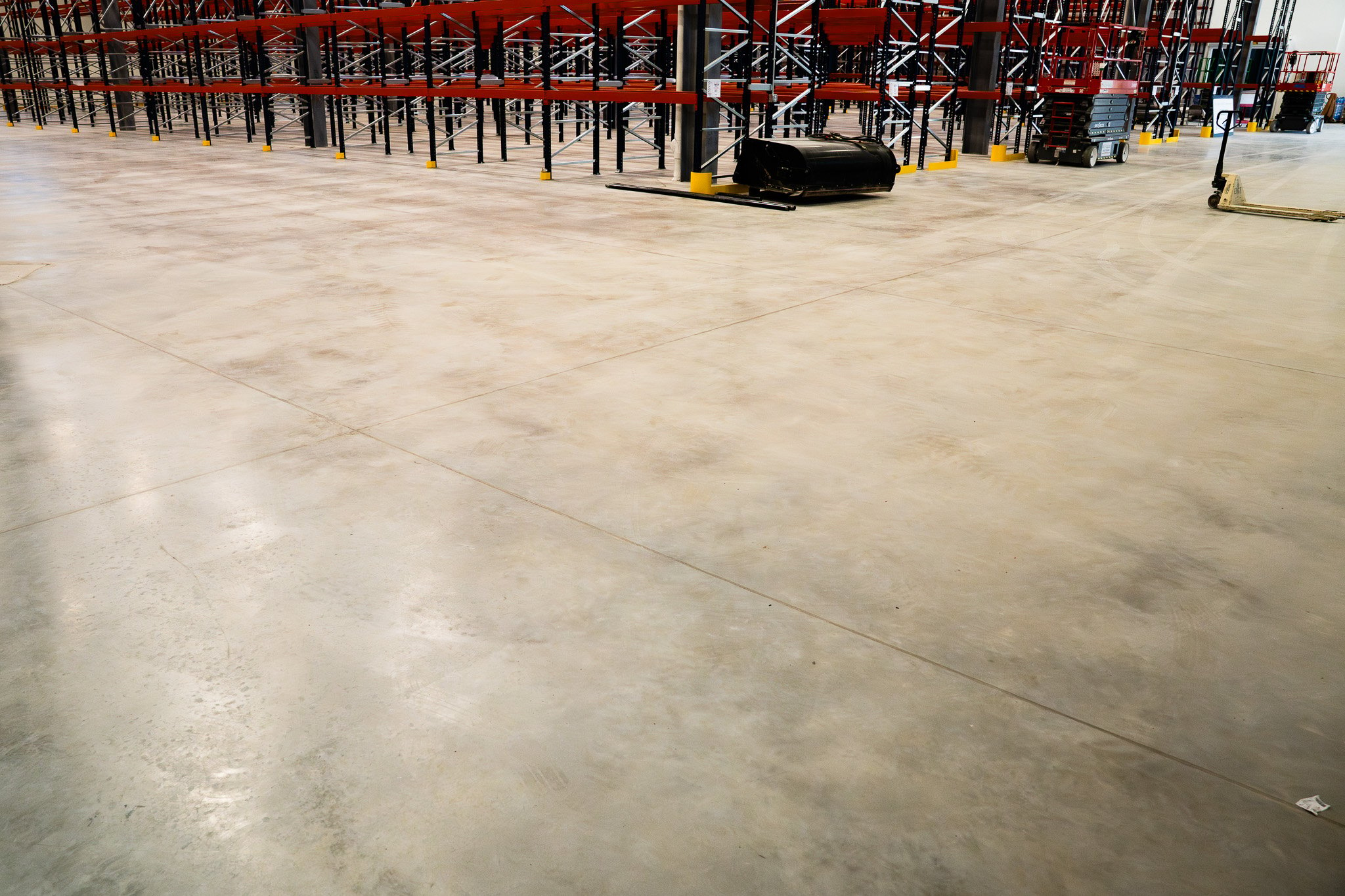
Both materials can create durable garage floors when the concrete is properly prepared and the coating is correctly installed.
Polyaspartic coatings are known for strong abrasion resistance and some flexibility, which can be beneficial under vehicle and everyday garage traffic. Epoxy can also provide strong wear and chemical resistance, although performance varies considerably between formulations.
Chemical resistance is similarly product-specific. Gasoline, automotive fluids, cleaners, road salts, and other substances may affect coatings differently depending on concentration and contact time.
Neither coating makes concrete indestructible. Heavy impacts can damage a coated floor, and cracks or movement within the underlying concrete may eventually affect the surface above.
What Do Epoxy and Polyaspartic Garage Floors Look Like?
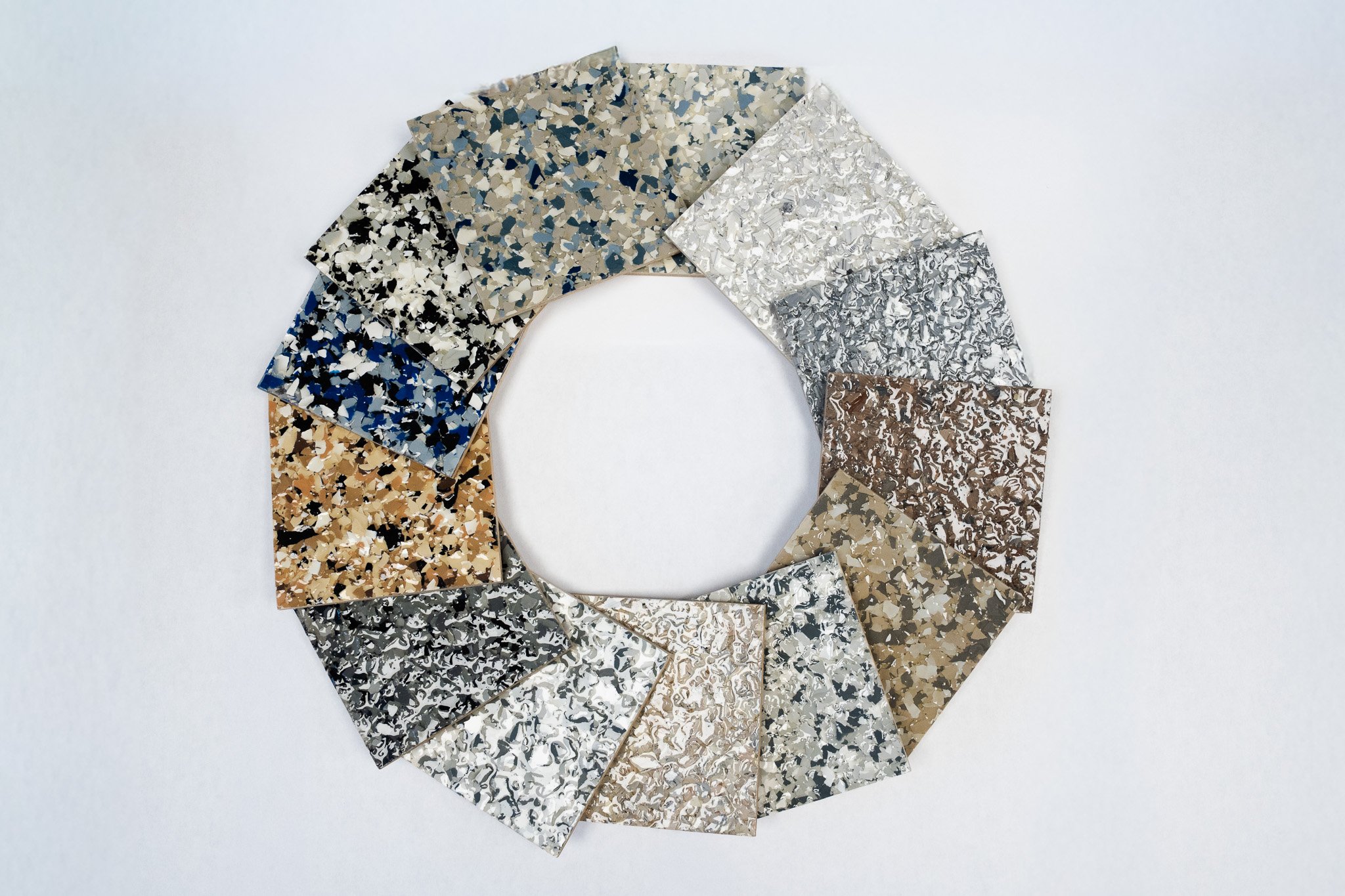
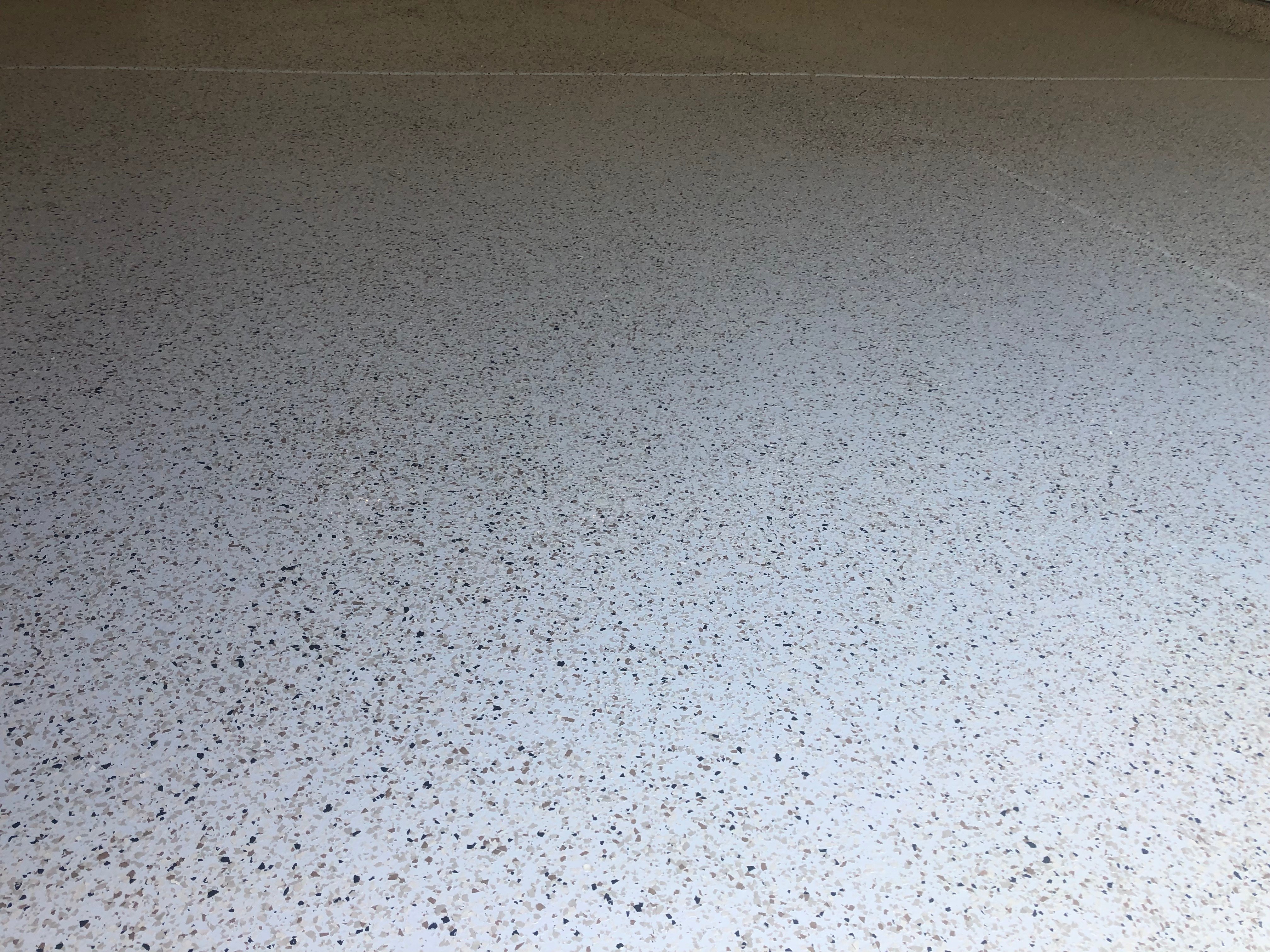
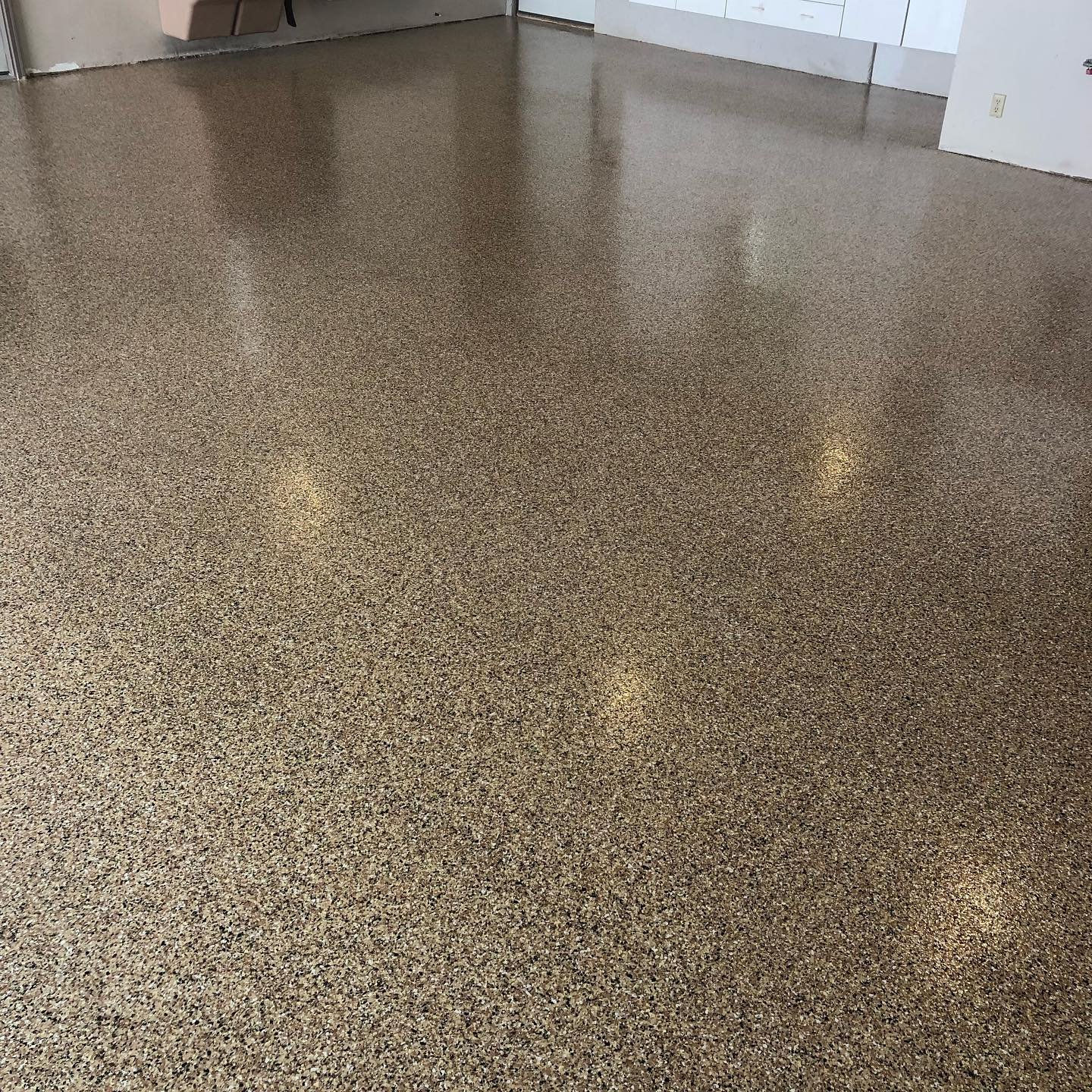
Both systems can provide a clean, finished appearance and can be customized with colors, decorative flakes, and different textures.
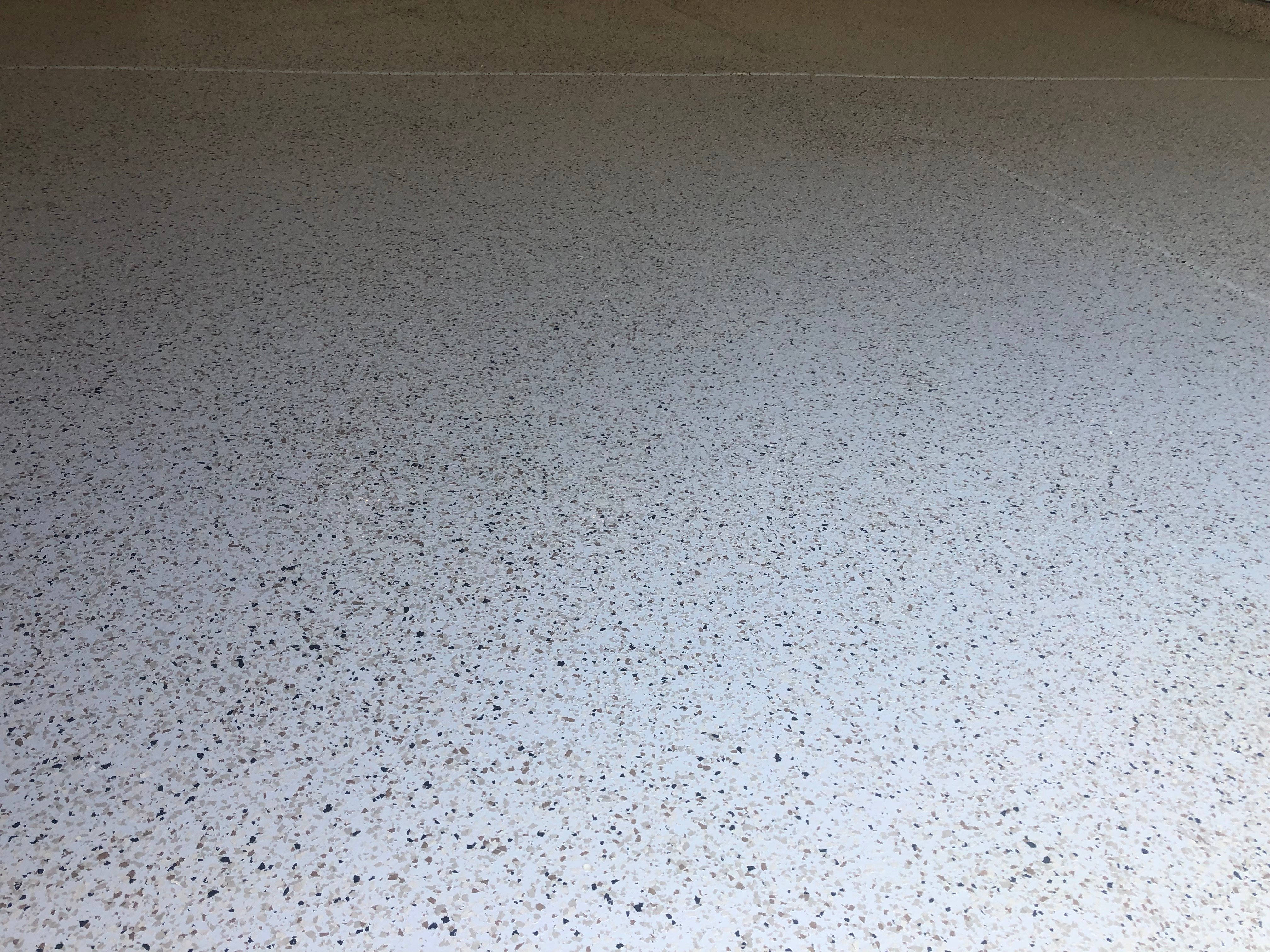
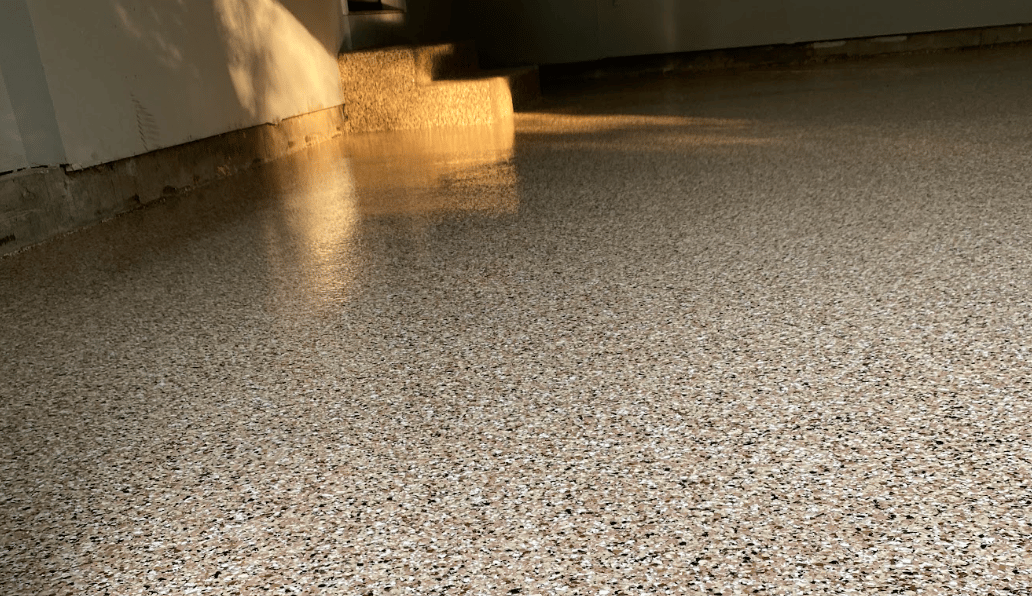
Flake systems are especially common in garages. Decorative flakes can help disguise minor visual imperfections while creating color variation across the floor. A clear protective topcoat is then typically installed over the broadcast.
From an appearance standpoint, the bigger difference may become noticeable over time. Polyaspartic's UV stability can help reduce discoloration in areas exposed to sunlight, while standard epoxy may experience more noticeable color changes.
Both surfaces are relatively easy to maintain when intact. Routine sweeping and appropriate cleaning can remove most dirt and road debris. Texture should also be considered: more aggressive slip-resistant surfaces can provide additional traction but may take more effort to clean.
How Long Do Polyaspartic and Epoxy Garage Floors Last?
There isn't a reliable single lifespan for either material.
Longevity depends on the quality of the coating, surface preparation, number and thickness of layers, concrete condition, moisture, traffic, chemical exposure, UV exposure, maintenance, and installation quality.
A high-quality epoxy system installed over properly prepared concrete can perform for many years. The same is true for a well-designed polyaspartic system.
Premature failures are often connected to more than the name of the coating. Poor preparation, unresolved moisture problems, incorrect application, or installing a product in conditions it wasn't designed to handle can shorten the service life of either system.
Is Polyaspartic More Expensive Than Epoxy?
Polyaspartic materials generally cost more than standard epoxy products, although the total project price depends on the complete flooring system.
Surface preparation, crack repairs, square footage, decorative flakes, number of layers, topcoat selection, and concrete condition can all affect the final cost. Faster cure times may also reduce downtime, which could be valuable for some homeowners.
Rather than comparing material prices alone, compare exactly what each contractor's system includes. A less expensive epoxy quote and a higher-priced polyaspartic quote may include very different preparation methods, repairs, coating thicknesses, and layers.
Final Thoughts
So, which wins the polyaspartic vs epoxy comparison? It depends on what you need from your garage floor.
Polyaspartic may be preferable when fast curing, UV stability, and abrasion resistance are priorities. Epoxy can be an excellent choice when strong adhesion, working time, build, and cost are more important. For some garages, combining epoxy base layers with a polyaspartic topcoat can provide advantages from both materials.
The coating itself is only part of the decision. Concrete condition, preparation, moisture, sunlight, traffic, appearance, budget, and expected downtime should all be considered before selecting a system.
Next, read “CustomCrete FAQ: What Is the Best Concrete Coating for a Garage Floor?” to see how these materials compare when choosing a complete system for your specific garage.

Topics:

.jpg?width=2048&height=1365&name=CC108559%20(1).jpg)
.jpeg?width=1638&height=1020&name=CC109349%20(1).jpeg)
.png?width=11520&height=9216&name=Untitled%20design%20(56).png)