
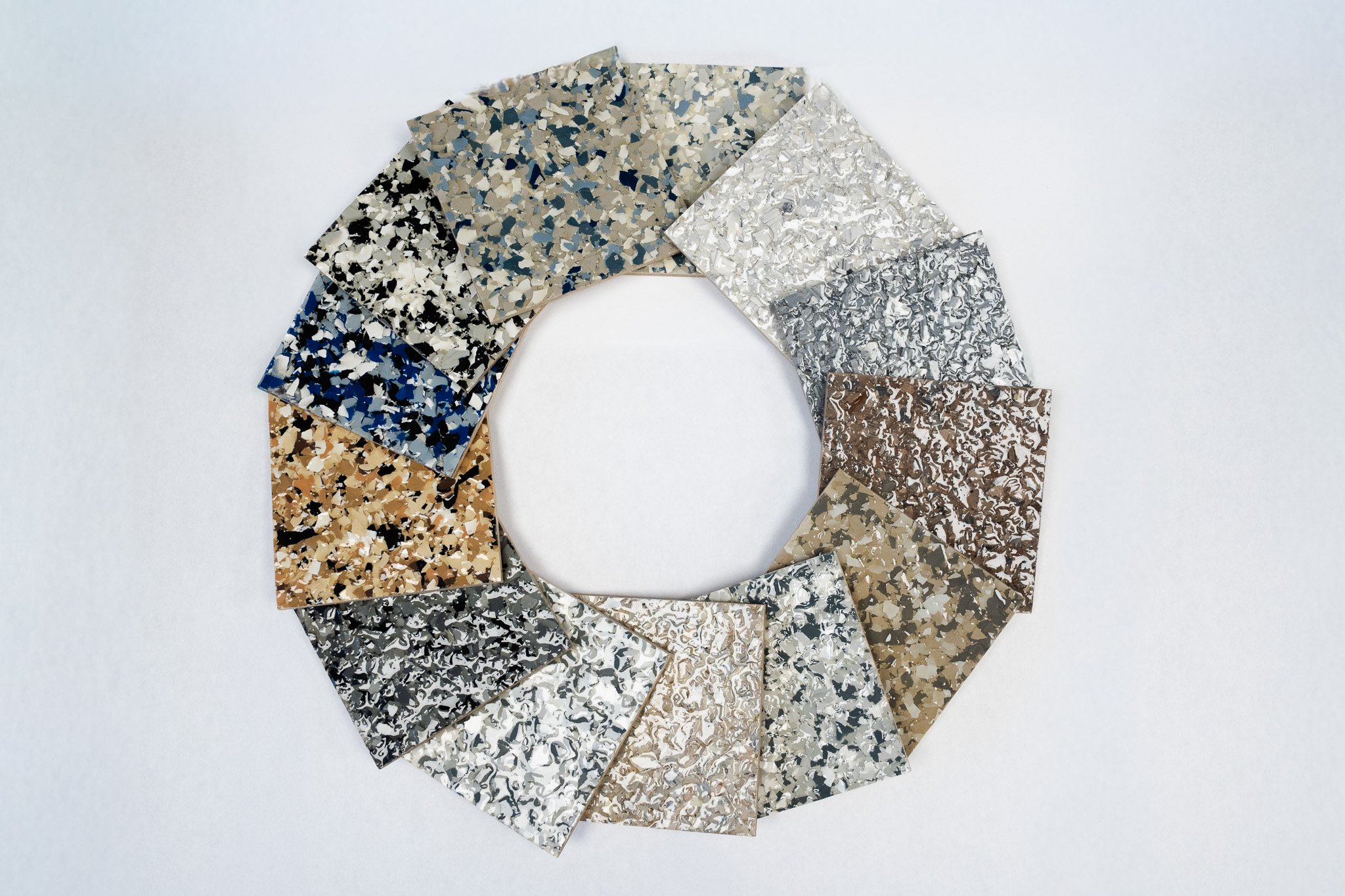
Choosing a floor color might seem like the easiest part of a flooring project—until you start looking at epoxy floor color samples. What looks great on a small sample chip can appear very different once it’s installed across a large space. Lighting, texture, and finish all play a role in how the final floor will look and perform.
Many facility managers run into issues where the installed floor doesn’t match expectations simply because they didn’t know how to interpret the samples correctly. With nearly 20 years of experience and over 1 million square feet installed, CustomCrete has helped clients navigate these decisions to ensure the final result matches both their aesthetic and operational needs.
This article explains how to understand epoxy floor color samples, the different options available, and what to expect once the floor is installed.
Key Takeaways
- Epoxy floor color samples often look different when installed due to lighting, texture, and finish.
- Different systems—solid, flake, metallic, and quartz—offer unique visual and performance benefits.
- Texture impacts both appearance and functionality, not just aesthetics.

Why Epoxy Floor Color Samples Can Be Misleading
One of the most common challenges is assuming the sample will look exactly the same once applied.
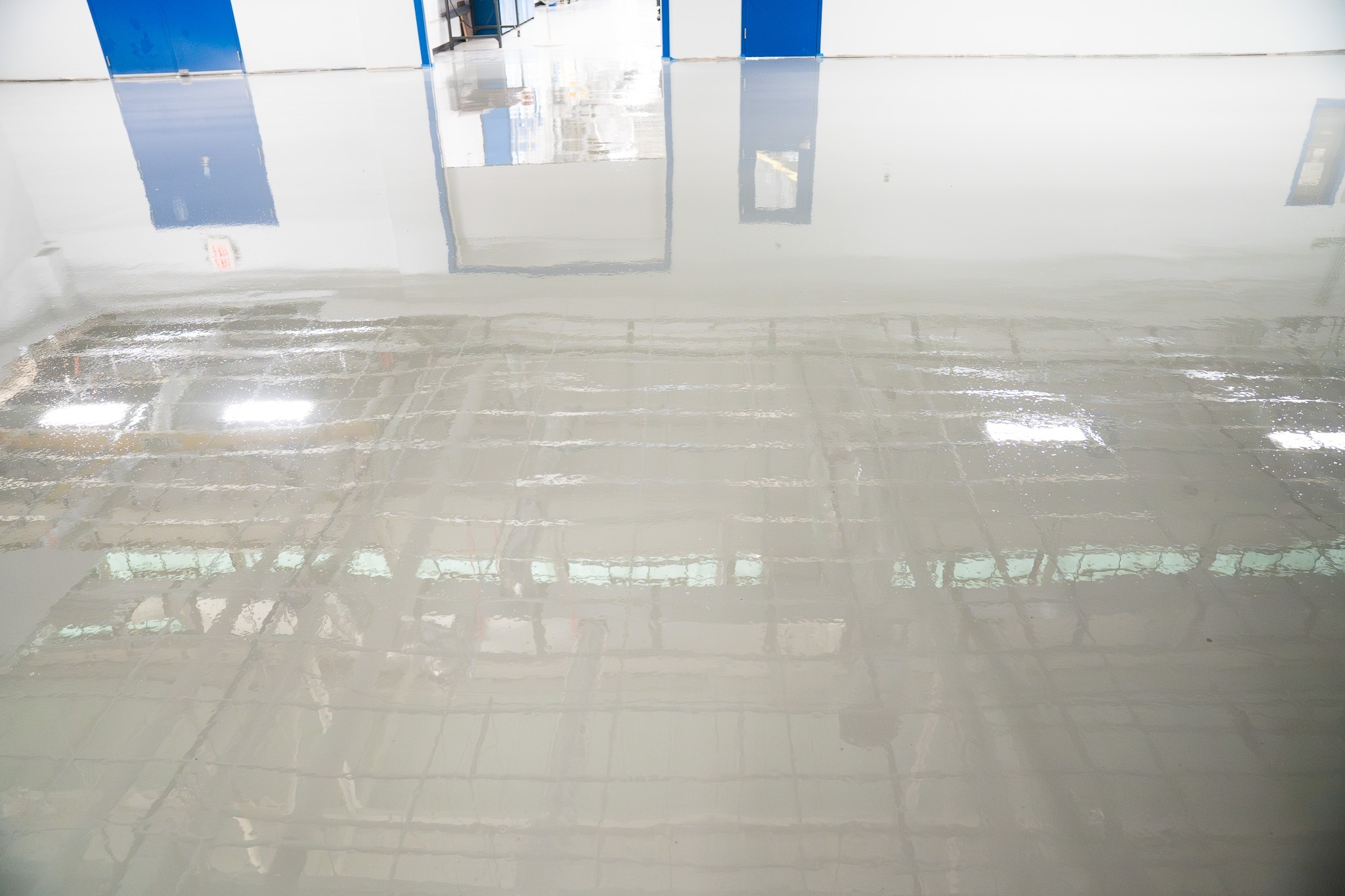
In reality, epoxy floor color samples are small representations of a much larger surface. Several factors can change how the color appears:
- Lighting conditions (natural vs artificial)
- Floor size and scale
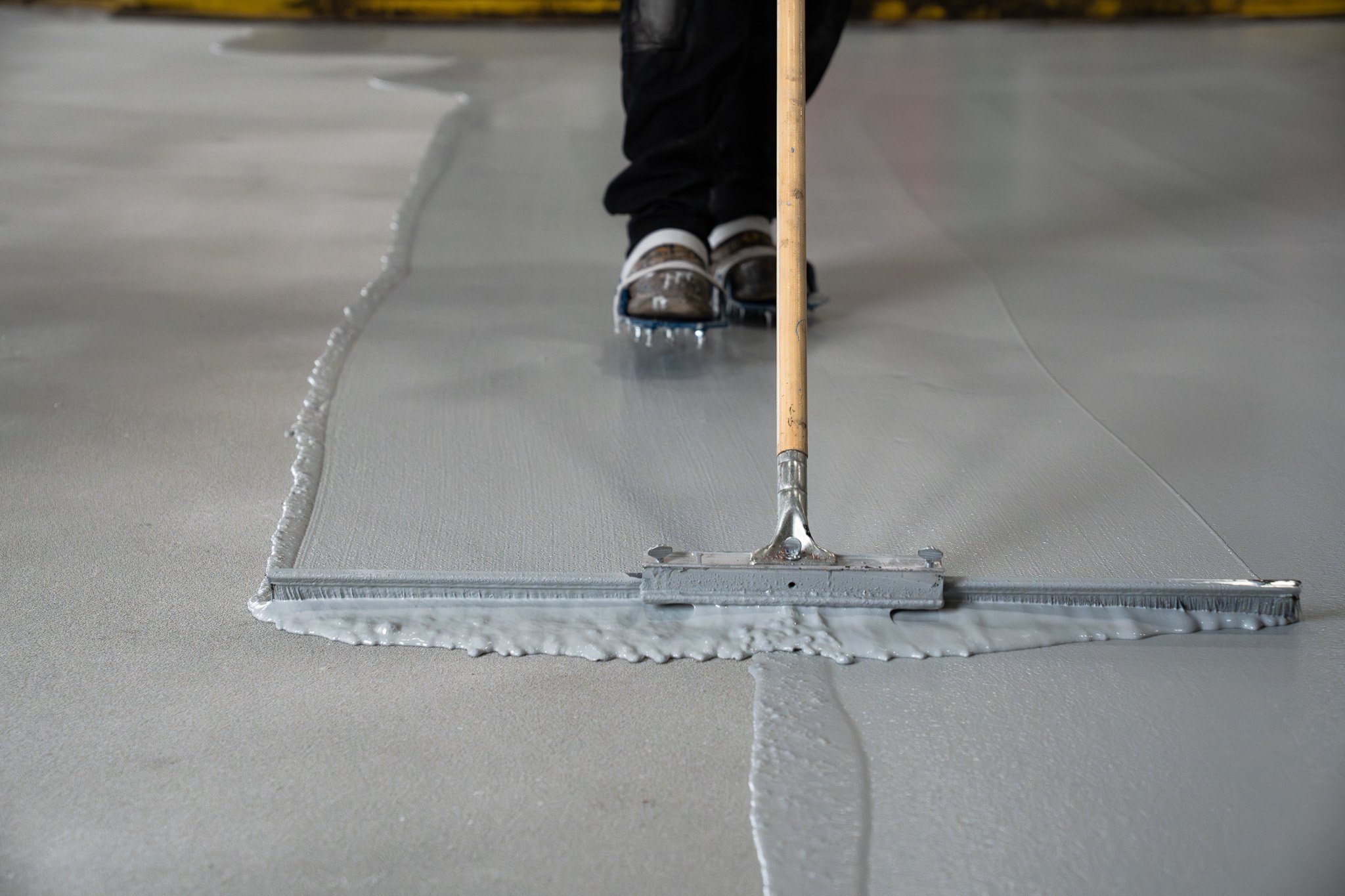
- Surface texture
- Finish type (matte, satin, gloss)
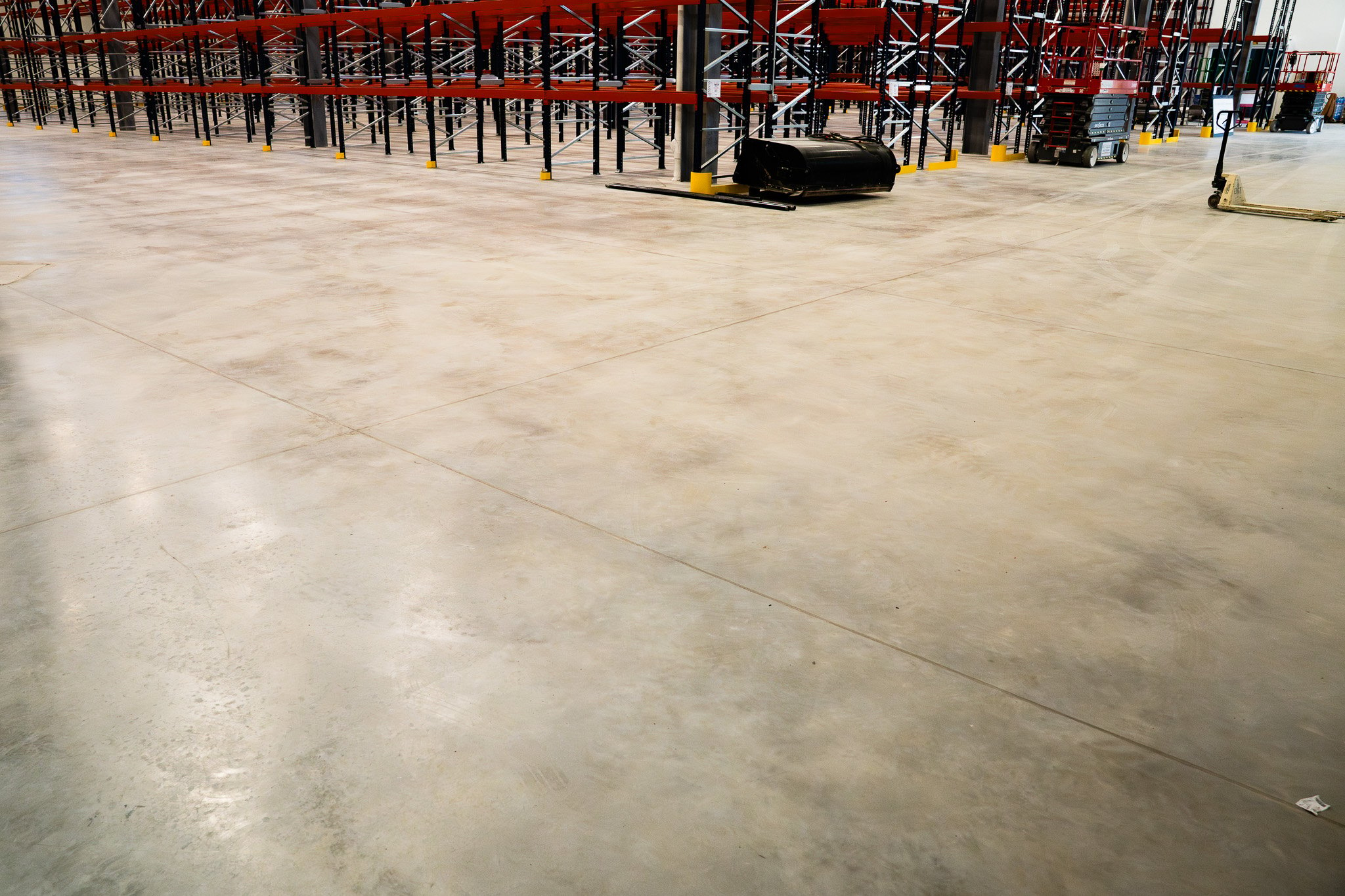
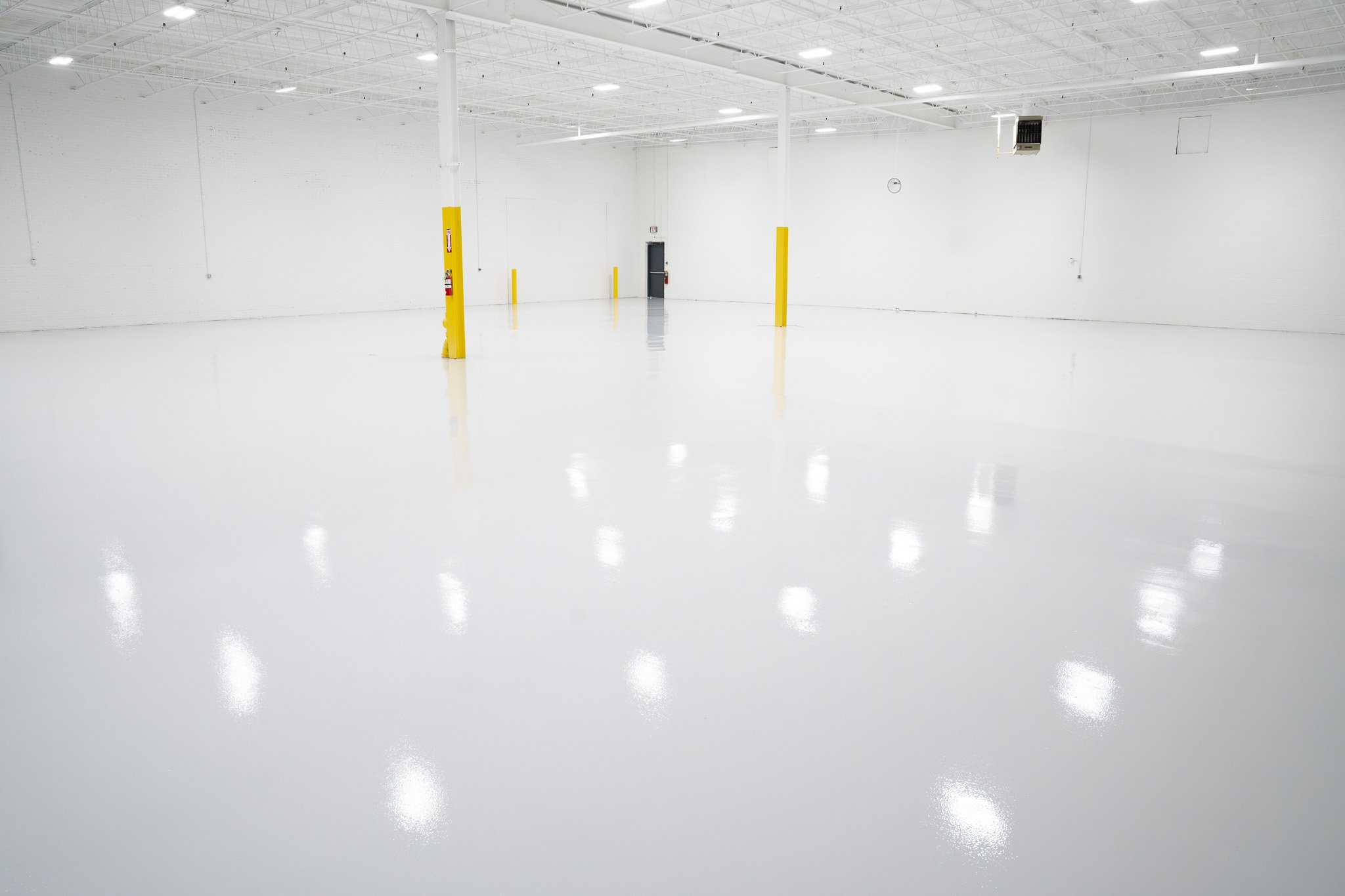
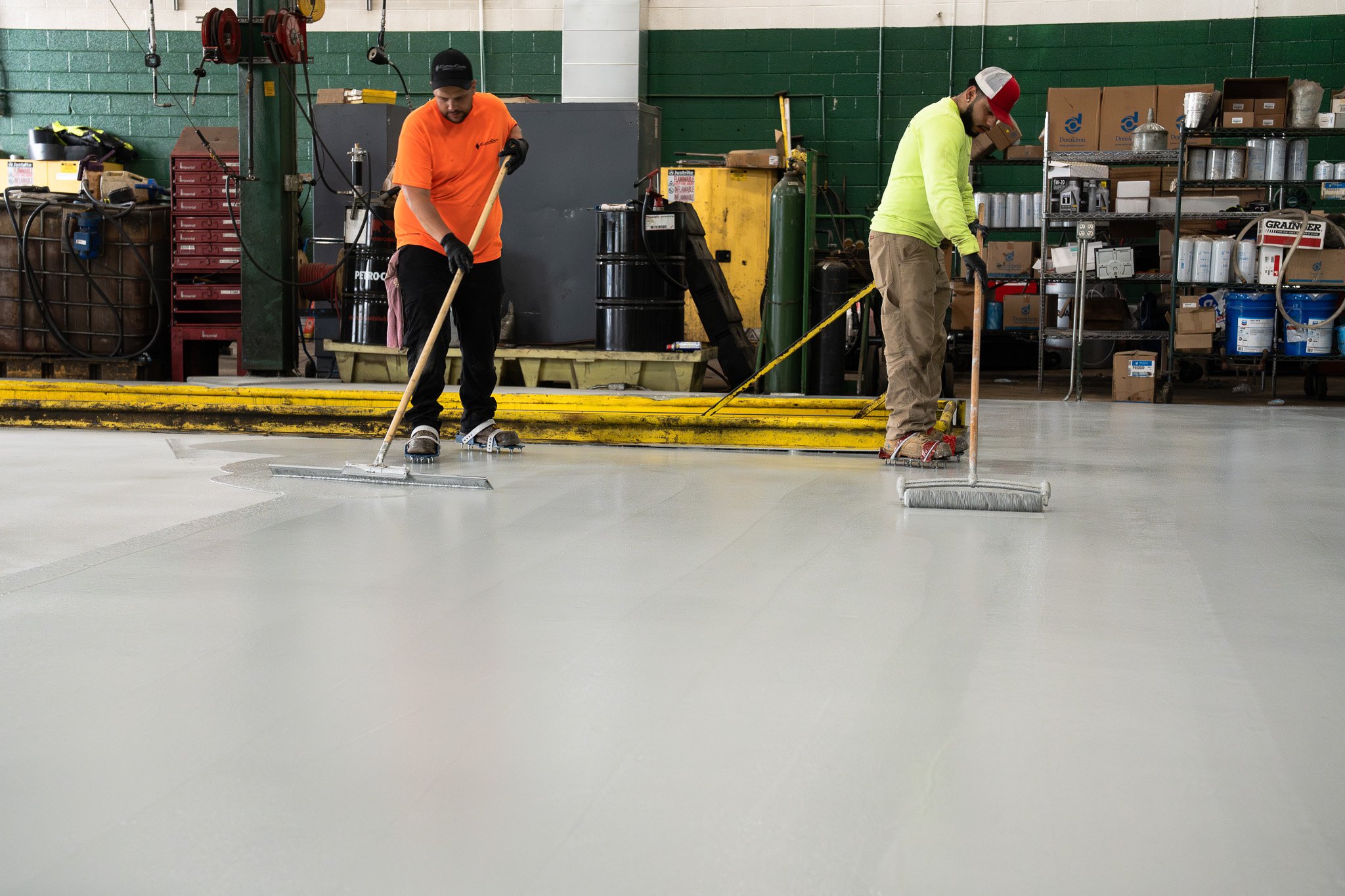
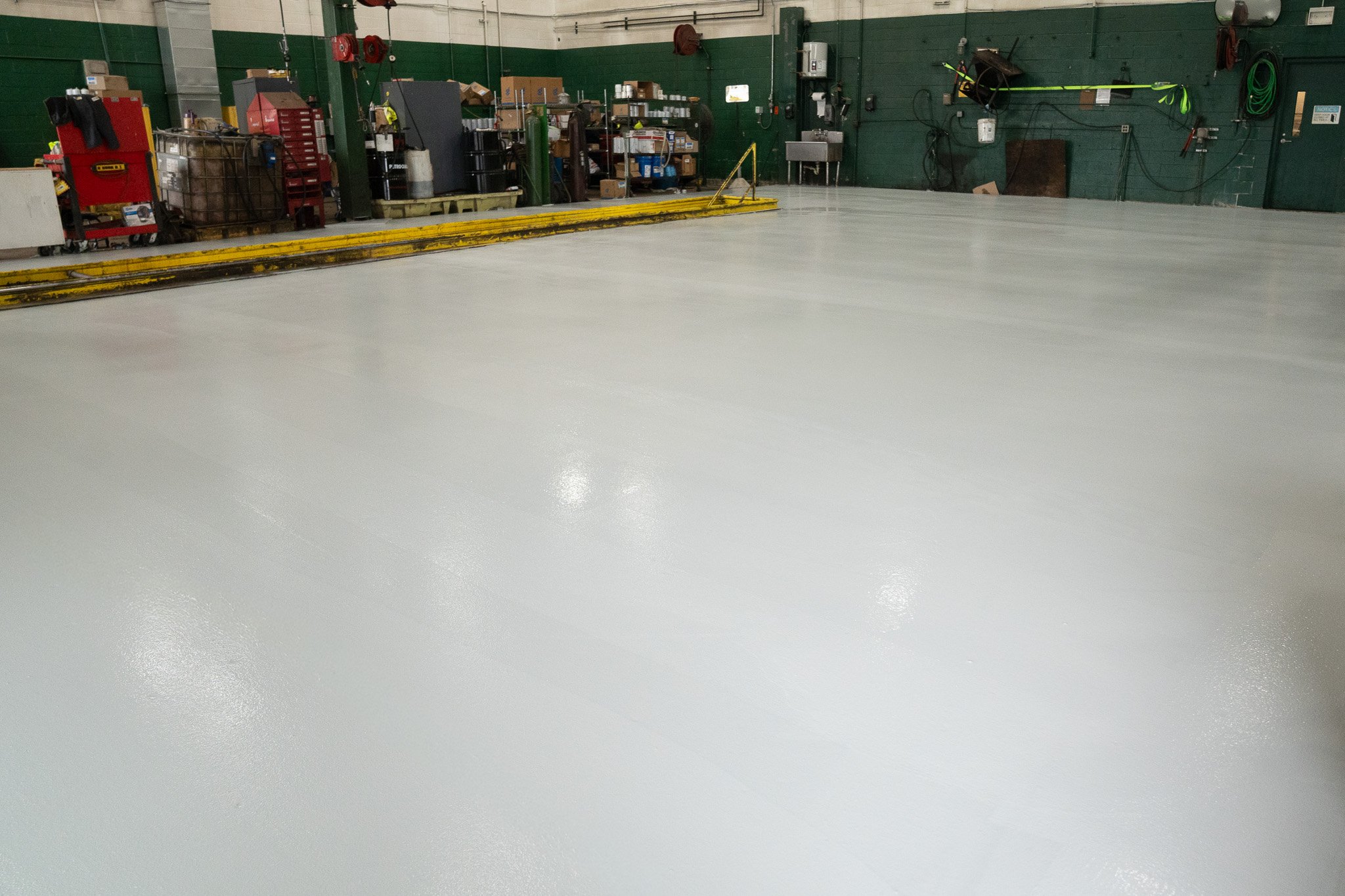
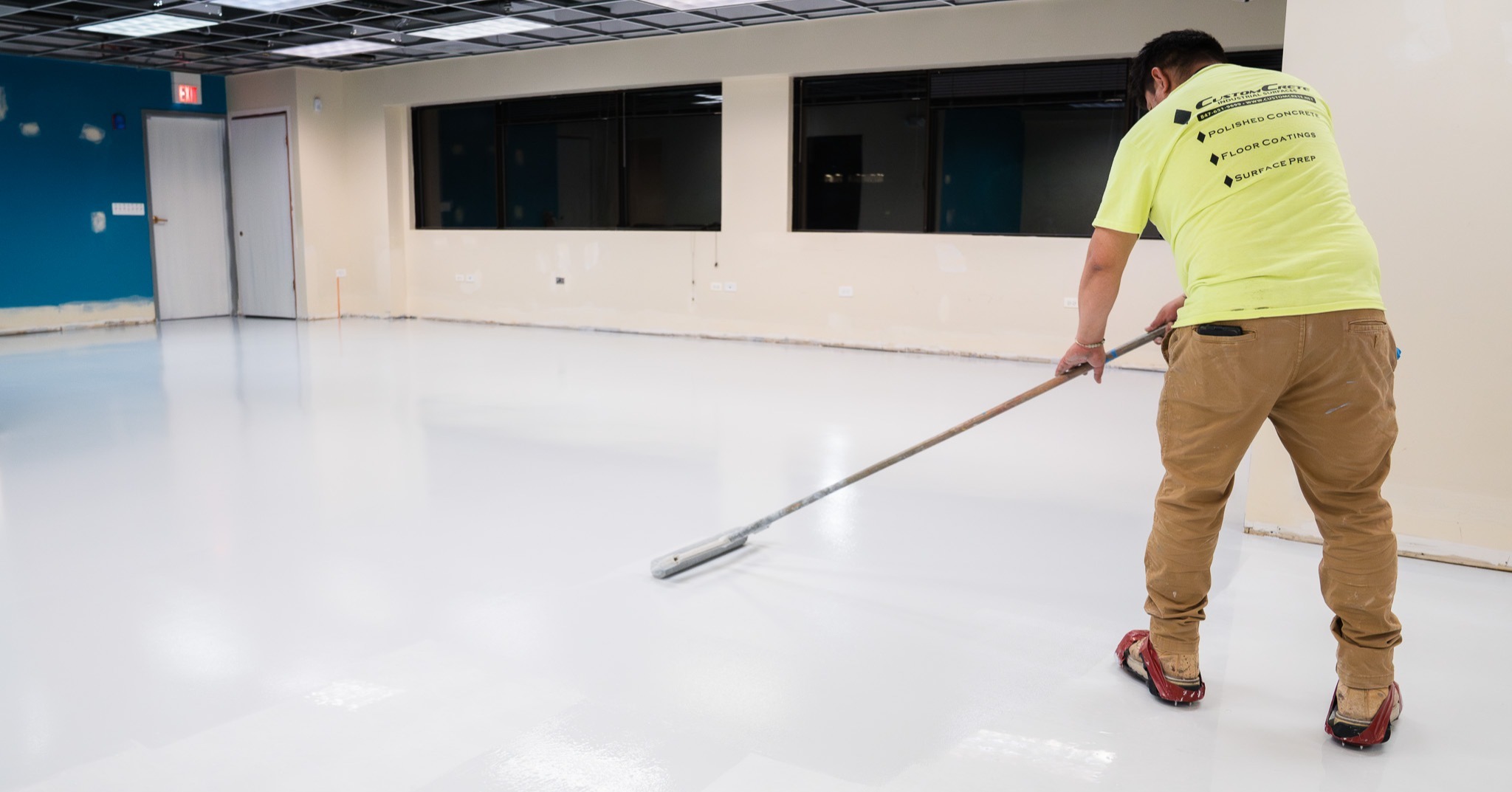
- Wall and ceiling color (Featured in photo below)
Understanding these variables helps set realistic expectations before installation.
Common Types of Epoxy Floor Color Options
There are several types of epoxy systems, each offering a different look and performance profile.
Solid Color Epoxy
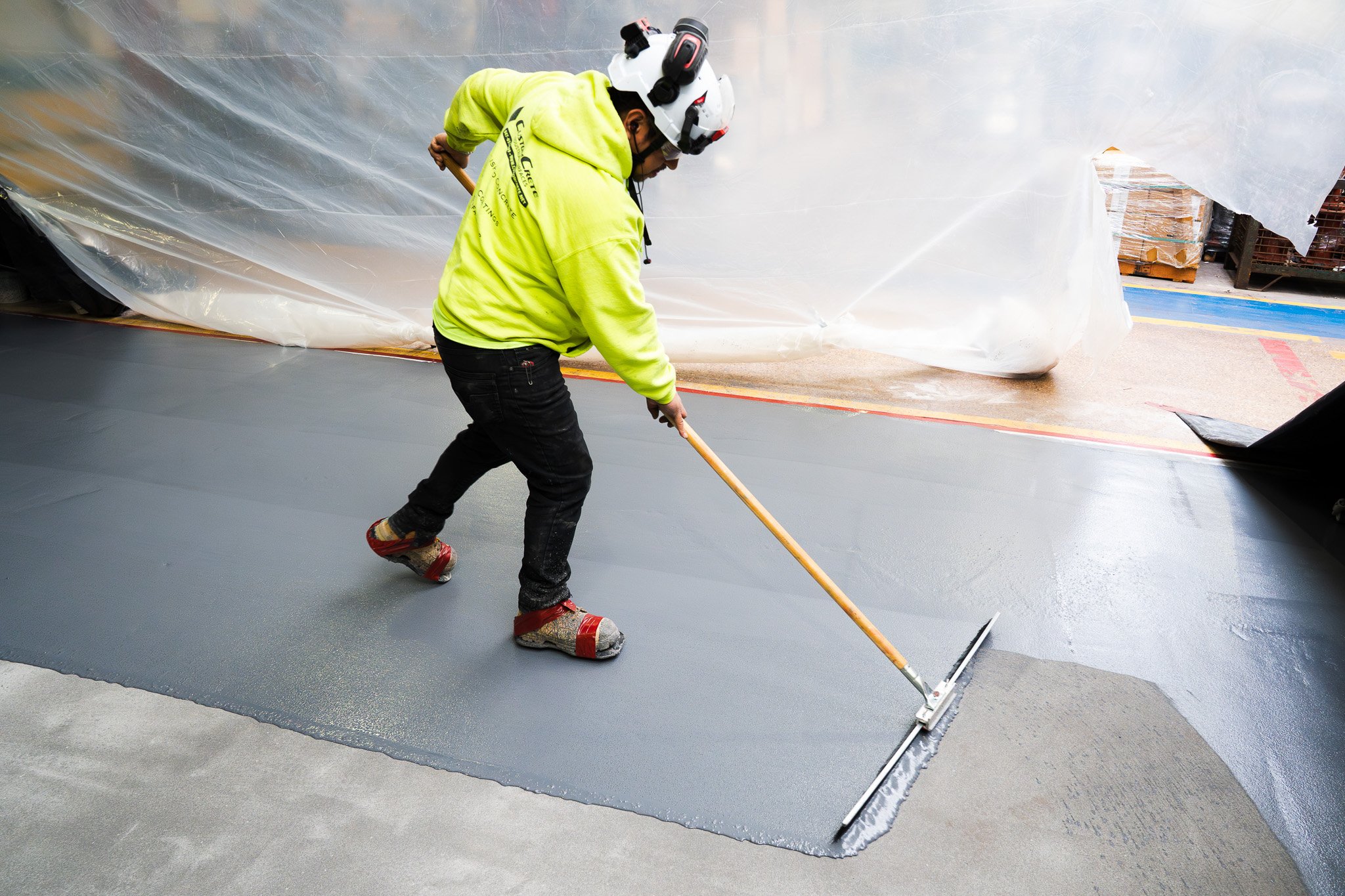
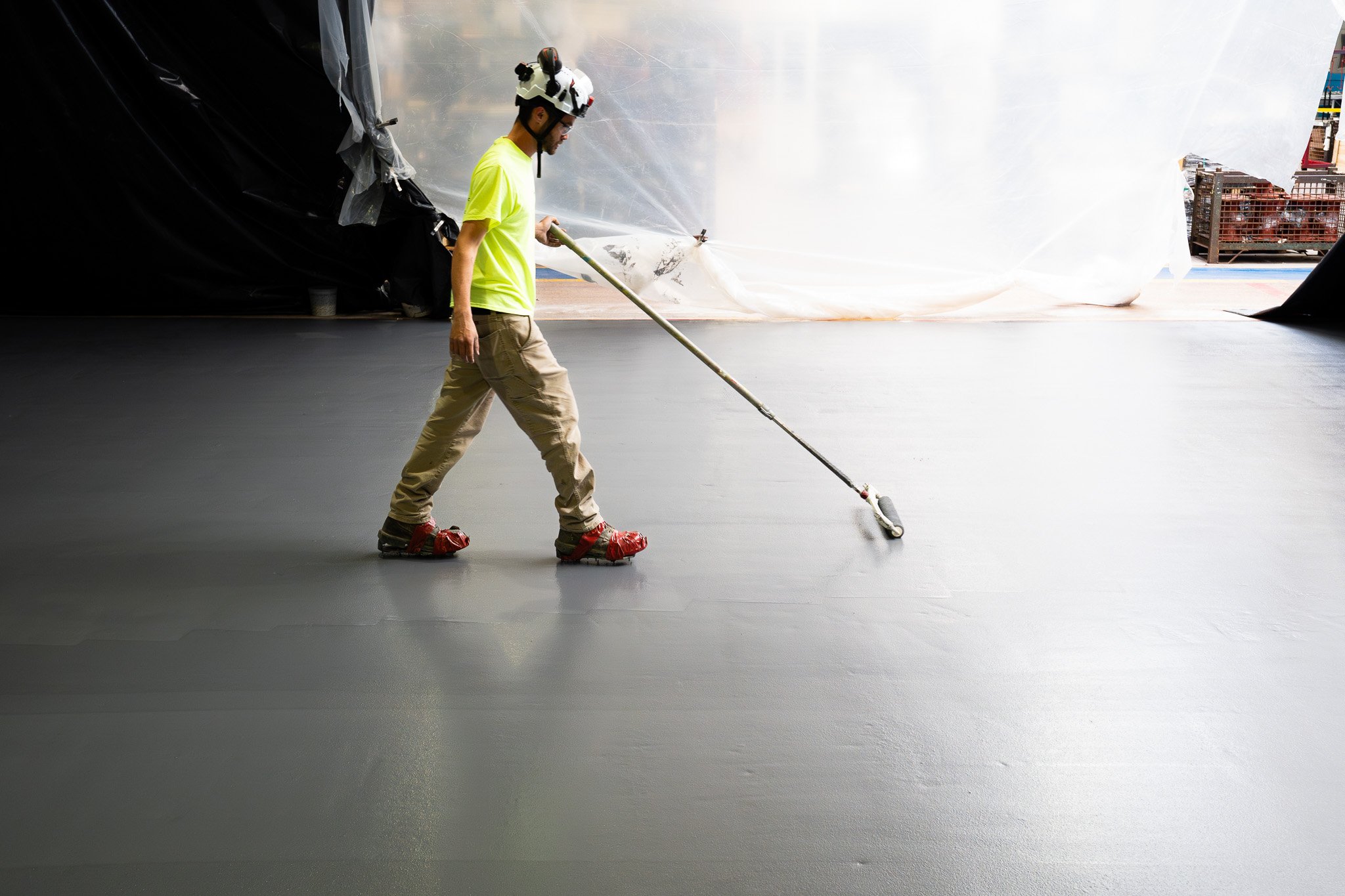
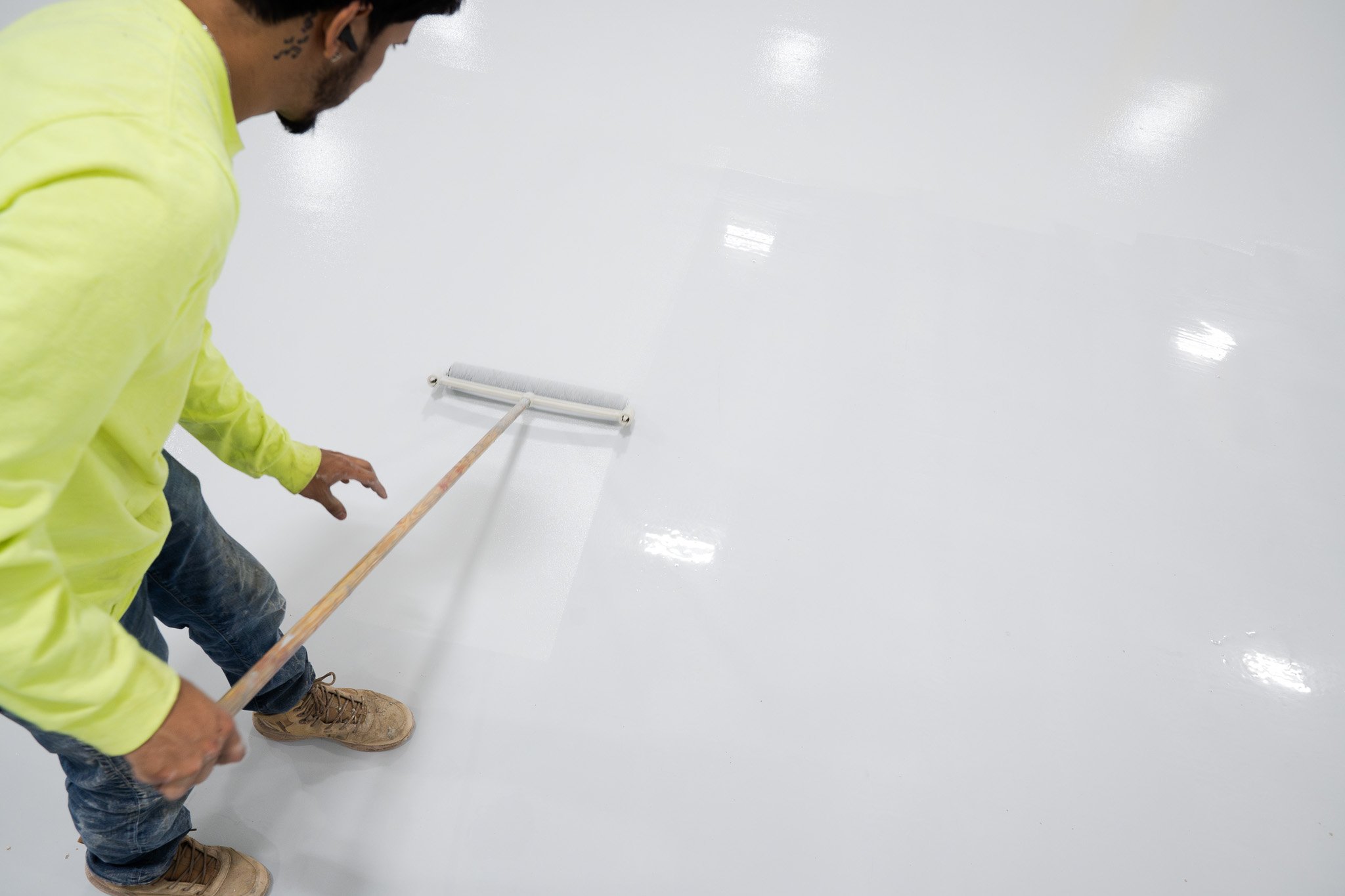
Solid color systems provide a clean, uniform appearance across the entire floor.
What to Expect:
- Consistent color throughout
- Smooth, seamless finish
- Easy to clean
Best For:
- Warehouses
- Commercial spaces
- Industrial facilities
When reviewing epoxy floor color samples, solid colors are the most straightforward—but they can show wear and imperfections more easily than other options.
Flake Systems
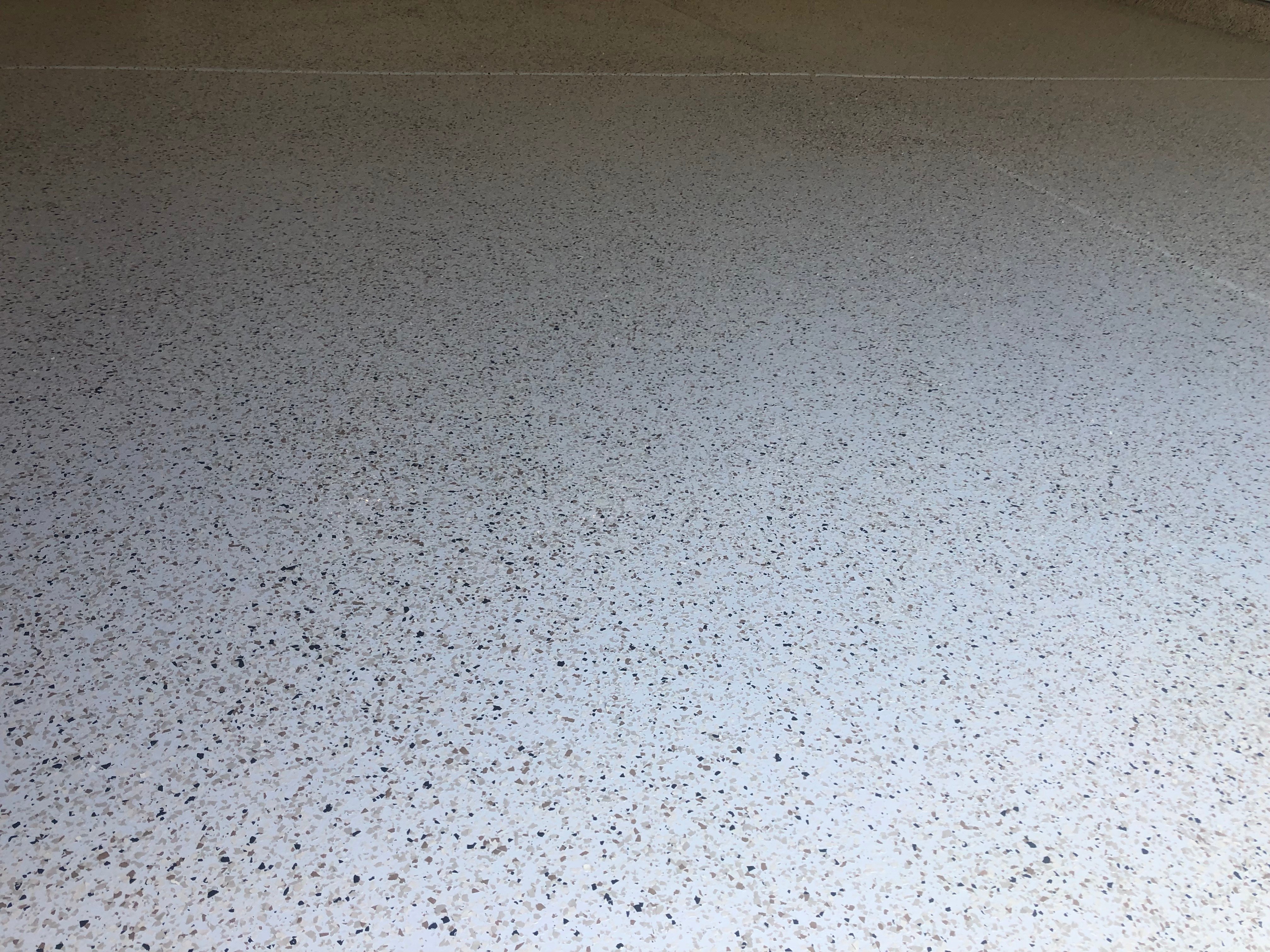
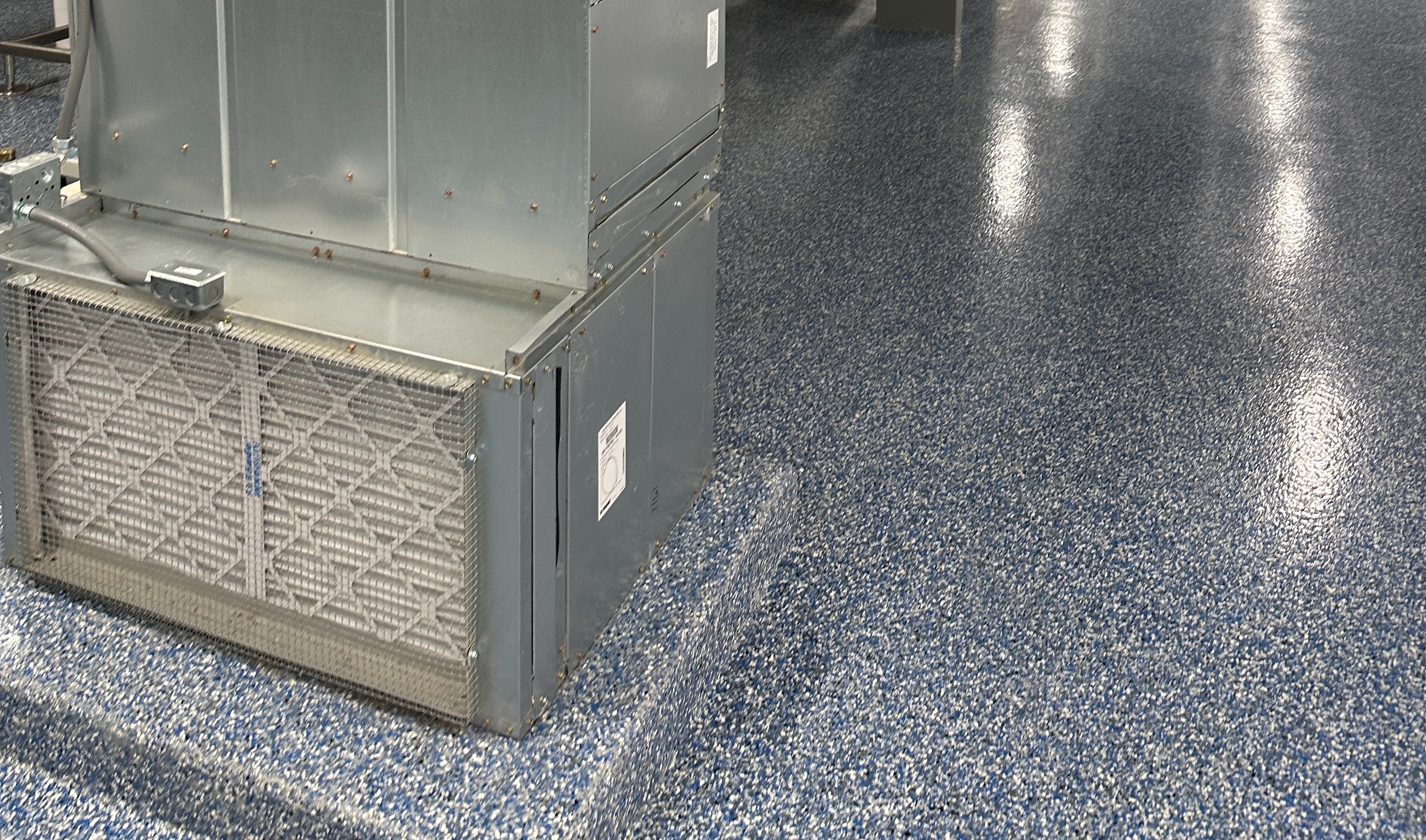
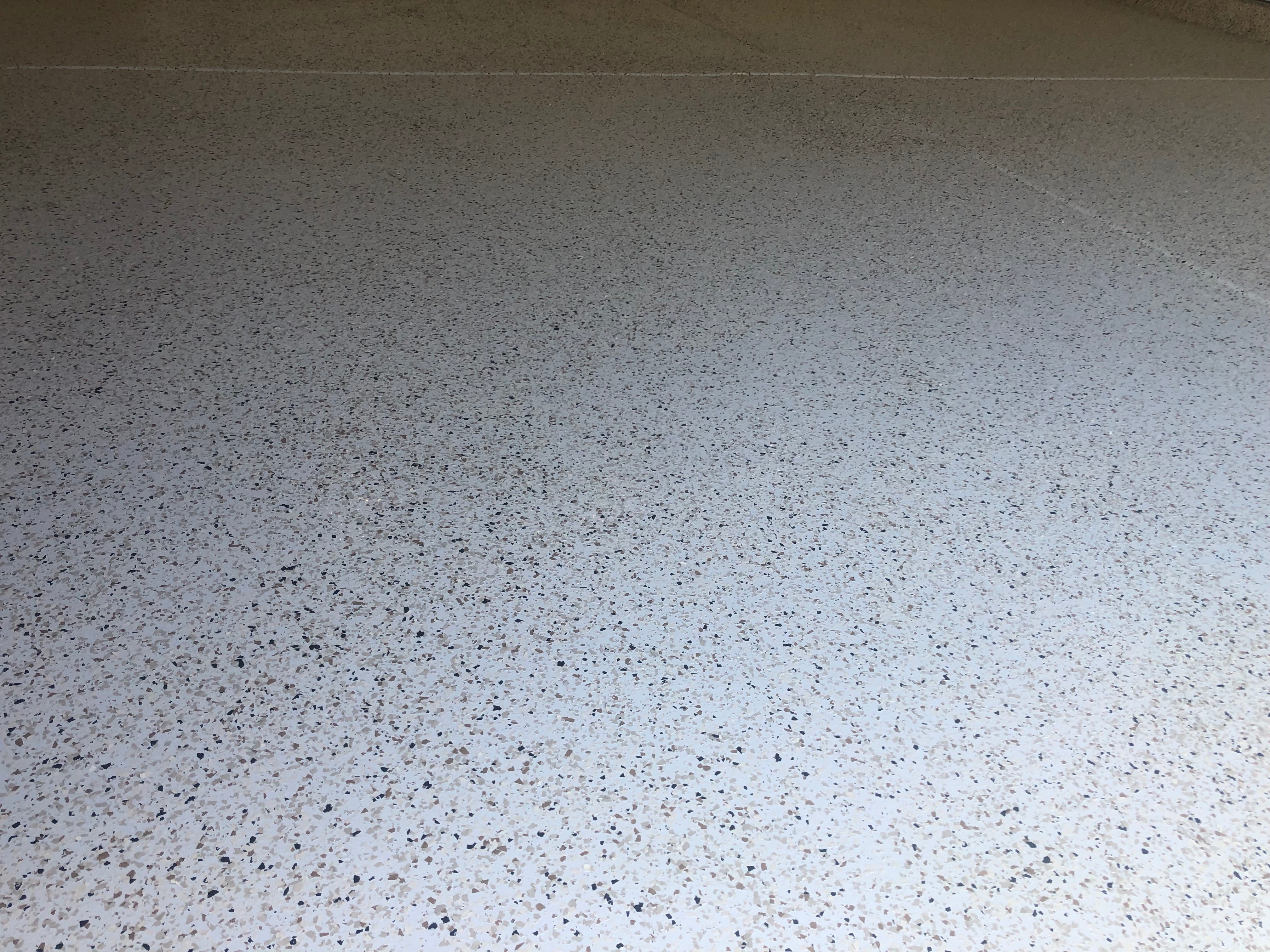
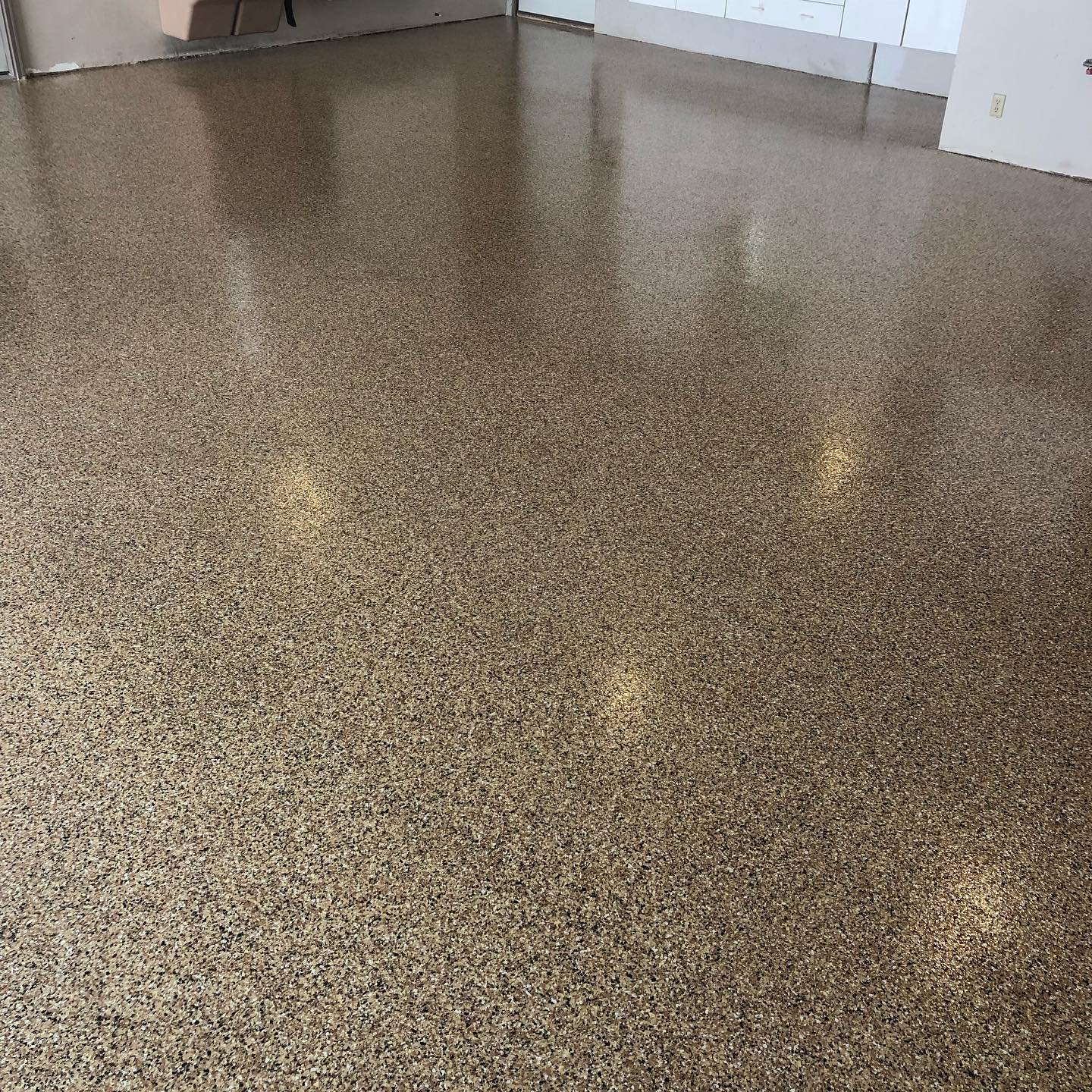
Flake systems incorporate colored vinyl chips into the epoxy, creating a textured, multi-tone appearance.
What to Expect:
- Varied color blends
- Textured surface
- Improved slip resistance
- Better ability to hide dirt and wear
Best For:
- Locker rooms
- Retail back-of-house areas
- Commercial spaces needing durability
Flake systems often look different in person than in epoxy floor color samples because the flakes create depth and variation across the surface.
Metallic Epoxy
Metallic epoxy creates a high-end, decorative finish with movement and depth.
What to Expect:
- Unique, one-of-a-kind patterns
- Reflective, dynamic appearance
- Visual variation across the floor
Best For:
- Showrooms
- Lobbies
- Retail spaces
- Breakrooms
No two metallic floors are the same, which means epoxy floor color samples are only a general representation of the final look.
Quartz Systems
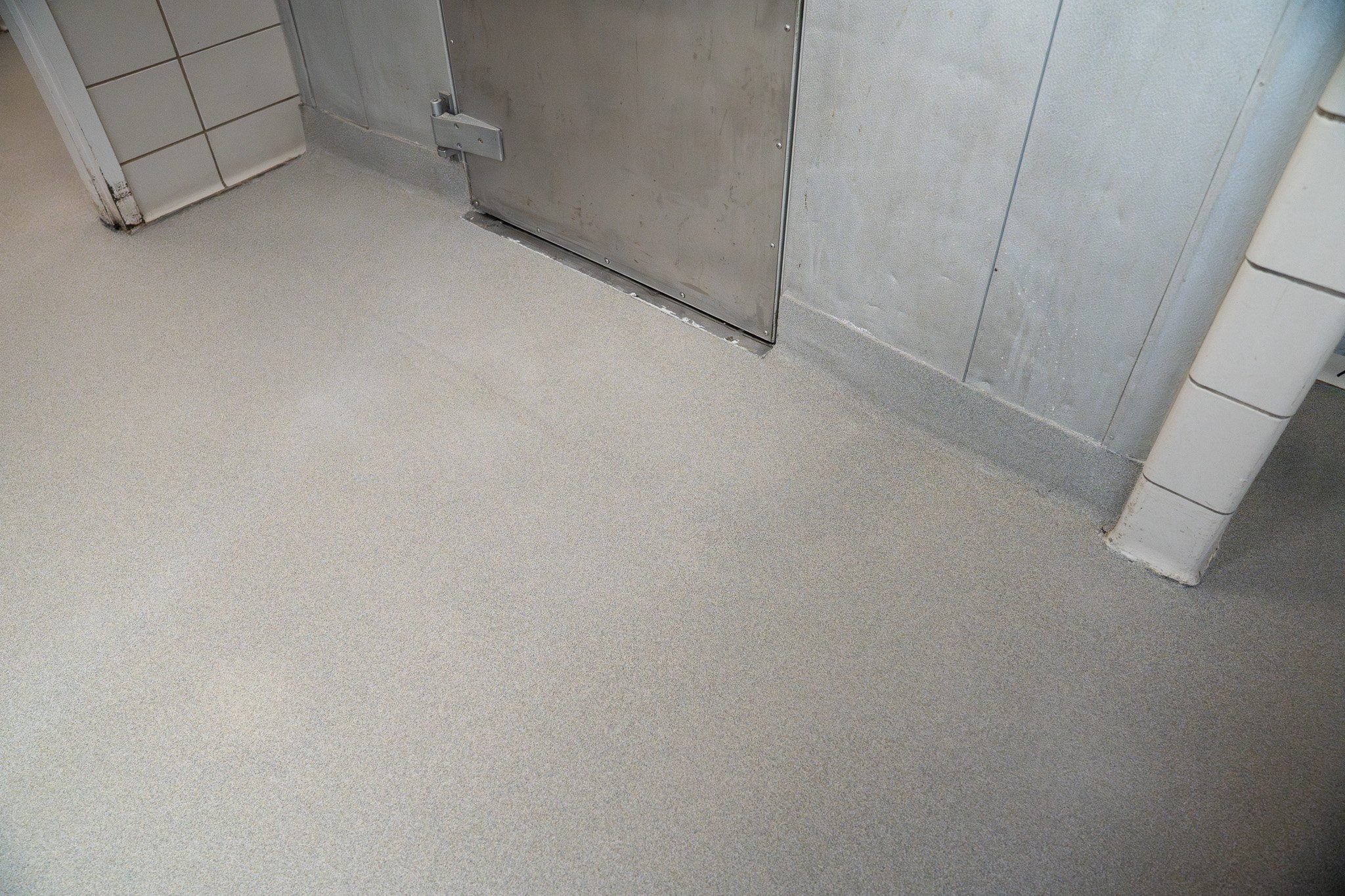
Quartz systems combine colored quartz aggregates with resin to create a highly durable and textured surface.
What to Expect:
- Strong, slip-resistant finish
- Multi-layer system
- High durability
Best For:
- Industrial environments
- Food and beverage facilities
- Areas requiring safety and durability
Quartz systems offer both performance and aesthetics, making them a popular choice in demanding environments.
The Role of Texture in Appearance and Performance
Texture not only affects safety but also changes how color is perceived.
- Smooth surfaces reflect light evenly
- Textured surfaces scatter light, softening the color
- Heavier textures can slightly darken the overall appearance
Texture also impacts:
- Slip resistance
- Cleanability
- Maintenance requirements
Balancing these factors is key when choosing from epoxy floor color samples.
Matching Color to Your Facility
The best color choice depends on how the space will be used.
Industrial and Warehouse Spaces
- Mid-tone or darker colors help hide wear and tire marks
- Flake or textured systems improve durability
Commercial and Retail Spaces
- Lighter colors create a clean, open feel
- Satin or gloss finishes enhance appearance
Safety and Functionality
Color can also be used for line striping to create:
- Walkways and traffic lanes
- Safety zones
- Equipment boundaries
Choosing the right color from epoxy floor color samples can improve both appearance and function.
Tips for Choosing the Right Color
To make the best decision:
- View samples under your facility’s lighting
- Consider how the floor will be used daily
- Think about long-term maintenance
- Ask how texture and finish will affect the final look
- Understand that large-scale application will differ from small samples
These steps help ensure your expectations match the final result.
Common Mistakes to Avoid
When reviewing epoxy floor color samples, avoid:
- Choosing based only on appearance
- Ignoring lighting conditions
- Not considering wear and maintenance
- Expecting exact matches to small samples
Avoiding these mistakes can prevent costly changes after installation.
FAQ: Epoxy Floor Color Samples
Will the final floor look exactly like the sample?
Not always. Lighting, texture, and scale can change the appearance.
Which system hides wear best?
Flake and quartz systems are best at hiding dirt and imperfections.
Can colors be customized?
Yes, many epoxy systems offer custom color blends.

Final Thoughts
Understanding how to interpret epoxy floor color samples is key to making the right decision for your space. Color, finish, and texture all work together to influence both the look and performance of your floor.
By considering lighting, usage, and maintenance needs, you can choose a system that meets both your design goals and operational requirements.
To explore available options and see how different systems compare, visit CustomCrete’s color chart page to view the full range of epoxy flooring colors and finishes.
Topics:


.jpg?width=2048&height=1365&name=CC108559%20(1).jpg)

.jpeg?width=1638&height=1020&name=CC109349%20(1).jpeg)
.png?width=11520&height=9216&name=Untitled%20design%20(56).png)