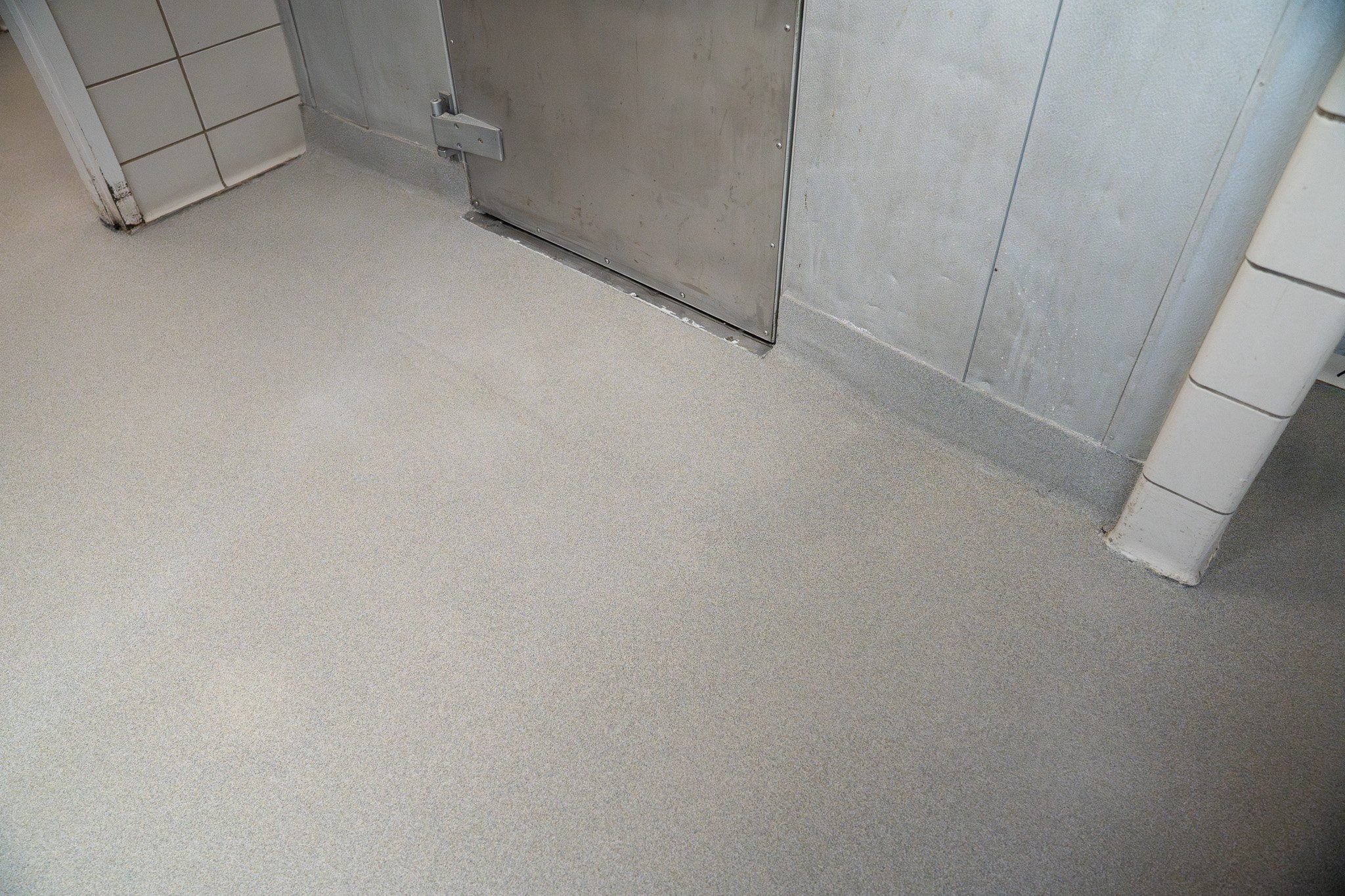

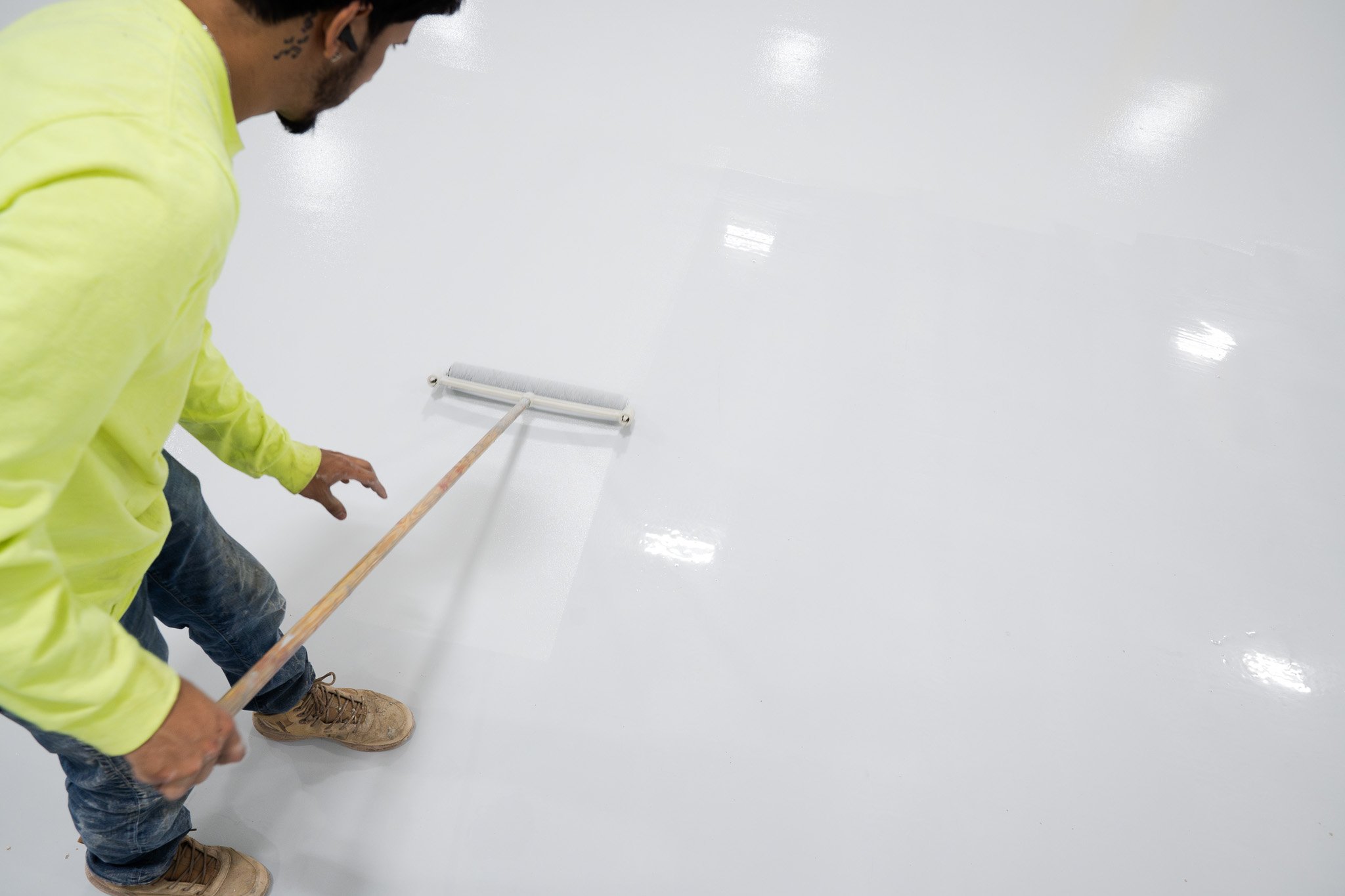
If your facility has tile floors that are worn, outdated, or difficult to maintain, you may be wondering if there’s a way to upgrade them without full removal. One question comes up often: can you install epoxy over tile?
The short answer is yes—under the right conditions. However, success depends heavily on surface preparation, the condition of the tile, and how the system is installed. Skipping key steps can lead to peeling, cracking, or early failure.
This guide explains when epoxy over tile is a practical option, what preparation is required, and what limitations to consider before moving forward.

Is Epoxy Over Tile a Good Idea?
Installing epoxy over tile can be a cost-effective alternative to removing and replacing the floor—especially in commercial kitchens, retail spaces, restrooms, or light industrial areas.
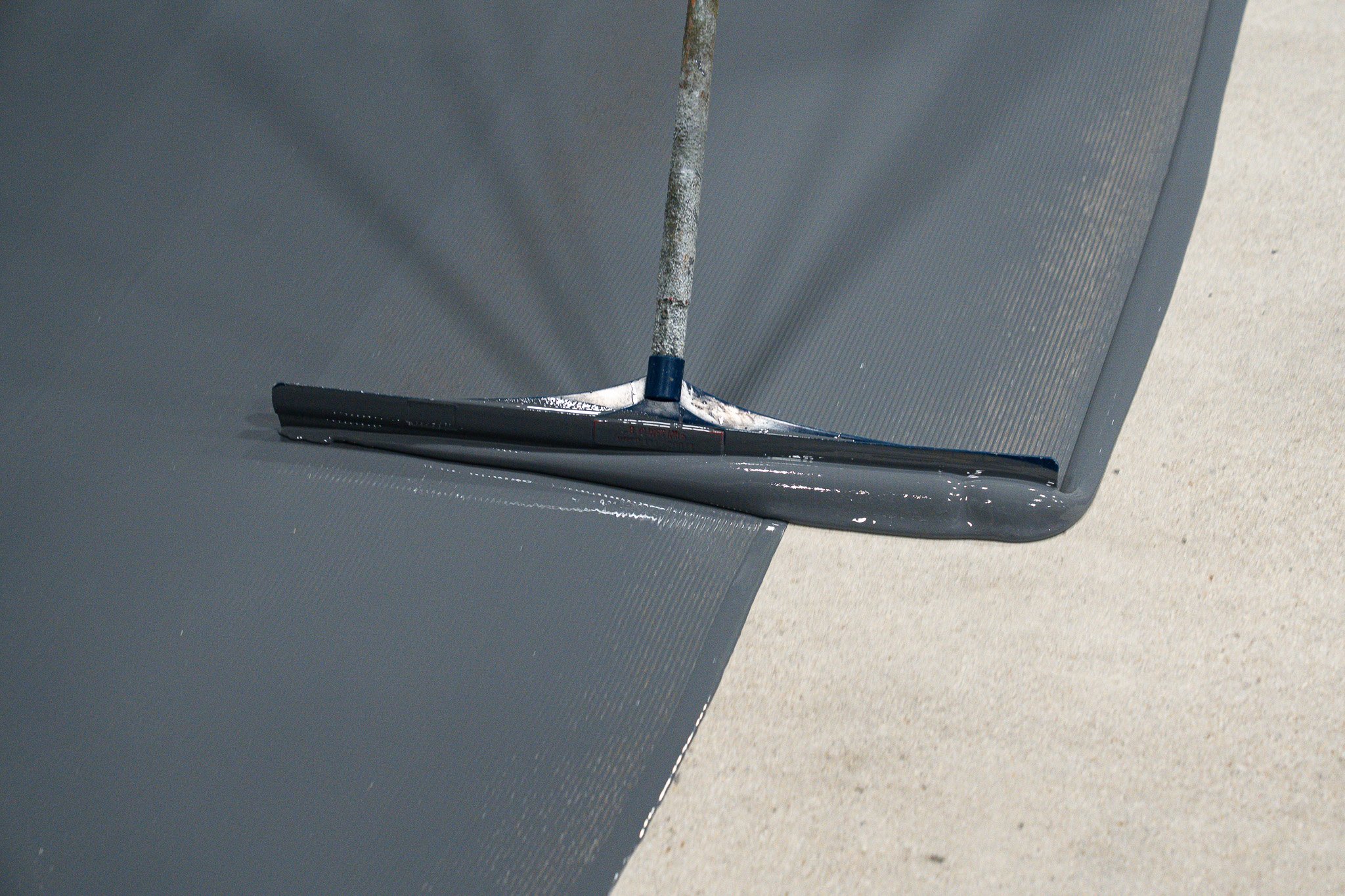
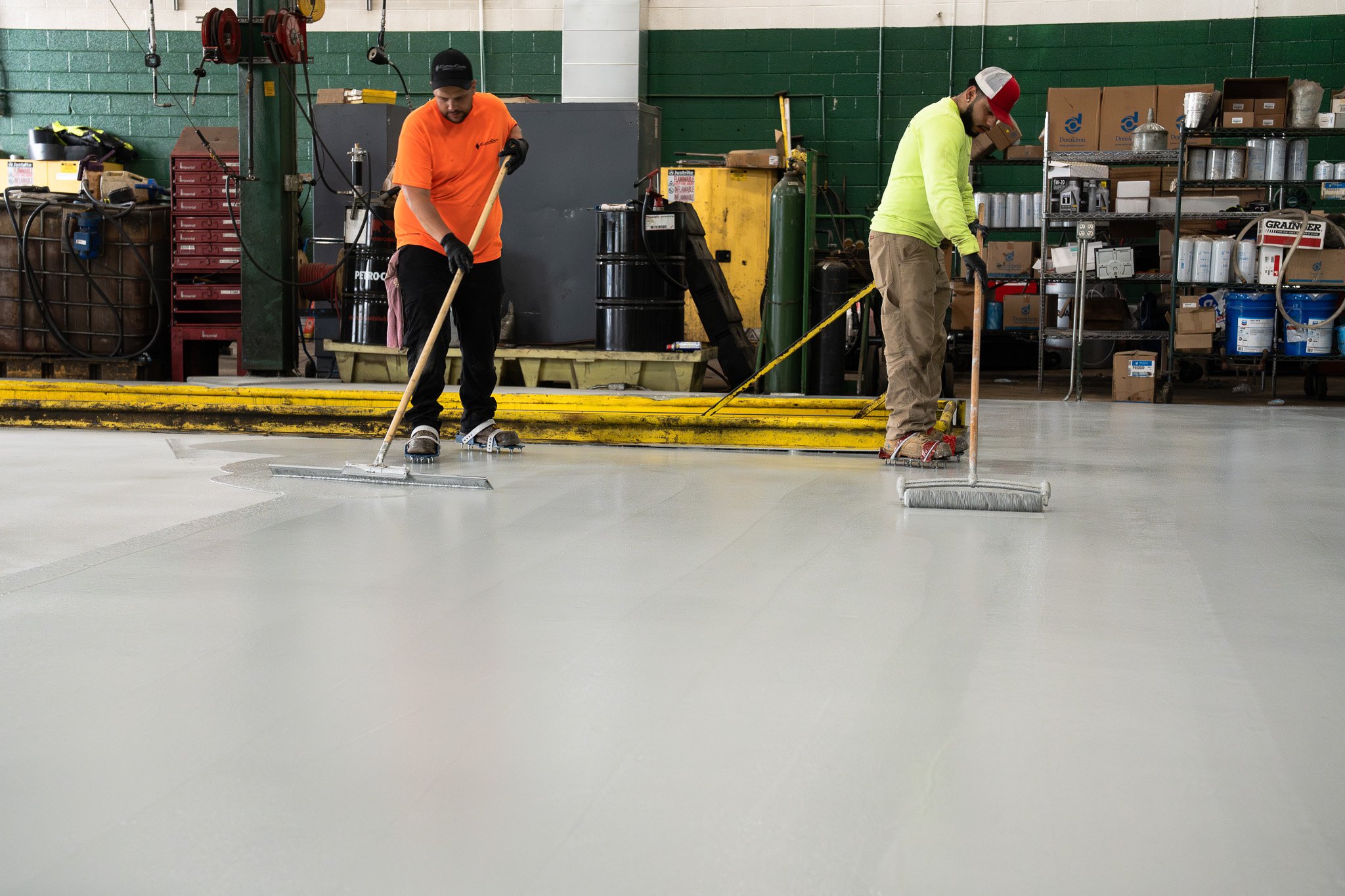
Instead of tearing out the tile, epoxy creates a seamless surface over it, improving cleanability and appearance. However, tile introduces variables that don’t exist with standard concrete surfaces.
Before choosing this option, it’s important to evaluate whether the tile floor is stable enough to support a coating system.
The Most Important Factor: Tile Condition
Epoxy coatings are only as strong as the surface beneath them. If the tile is loose, cracked, or unstable, the epoxy will fail along with it.
Before installing epoxy over tile, contractors typically check for:
- Loose or hollow-sounding tiles
- Cracked or broken tiles
- Movement in the floor
- Damaged or deteriorating grout lines
If tiles are not properly bonded to the substrate, they must be repaired or replaced before coating. Otherwise, the epoxy system will not perform as expected.
Surface Preparation: The Key to Success
Surface preparation is the most critical step when installing epoxy over tile. Unlike bare concrete, tile surfaces are smooth and non-porous, which makes adhesion more challenging.
Cleaning the Surface
The floor must be thoroughly cleaned to remove:
- Grease and oils
- Cleaning residues
- Dirt and debris
Any contamination left behind can prevent the epoxy from bonding properly.
Mechanical Profiling
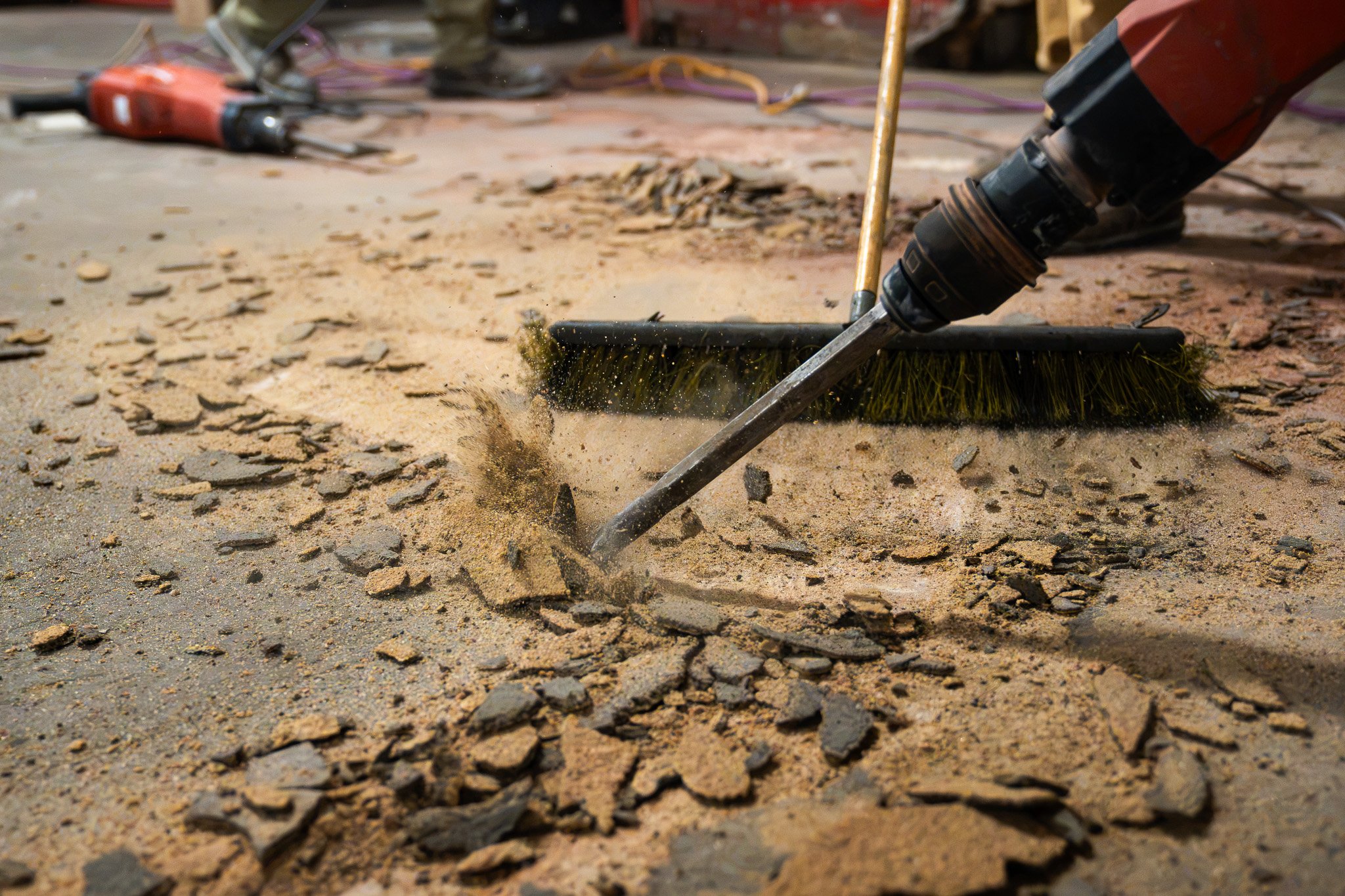
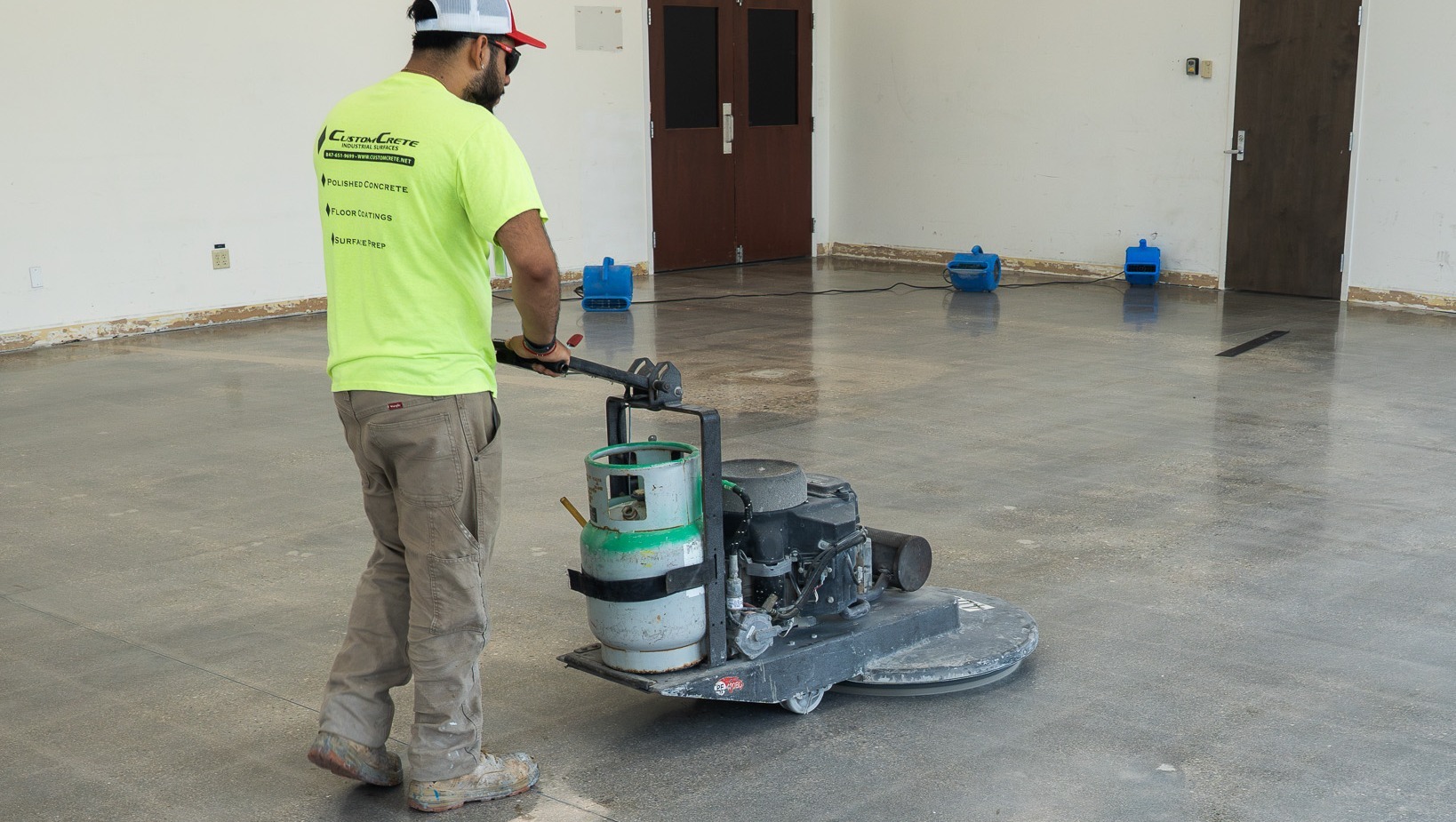
Because tile is smooth, it must be mechanically profiled to create a surface the epoxy can adhere to. This is typically done using grinding equipment.
Concrete grinding over tile helps:
- Roughen the surface
- Remove glaze from ceramic tiles
- Improve adhesion
Without proper profiling, epoxy over tile is likely to peel or delaminate.
Addressing Grout Lines
Grout lines are one of the biggest challenges when installing epoxy over tile.
Tile floors are not flat—they have joints that can telegraph through the coating if not treated properly.
To address this, installers often:
- Fill grout lines with patching material
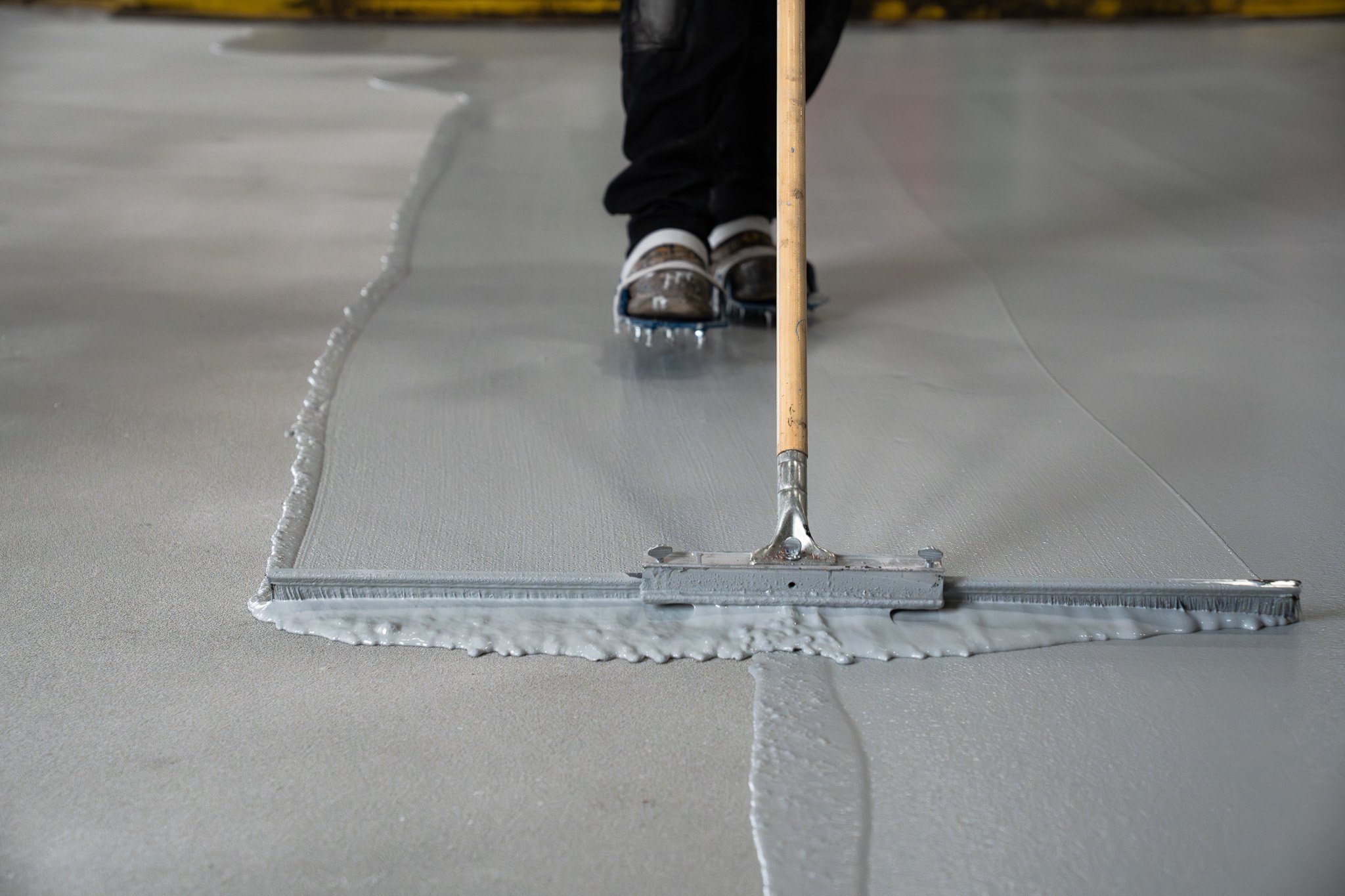
- Apply a leveling layer to create a smooth surface
- Ensure a uniform substrate before coating
Skipping this step can result in visible lines or uneven surfaces in the finished floor.
Moisture Considerations
Moisture can affect any flooring system, including epoxy over tile. If moisture is present beneath the tile or slab, it can lead to coating failure.
Before installation, it’s important to assess:
- Moisture vapor transmission
- Signs of dampness or previous failures
- The presence of a vapor barrier beneath the slab
In some cases, additional moisture mitigation may be required before installing epoxy.
Limitations to Consider
While epoxy over tile can be effective, it is not always the best solution and we do not recommend it. .
Substrate Dependence
The performance of the epoxy depends on the stability of the tile beneath it.
Potential for Cracking
Movement in the tile or slab can transfer through the coating.
Surface Prep Requirements
Proper preparation is essential—and can be more involved than expected.
Not Ideal for All Environments
In heavy industrial or high-moisture environments, removing tile and starting with a prepared concrete surface may be a better long-term solution.
When Should Tile Be Removed Instead?
Removal may be the better option if:
- Large areas of tile are loose or damaged
- The substrate is unstable
- Moisture issues are present
- The facility requires a heavy-duty industrial system
While removal increases upfront cost, it can improve long-term performance in demanding environments.
Common Mistakes to Avoid
Facilities often run into problems with epoxy over tile due to:
- Skipping mechanical grinding
- Not addressing grout lines
- Coating over unstable tile
- Ignoring moisture issues
Avoiding these mistakes ensures the system performs as intended.
FAQ: Epoxy Over Tile
Can epoxy stick to tile without grinding?
No. Mechanical profiling is required for proper adhesion.
Will grout lines show through epoxy?
They can, unless they are filled and leveled before coating.
Is epoxy over tile permanent?
It can last for years if installed correctly, but performance depends on the condition of the underlying tile.

Final Thoughts
If you’re considering epoxy over tile for your facility, the next step is evaluating your existing floor and determining whether it’s a good candidate for coating.
To explore your options and get a tailored recommendation, request a quote with CustomCrete.
Topics:
.jpg?width=2048&height=1365&name=CC108559%20(1).jpg)
.jpeg?width=1638&height=1020&name=CC109349%20(1).jpeg)
.png?width=11520&height=9216&name=Untitled%20design%20(56).png)