
A long-lasting industrial floor doesn’t happen by accident. Behind every polished concrete finish, epoxy coating system, or urethane cement installation is a careful process supported by professional-grade equipment. While many facilities understand the value of choosing the right flooring system, fewer realize how essential the right concrete tools are in achieving long-term performance.
For CustomCrete, tools aren’t an afterthought—they are a core part of the installation process. Using reliable, industry-grade equipment ensures floors are properly prepared, coatings bond correctly, and surfaces perform as expected under heavy use. This article highlights the primary tools CustomCrete uses every day and explains why each one plays a critical role in delivering durable, high-quality results.
Surface Preparation Tools: The Foundation of Every Successful Floor
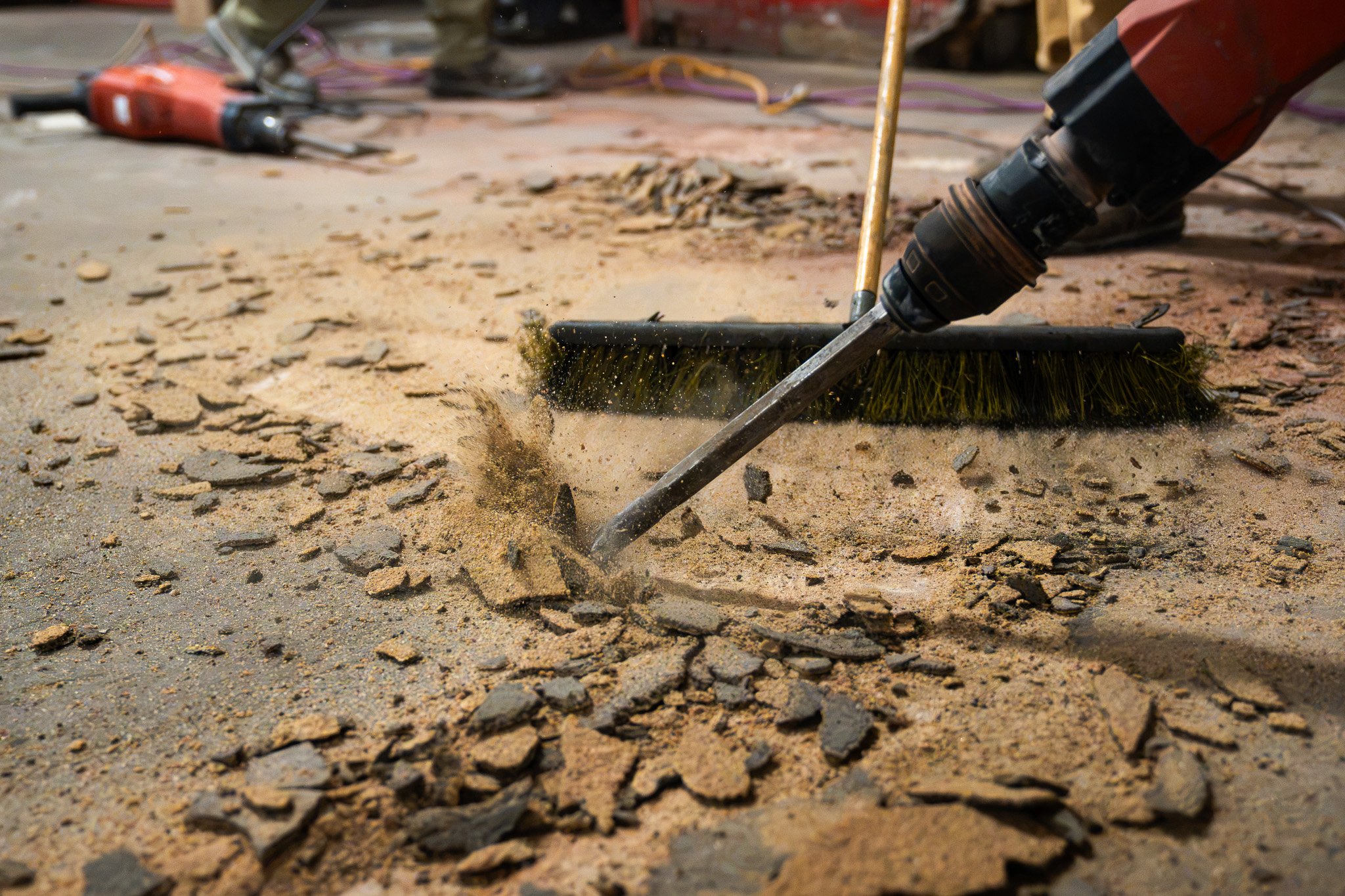
Surface prep is the most important step in any flooring installation. Without a properly profiled slab, even the most advanced coating or polish will fail over time.
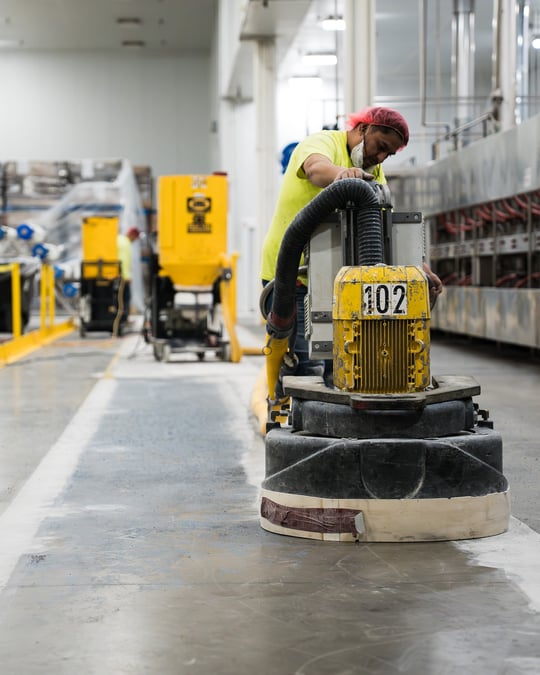
SASE Grinders
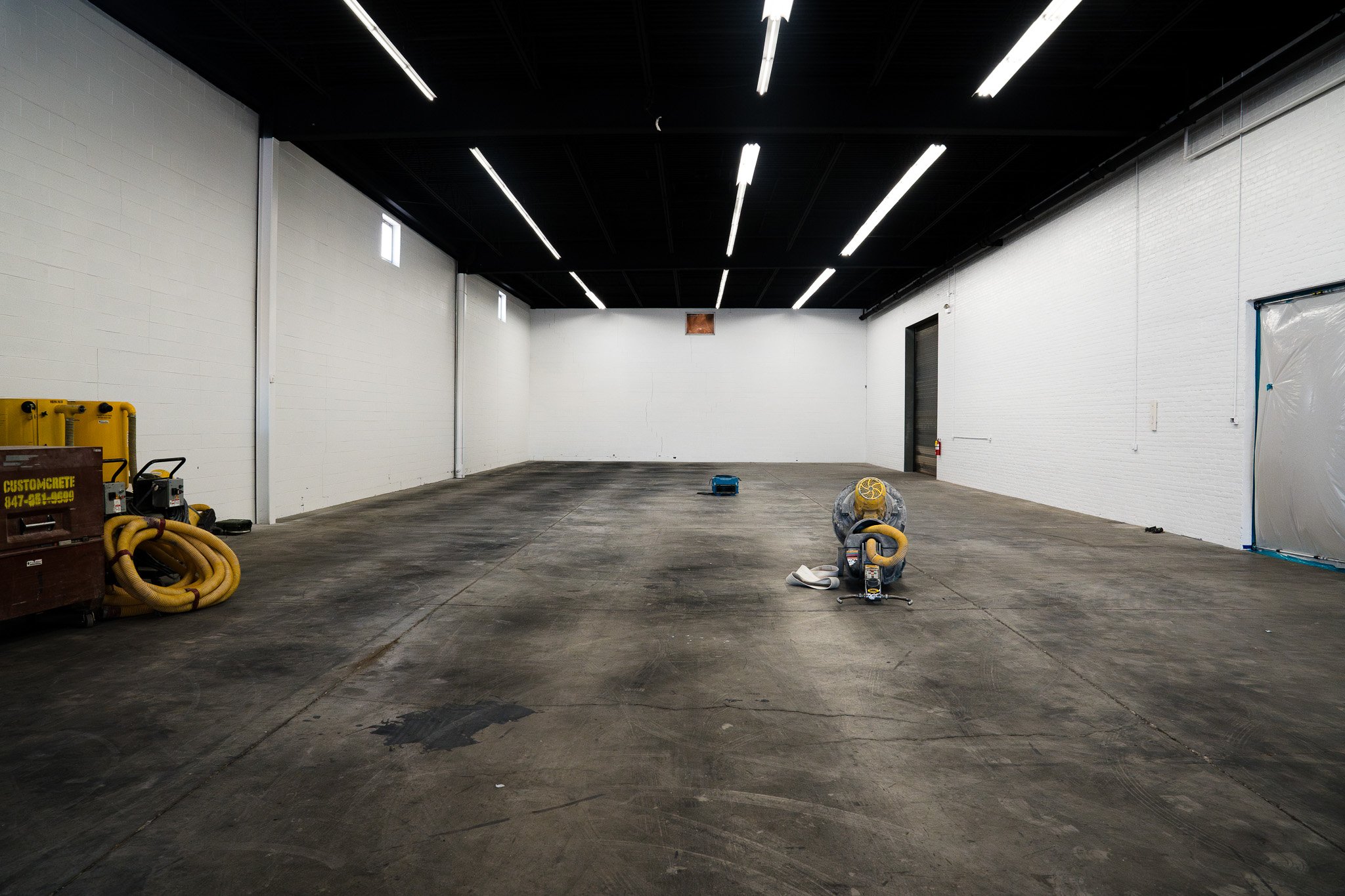
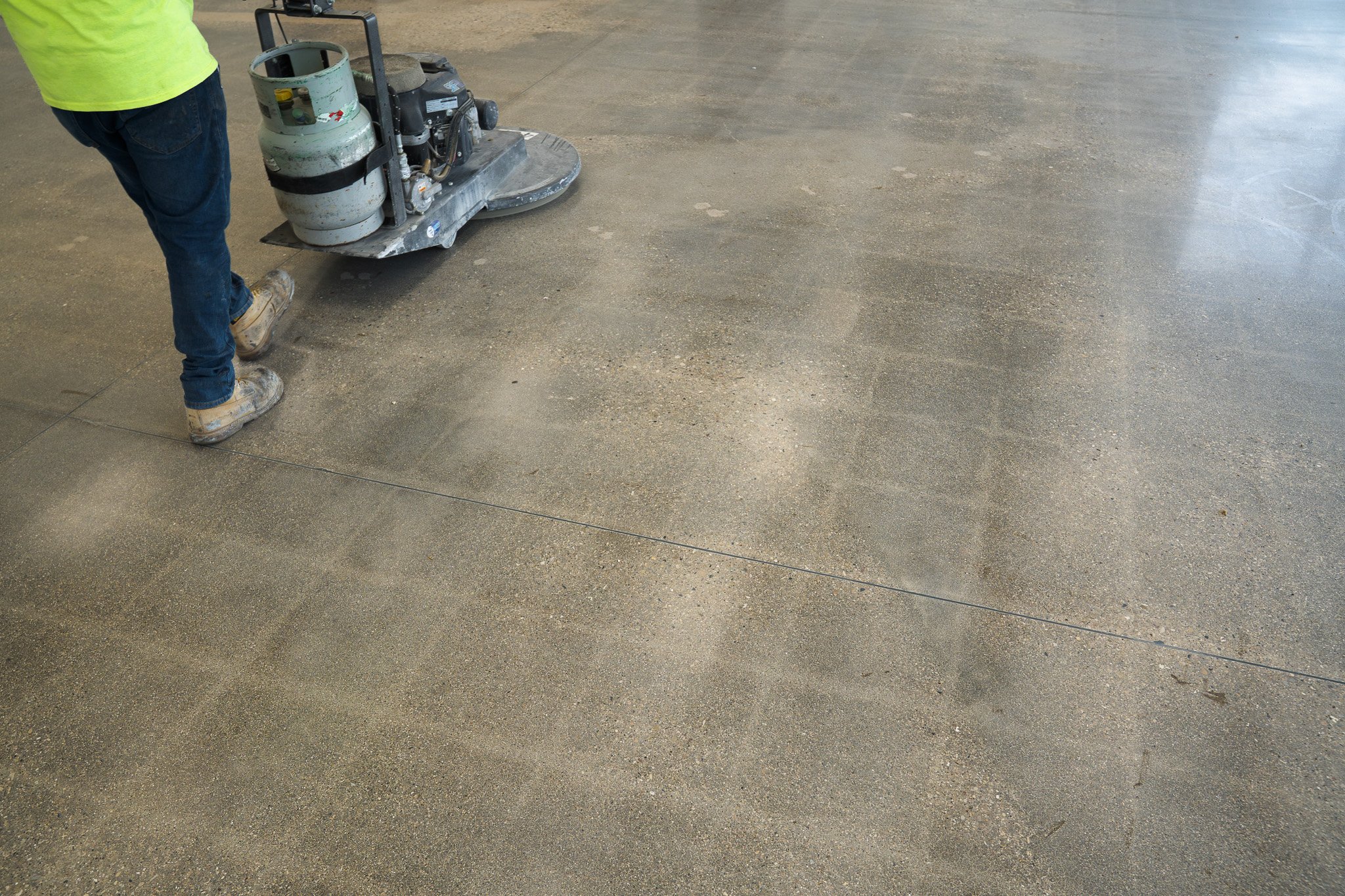
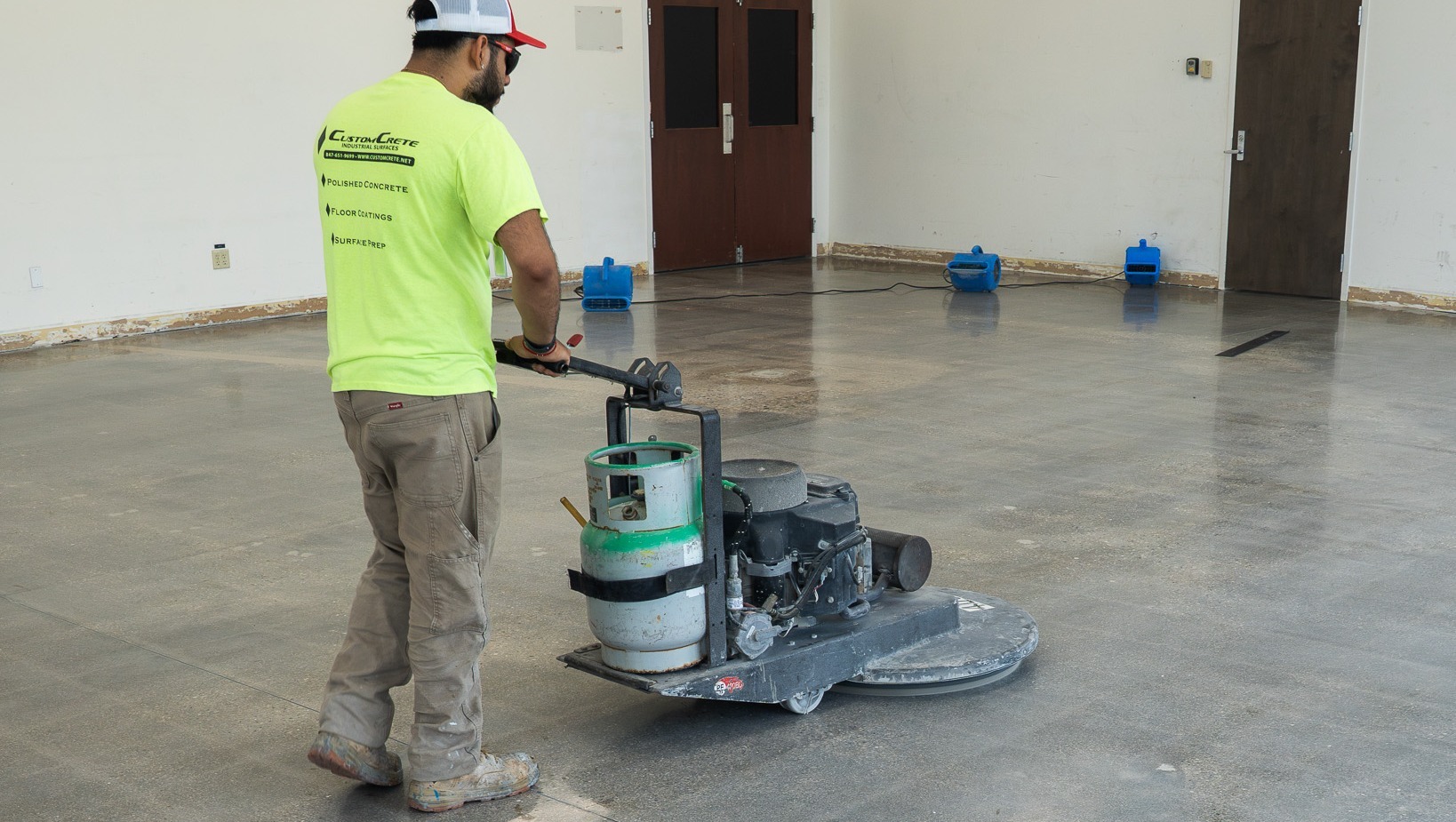
SASE planetary grinders are essential for mechanical preparation. They remove old coatings, create the proper concrete profile, and refine surfaces during polishing. Their precision allows installers to achieve uniform scratch patterns and smooth transitions across large areas.
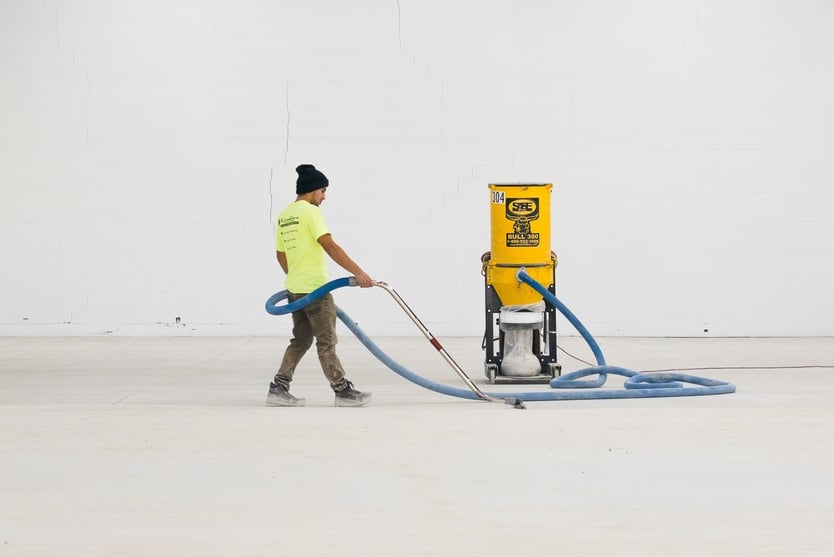
SASE Vacuums
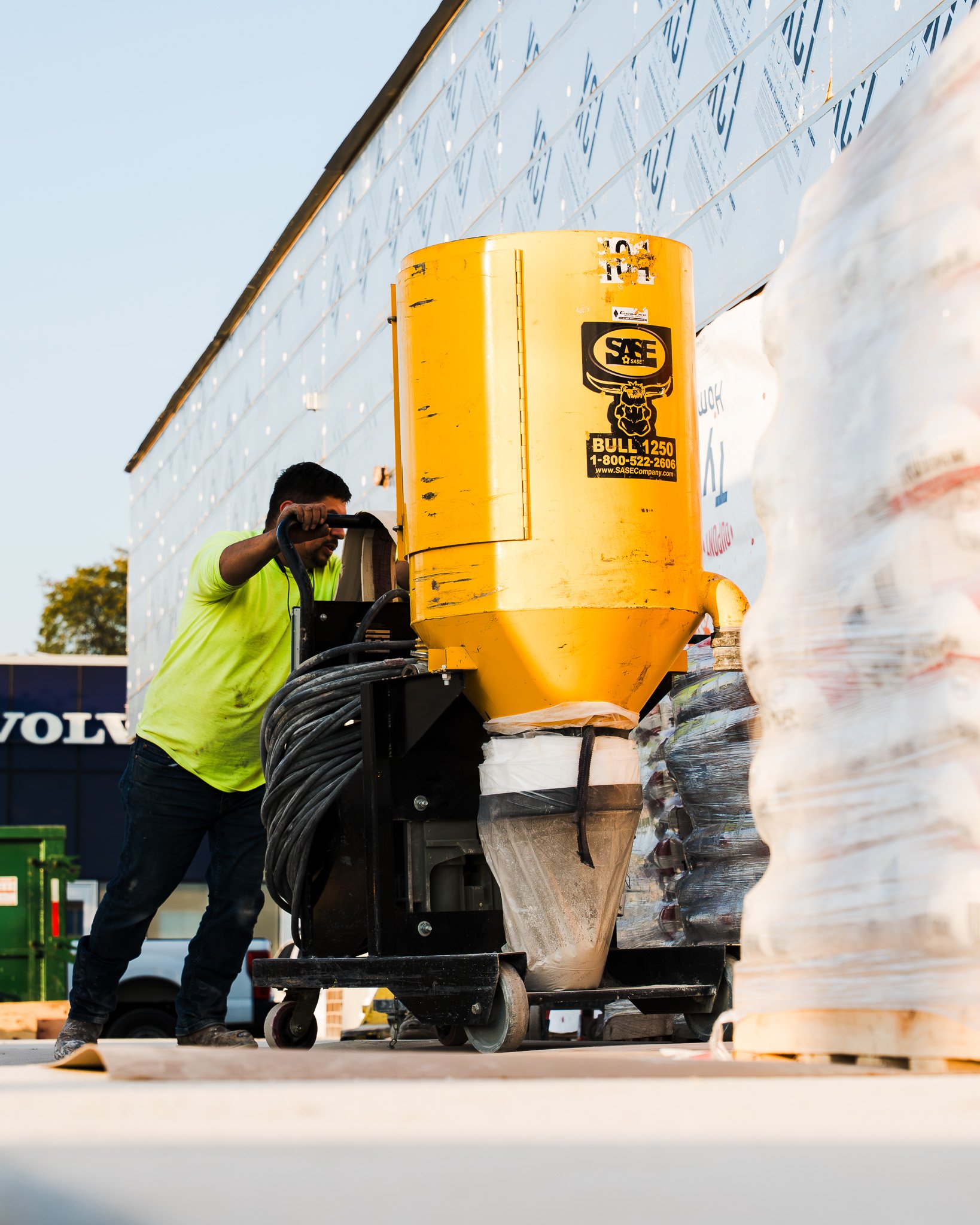
Dust control is a critical part of industrial flooring, especially in active facilities. SASE dust collection systems pair with grinders to capture concrete particles at the source, keeping the environment clean and ensuring visibility during prep. Cleaner prep also means stronger adhesion for coatings.
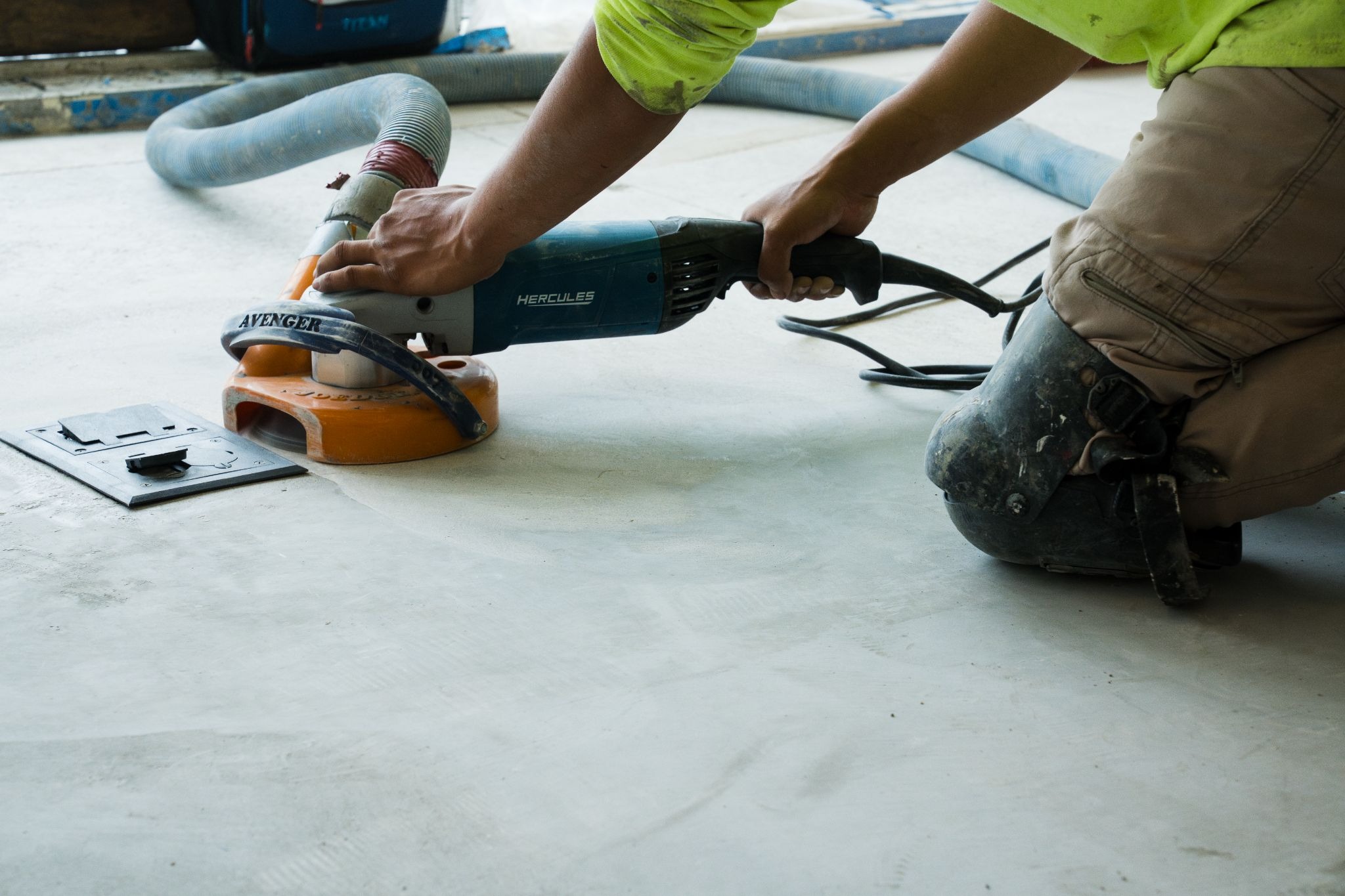
Hand Grinders
For edges, corners, and tight spaces, CustomCrete uses high-powered hand grinders from brands like Bosch and Metabo. These tools ensure that no area is overlooked, delivering a seamless and consistent finish across the entire surface.
Moisture Testing Tools: Preventing Long-Term Failures
Moisture is one of the leading causes of coating failure. If vapor pressure pushes upward through the slab, coatings can blister, bubble, or peel—sometimes within days.
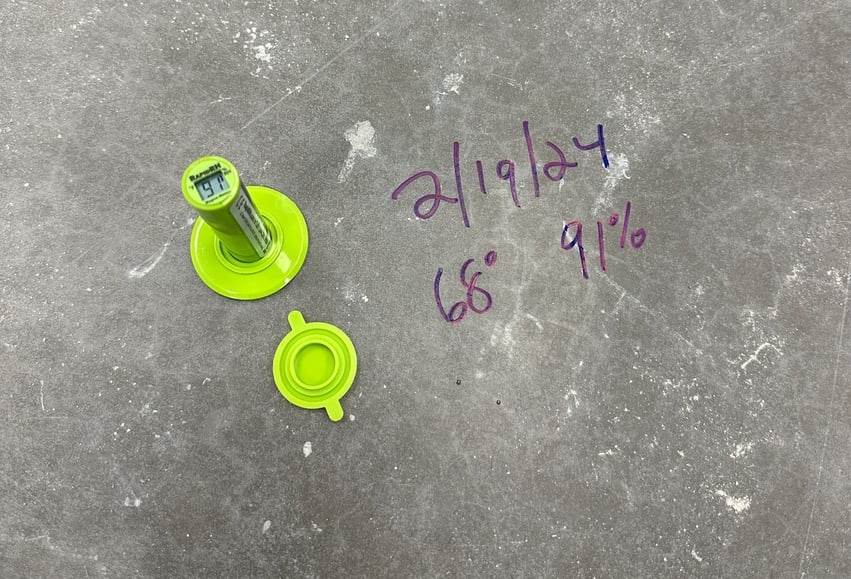
Moisture Meters and RH Testing Equipment
CustomCrete regularly uses in-slab relative humidity testing tools such as the Wagner Rapid RH system to measure moisture levels inside concrete. These readings determine whether a moisture mitigation system is needed before installation.
Calcium Chloride Test Kits
In addition to RH testing, calcium chloride tests help measure surface moisture emission rates. These results guide system selection and ensure the final floor can withstand the conditions of the space.
Why These Tools Matter
Accurate moisture testing helps prevent costly failures and ensures that coatings or polished finishes bond properly. Without the correct testing tools, installers risk guessing—a mistake that often leads to delamination or premature wear.
Mixing Tools for Coatings and Cementitious Systems
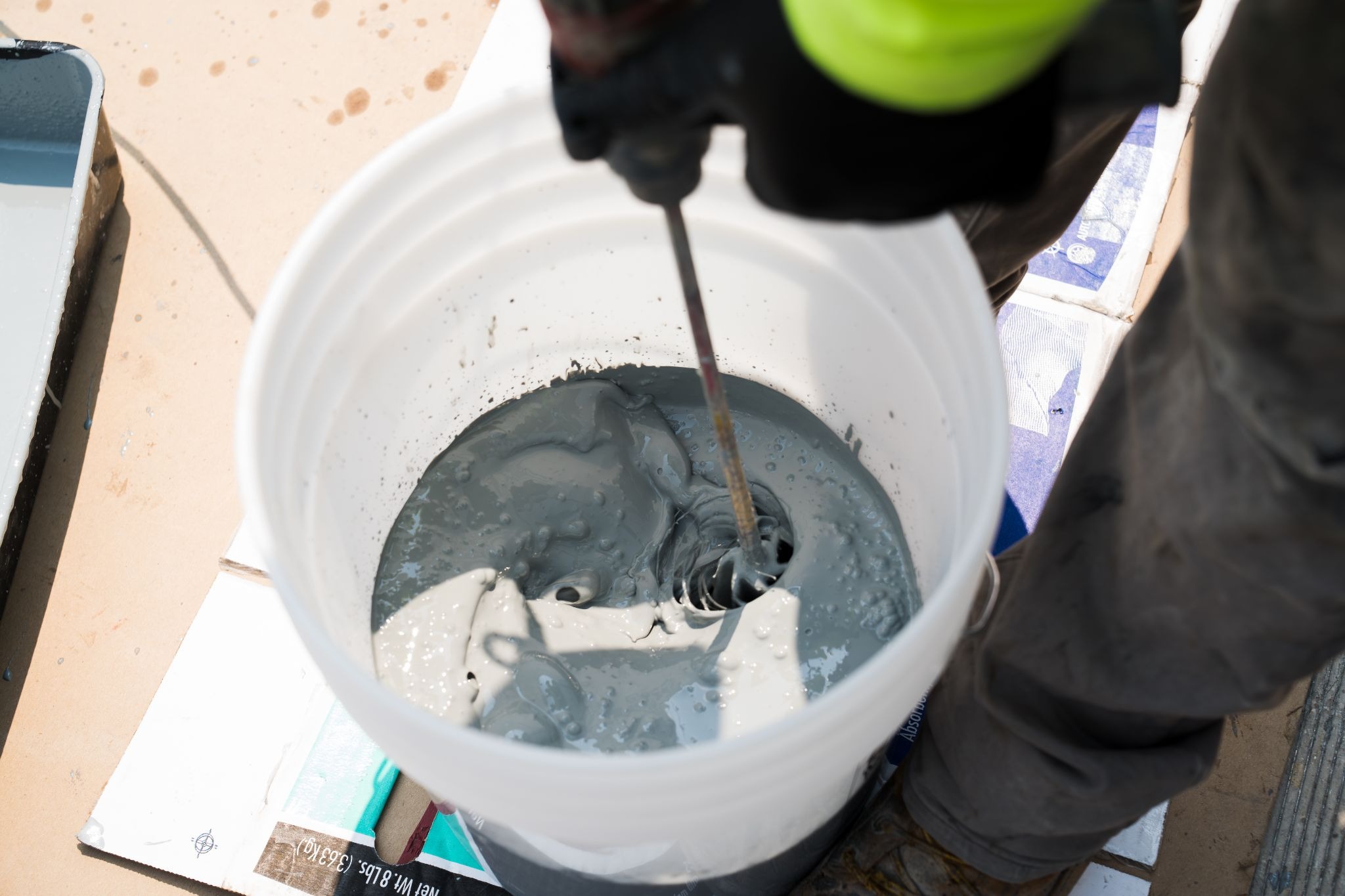
The quality of a coating depends not only on its chemistry but also on how well it’s mixed. Inconsistent mixing can create weak spots, air pockets, or uneven curing.
Milwaukee and DeWalt Mixers
CustomCrete uses high-torque drills and paddle mixers from these brands to blend epoxy resins, urethane cement, and patching materials. Their power and stability ensure that components mix uniformly, allowing coatings to cure correctly.
Bucket Scrapers and Measuring Tools
Because coating systems rely on precise ratios, tools like digital scales, measuring containers, and bucket scrapers are essential. These tools ensure accuracy, prevent chemical imbalance, and reduce wasted materials.
Application Tools: Ensuring Smooth, Even Coating Systems
Once the surface is prepped and materials are mixed, the next step is applying the system with precision. Professional application tools help control thickness, texture, and overall appearance.
Magic Trowels and Steel Trowels
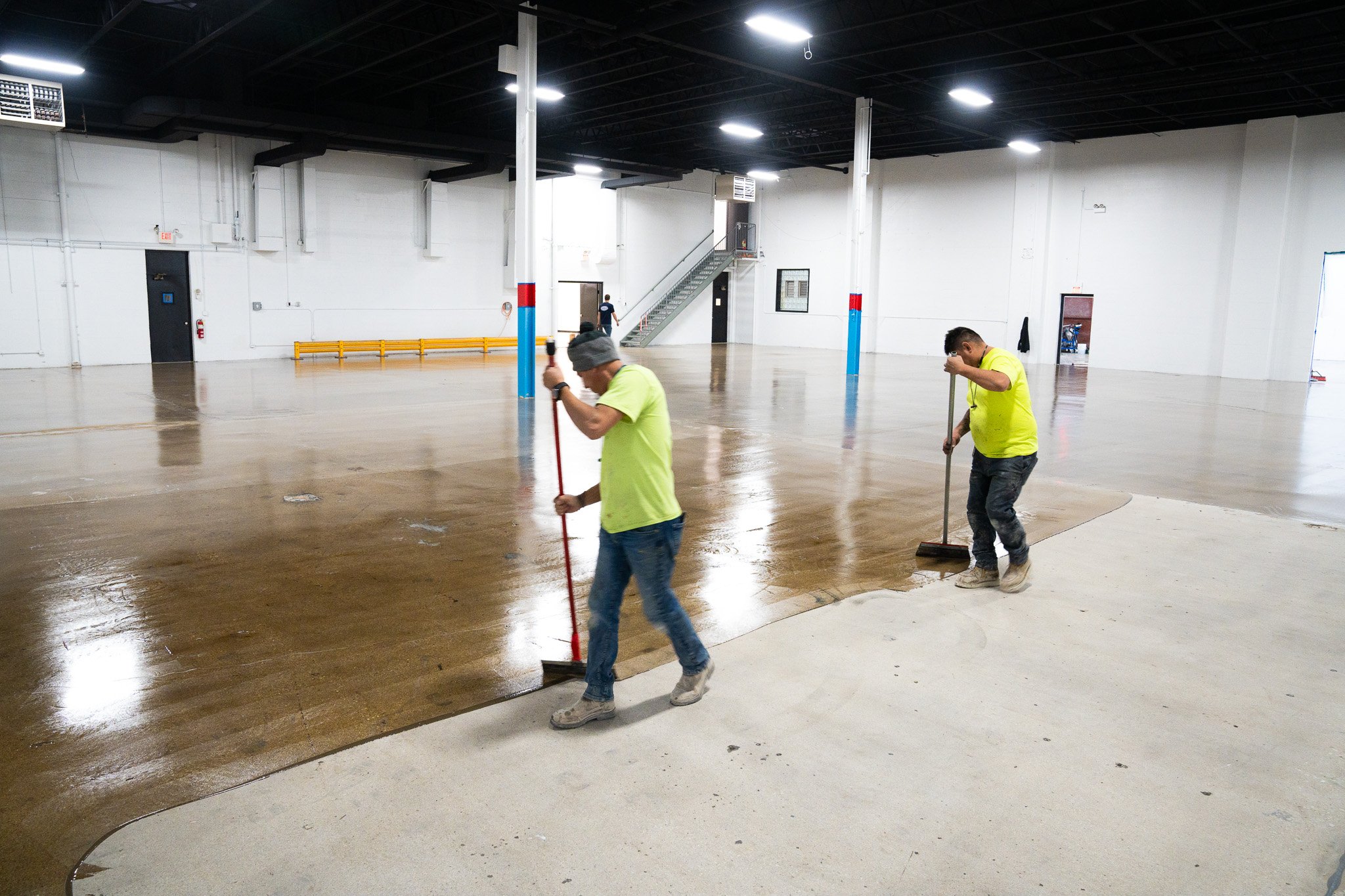
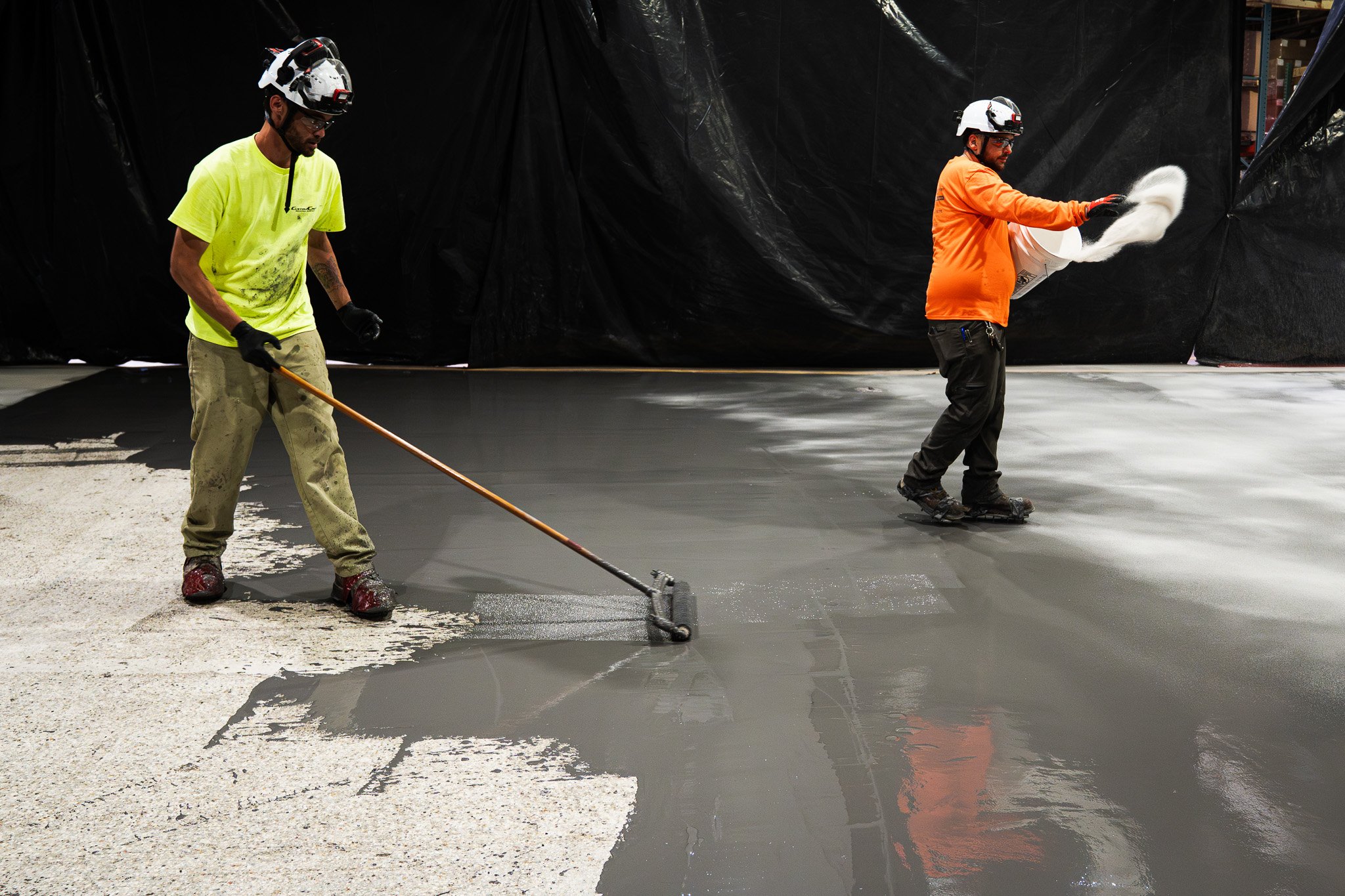
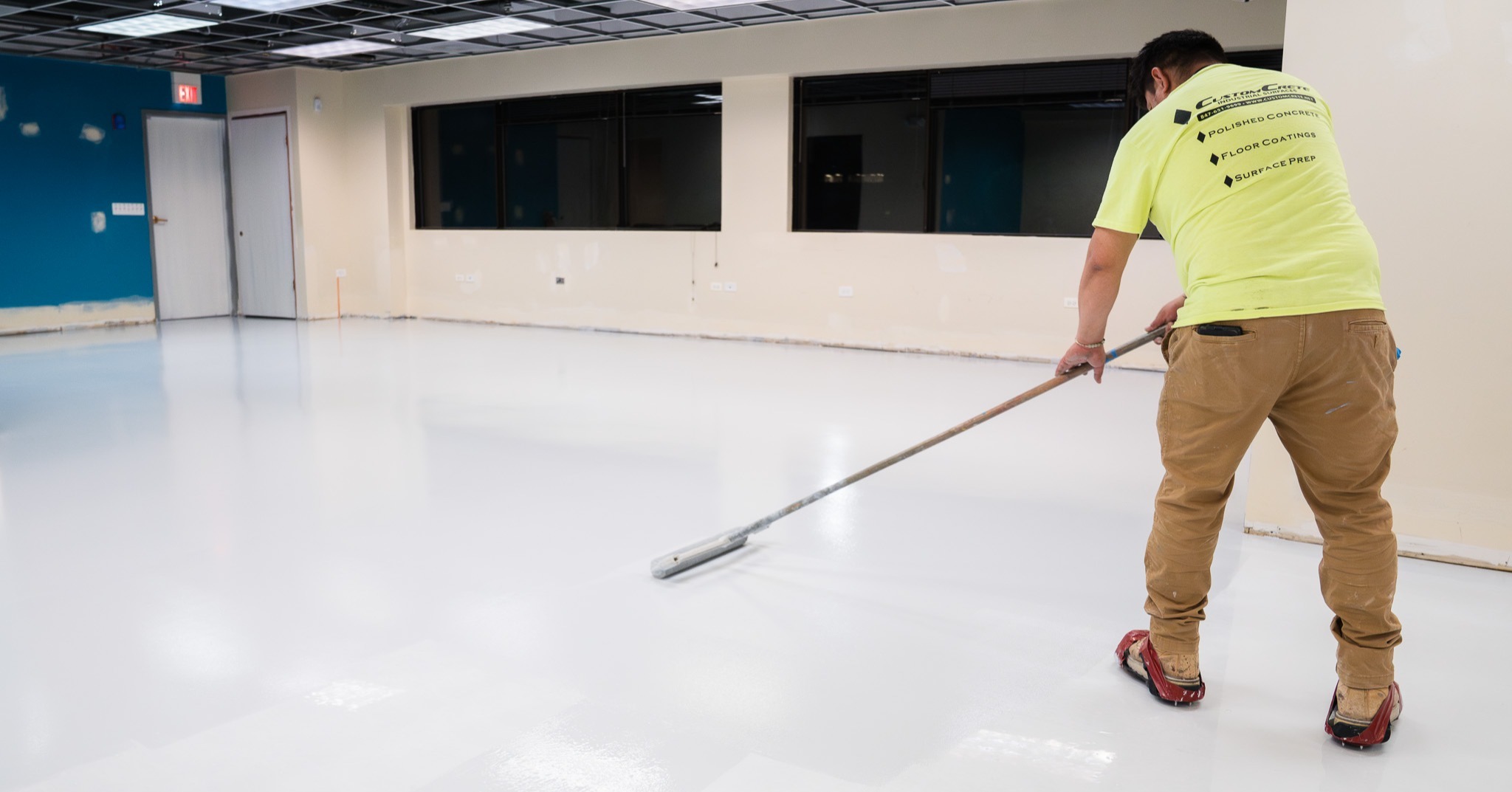
Magic trowels allow installers to pull coatings evenly across the floor, reducing lines and minimizing inconsistencies. Steel trowels are commonly used for urethane cement to create a strong, uniform base layer.
Squeegees
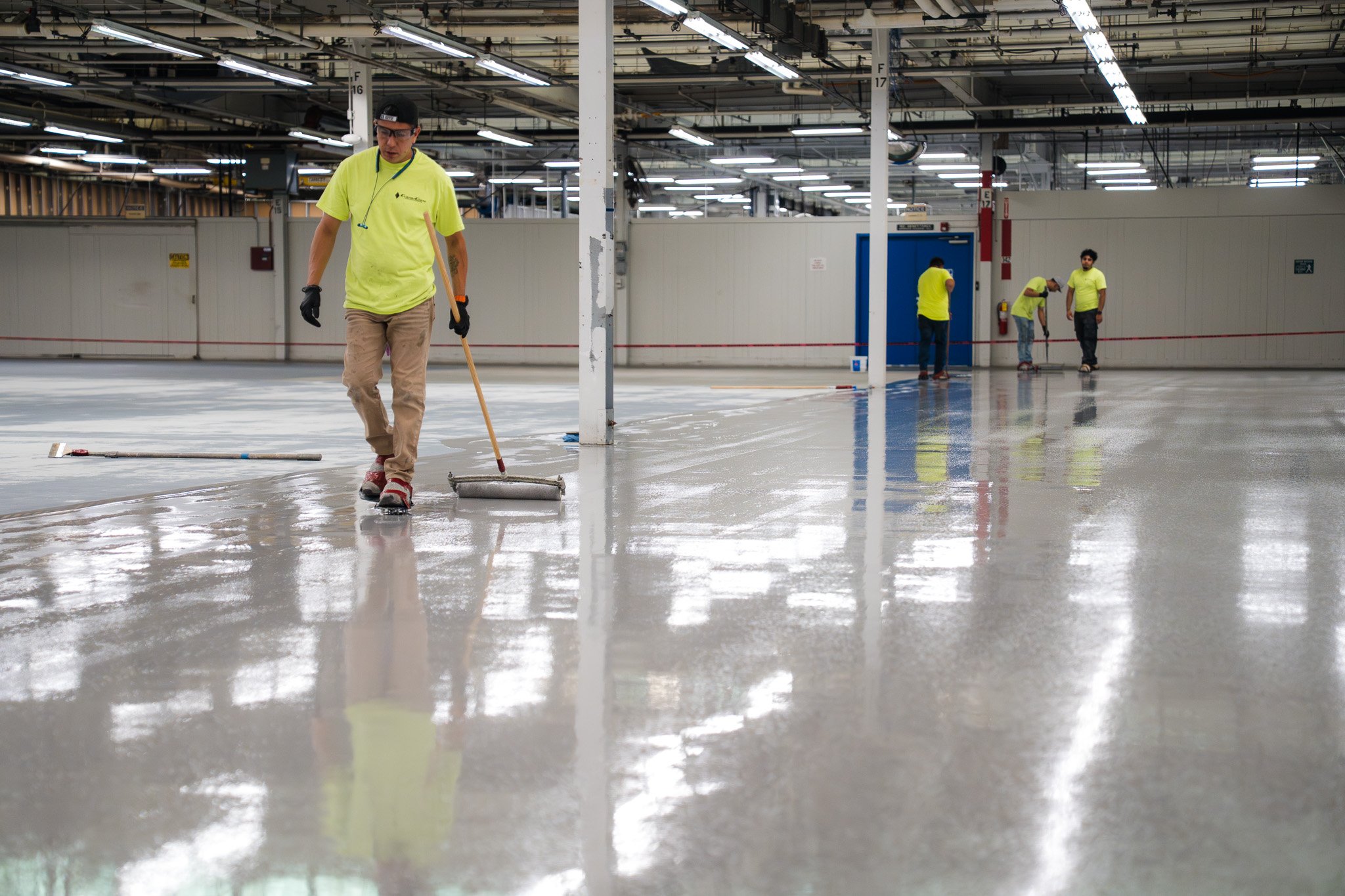
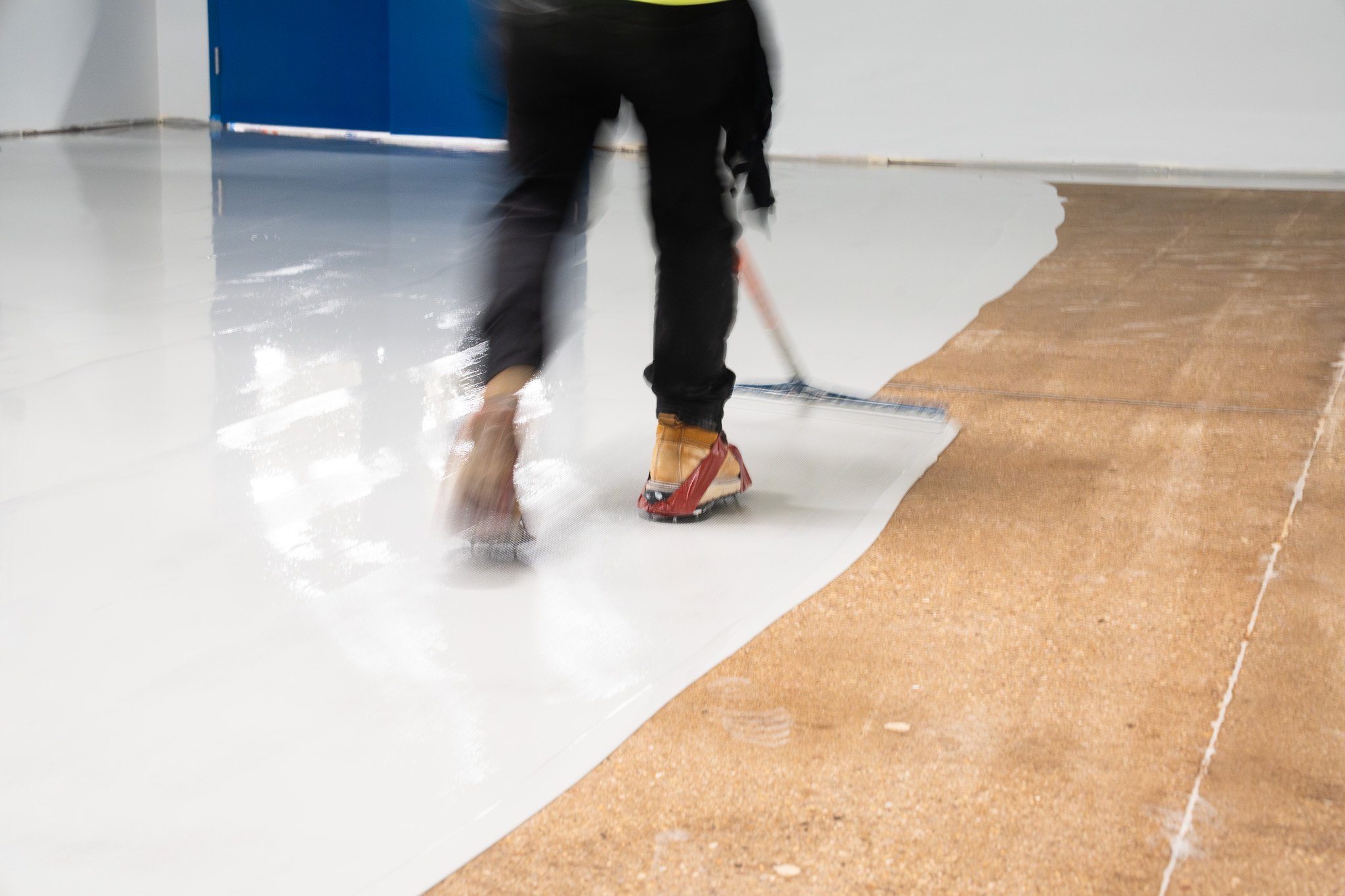
Different squeegees—flat, notched, or serrated—control mil thickness during epoxy application. Using the correct squeegee ensures the floor receives the proper build and performs as expected.
Rollers
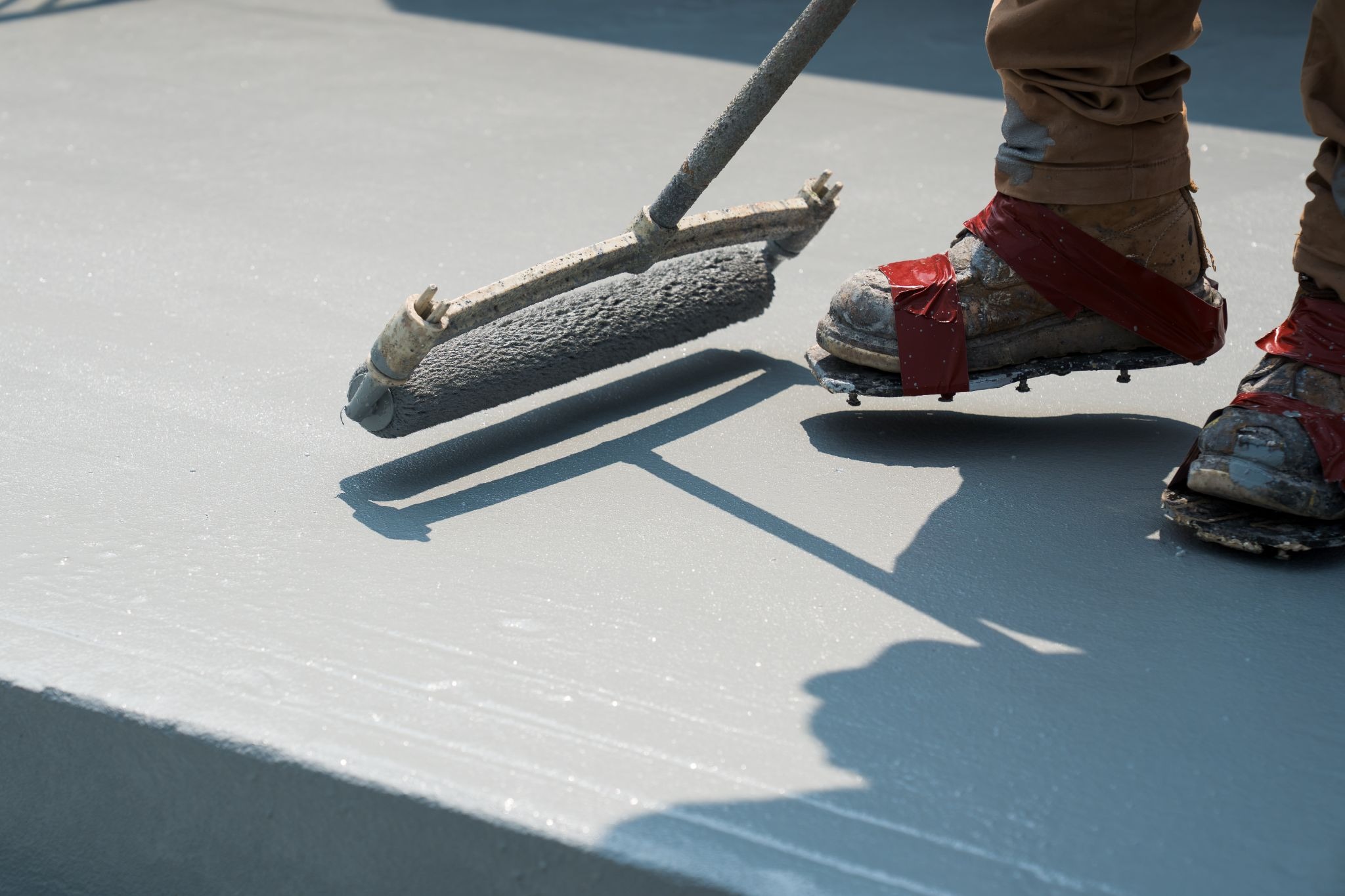
Short-nap and lint-free rollers help installers back-roll coatings, removing excess material and creating a uniform surface. Rollers are also used to apply polyaspartic topcoats and sealers.
Spike Shoes
Spike shoes allow installers to walk across wet coatings without leaving marks. They make it possible to blend and touch up areas without disrupting the finish.
Joint and Crack Repair Tools
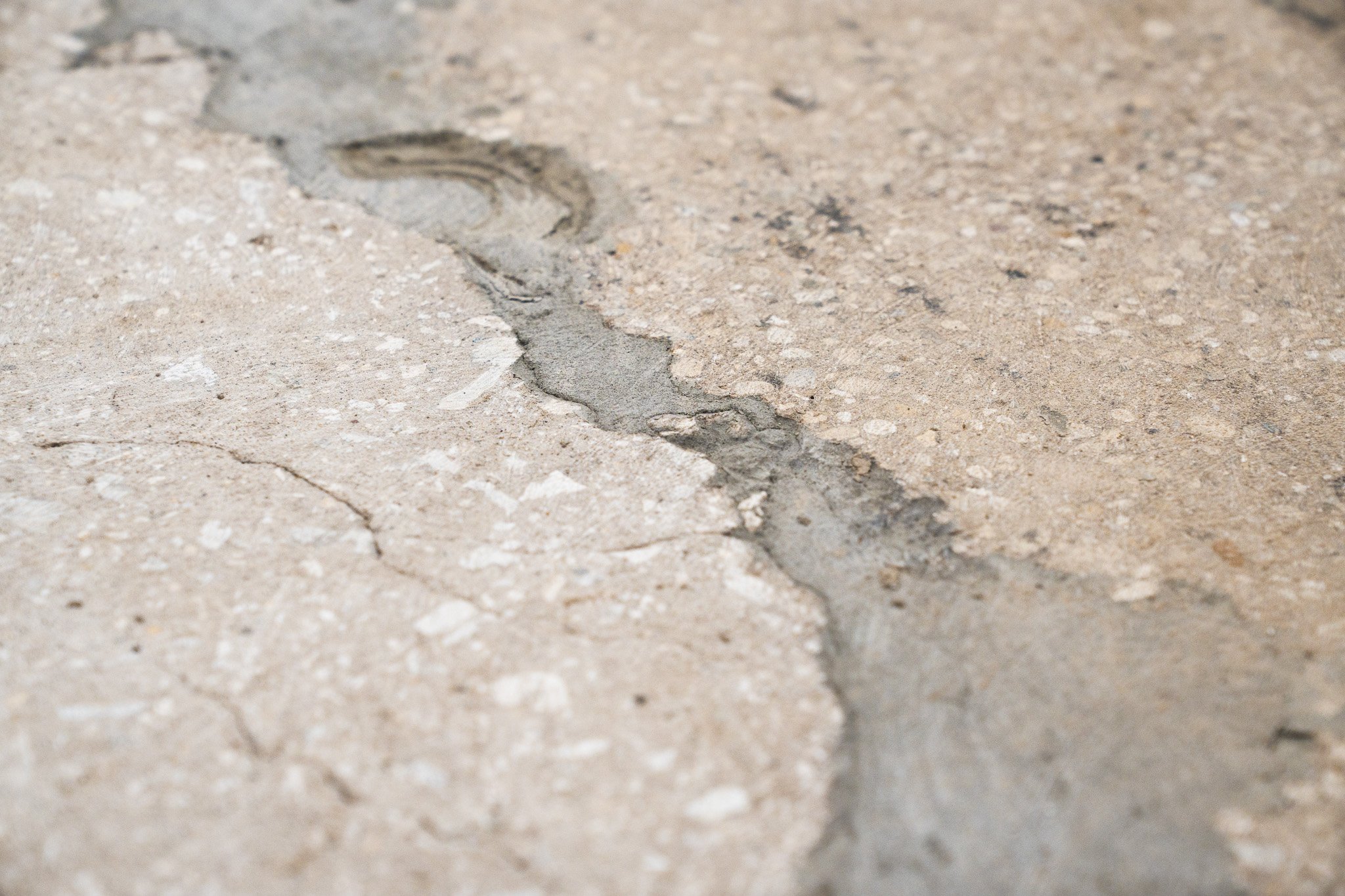
Strong flooring systems start with a stable foundation. That means repairing cracks, stabilizing joints, and resolving slab imperfections before installation.
Joint Saws
CustomCrete uses diamond-blade joint saws from Husqvarna and Makita to clean and widen control joints before filling. Proper joint preparation improves load transfer and extends the life of the slab.
Polyurea Joint Fill Equipment
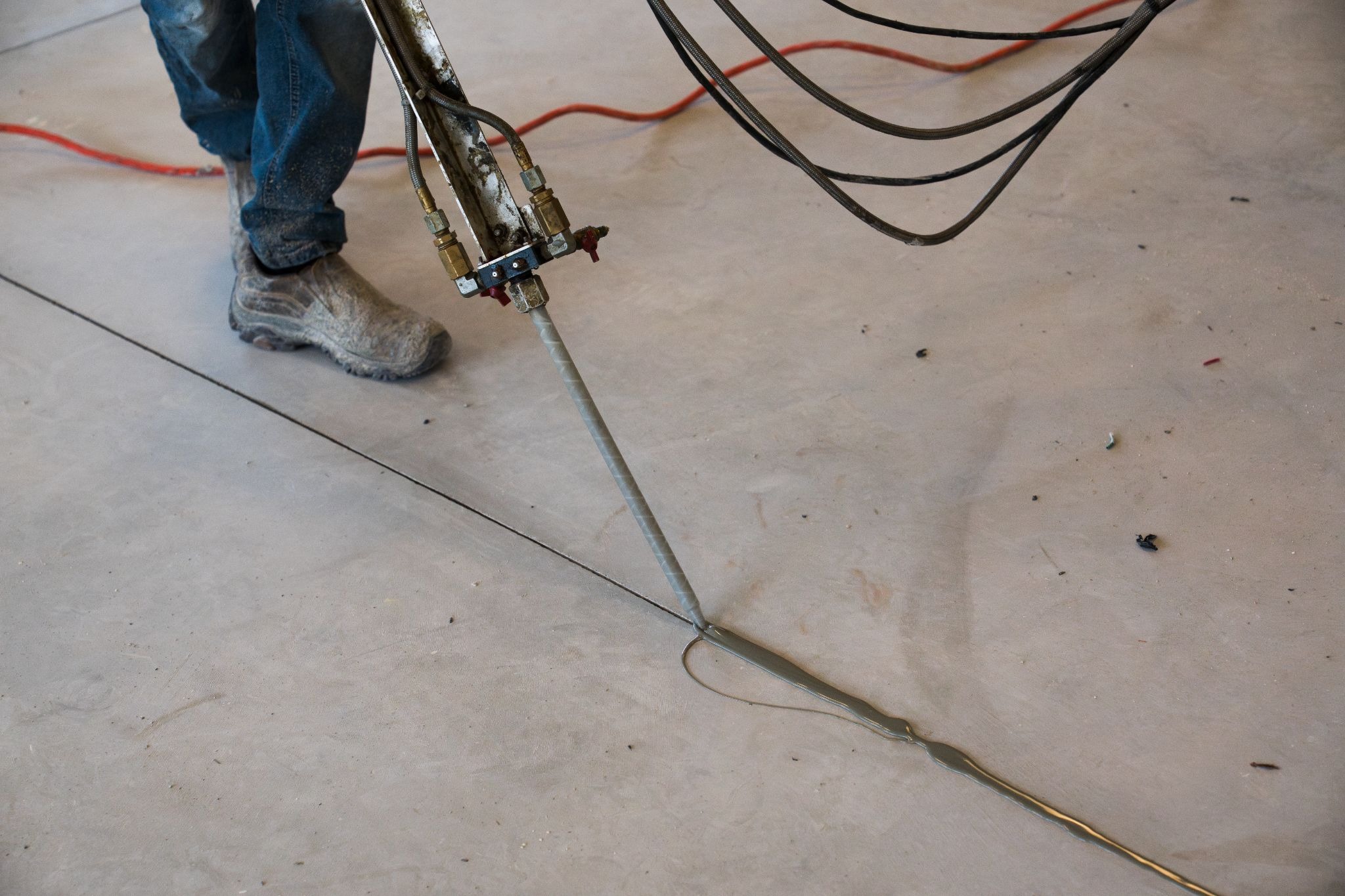
Dispensing tools for products like Metzger McGuire polyurea help deliver consistent fills that support heavy forklift traffic and prevent edge chipping.
Crack Chasers
These specialized saws follow irregular cracks and open them into uniform channels so repair materials can bond effectively.
Polishing Tools for High-Gloss, Low-Maintenance Floors
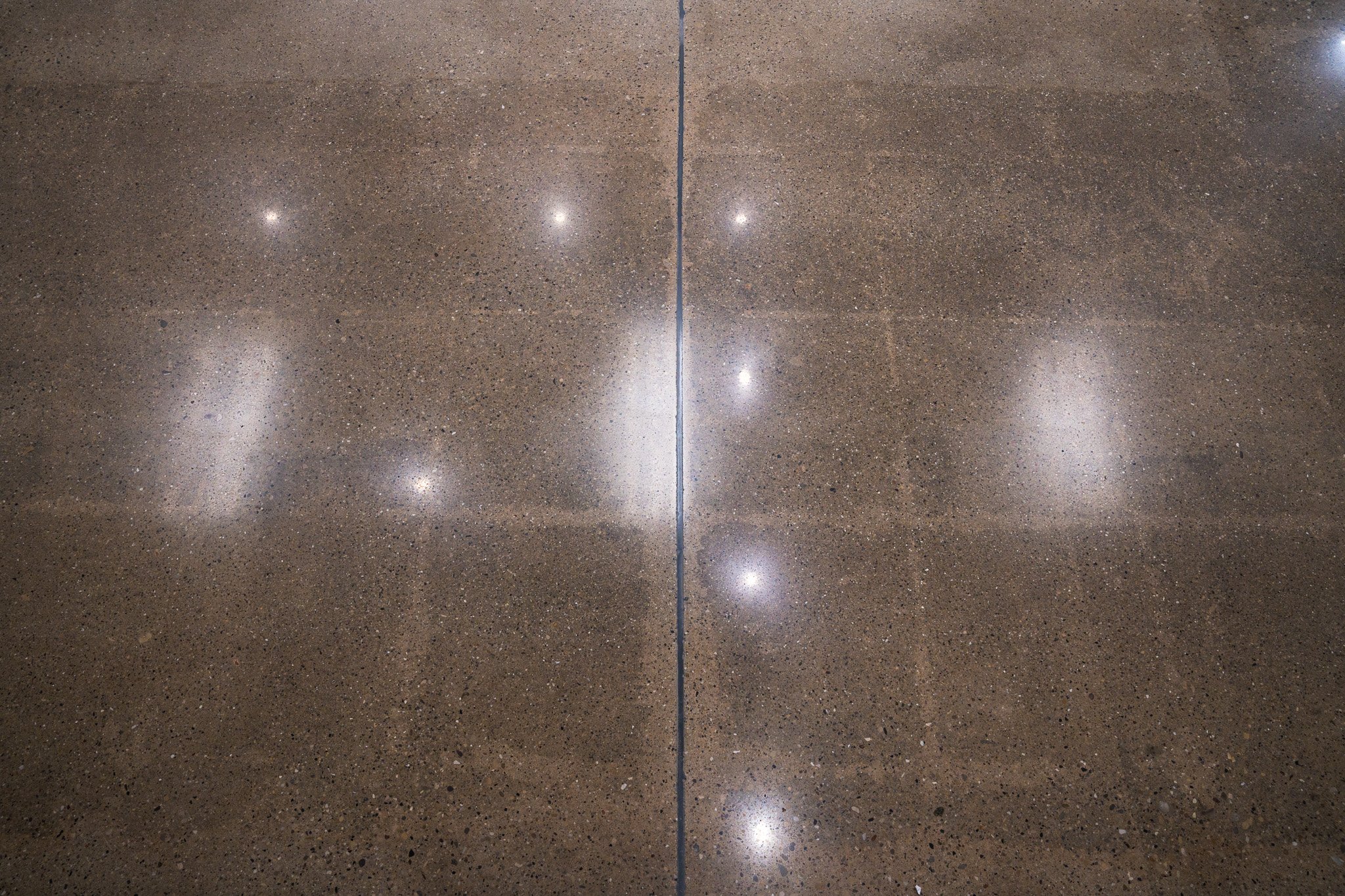
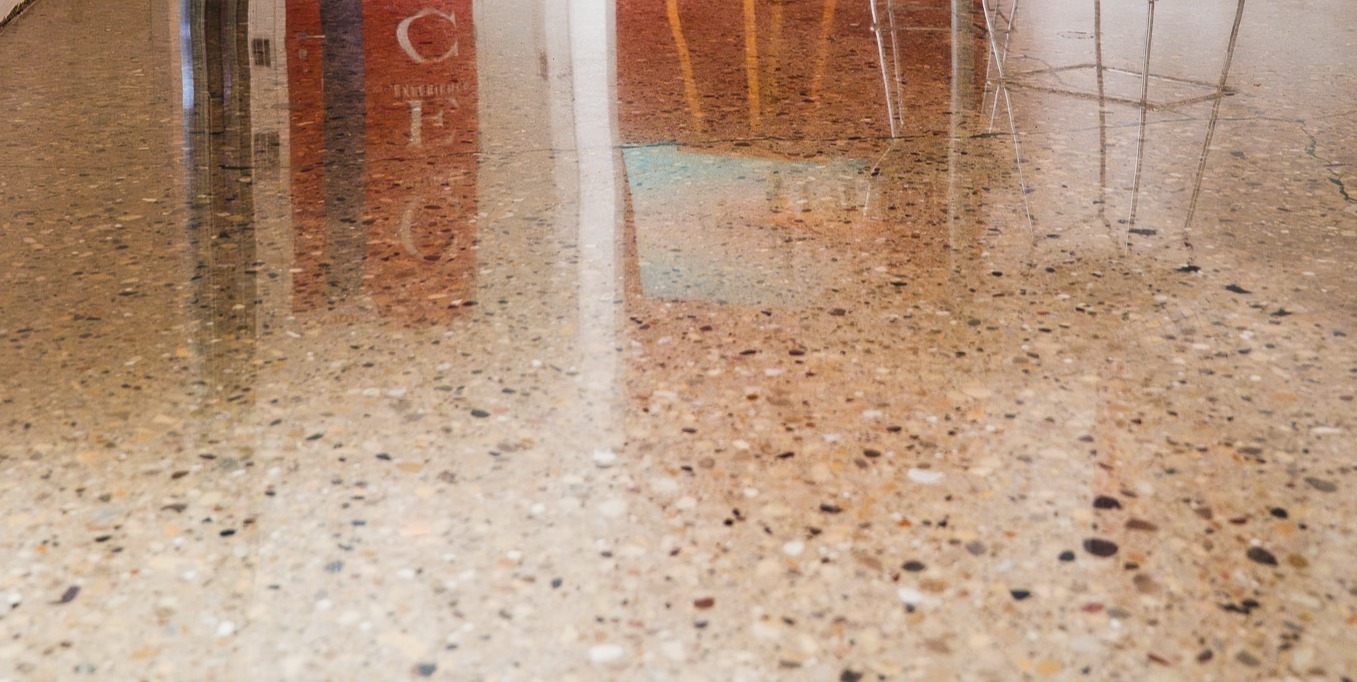
Polished concrete is one of the most technical flooring systems, requiring multiple steps and specialized tools.
Resin and Metal Diamond Tooling
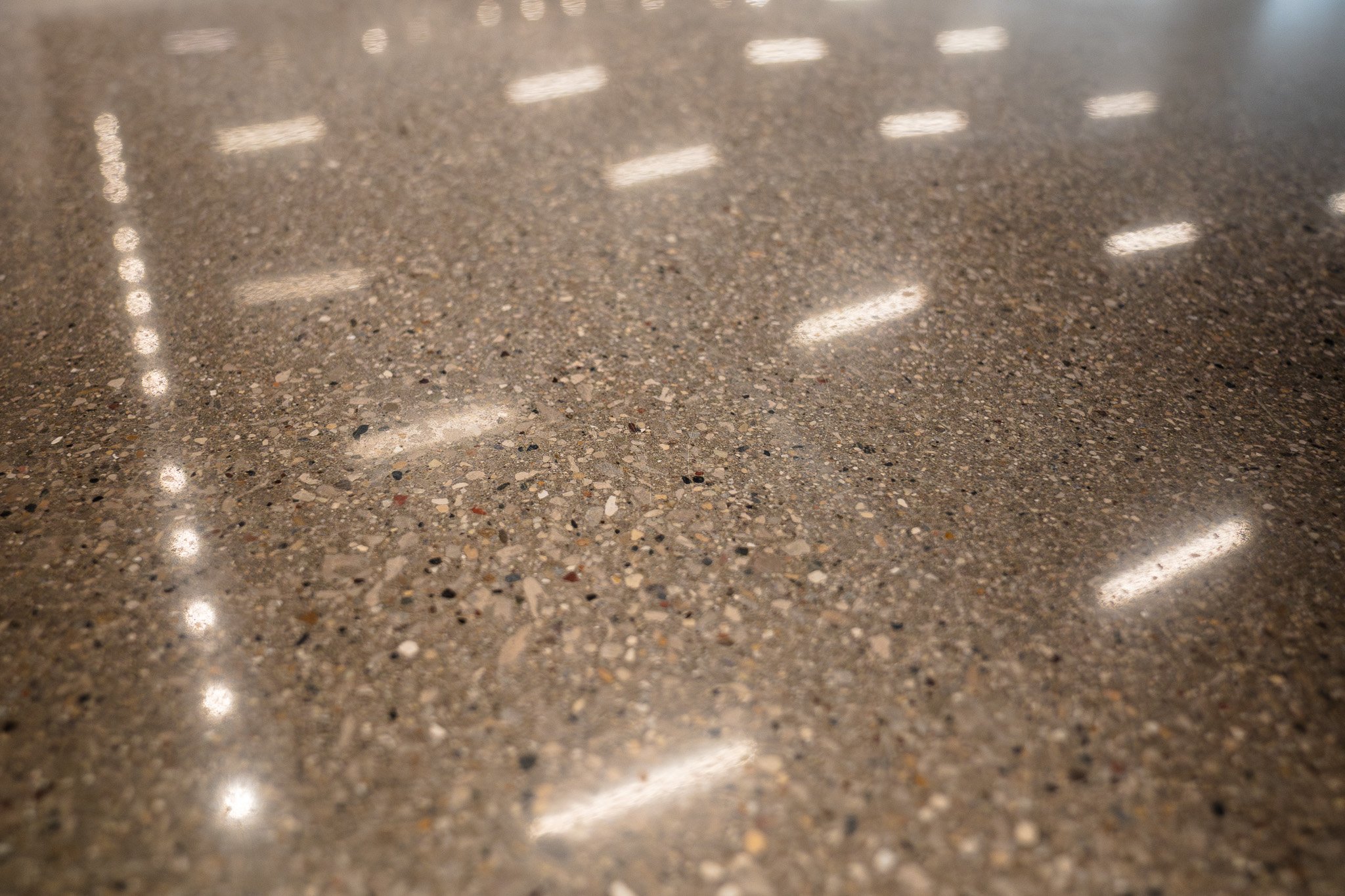
SASE diamond tooling—from 40-grit metal bonds to 1500-grit resins—is essential for polishing. Each step refines the surface, removes scratches, and prepares the concrete for densifiers or guards.
Densifier and Guard Sprayers
Proper application of densifiers like HTS Poly Densifier ensures deeper concrete penetration and strengthens the floor for long-term durability.
Burnishers
High-speed burnishers add clarity, shine, and stain resistance. They complete the polishing process by heating and fusing guard products into the surface.
Why These Tools Matter for Your Project
Using the right concrete tools is just as important as choosing the right flooring system. Dust control, surface profile accuracy, material consistency, and application precision all depend on the equipment behind the installation.
When tools are outdated or misused, the risks increase significantly:
- Poor coating adhesion
- Premature wear
- Uneven finishes
- Moisture-related failures
- Reduced durability
By investing in professional-grade equipment, CustomCrete ensures that every floor—from polished surfaces to urethane cement and epoxy systems—is built to last.
Final Thoughts
This overview of the everyday concrete tools used by CustomCrete highlights how specialized equipment supports each step of the installation process. These tools play a major role in delivering durable, high-performance floors that support real-world industrial demands.
If you’re considering a flooring project and want a system installed with precision and care, the next step is simple—request a quote from CustomCrete.

Topics:
.jpg?width=2048&height=1365&name=CC108559%20(1).jpg)
.png?width=11520&height=9216&name=Untitled%20design%20(56).png)
.jpg?width=2048&height=1365&name=CC106221%20(1).jpg)
.jpg?width=2048&height=1365&name=CC102459%20(1).jpg)