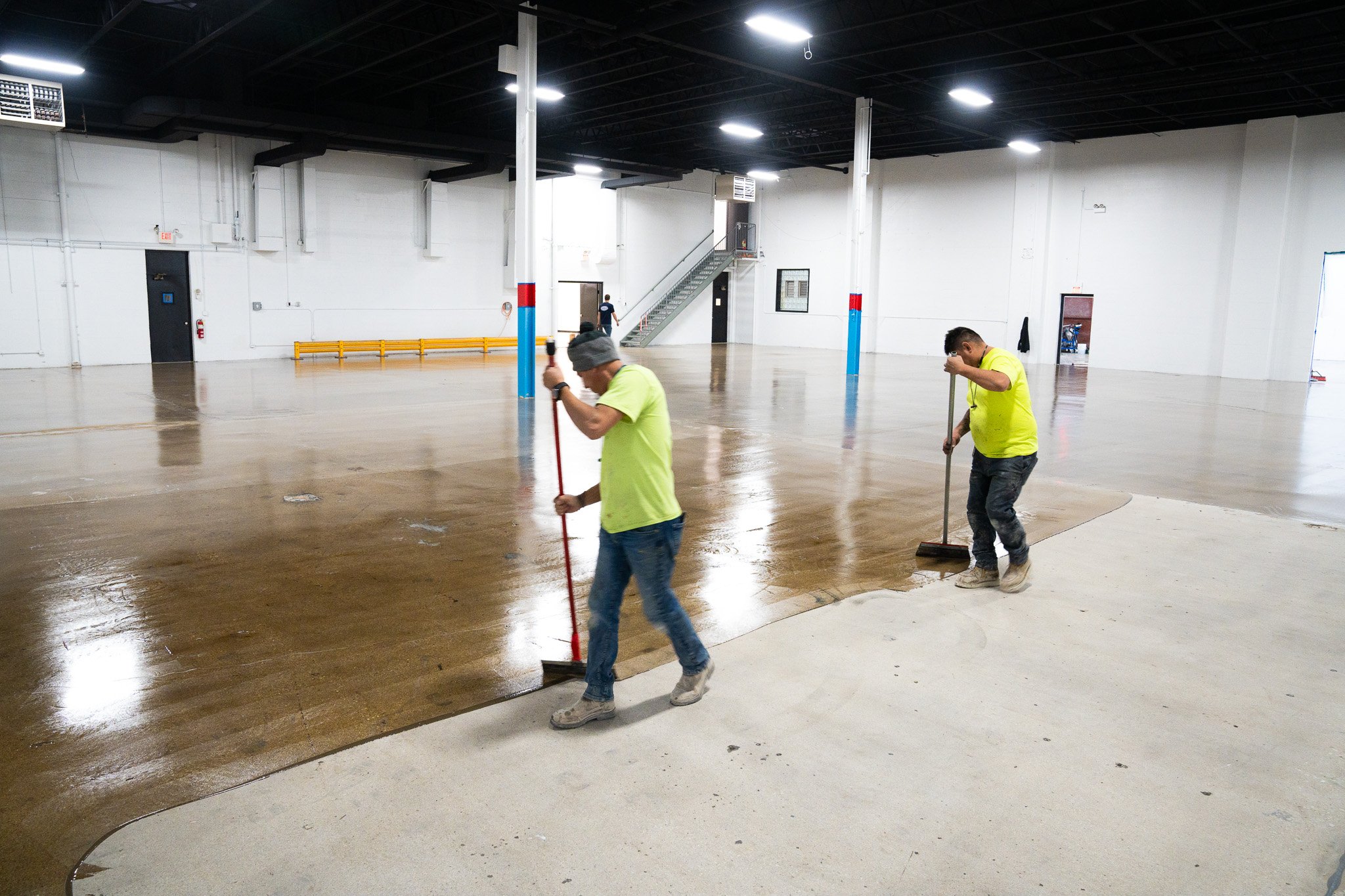


Data centers and electronics facilities have very different flooring needs than most industrial spaces. Beyond durability, these environments must control static electricity, support heavy rolling loads, and maintain clean, predictable performance. Because of this, many facility managers ask which type of concrete flooring is truly best for protecting sensitive equipment.
At CustomCrete, this is a common question from teams responsible for data centers, server rooms, electronics manufacturing, and mission-critical infrastructure.

What Flooring Matters Most in Data Centers?
In data centers and electronics facilities, flooring plays a direct role in operational reliability. The wrong system can increase static discharge risk, interrupt airflow, or break down under constant equipment movement.
Key flooring requirements typically include:
- Static control (ESD protection)
- High load-bearing capacity
- Smooth, cleanable surfaces
- Minimal dust and debris
- Long-term durability with low maintenance
Why ESD Epoxy Flooring Is Often the Best Choice
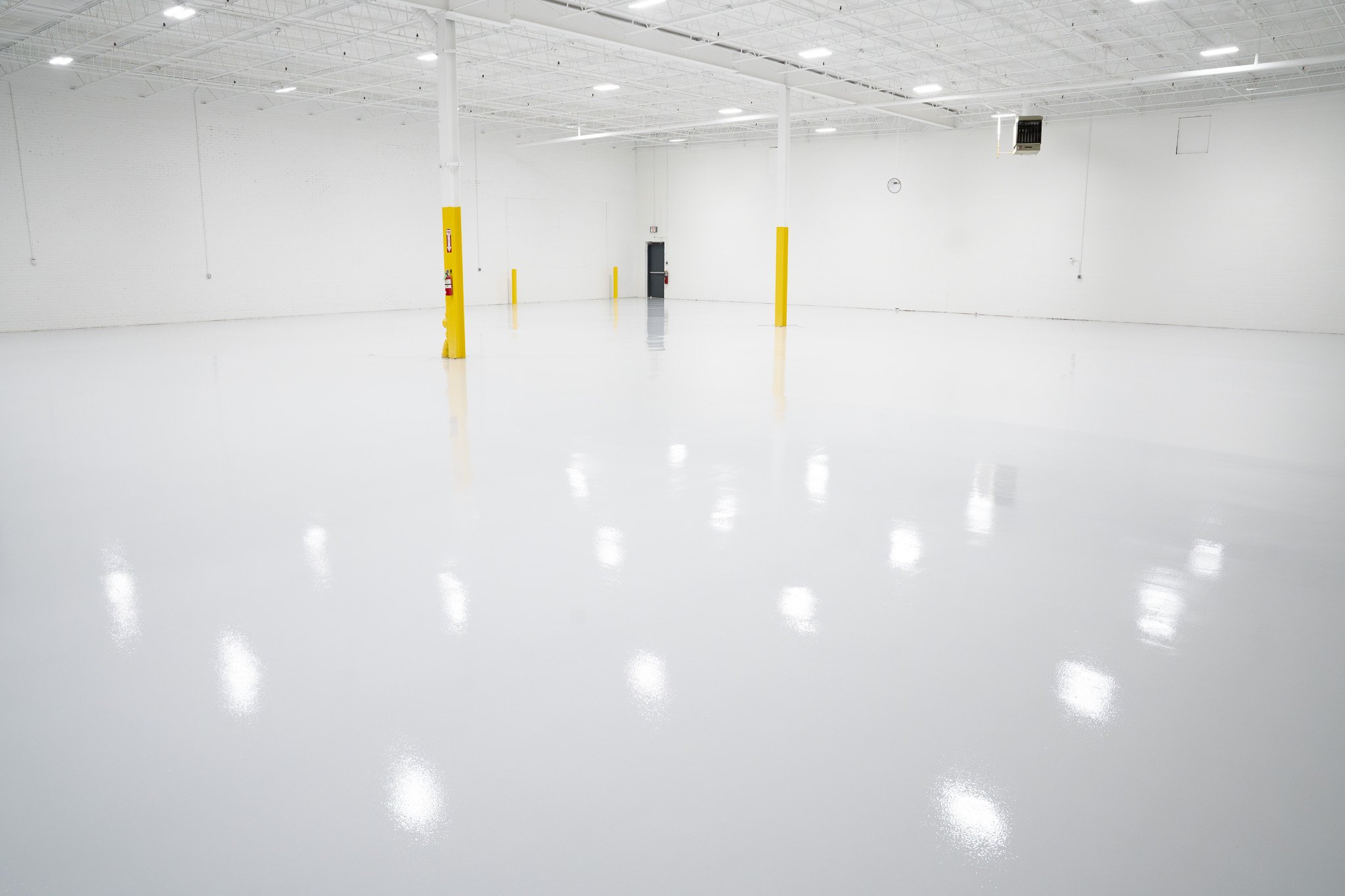
For most data centers and electronics facilities, ESD epoxy flooring is considered the preferred solution.
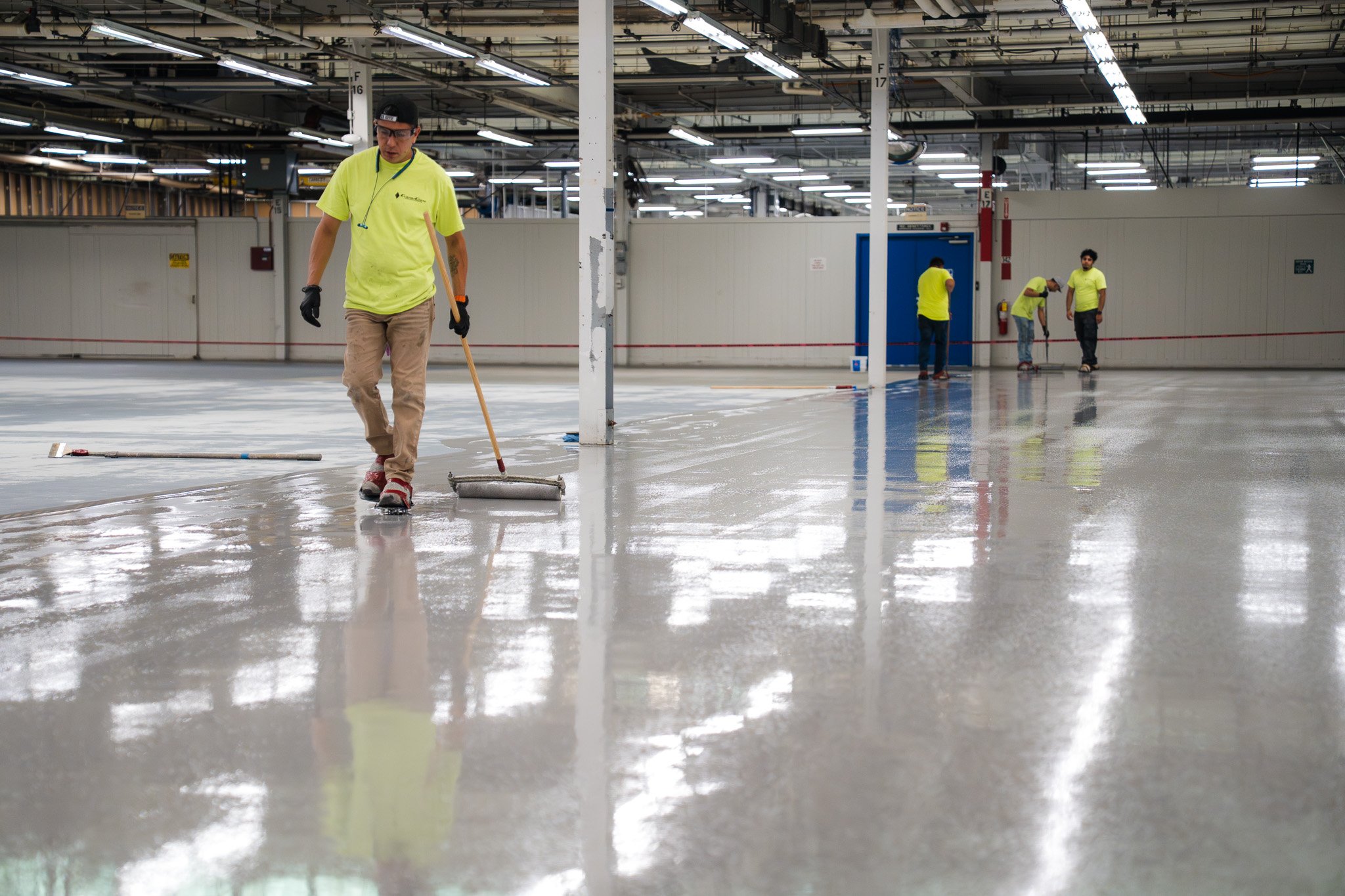
ESD (electrostatic dissipative) epoxy flooring is designed to safely control static electricity by grounding or dissipating electrical charges. This reduces the risk of electrostatic discharge that can damage sensitive electronic equipment.
In addition to static control, epoxy flooring offers:
- Seamless, non-porous surfaces
- High resistance to wear from rolling racks and carts
- Easy cleaning and dust control
- Consistent appearance and performance
Because of these benefits, ESD epoxy flooring is widely used in data centers, server rooms, clean rooms, and electronics production environments.
Are Raised Floors the Only Option?
Raised access floors are common in many data centers, but they still rely on a durable concrete substrate underneath. The concrete floor below must support point loads, resist wear, and remain stable over time.
In many cases, epoxy or ESD epoxy systems are installed beneath raised floors or in areas without raised systems, such as equipment rooms, battery rooms, and corridors.
What About Polished Concrete or Other Coatings?
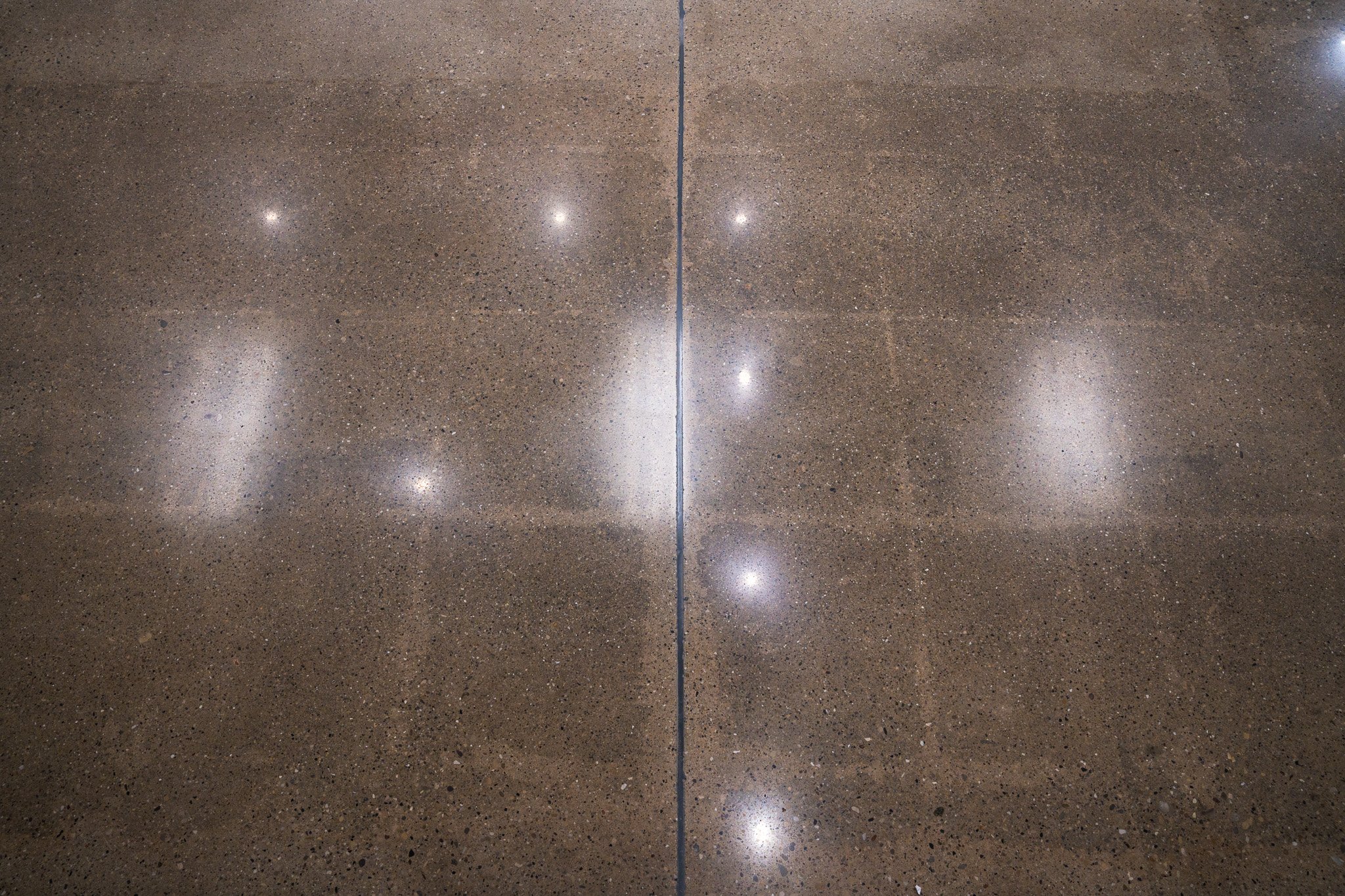
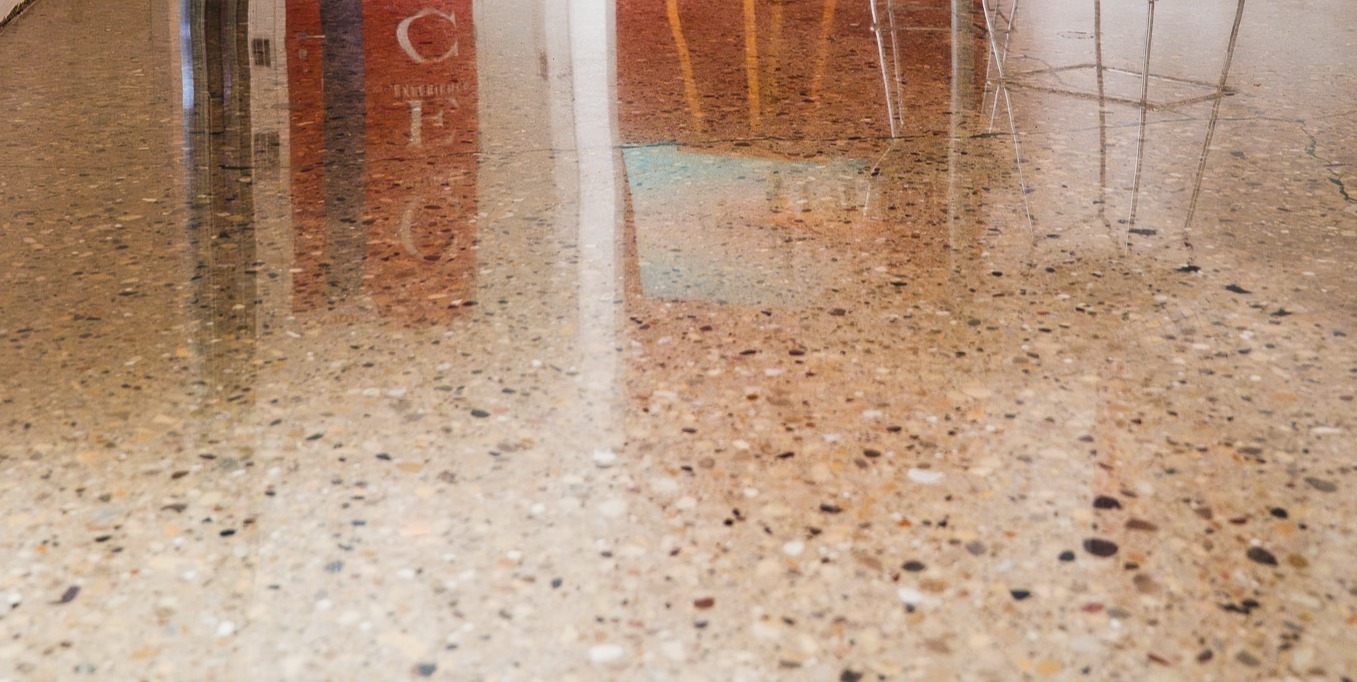
While polished concrete and sealed concrete can work in some technical spaces, they typically do not provide static control on their own. In electronics environments where ESD protection is required, these options may fall short unless paired with additional treatments.
Other coating systems may offer durability, but without ESD properties, they are usually not recommended for sensitive electronics areas.
Factors That Influence the Best Flooring Choice
No two facilities are exactly alike. The best flooring system depends on:
- Equipment sensitivity
- Rolling load requirements
- Humidity and temperature control
- Whether ESD compliance is required
- Budget and long-term maintenance expectations
Understanding these factors helps narrow the right solution before installation begins.
Final Thoughts
For most data centers and electronics facilities, ESD epoxy flooring provides the right balance of static control, durability, cleanliness, and long-term performance. While other flooring options exist, few are designed specifically to protect sensitive electronic environments.
If you’re planning a flooring upgrade or new installation, one of the fastest ways to get direction is to estimate costs early. To explore pricing based on your facility’s needs, try CustomCrete’s pricing estimator to see which flooring solutions may fit your project.
.jpg?width=2048&height=1365&name=CC108559%20(1).jpg)
.png?width=11520&height=9216&name=Untitled%20design%20(56).png)

.jpg?width=2048&height=1365&name=CC106221%20(1).jpg)
.jpg?width=2048&height=1365&name=CC102459%20(1).jpg)