
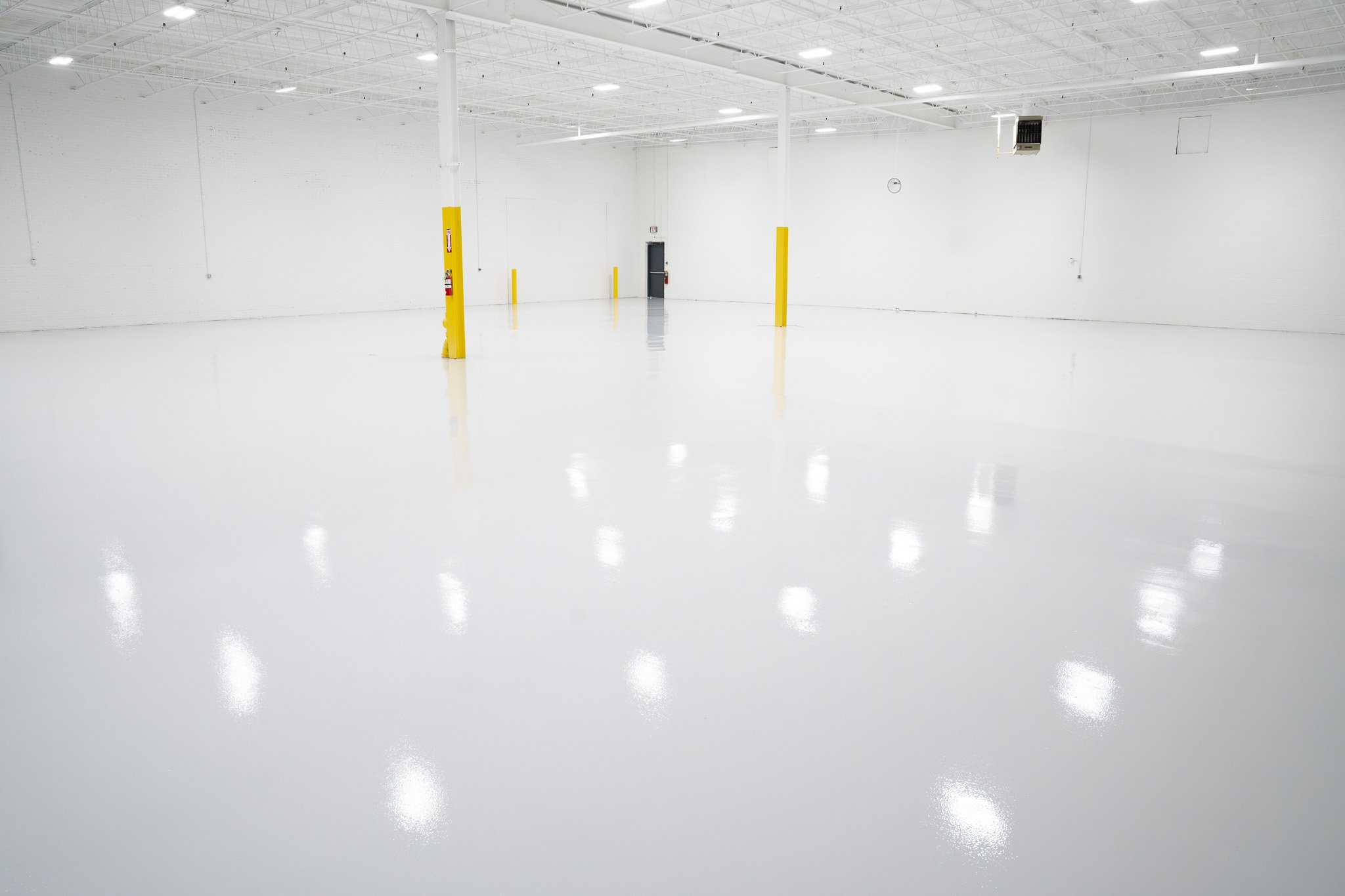
Choosing the right floor system for a commercial space or warehouse isn’t always straightforward. Many facilities deal with heavy forklift traffic, moisture issues, chemical exposure, and constant wear. The challenge is that no single concrete coating works best in every environment.
Facility managers often compare options like epoxy, urethane cement, and polyaspartic systems—but each one performs differently depending on the conditions. With nearly 20 years of experience and over 1 million square feet installed, CustomCrete has seen how the right choice can extend floor life and how the wrong one can lead to early failure.
This guide breaks down the most common coating options and explains how to determine which concrete coating is right for your facility.
Key Takeaways
- There is no one size fits all concrete coating. The best option depends on your environment.
- Factors like traffic, moisture, and chemical exposure should drive your decision.
- Matching the coating system to your facility conditions improves long-term performance.

Why Choosing the Right Coating Matters
Commercial and warehouse floors are exposed to constant stress. From forklifts and pallet jacks to spills and cleaning routines, the flooring system must perform under pressure.
The right concrete coating can:
- Protect the concrete slab from damage
- Improve safety with slip-resistant surfaces
- Reduce maintenance and repair costs
- Extend the lifespan of the floor
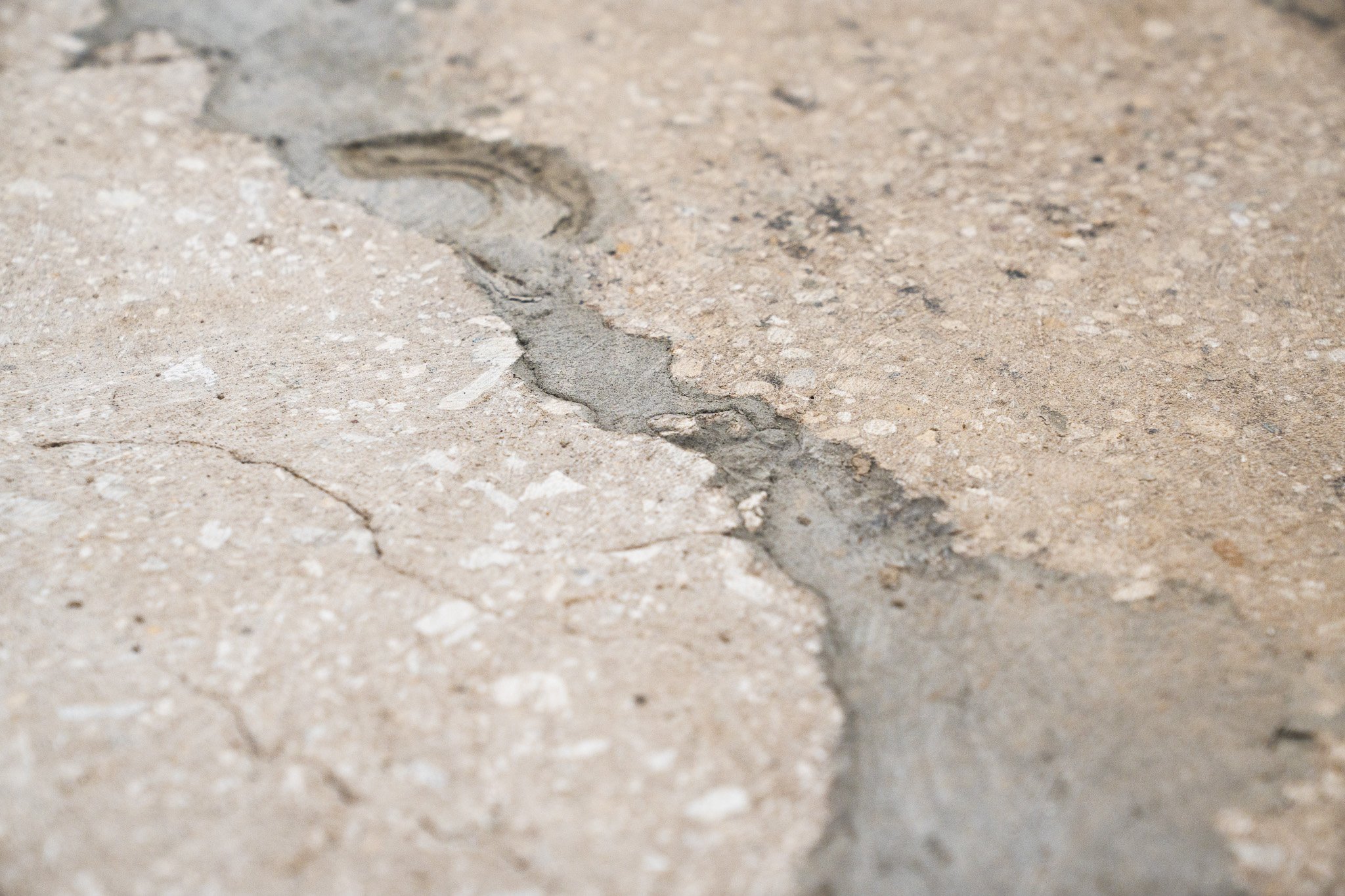
Choosing the wrong system, however, can lead to peeling, cracking, and costly downtime.
Key Factors to Consider Before Choosing a Coating
Before comparing specific systems, it’s important to understand what your facility needs.
Traffic Levels
- Light traffic: Offices or low-use spaces
- Moderate traffic: Retail or storage areas
- Heavy traffic: Warehouses with forklifts and equipment
Higher traffic requires stronger, more durable coatings.
Moisture Conditions
Moisture vapor can move through concrete and cause coatings to fail.
- Low moisture: Standard systems may work
- High moisture: Requires moisture-tolerant systems
Understanding moisture is critical when selecting a concrete coating. Be sure to ask about moisture testing.
Chemical Exposure
If your facility deals with oils, solvents, or cleaning agents, chemical resistance becomes essential.
Maintenance Expectations
Some coatings require periodic recoating, while others offer long-term durability with minimal upkeep.
Epoxy Coatings
Epoxy is one of the most widely used options for commercial and warehouse environments.
Best For
- Warehouses
- Manufacturing facilities
- Retail spaces
Advantages
- Strong adhesion to concrete
- Good chemical resistance
- Seamless and easy to clean
- Cost-effective for many applications
Limitations
- Can be sensitive to moisture vapor
- May not perform well under thermal shock
- Can show wear over time in high-traffic areas
Epoxy is a versatile concrete coating, but it performs best in controlled environments.
Urethane Cement Systems
Urethane cement is designed for more demanding conditions and is often used in industrial environments.
Best For
- Food and beverage facilities
- Cold storage and freezers
- Heavy industrial spaces
Advantages
- Excellent resistance to thermal shock
- High durability under heavy traffic
- Strong moisture tolerance
- Resistant to aggressive chemicals
Limitations
- Higher upfront cost
- More specialized installation
For facilities with harsh conditions, urethane cement is often one of the most durable concrete coating options.
Polyaspartic Coatings
Polyaspartic systems are known for fast cure times and flexibility.
Best For
- Facilities needing quick installation
- Areas exposed to UV light
- Projects with limited downtime
Advantages
- Fast curing (often within hours)
- UV stability (won’t yellow in sunlight)
- Flexible and durable
Limitations
- Requires experienced installation
- Can be more expensive than standard epoxy
Polyaspartic coatings are ideal when speed and flexibility are priorities.
Polished Concrete
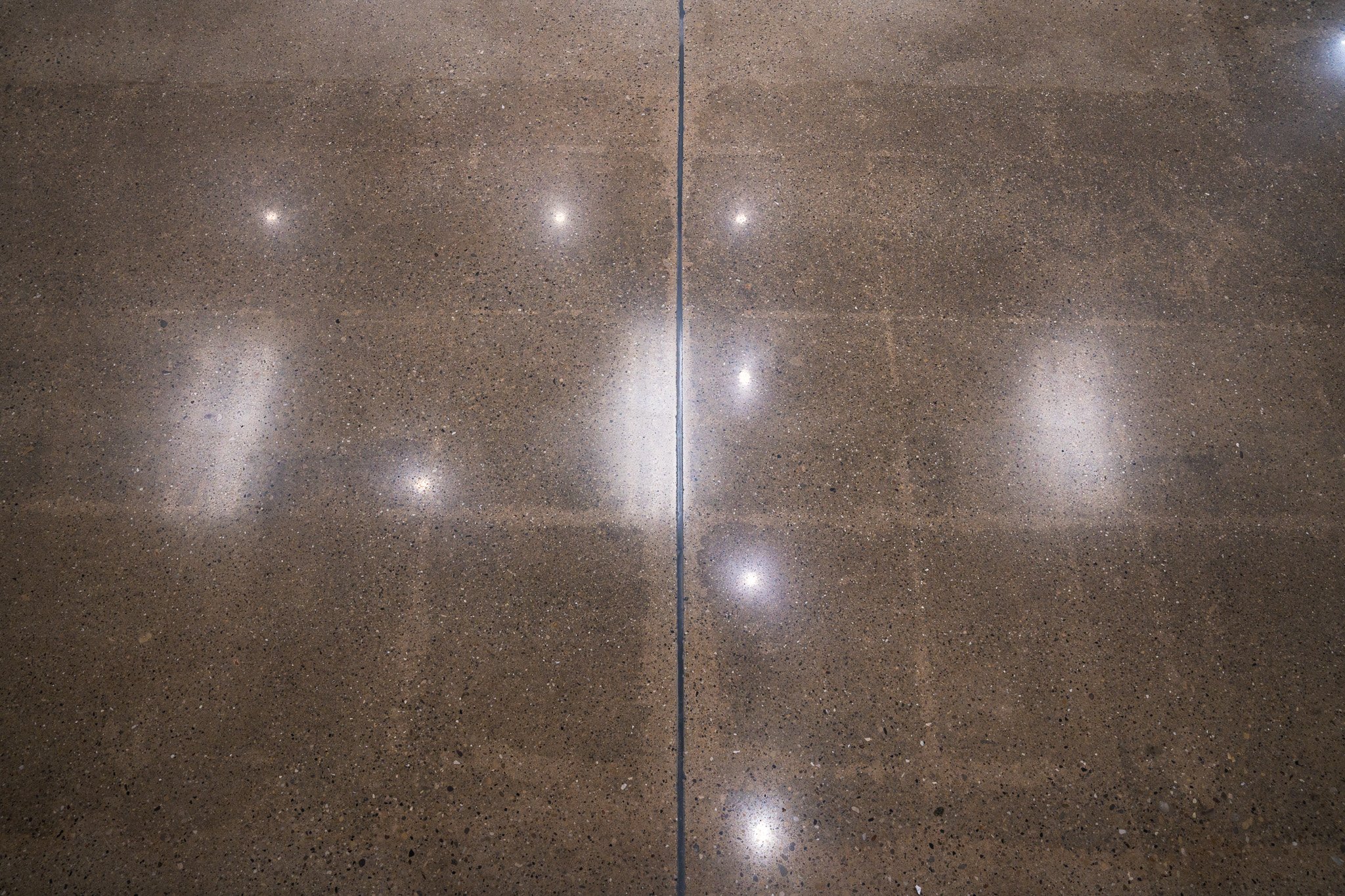
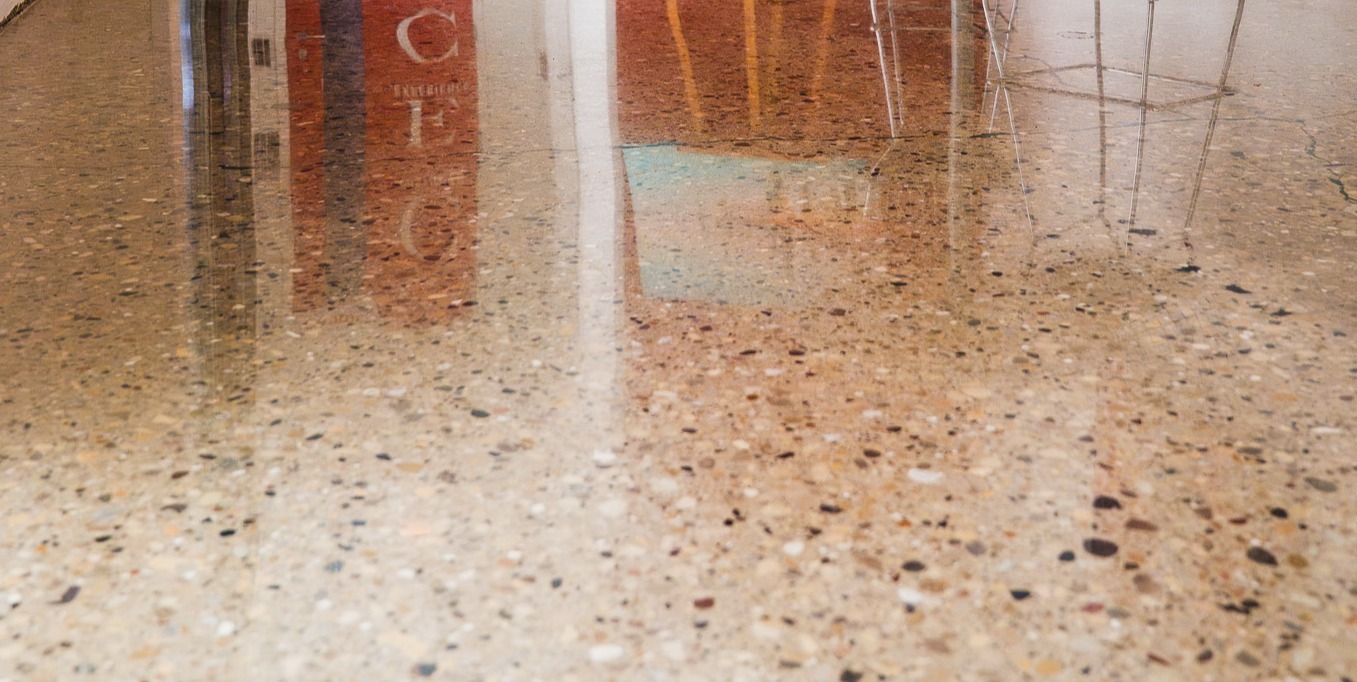
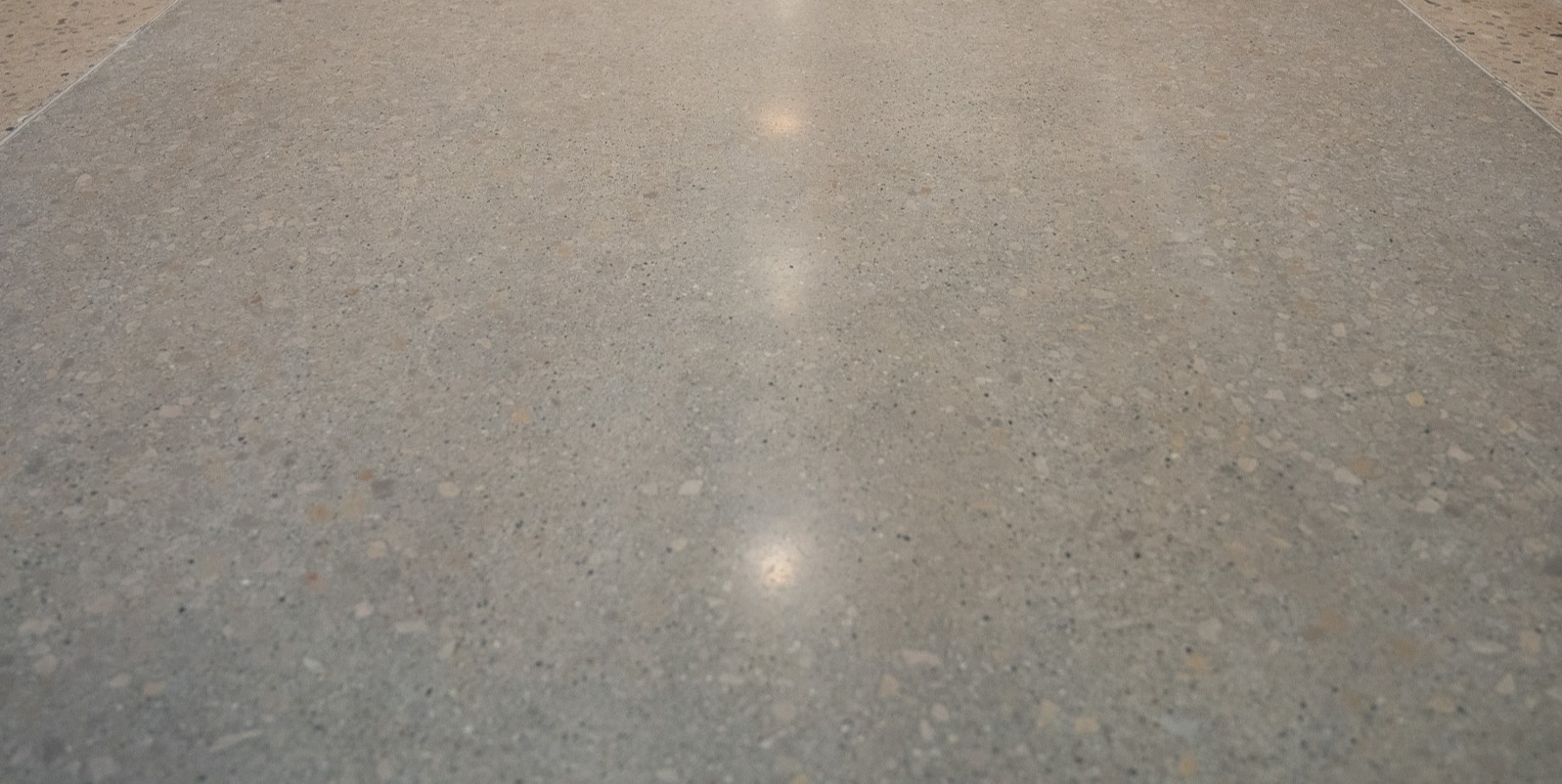
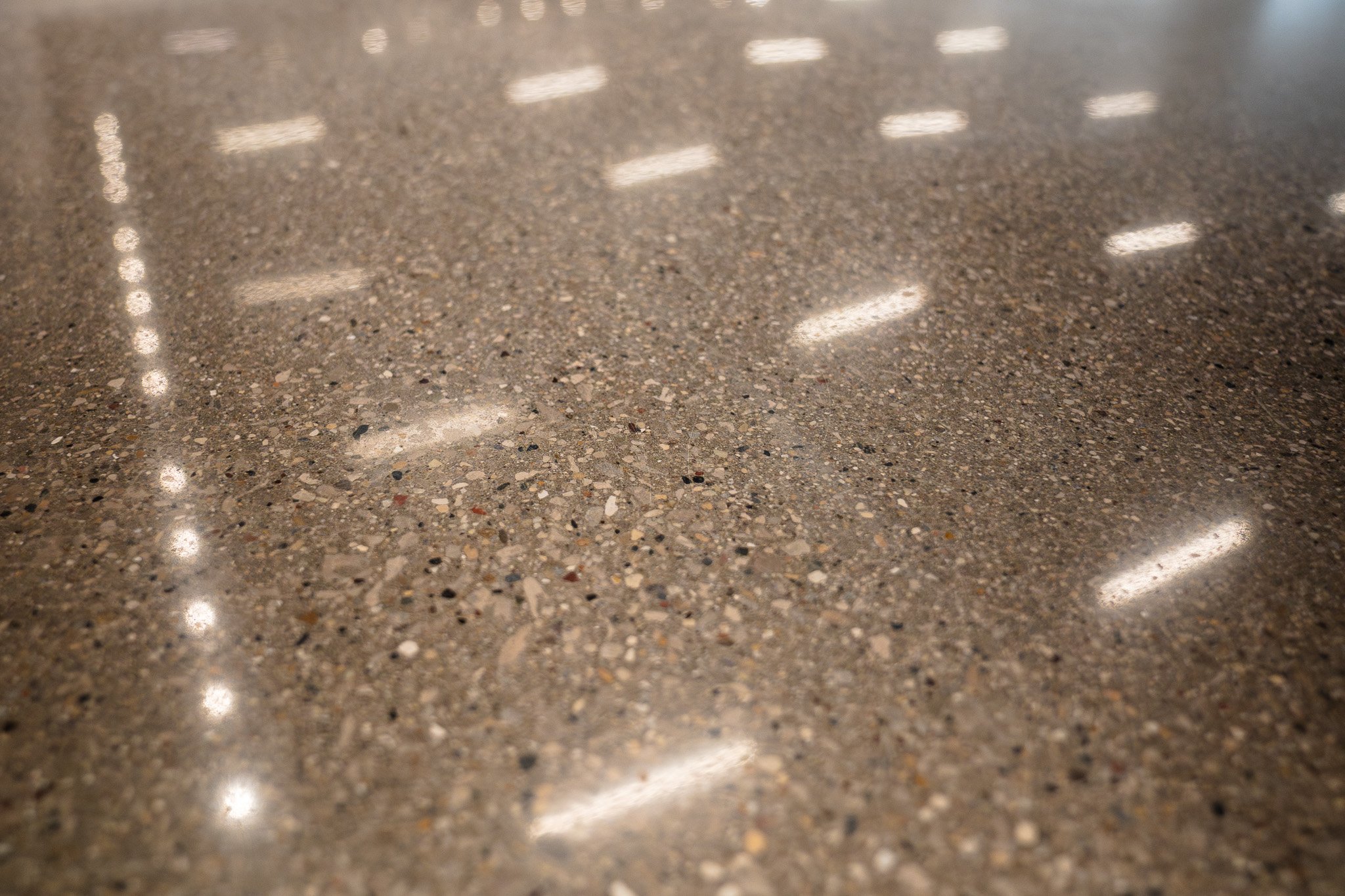
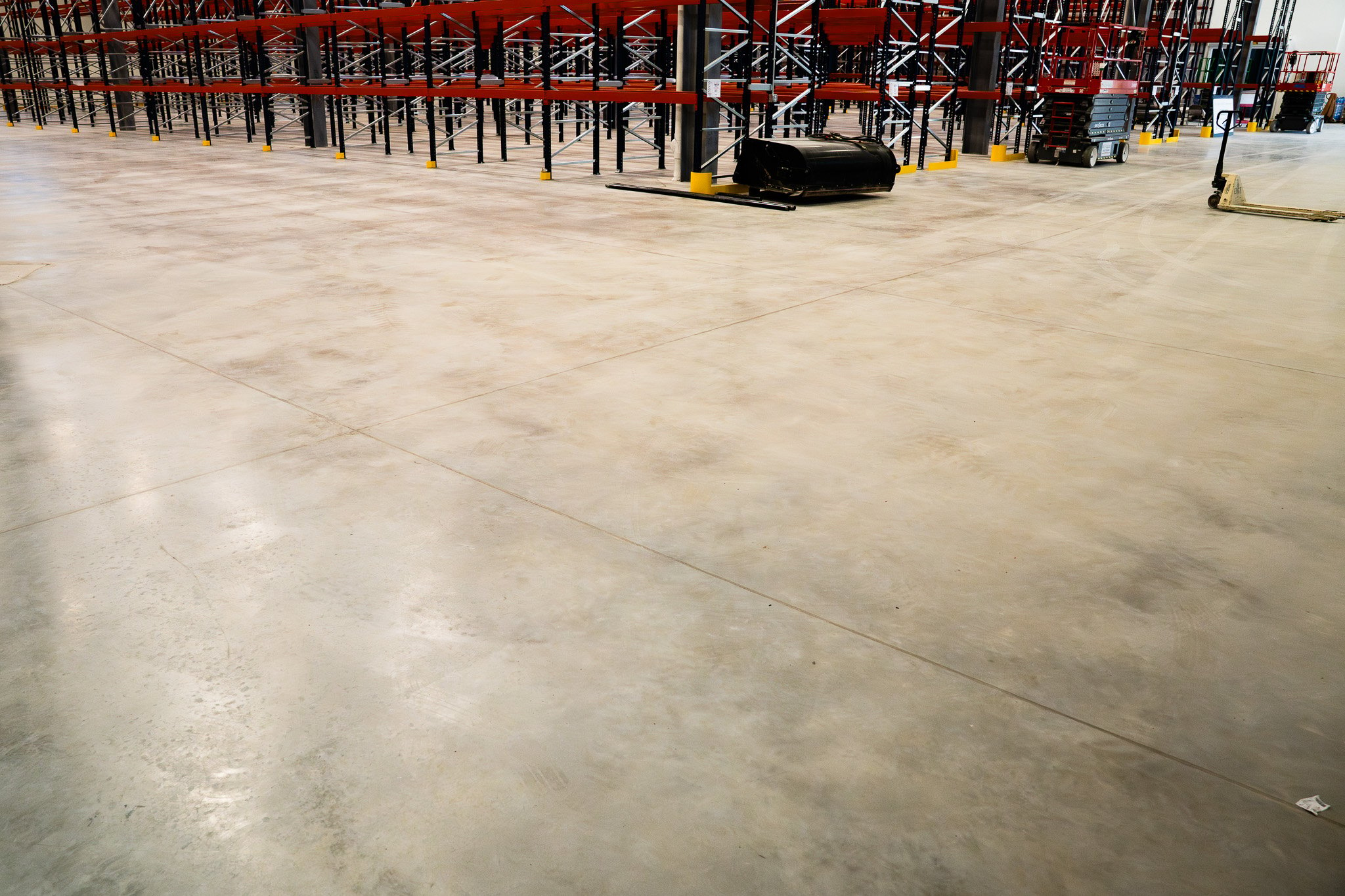
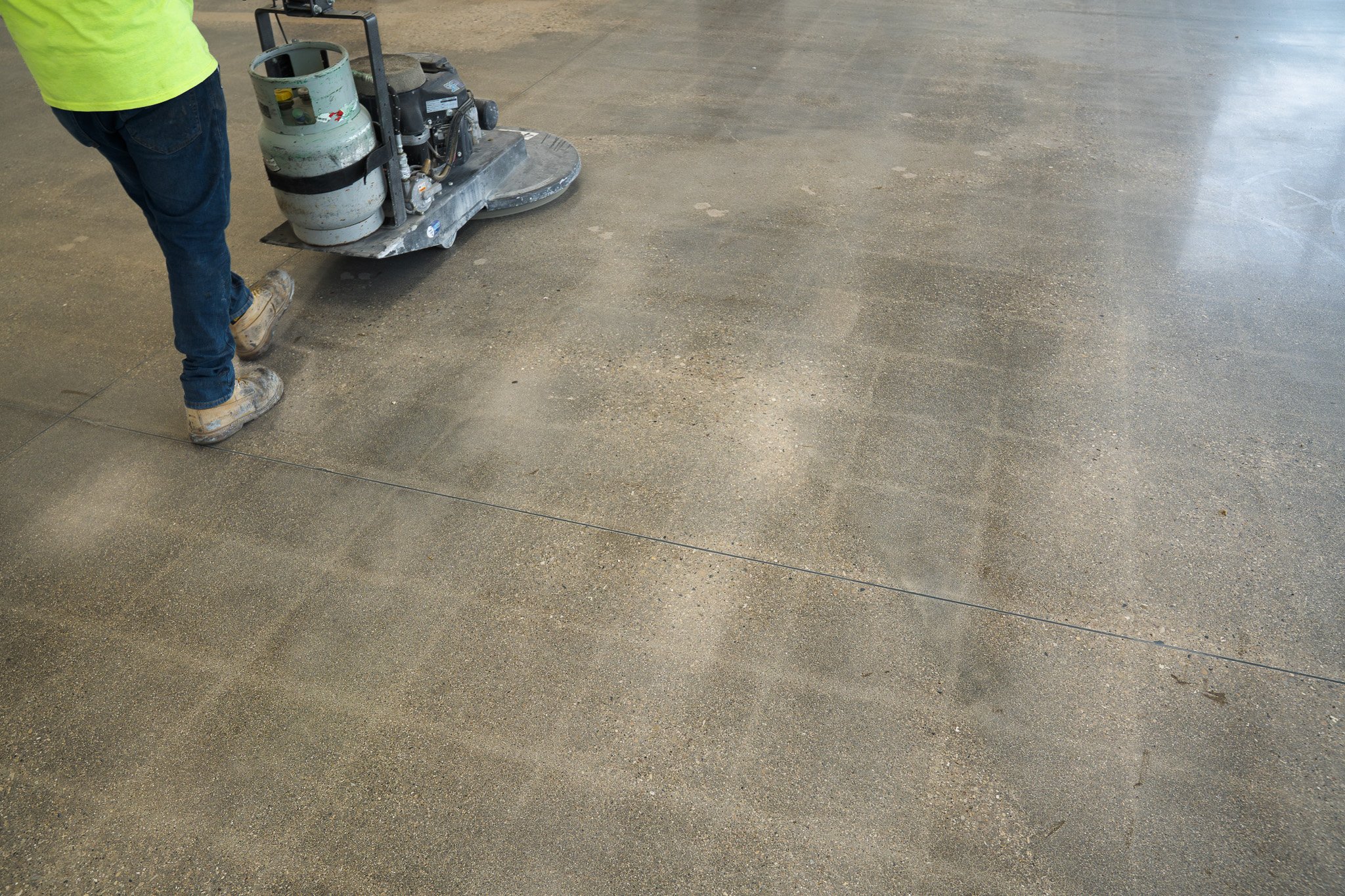
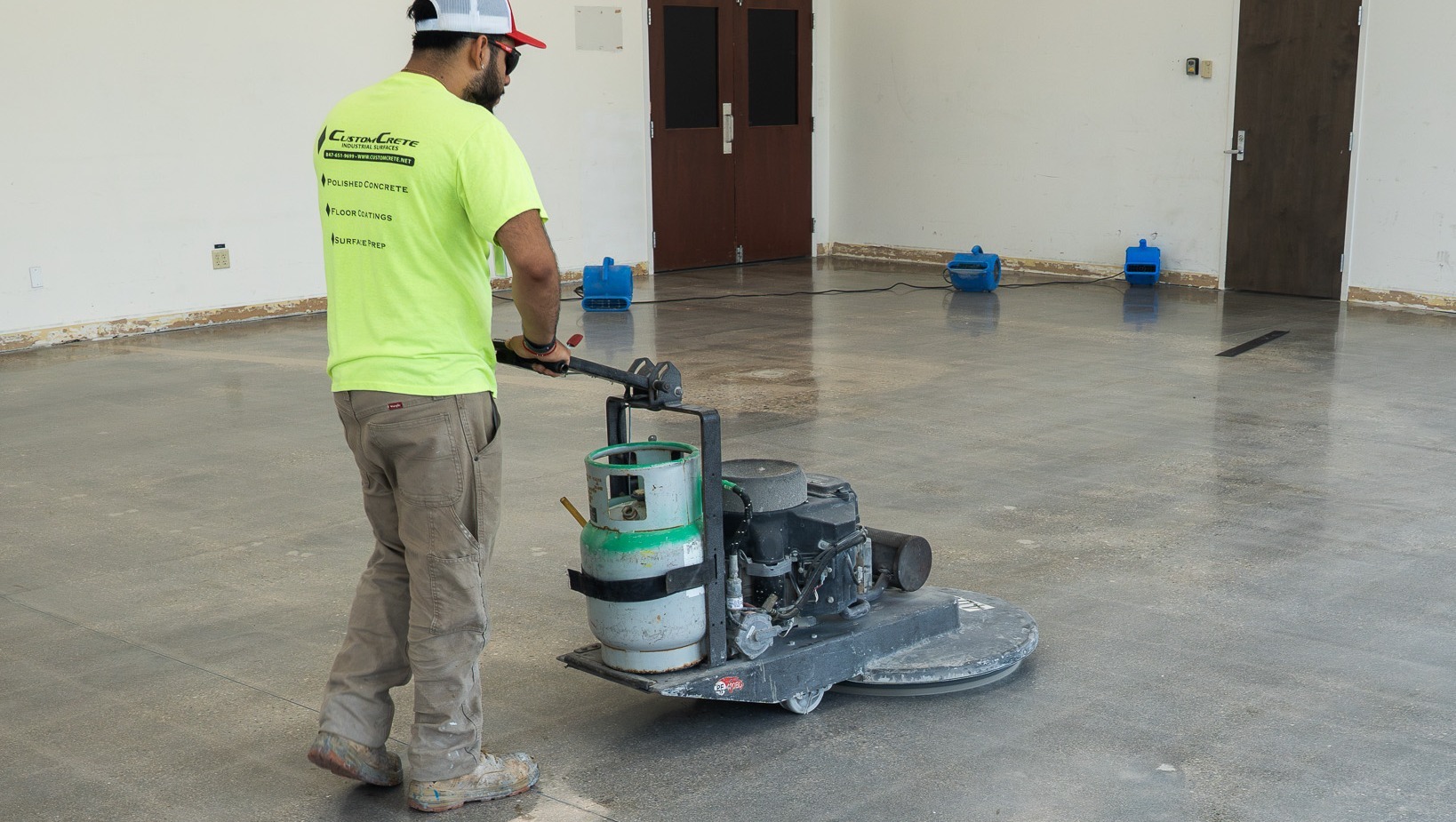
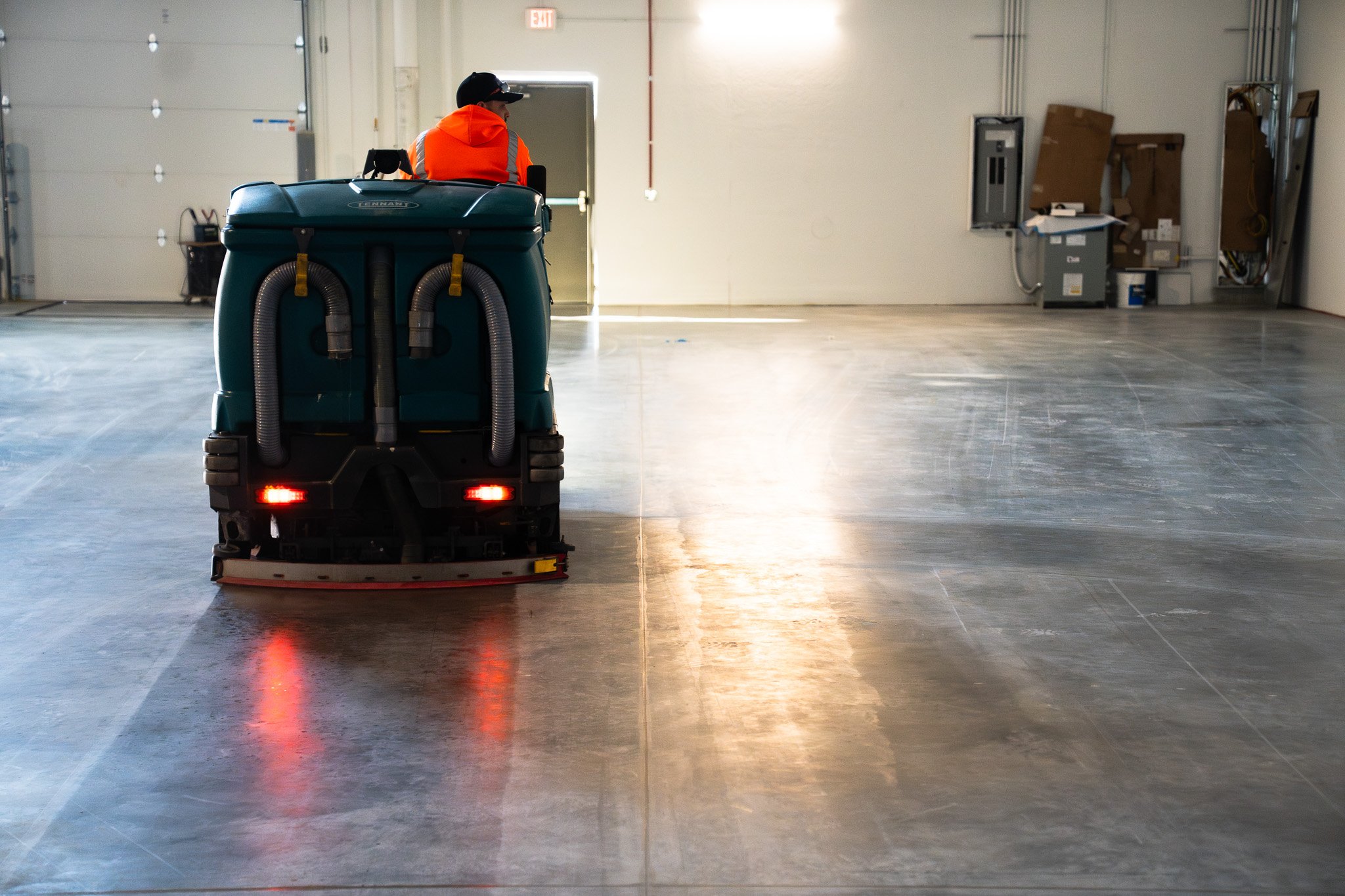
Polished concrete is a mechanical concrete flooring solution that uses grinding, densifying, and polishing techniques to create a durable and low-maintenance surface.
Best For
- Warehouses
- Retail stores
- Distribution centers
- Showrooms and office spaces
Advantages
- Highly durable under foot and forklift traffic
- Low maintenance compared to many coatings
- Dust reduction through densification
- Bright, reflective surface can improve lighting conditions
- Long lifespan when properly maintained
Limitations
- Limited chemical resistance without additional protection
- Existing concrete condition greatly impacts final appearance
- Can become slippery if contaminants like oil or water are present
- Less comfortable underfoot compared to some resinous flooring systems
Polished concrete is often a strong choice for commercial spaces looking for a durable, professional-looking floor with lower long-term maintenance requirements.
Comparing the Options
Each concrete coating performs differently depending on the environment.
- Epoxy: Best for general use and controlled conditions
- Urethane cement: Best for heavy-duty, high-moisture, or temperature-sensitive environments
- Polyaspartic: Best for fast turnaround and UV-exposed areas
- Polished concrete: Best for offices and areas with heavy machinery and frequent traffic.
Choosing the right system means matching these strengths to your facility’s needs.
When One System Isn’t Enough
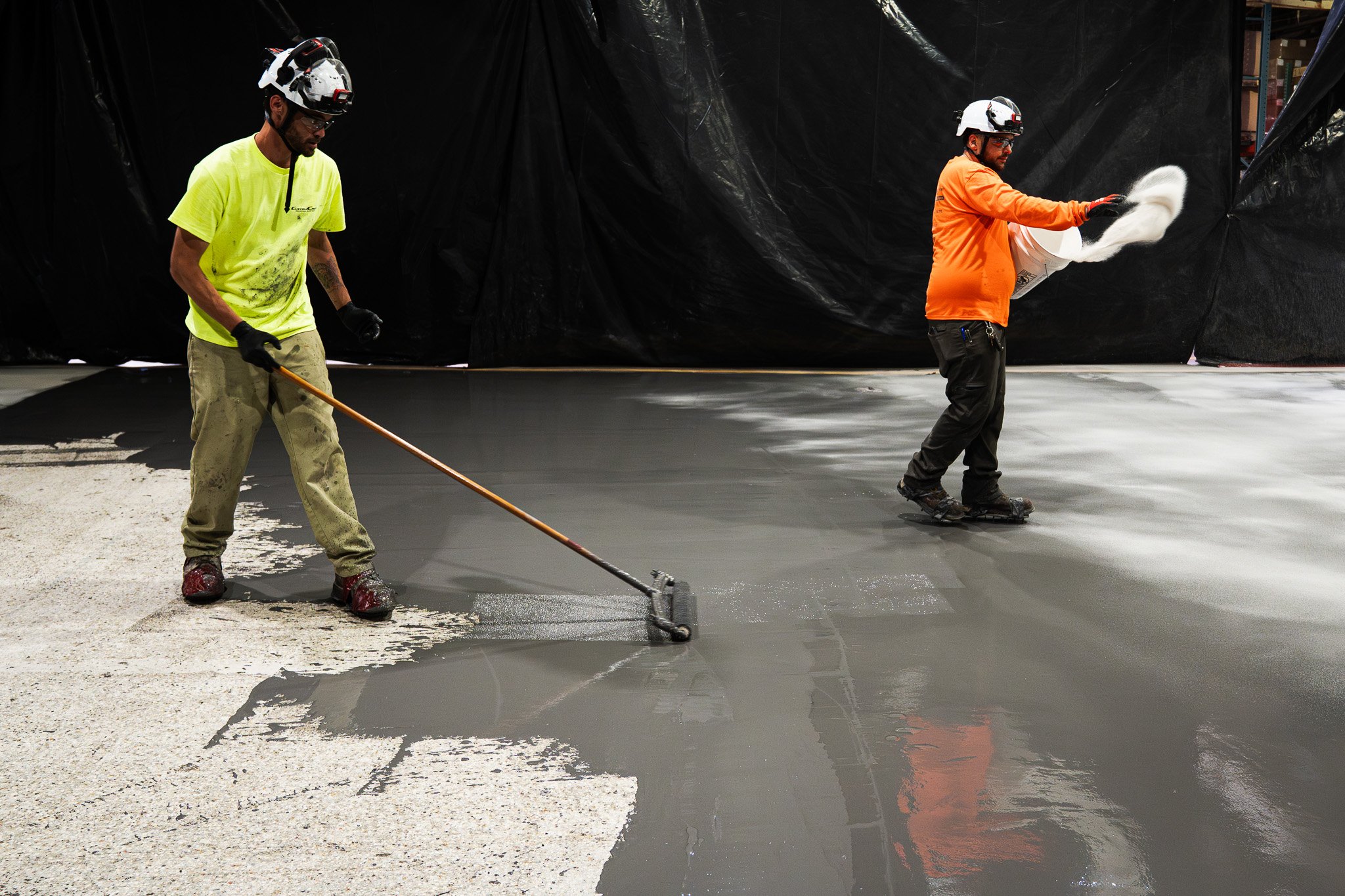
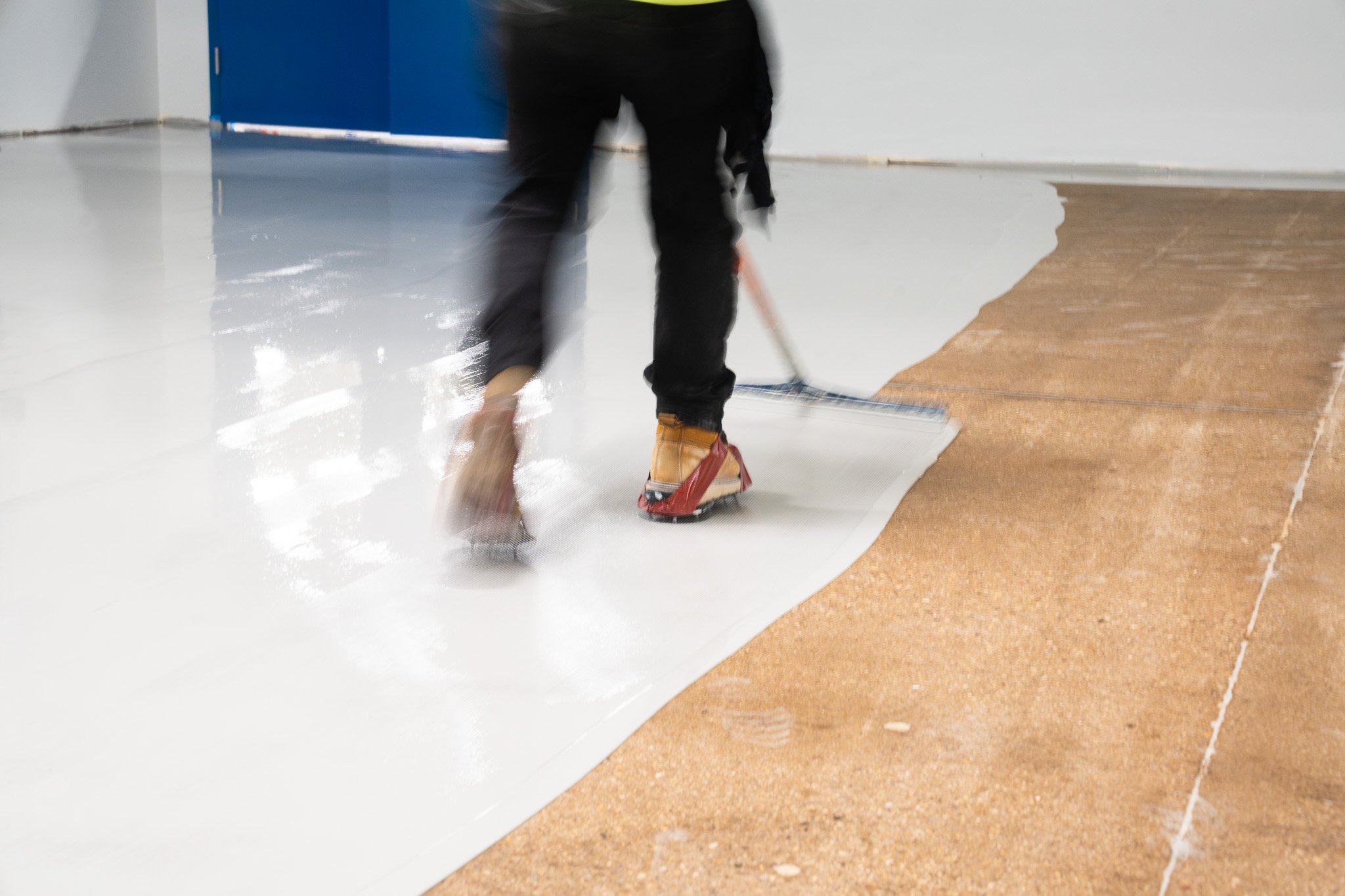
In many cases, flooring systems are built in layers using multiple materials.
For example:
- Epoxy base coat for strength
- Broadcast system for slip resistance
- Urethane topcoat for protection
Combining systems can improve performance and extend the life of the floor.
Common Mistakes to Avoid
When selecting a concrete coating, avoid:
- Choosing based on price alone
- Ignoring moisture conditions
- Not considering traffic levels
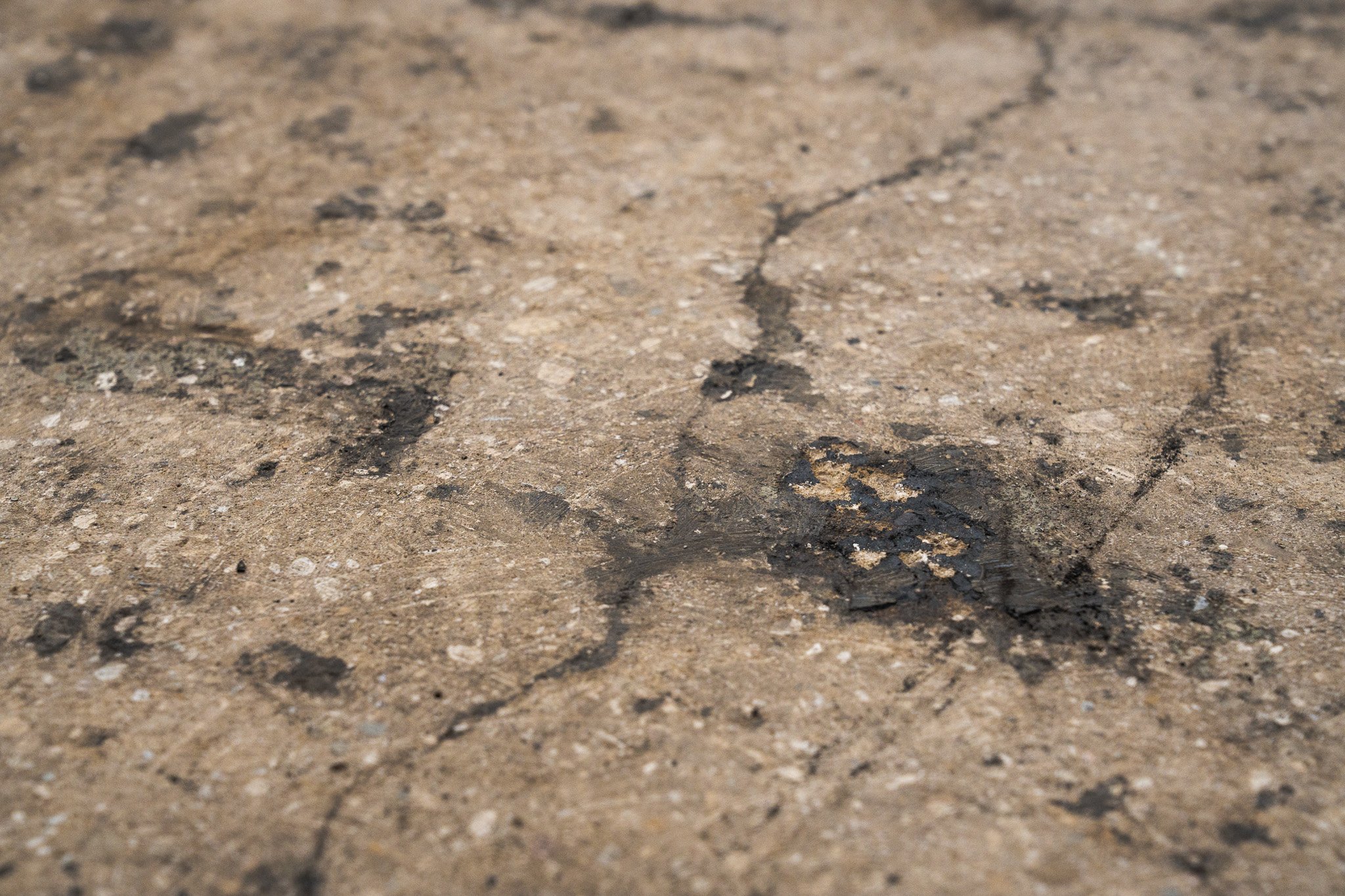
- Skipping proper surface preparation
- Overlooking long-term maintenance
Avoiding these mistakes helps ensure your floor performs as expected.
FAQ: Concrete Coatings for Commercial Spaces
What is the most durable coating for warehouses?
Urethane cement is often the most durable option for heavy industrial use.
Can epoxy handle forklift traffic?
Yes, but high-traffic areas may require thicker or reinforced systems.
Which coating is best for fast installation?
Polyaspartic coatings are often used when quick turnaround is needed.

Final Thoughts
There is no single “best” concrete coating for every commercial space or warehouse. The right solution depends on your facility’s conditions—traffic, moisture, chemical exposure, and operational demands all play a role.
By understanding how each system performs, you can choose a coating that supports long-term durability and minimizes maintenance issues.
If you’re ready to explore pricing based on your facility’s specific needs, try CustomCrete’s pricing estimator to get a clearer idea of your project costs.
.jpg?width=2048&height=1365&name=CC108559%20(1).jpg)
.png?width=11520&height=9216&name=Untitled%20design%20(56).png)
.jpg?width=2048&height=1365&name=CC106221%20(1).jpg)
.jpg?width=2048&height=1365&name=CC102459%20(1).jpg)