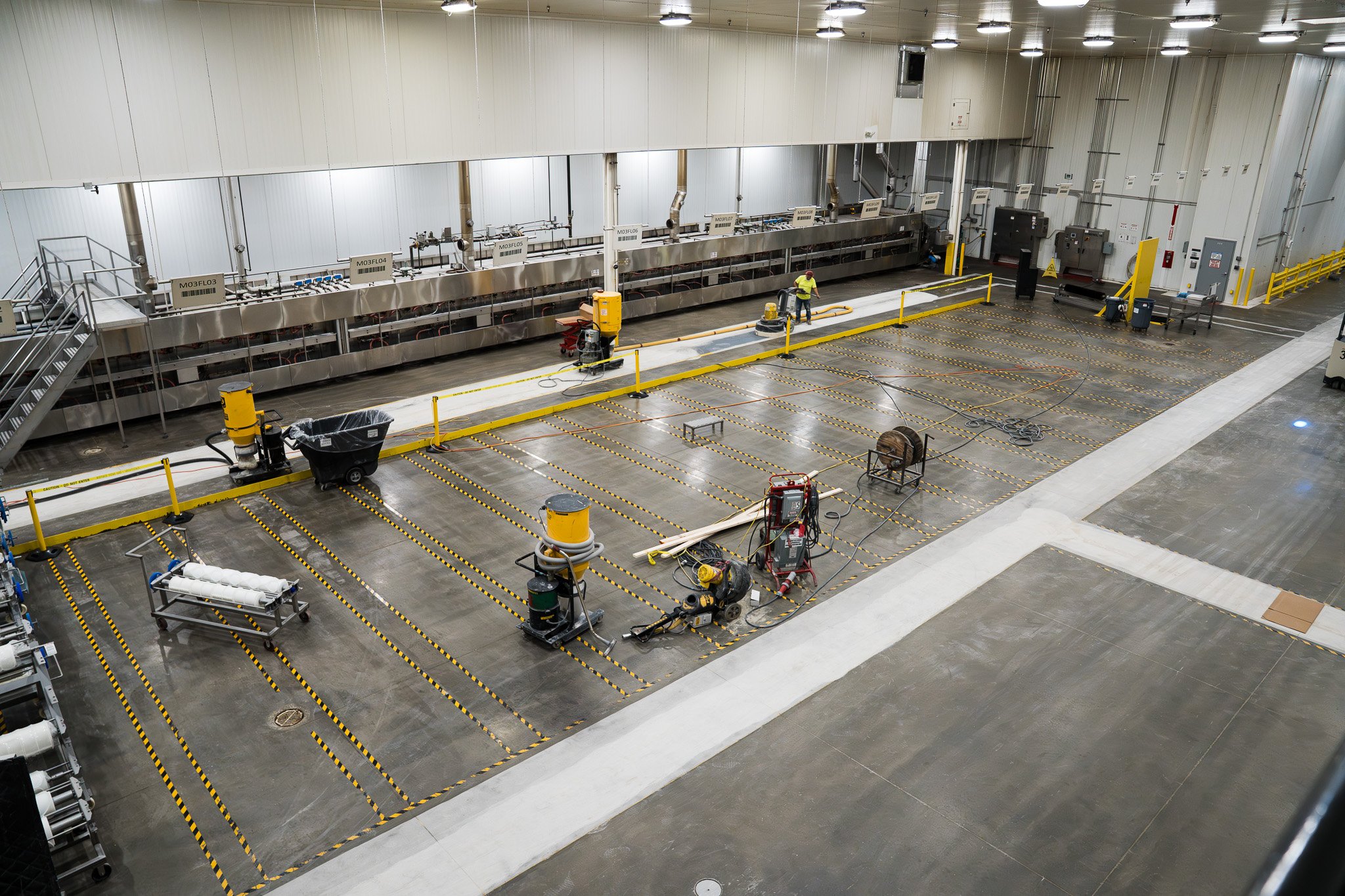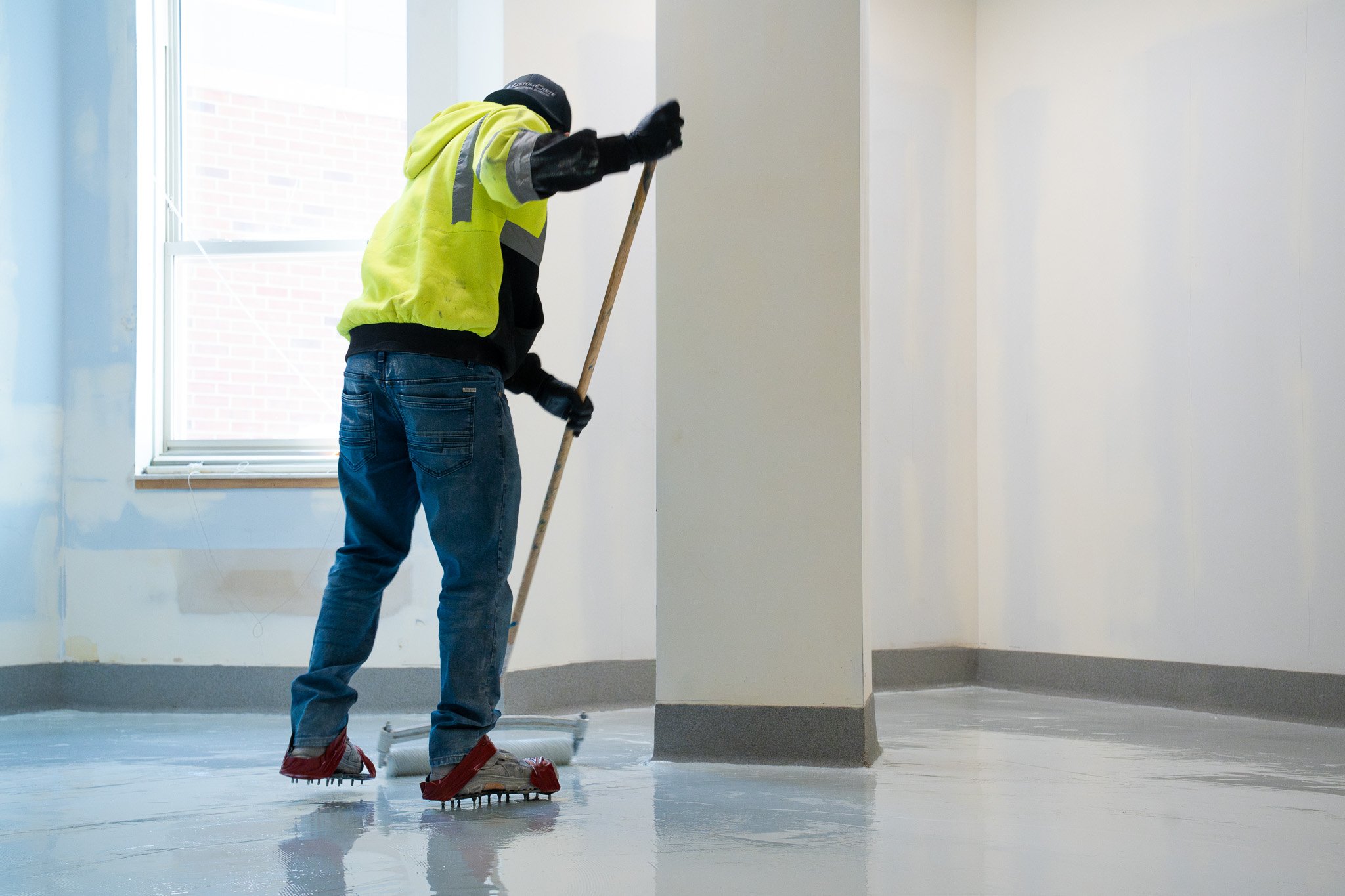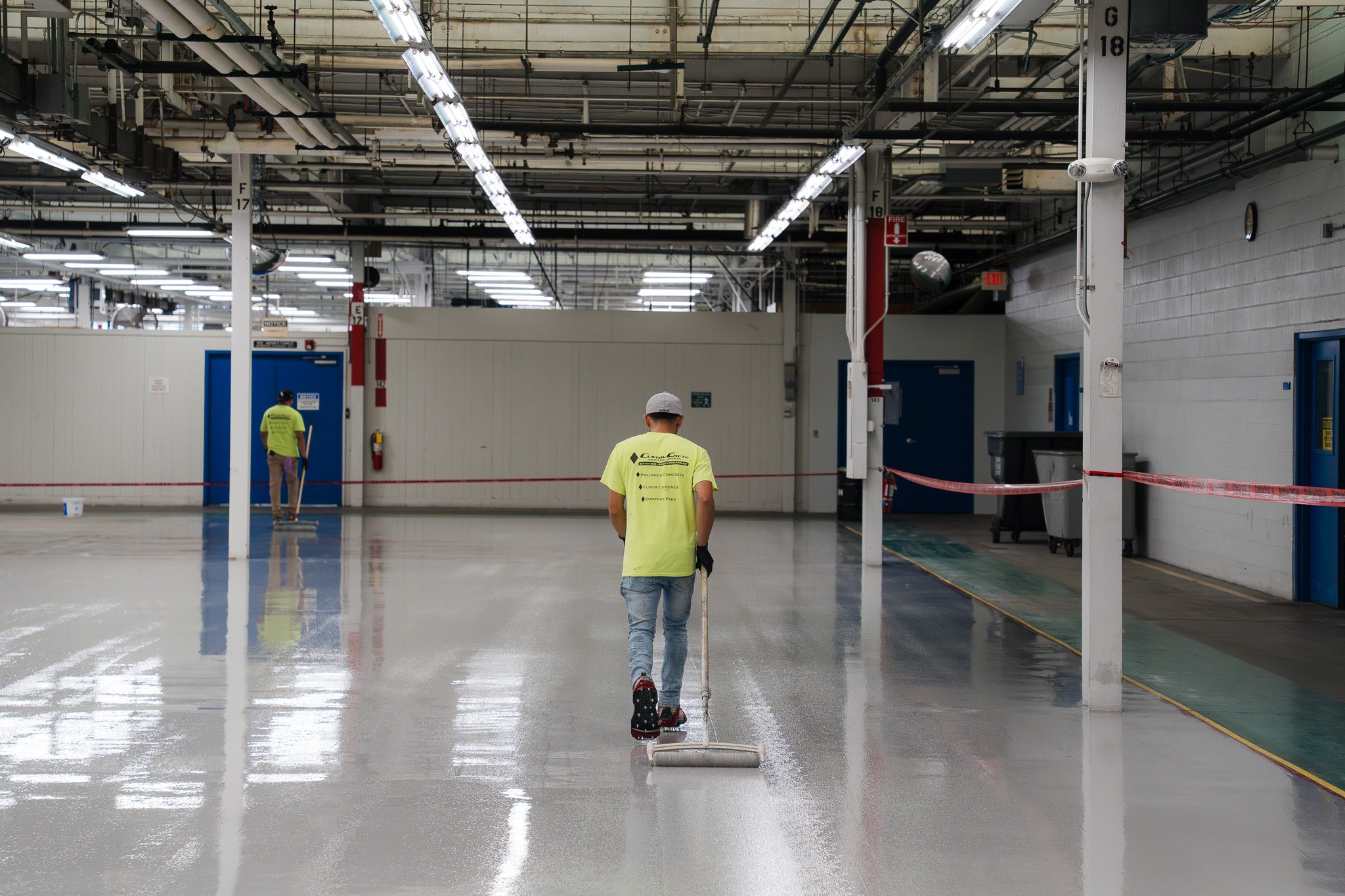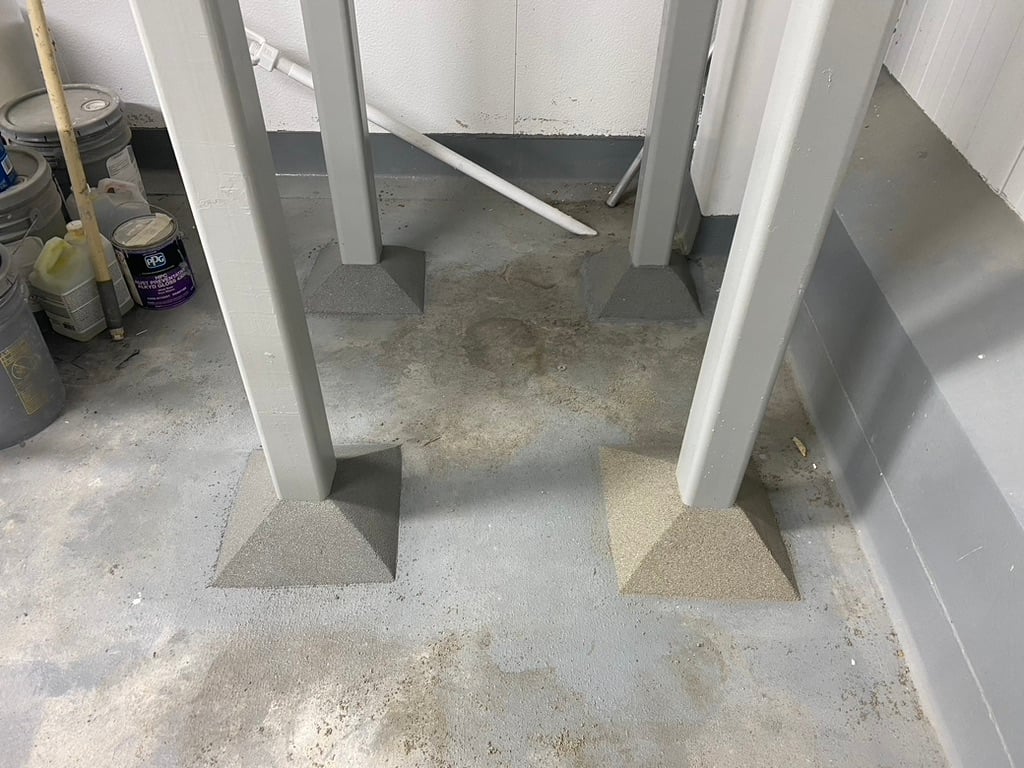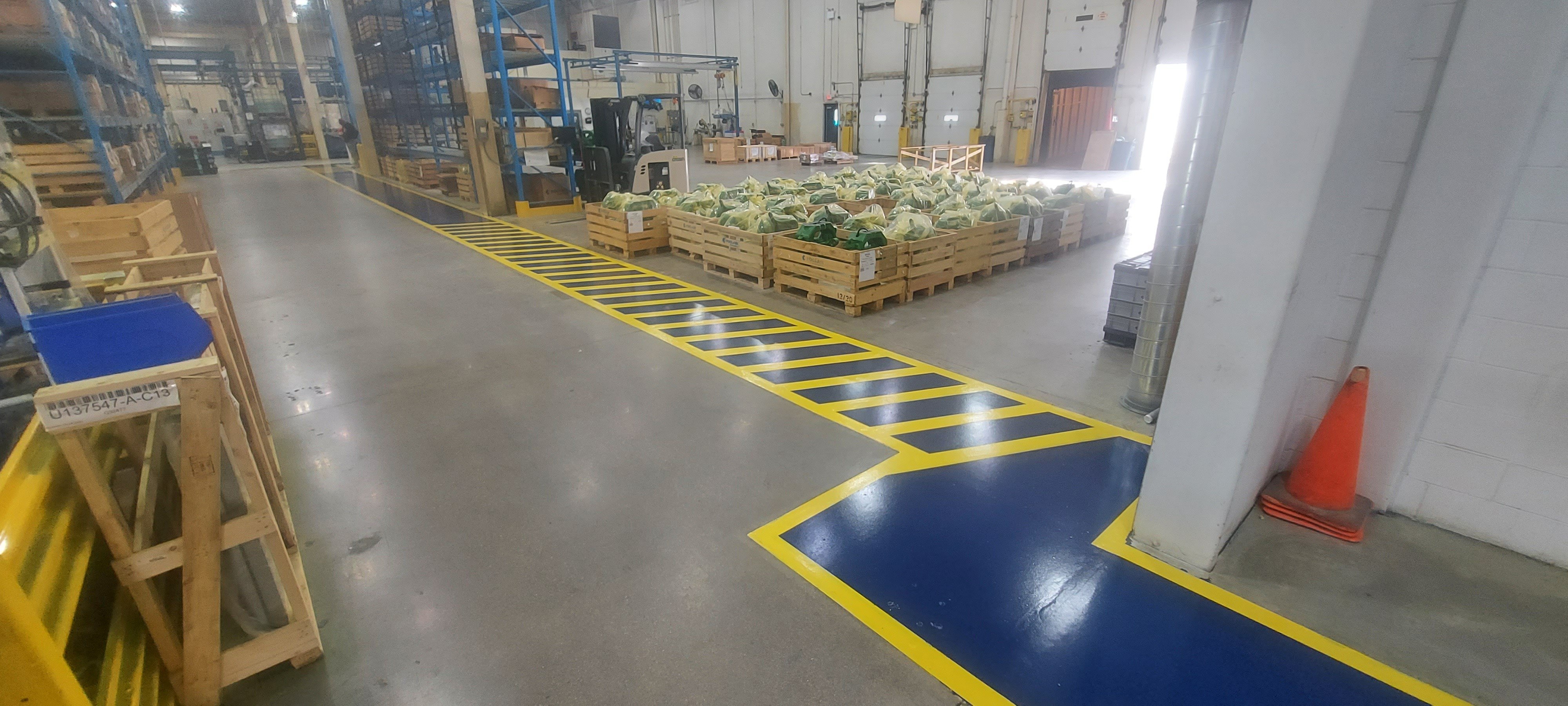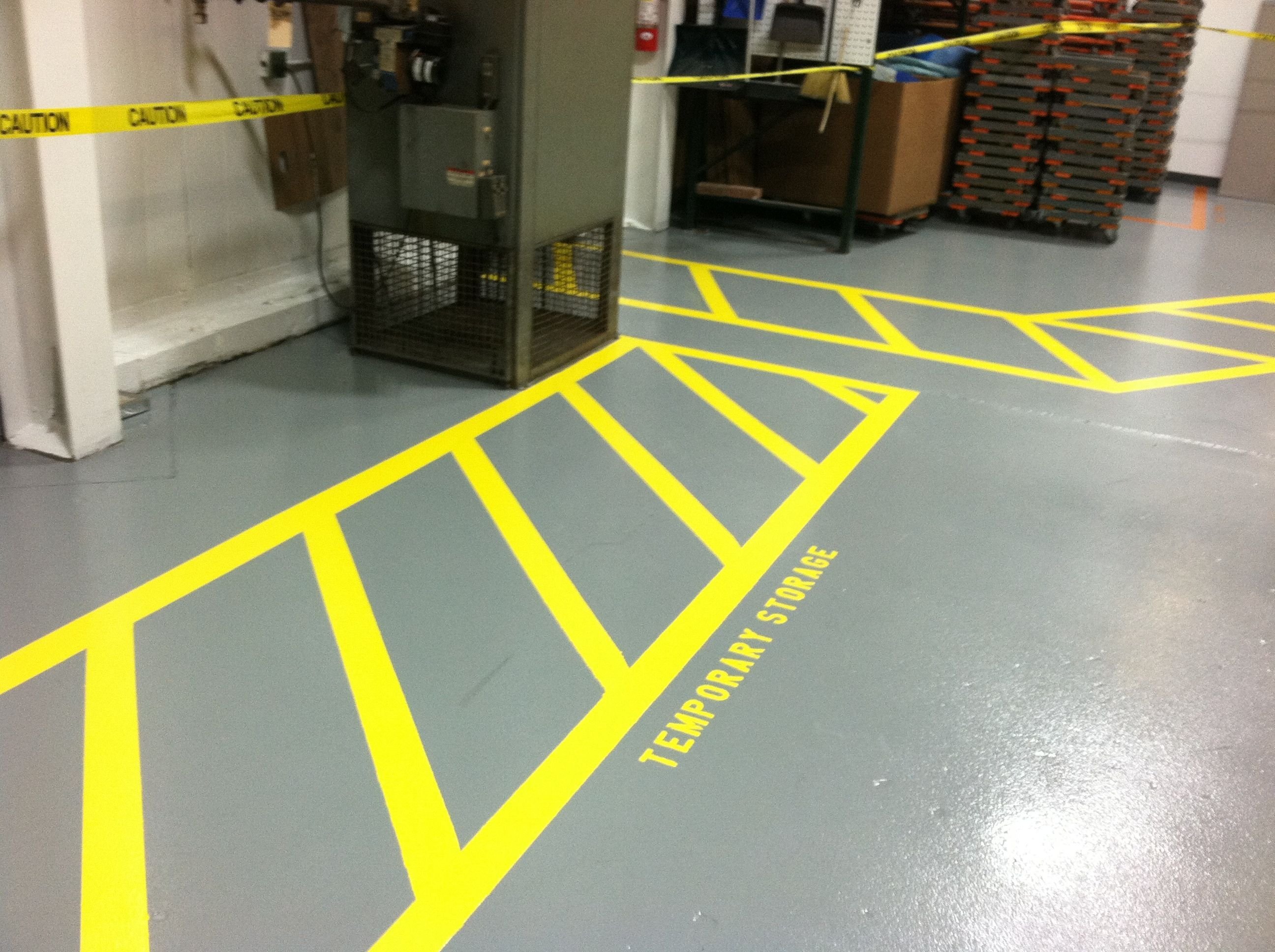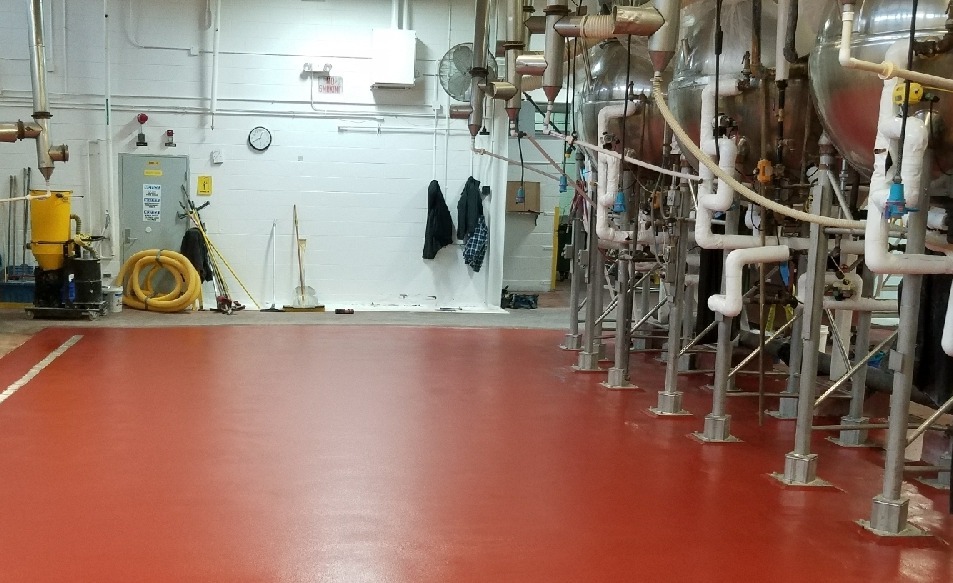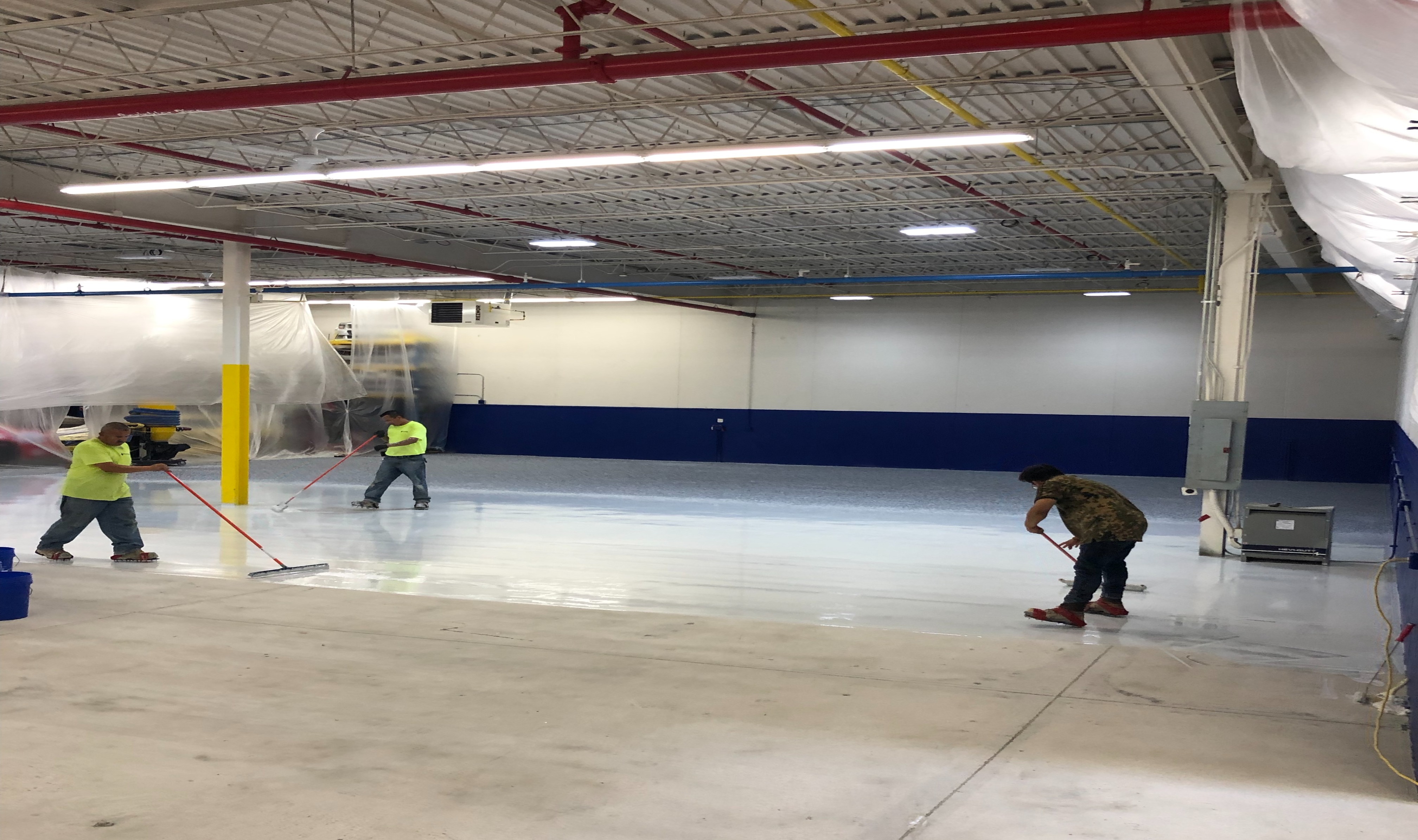

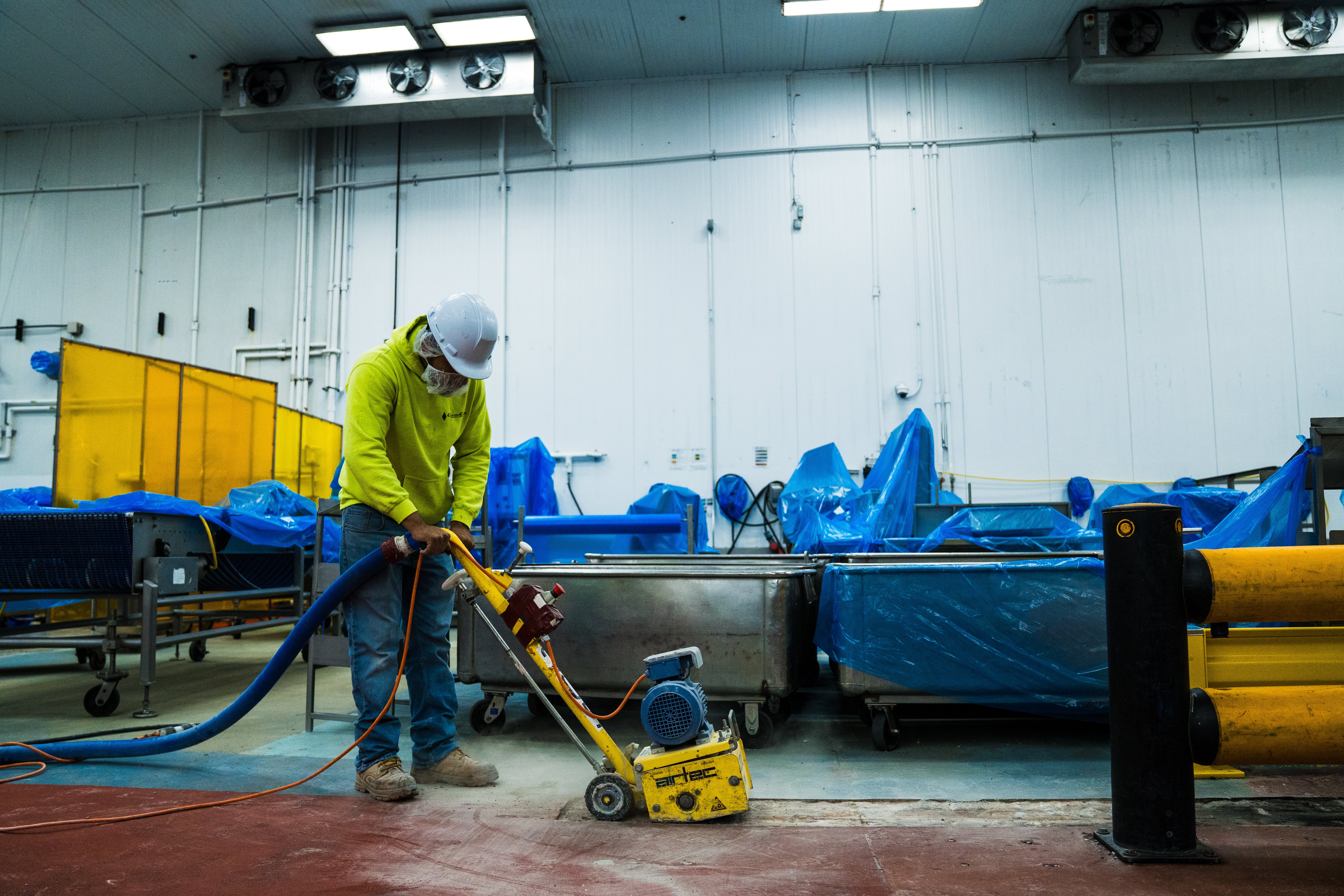
The wrong concrete coating does not directly cause foodborne illness, but it can create conditions that make a food processing facility harder to properly clean and sanitize. Cracked, peeling, porous, or poorly drained floors can trap moisture, food residue, and contaminants in areas that are difficult to reach during routine cleaning.
With nearly 20 years of experience and over 1 million square feet installed, CustomCrete has worked with commercial and industrial flooring in demanding environments where sanitation and durability matter. Here’s what facility managers should understand when choosing flooring for food processing areas.
Key Takeaways
- Flooring does not directly cause foodborne illness, but damaged or difficult-to-clean surfaces can increase sanitation concerns.
- Food processing flooring should be selected based on cleanability, moisture, drainage, chemicals, temperature, traffic, and maintenance.
- A coating that works in a warehouse or general manufacturing facility may not be appropriate for a food processing environment.
How Can the Wrong Concrete Coating Create Food Safety Risks?
Food processing floors face conditions that many standard commercial coatings aren't designed to handle. Water, oils, food byproducts, cleaning chemicals, equipment traffic, and temperature changes can all put stress on a flooring system.
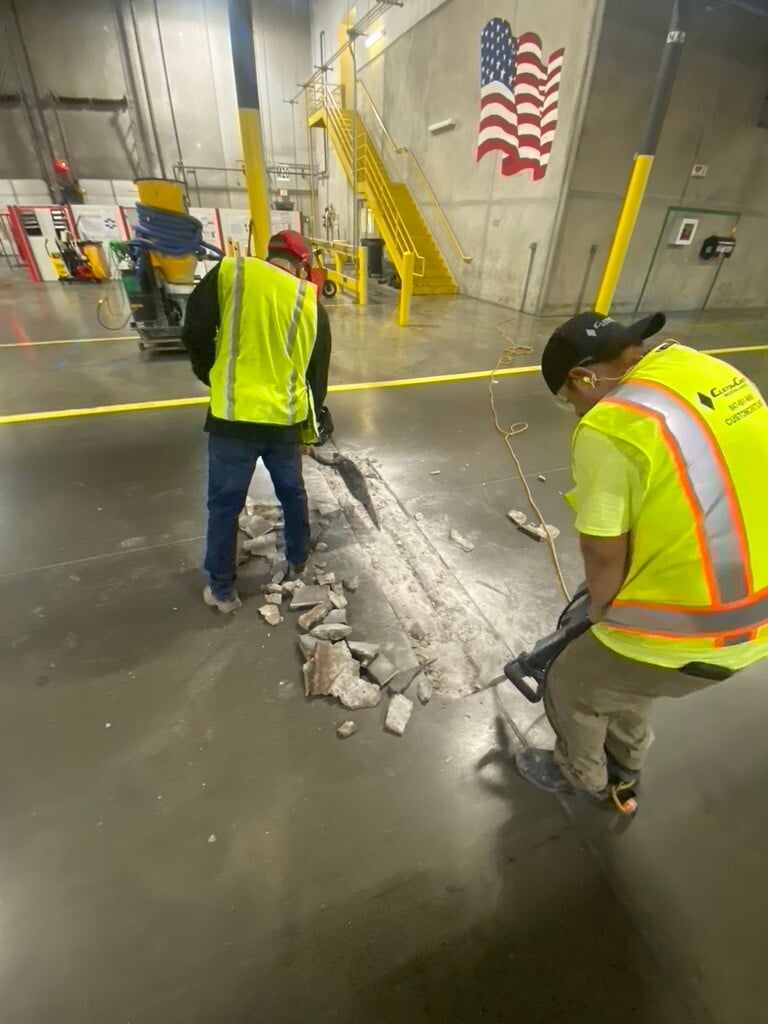
If the coating begins cracking, peeling, or separating from the concrete, those damaged areas can collect moisture and organic material. Even with a thorough sanitation program, cracks and areas beneath a delaminating coating can be much harder to clean than an intact surface.
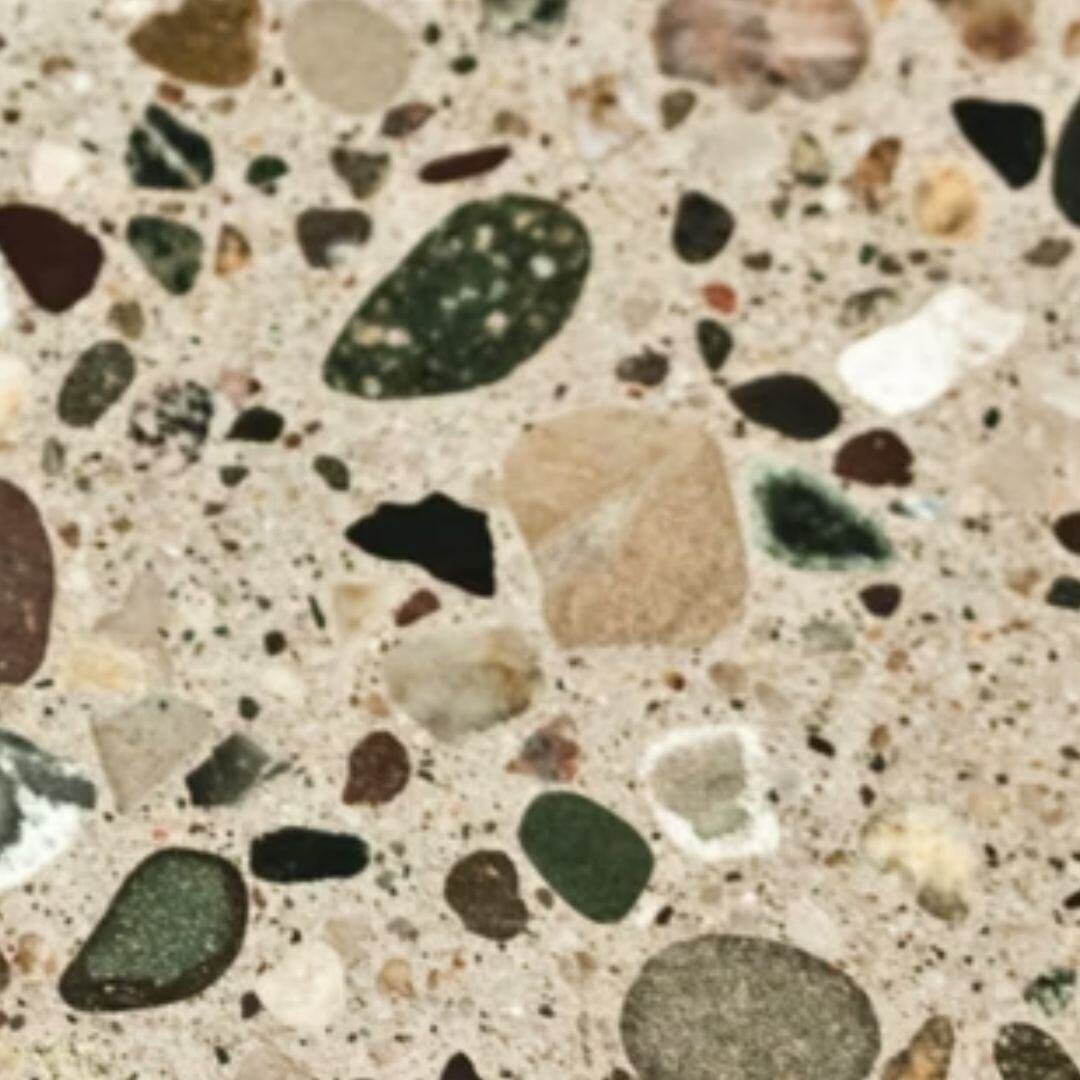
Porosity is another concern. Unprotected concrete naturally absorbs moisture. If a coating wears away or fails, exposed concrete may become more difficult to clean and keep dry.
None of these conditions automatically results in foodborne illness. Instead, they can create additional sanitation challenges that a food processing facility must control.
Why Drainage and Cleanability Matter
A durable coating alone isn't enough. Food processing flooring also needs to work with the facility's drainage and cleaning procedures.
In wet processing environments, floors may be regularly exposed to water during production and washdowns. Low spots, improper slope, or poorly positioned drains can allow water to collect rather than move away from the processing area. A floor coating cannot solve major drainage problems on its own.
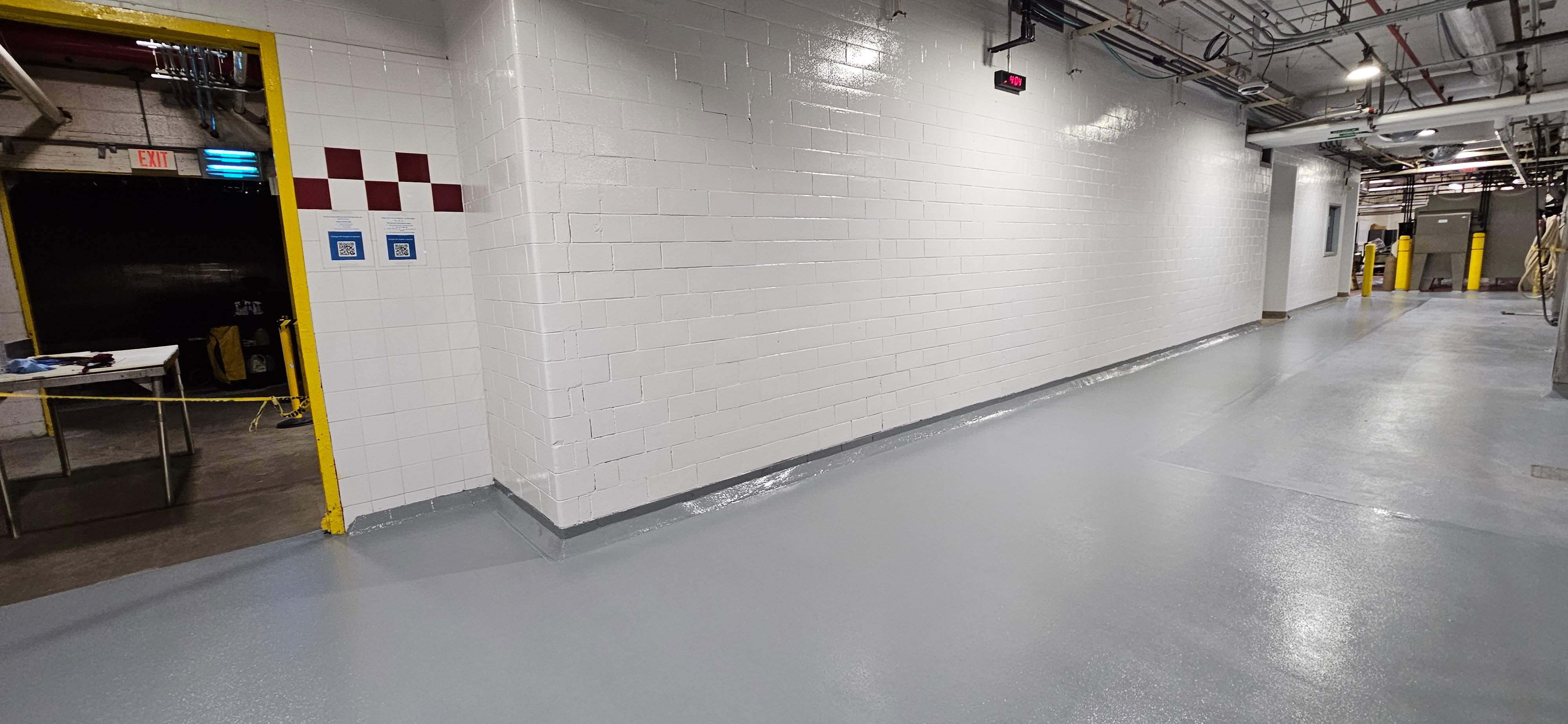
Floor-to-wall transitions also deserve attention. Traditional 90-degree joints can be harder to clean, which is why some food processing environments use an integrated cove base to create a smoother transition from the floor to the wall.
Texture requires a similar balance. A completely smooth floor may become slippery when wet, while an extremely aggressive texture can trap material and become harder to clean. The appropriate level of slip resistance should account for the facility's operations, cleaning procedures, and safety requirements.
Why Some Concrete Coatings Fail in Food Processing Facilities
A coating can perform well in one industrial environment and fail quickly in another. Food processing facilities often expose floors to combinations of conditions that need to be considered before choosing a system.
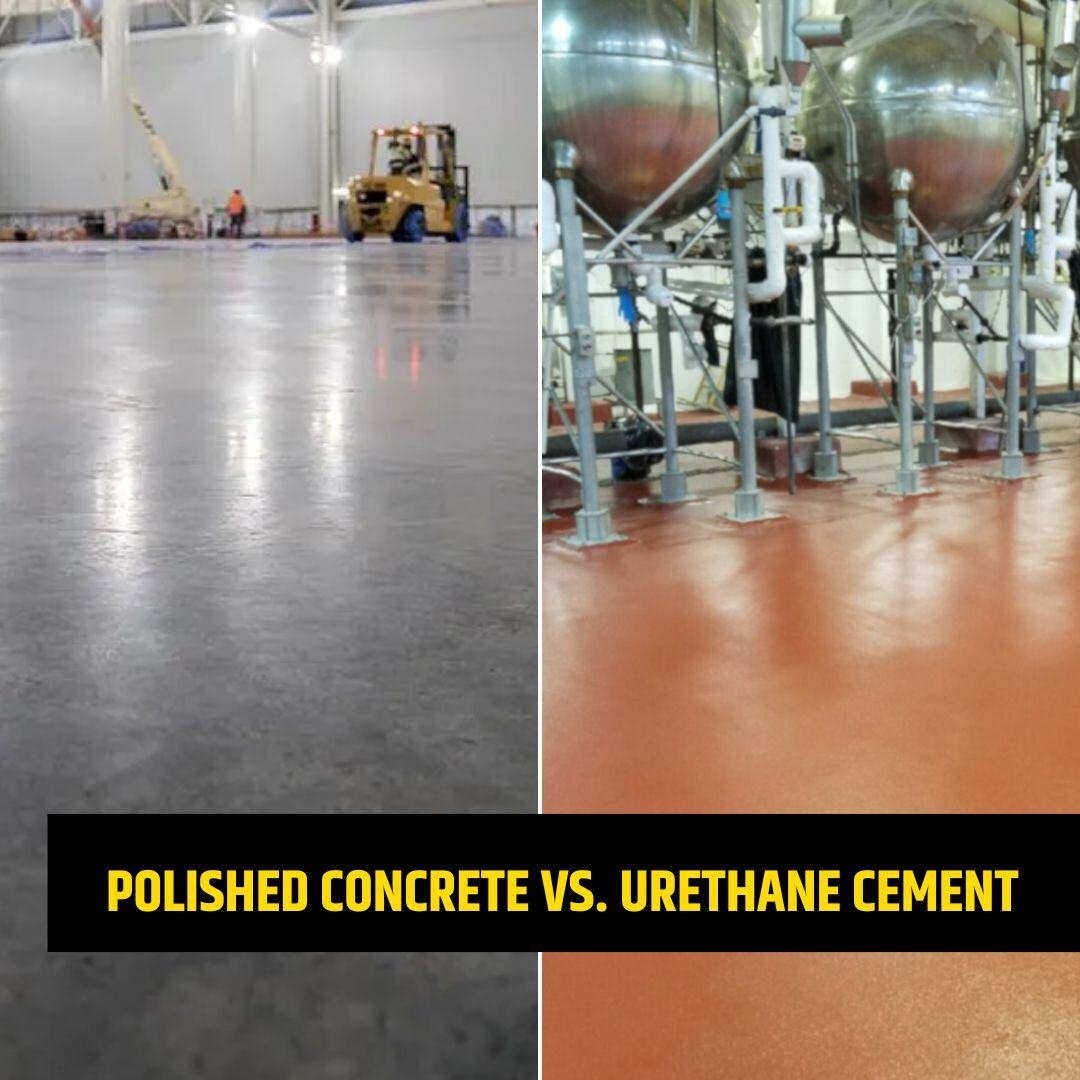
Thermal shock is one example. Hot-water washdowns, steam, refrigeration, and rapid temperature changes can stress both the coating and the concrete slab. Urethane cement is commonly considered for environments exposed to thermal shock because of its performance under these conditions, although the correct product and thickness still depend on the application.
Chemical exposure also matters. Detergents, degreasers, sanitizers, acids, and other cleaning chemicals can affect flooring differently depending on their concentration, temperature, and contact time.
Finally, the floor has to withstand everyday traffic. Forklifts, carts, production equipment, dropped tools, and constant foot traffic can damage a coating that wasn't designed for that level of use.
What Should Food Processing Facilities Look for in a Flooring System?
Instead of looking for a coating simply marketed as "food-grade," facility managers should evaluate whether the system fits their actual operating environment.
Start with how the floor will be cleaned. Consider the chemicals used, water temperature, frequency of washdowns, drainage, and whether the surface texture can be cleaned effectively. Then evaluate temperature changes, chemical exposure, moisture, impact, traffic, and expected maintenance.
Surface preparation and installation also matter. Even a high-performance coating can fail if the concrete isn't properly prepared or underlying moisture and slab conditions aren't addressed before installation.
Depending on these factors, a facility may consider urethane cement, epoxy, or another resinous flooring system. There isn't a single coating that is appropriate for every food and beverage facility.
Can the Right Flooring Prevent Foodborne Illness?
No flooring system can guarantee the prevention of foodborne illness. Food safety depends on many controls, including sanitation procedures, employee practices, food handling, equipment cleaning, temperature control, and facility maintenance.
The floor's job is to support those efforts by providing a durable and cleanable surface. When flooring remains intact and is designed around the facility's operating conditions, there are fewer cracks, gaps, and damaged areas that complicate cleaning.
That makes flooring one part of a larger sanitary design strategy rather than a standalone food safety solution.
Final Thoughts
The wrong concrete coating won't directly cause foodborne illness, but choosing a system that can't withstand a food processing environment can create unnecessary sanitation challenges.
Cleanability, drainage, moisture, chemicals, thermal shock, traffic, and maintenance should all be considered before selecting a flooring system. The goal is to install a surface that can continue supporting the facility's cleaning and sanitation procedures throughout its service life.
Next, read "USDA FDA Flooring Requirements Food Processing Plants" to better understand what regulators look for and how flooring can support a food processing facility's sanitation and compliance efforts.

Topics: