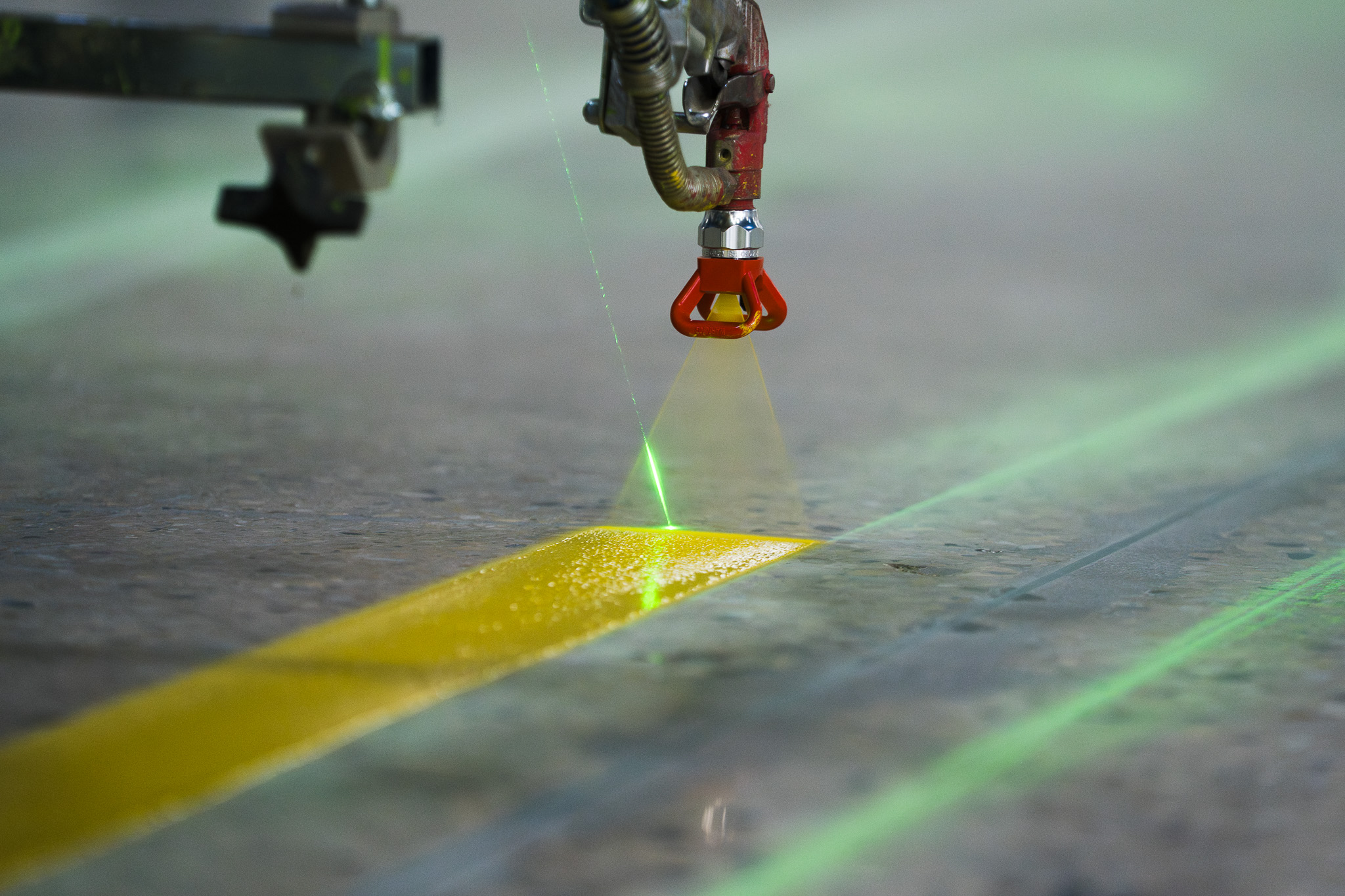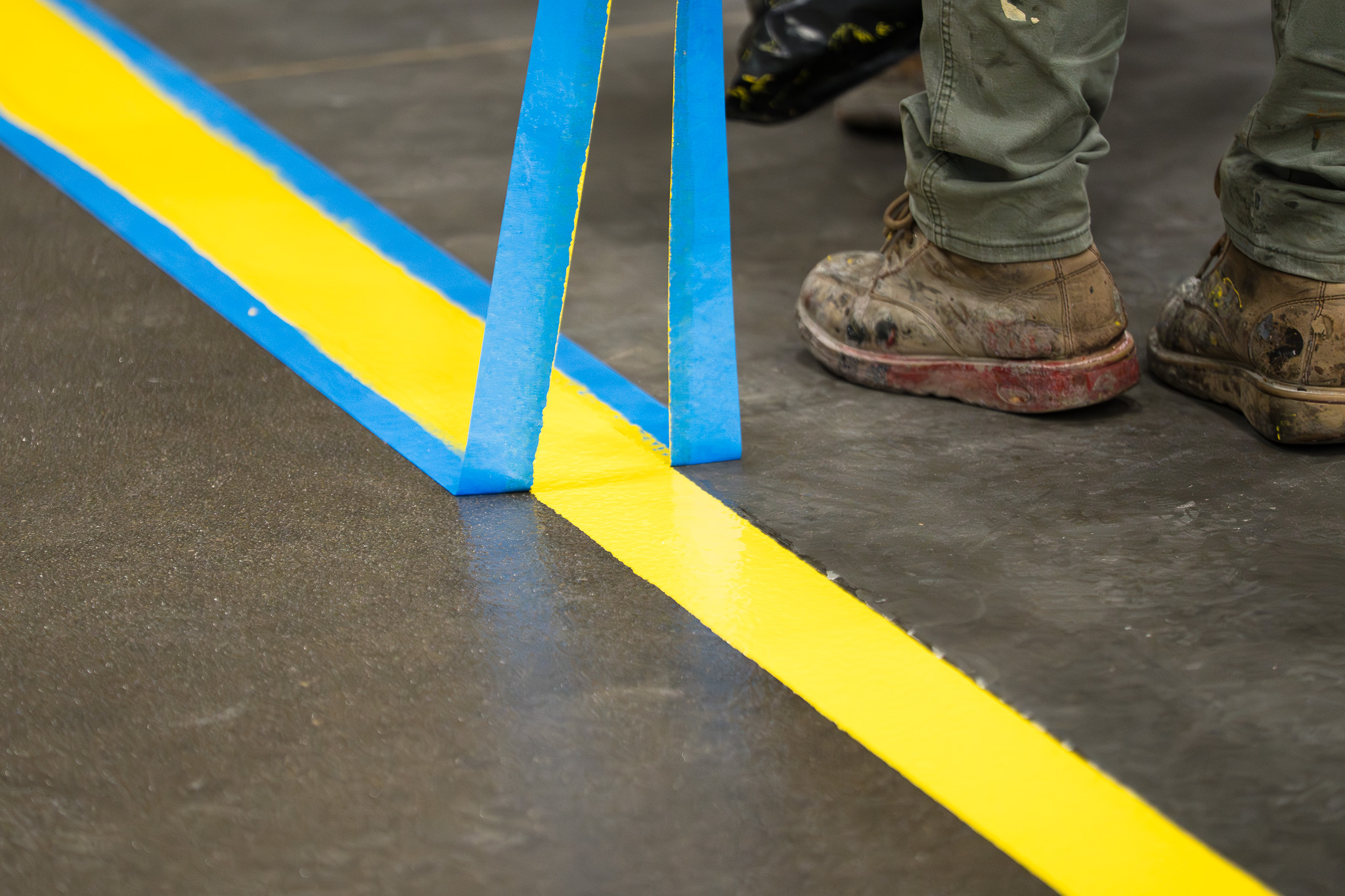

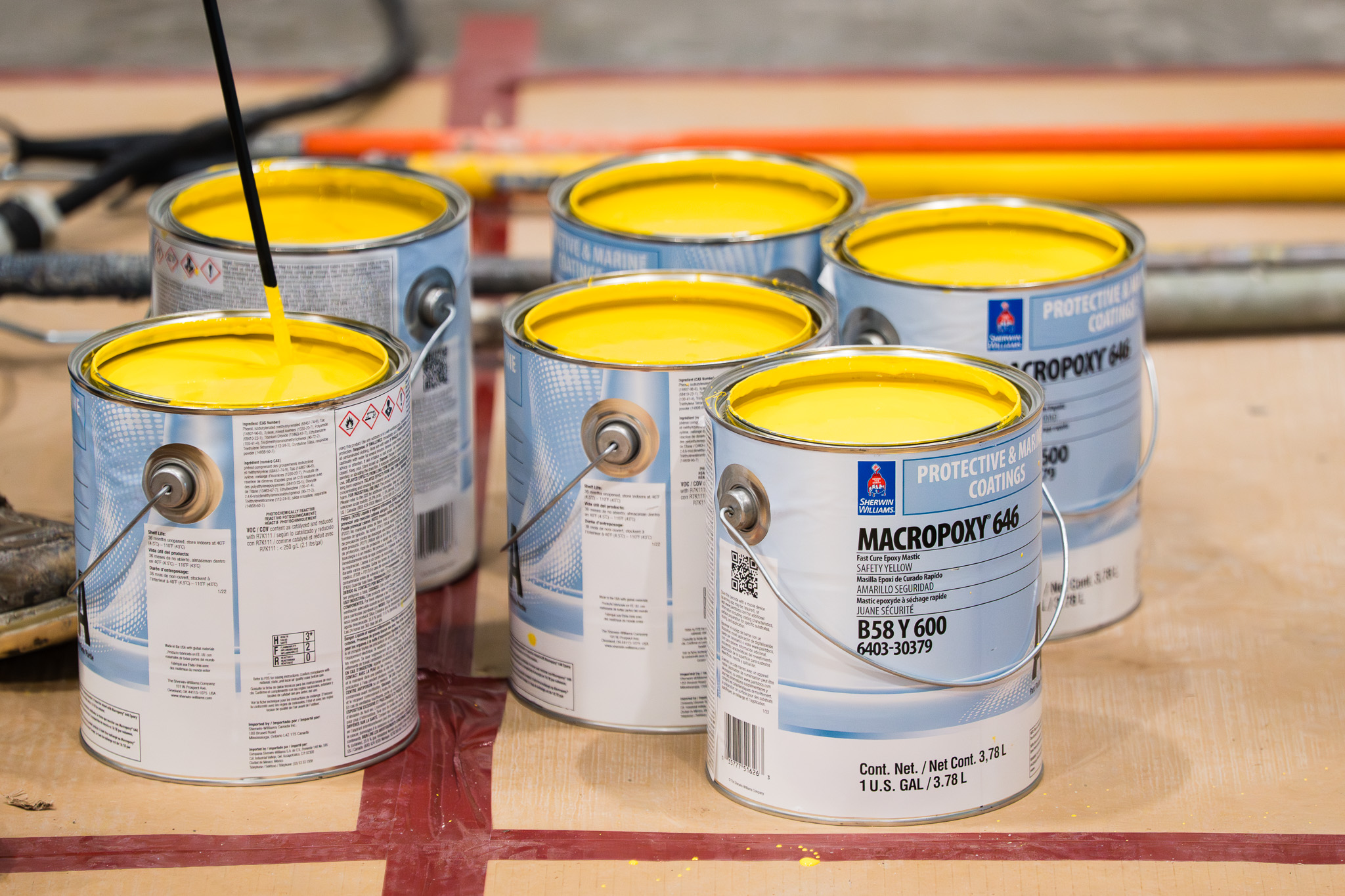
Line striping is typically done using durable, coating-based materials like epoxy, polyurethane, or other industrial-grade floor coatings—not standard paint. While basic paint can be used in low-traffic areas, most warehouses and factories rely on high-performance materials designed to withstand heavy traffic and wear.
Understanding the difference between standard paint and industrial line striping materials is key to choosing a solution that will last.
At CustomCrete, this is a common question from facilities planning new safety markings or updating existing layouts.
Why Standard Paint Isn’t Always Enough
Basic floor paint may seem like a simple solution, but it tends to wear quickly in industrial environments. In areas with forklifts, pallet jacks, or constant foot traffic, standard paint can fade, chip, or peel within a short time.
Because of this, most industrial facilities use more durable materials that bond better to concrete and resist abrasion.
Common Materials Used for Line Striping
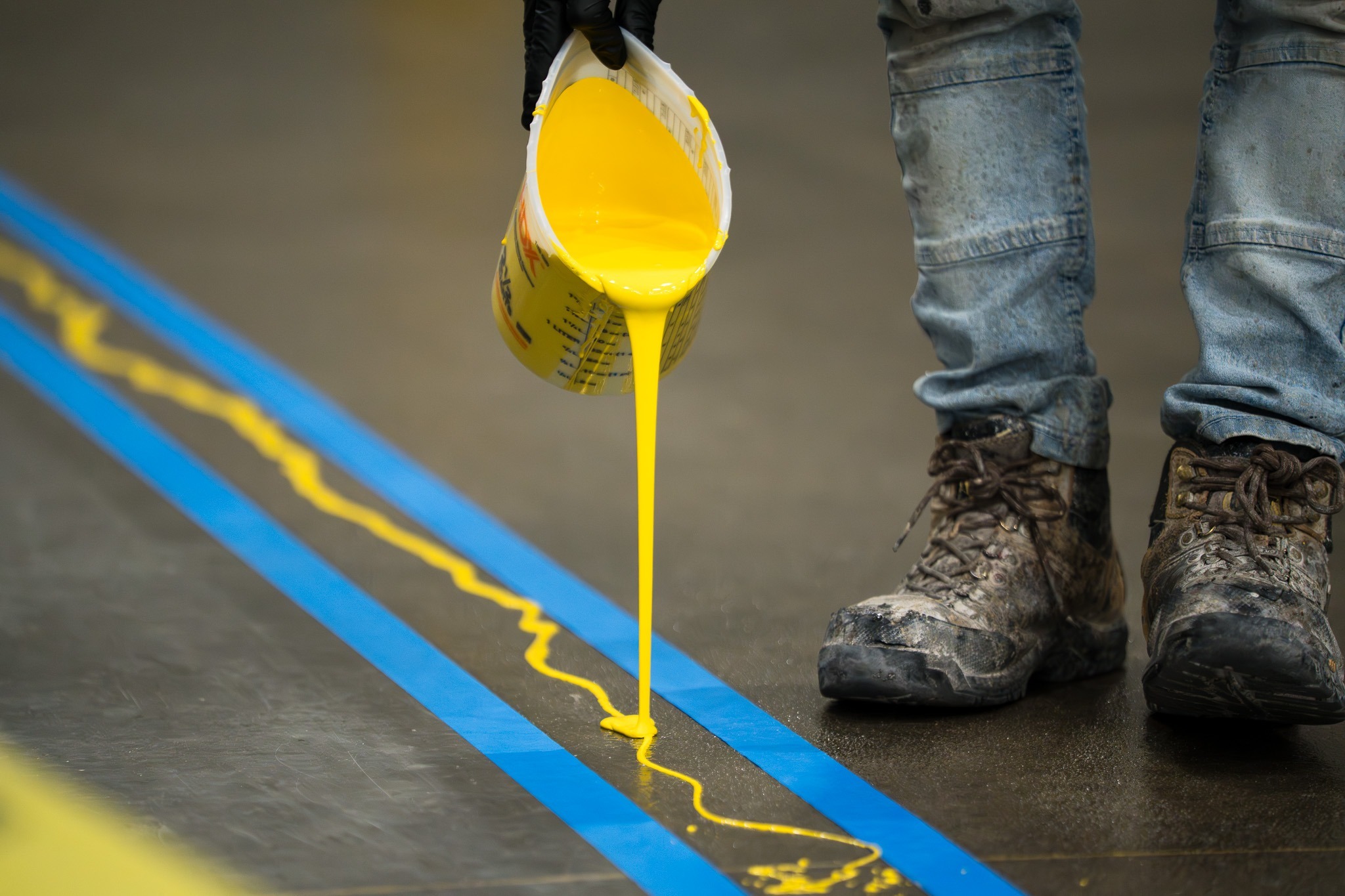
Several types of materials are used for line striping depending on the environment and performance needs.
Epoxy Line Striping
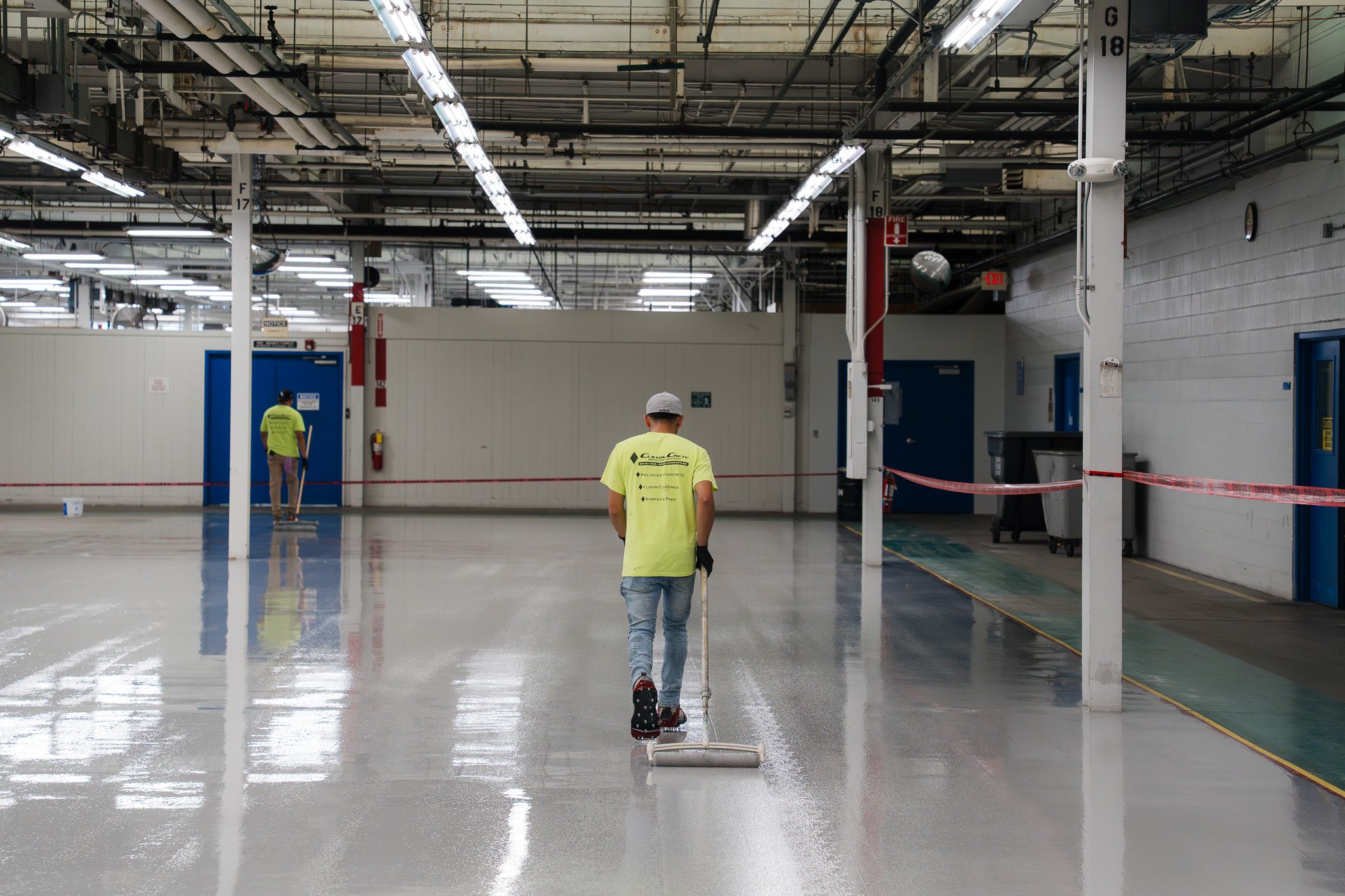
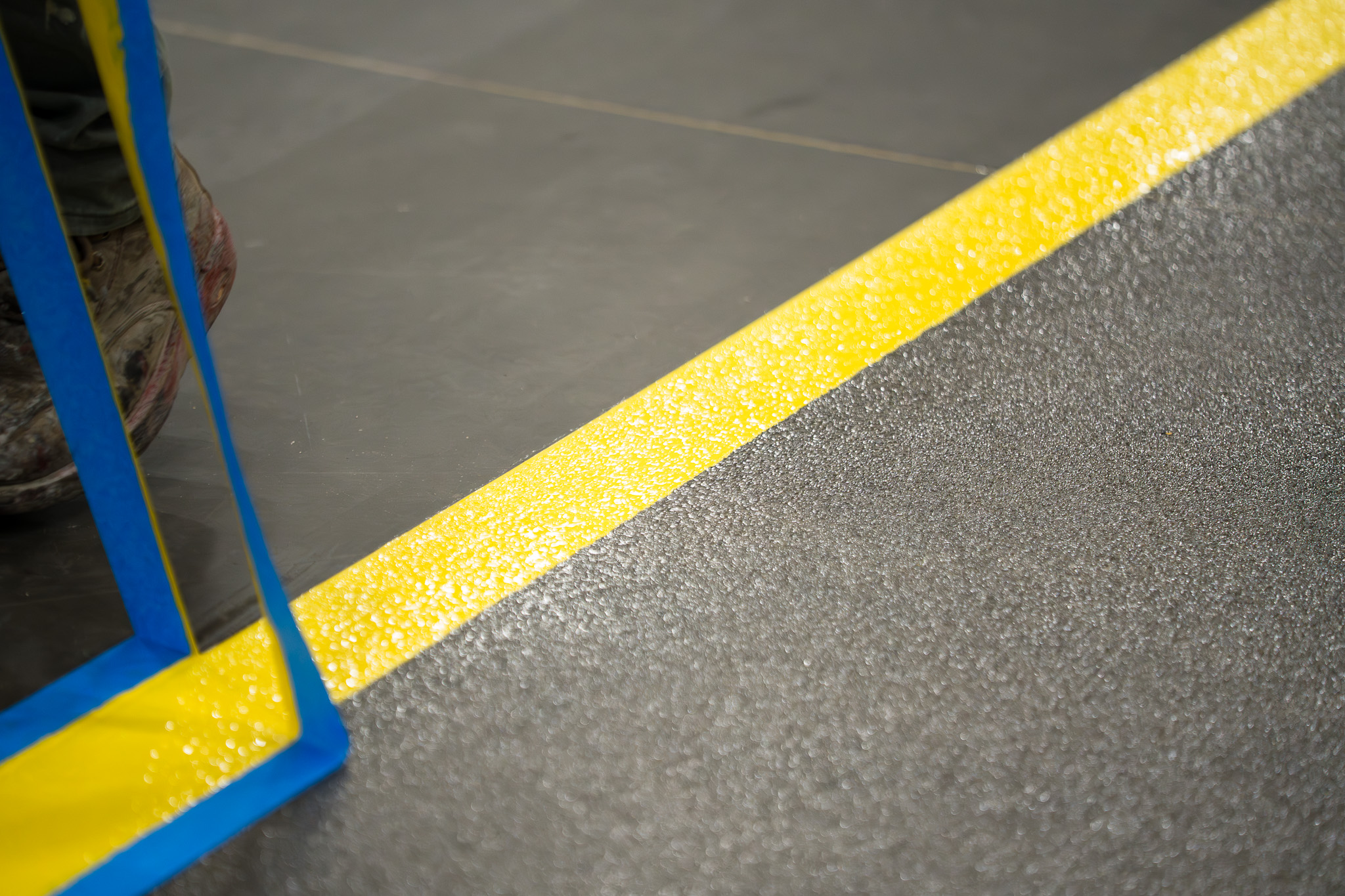
Epoxy is one of the most common materials used for line striping in warehouses and manufacturing facilities. It creates a strong bond to the concrete and offers good durability under moderate to heavy traffic.
Epoxy striping is often used for:
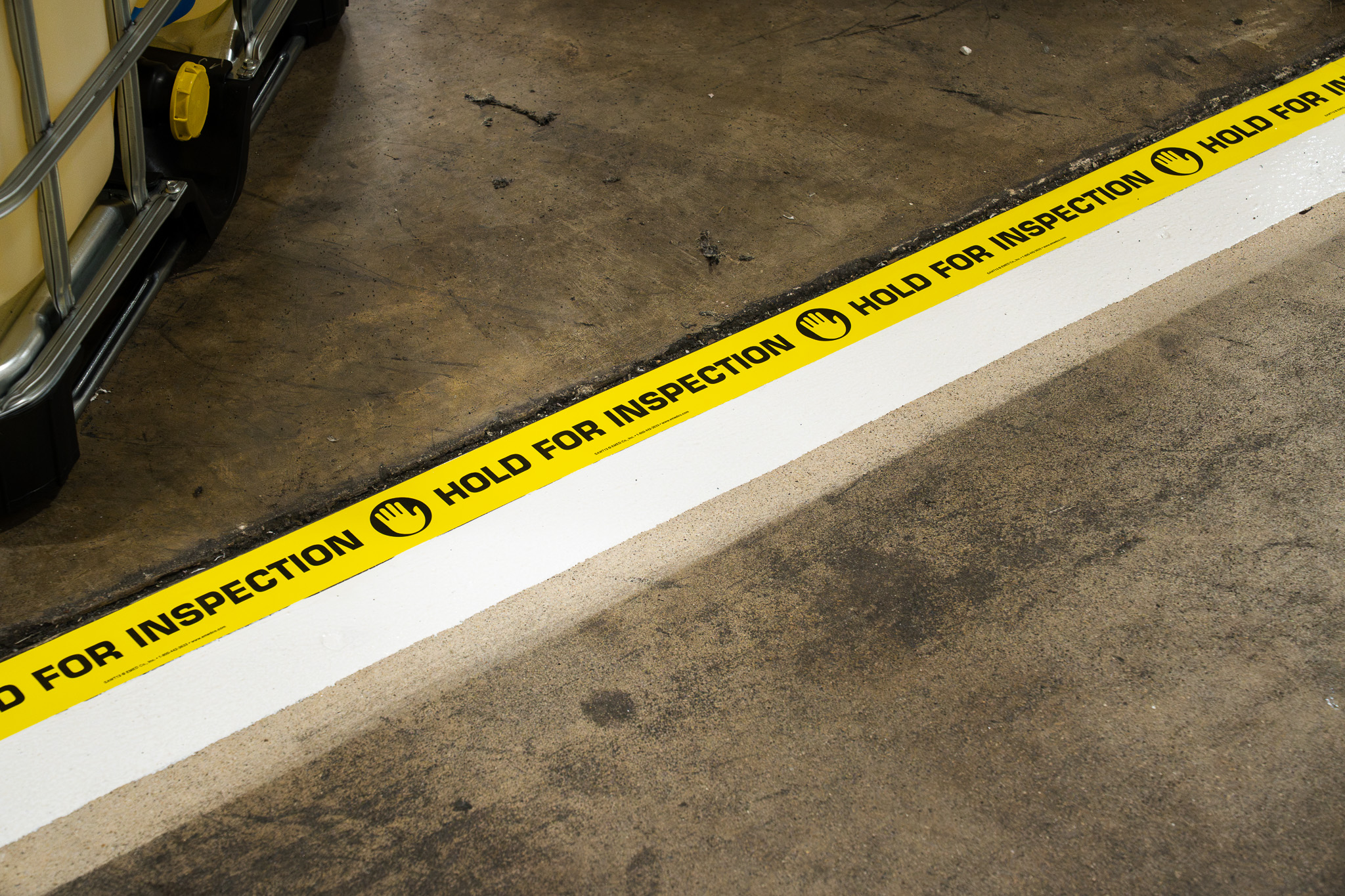
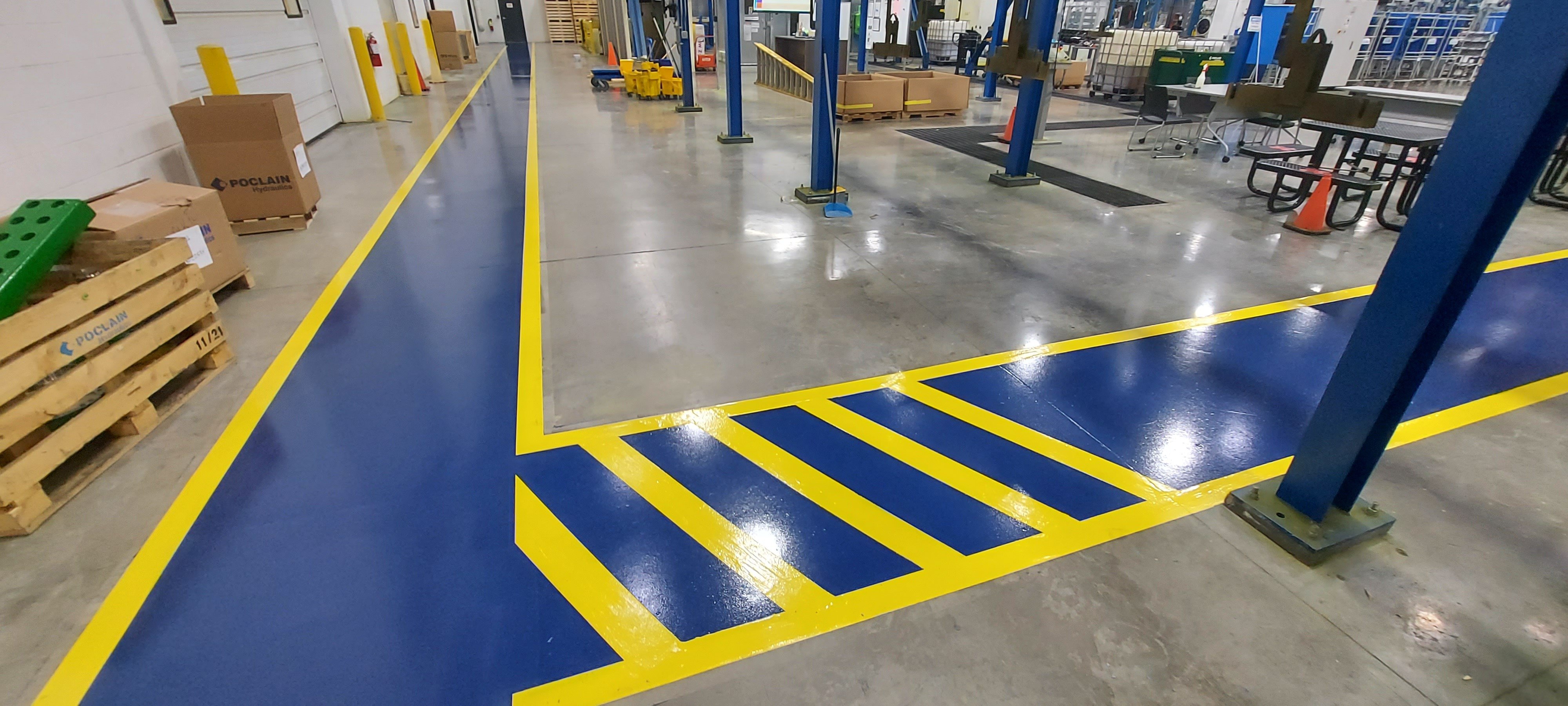
- Forklift lanes
- Pedestrian walkways
- Work zones and staging areas
Polyurethane Line Striping
Polyurethane coatings are flexible and resistant to wear and chemicals. They are often used in environments where floors experience temperature changes or frequent cleaning.
Acrylic or Paint-Based Striping
In lighter-duty environments, acrylic or paint-based striping may be used. These options are more cost-effective but typically do not last as long in high-traffic areas.
What Affects the Performance of Line Striping?
The material used is important, but other factors also impact how long line striping lasts.
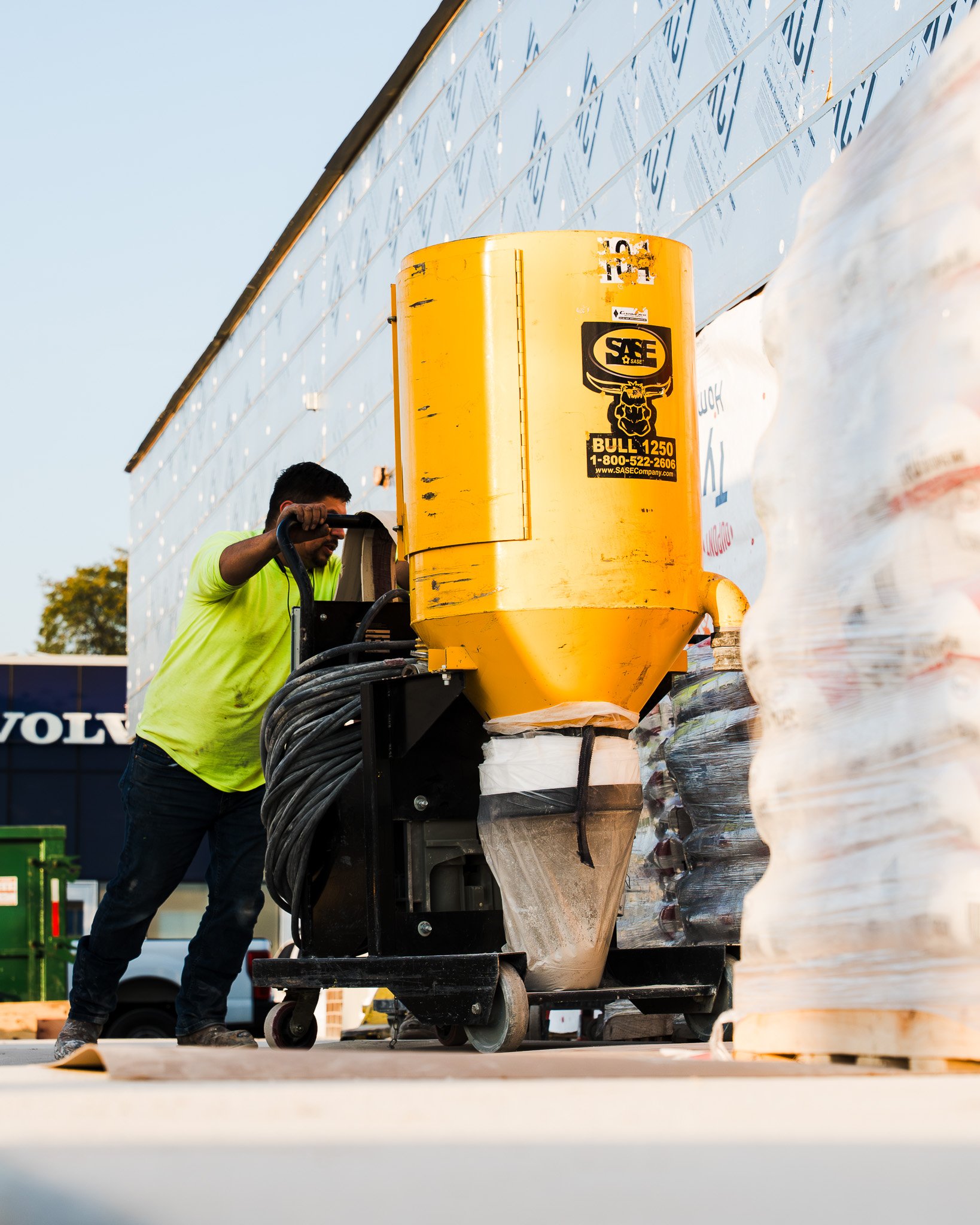
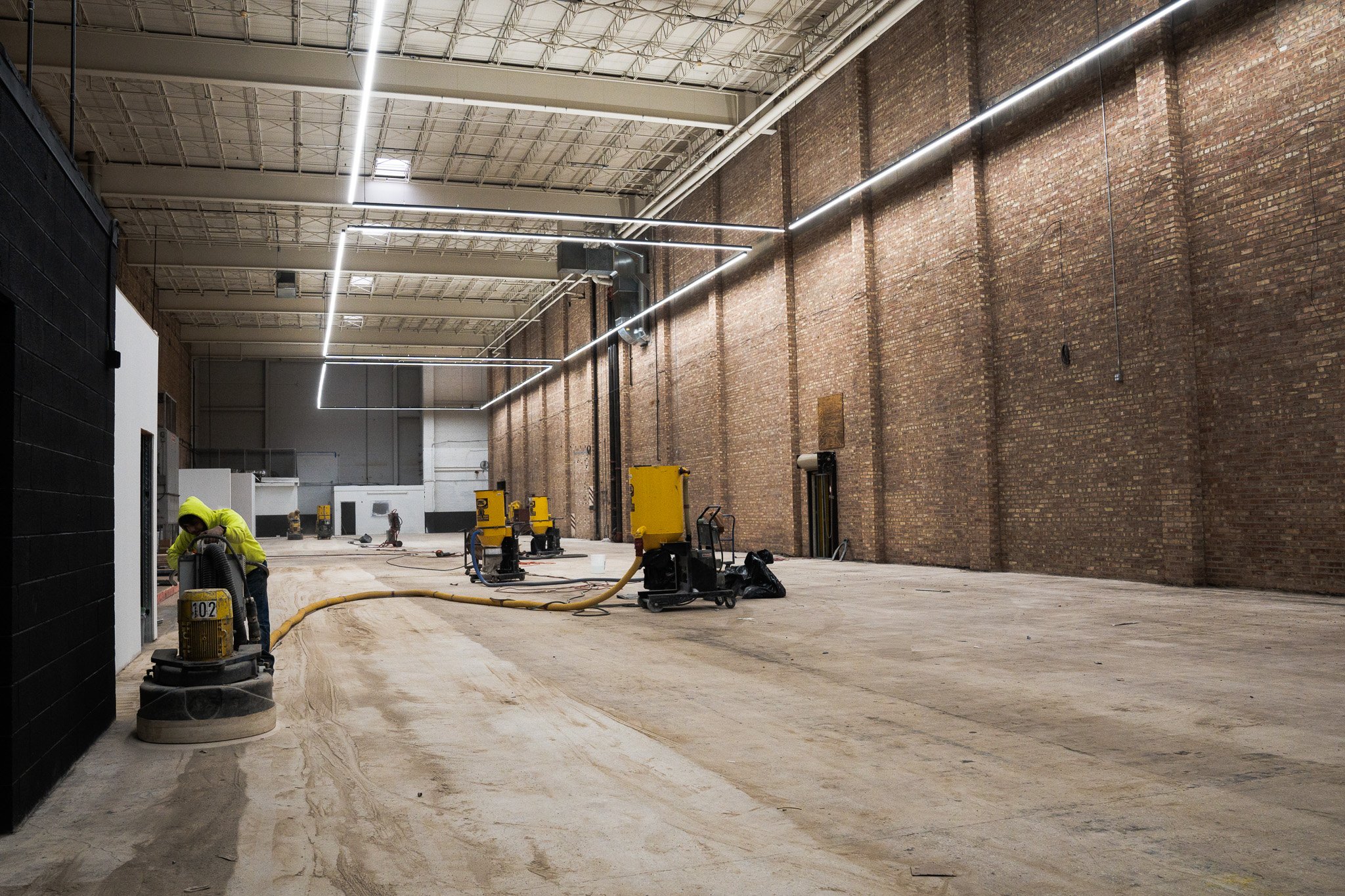
- Surface preparation: Grinding or cleaning helps striping adhere properly
- Traffic levels: Heavy equipment wears down markings faster
- Cleaning methods: Harsh chemicals or scrubbing can reduce lifespan
- Thickness of application: Thicker coatings generally last longer
Choosing the right material and installing it correctly helps ensure long-term performance.
Can Line Striping Be Customized?
Yes. Line striping can be customized using different colors, widths, and layouts to match a facility’s workflow and safety requirements. The material used will often depend on how durable the striping needs to be in each area.
Final Thoughts
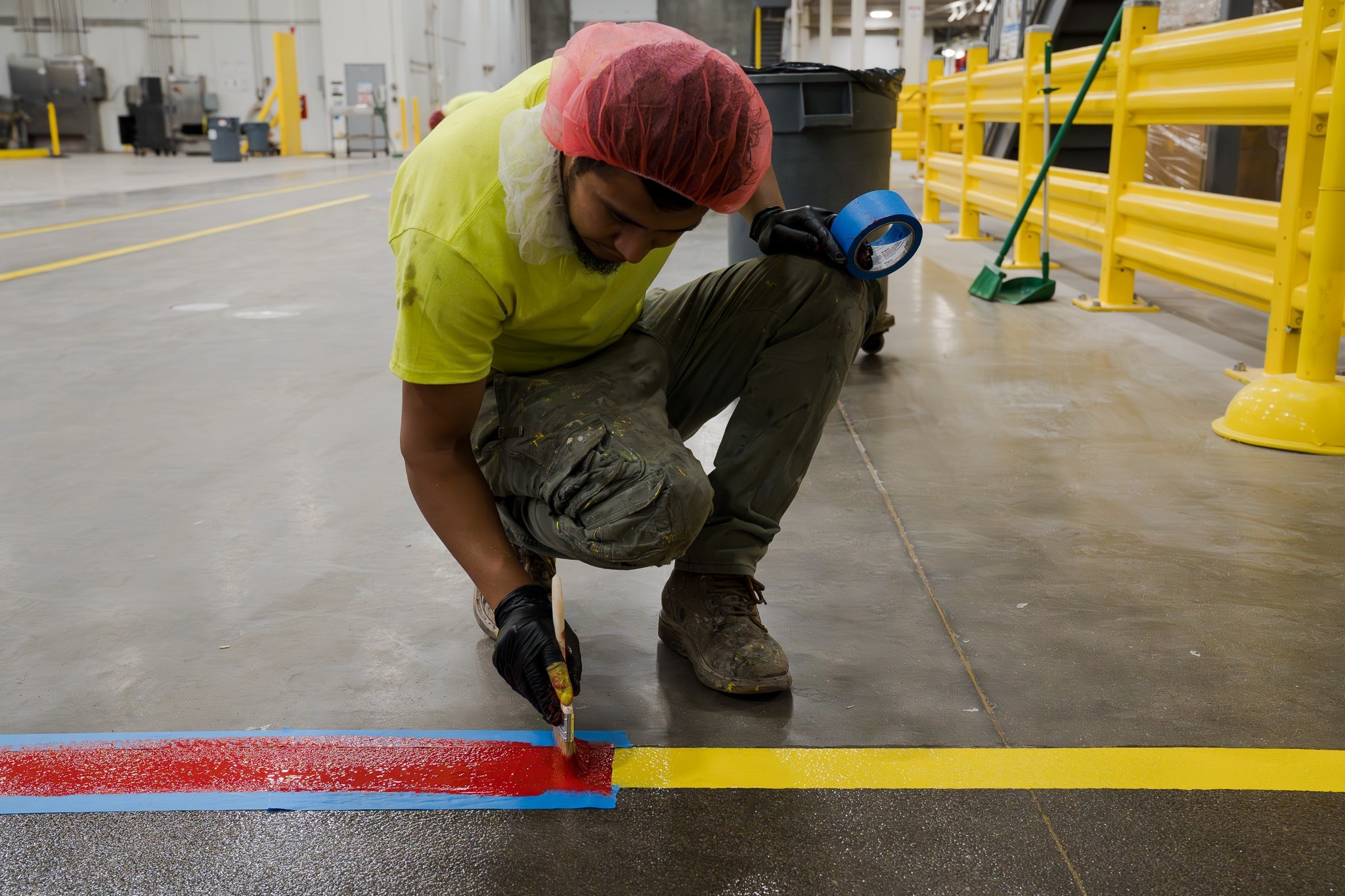
Line striping in industrial and commercial facilities is usually done with epoxy, polyurethane, or other durable coatings rather than standard paint. These materials provide better adhesion and longer lifespan, especially in high-traffic environments.
To learn how long different striping materials last and what to expect over time, read the next article: “CustomCrete FAQ: How Long Does Line Striping Last?”

Topics: