
Key Takeaways
- Line striping helps improve safety, organization, and traffic flow within industrial facilities.
- Floor markings can reduce confusion and help separate pedestrians from equipment traffic.
- Well-maintained striping supports OSHA initiatives, workplace efficiency, and operational consistency.
Walk through almost any warehouse, manufacturing plant, distribution center, or food processing facility and you'll see painted lines on the floor directing traffic, identifying work areas, and improving organization. While these markings may seem simple, line striping plays a critical role in workplace safety, efficiency, and facility operations.
Industrial facilities are busy environments where employees, forklifts, pallet jacks, and equipment often share the same space. Without clear visual guidance, confusion can occur, increasing the risk of accidents and operational inefficiencies.
With nearly 20 years of experience and over 1 million square feet installed, CustomCrete has worked with facilities across a wide range of industries where proper line striping helps improve safety, organization, and workflow. This guide explains what industrial line striping is used for and why it remains an important part of facility management.

What Is Industrial Line Striping?
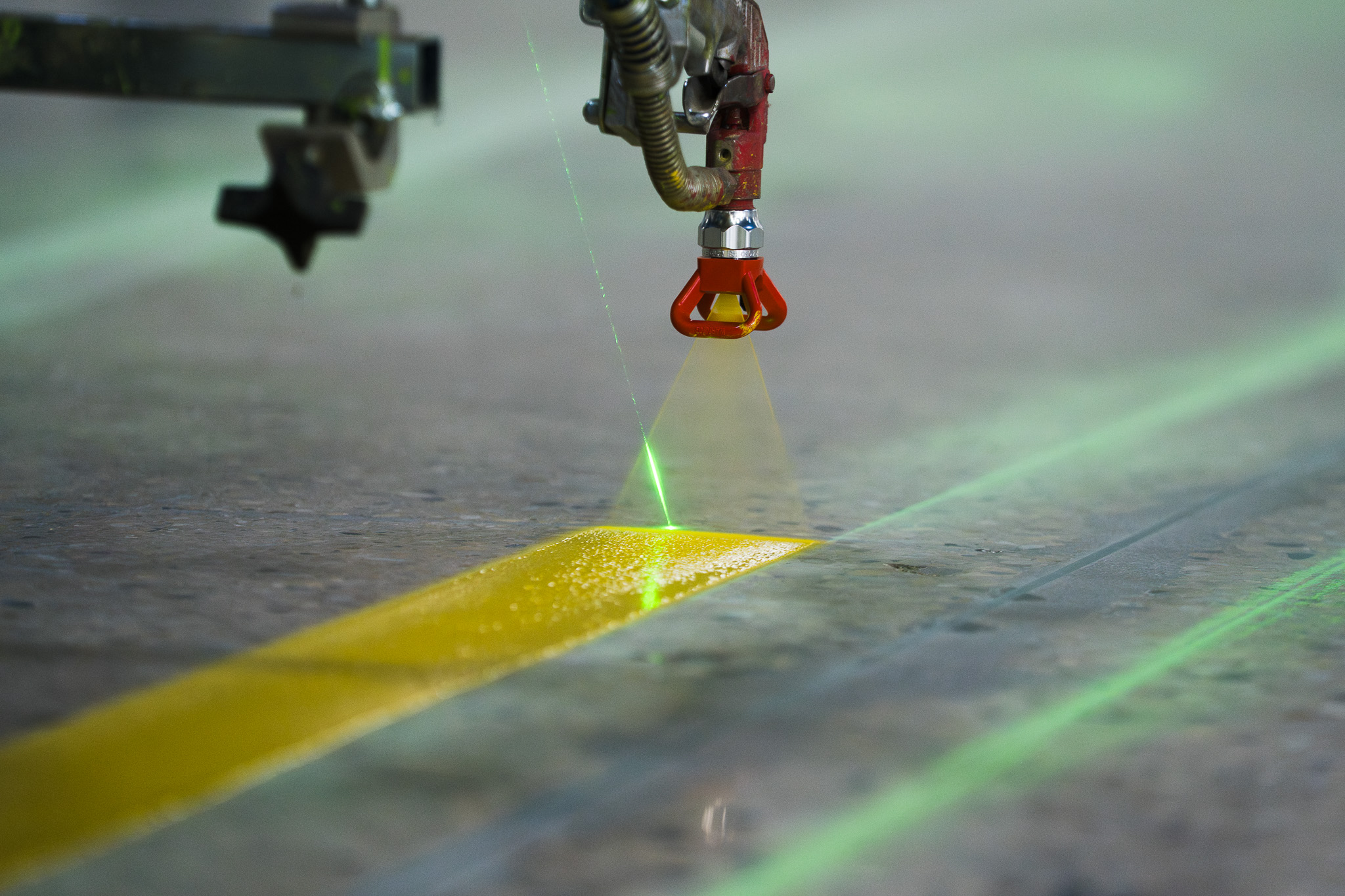
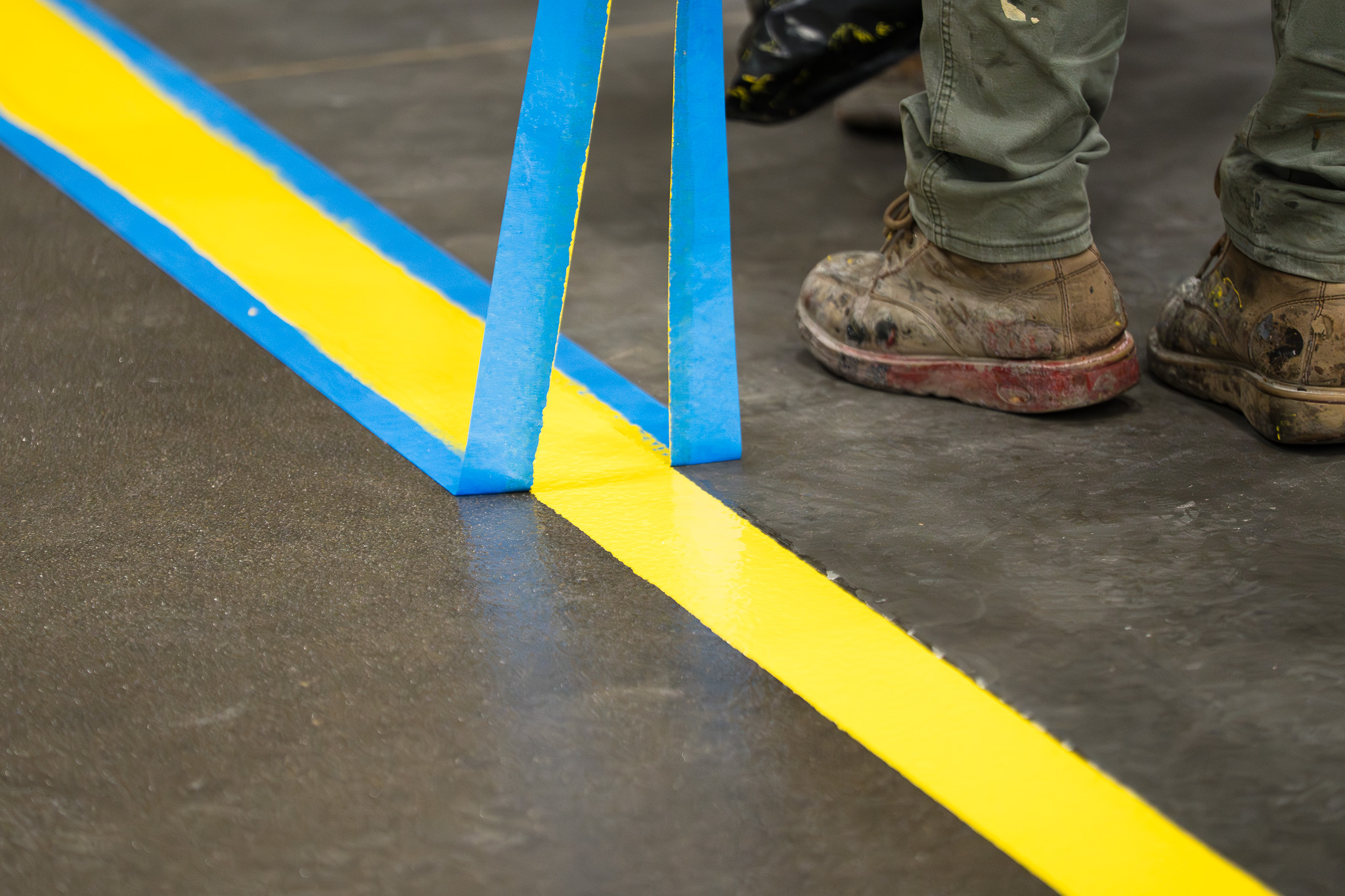
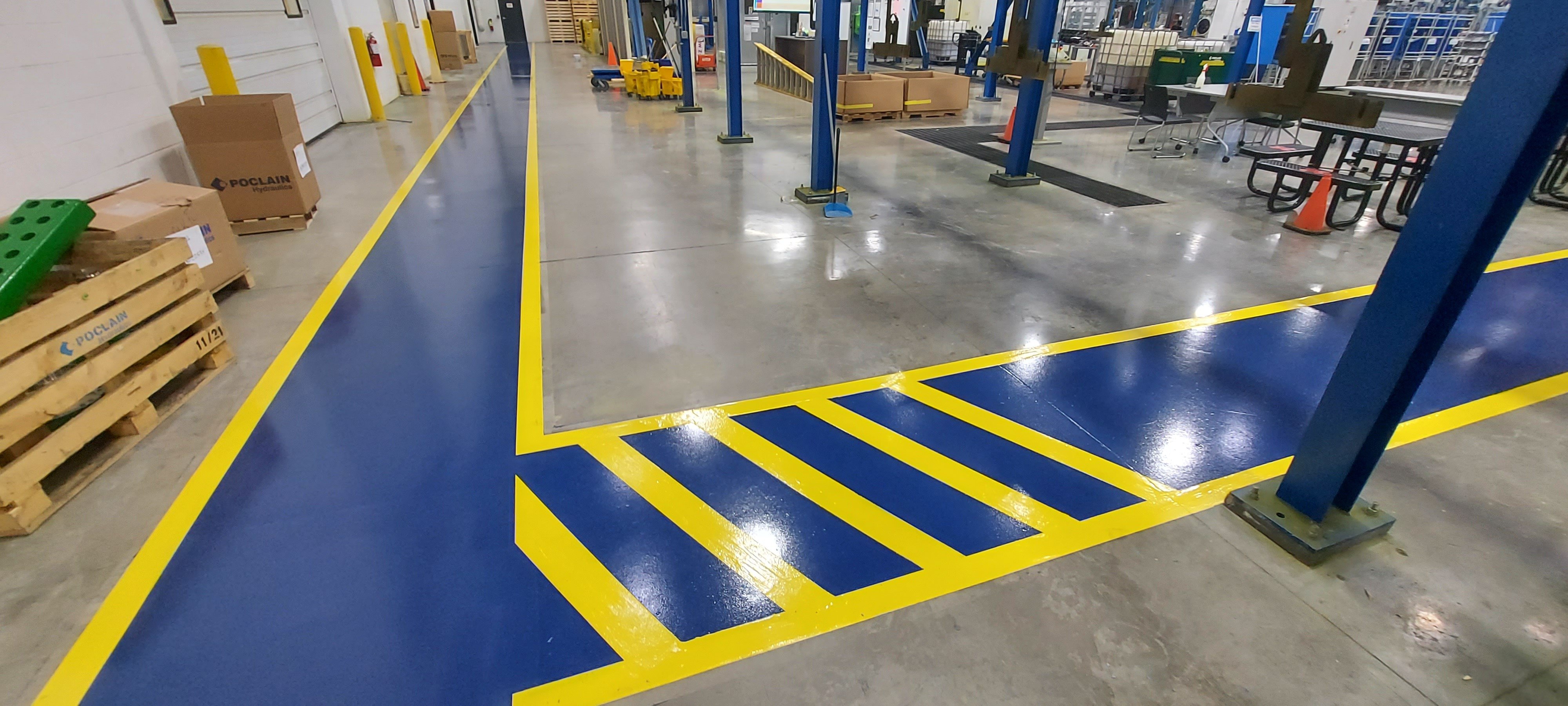
Industrial line striping refers to the application of painted or coated markings on concrete floors to communicate information and organize facility operations.
These markings are commonly used to:
- Direct traffic
- Identify work zones
- Mark storage locations
- Highlight safety hazards
- Define pedestrian walkways
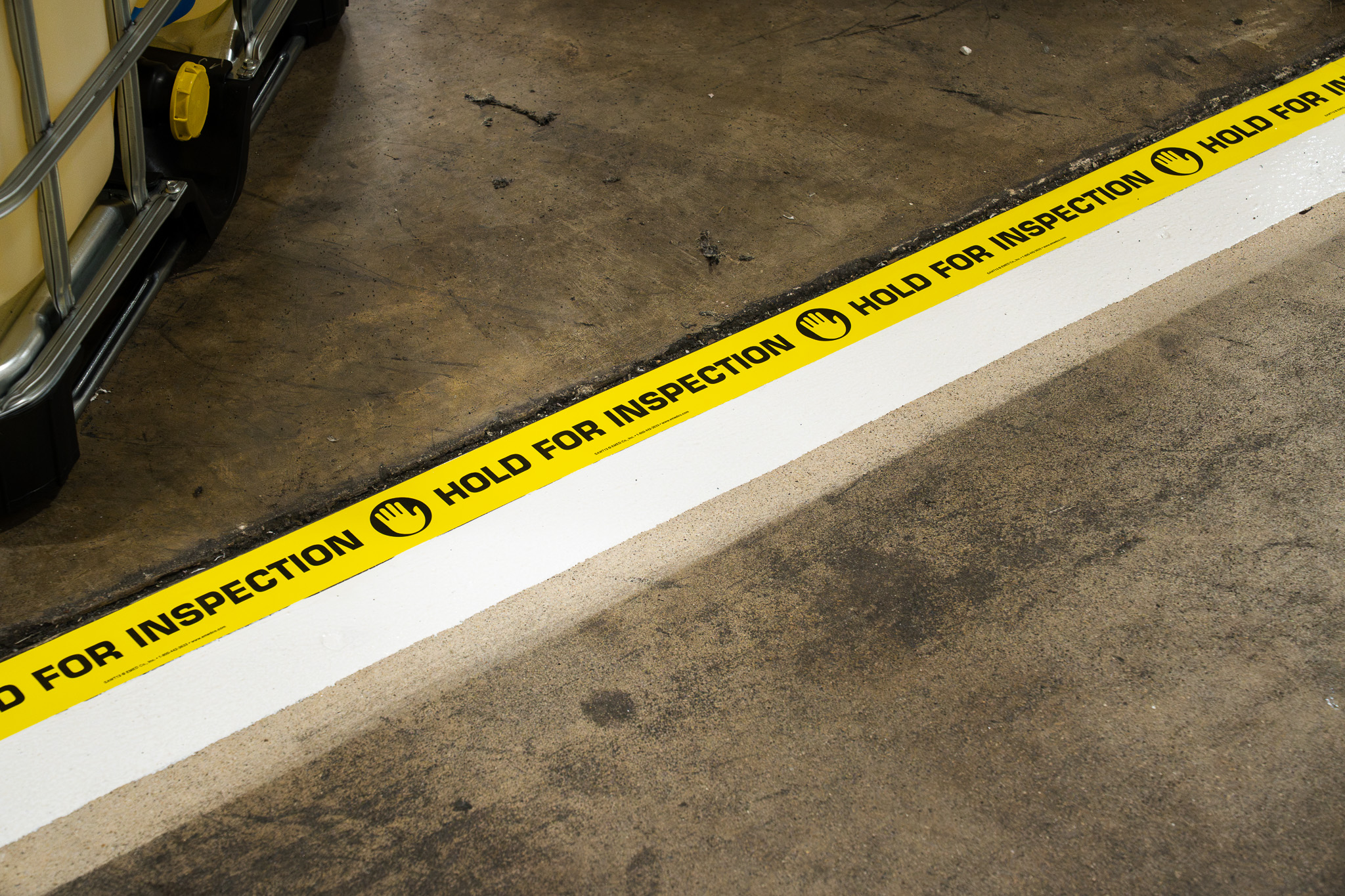
Unlike temporary signs or floor tape, industrial striping is typically designed to withstand heavy traffic and daily wear.
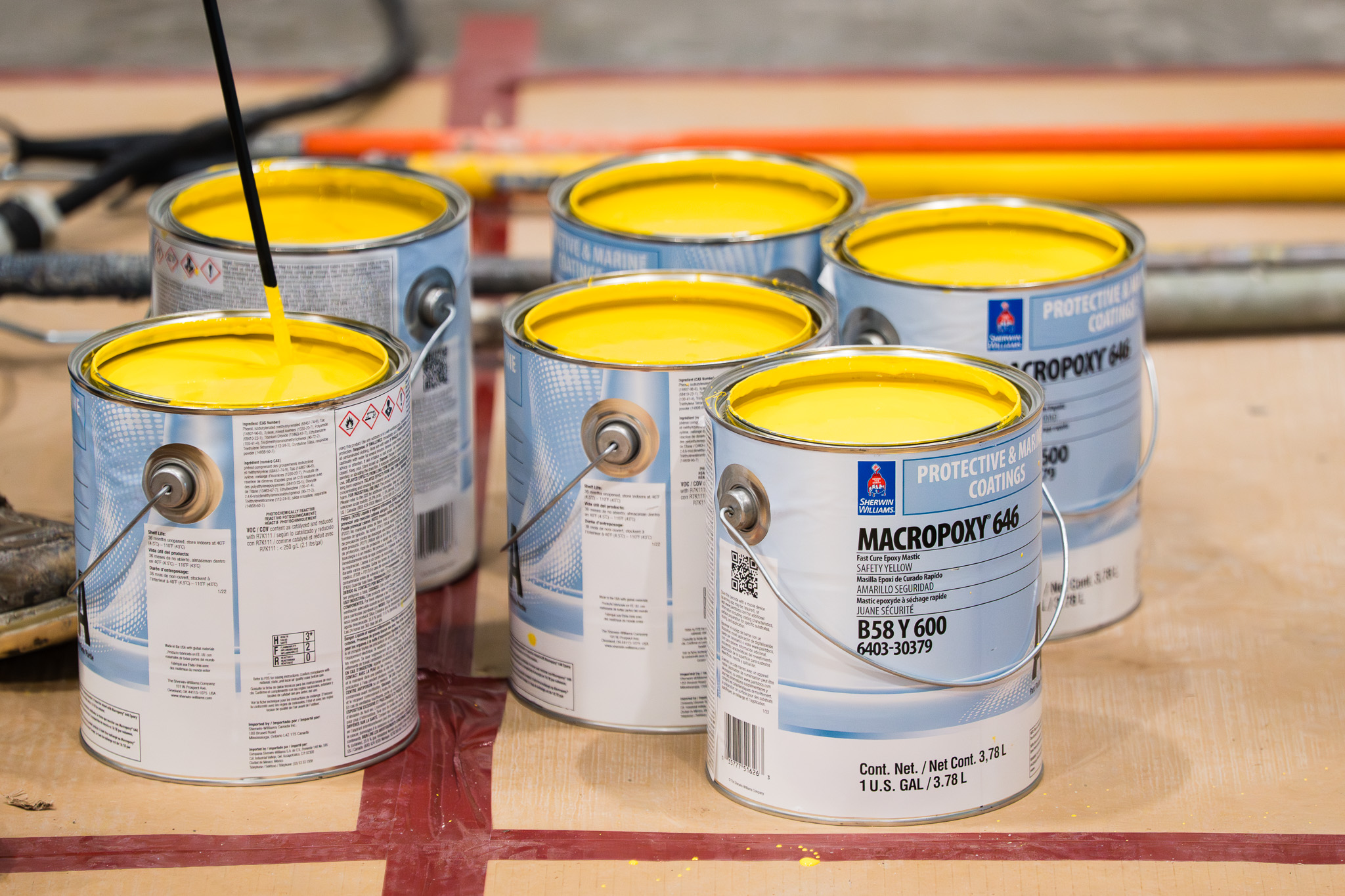
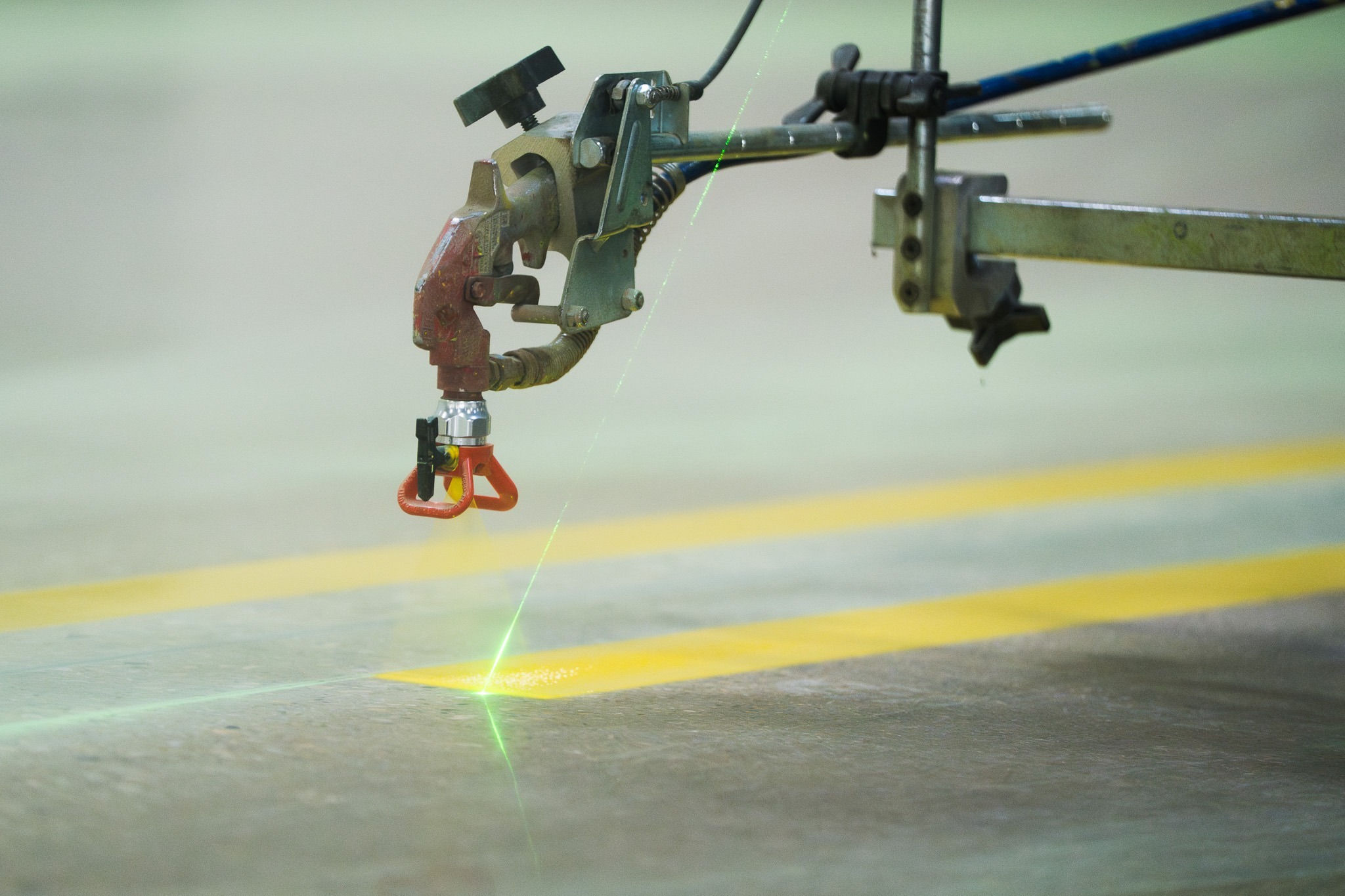
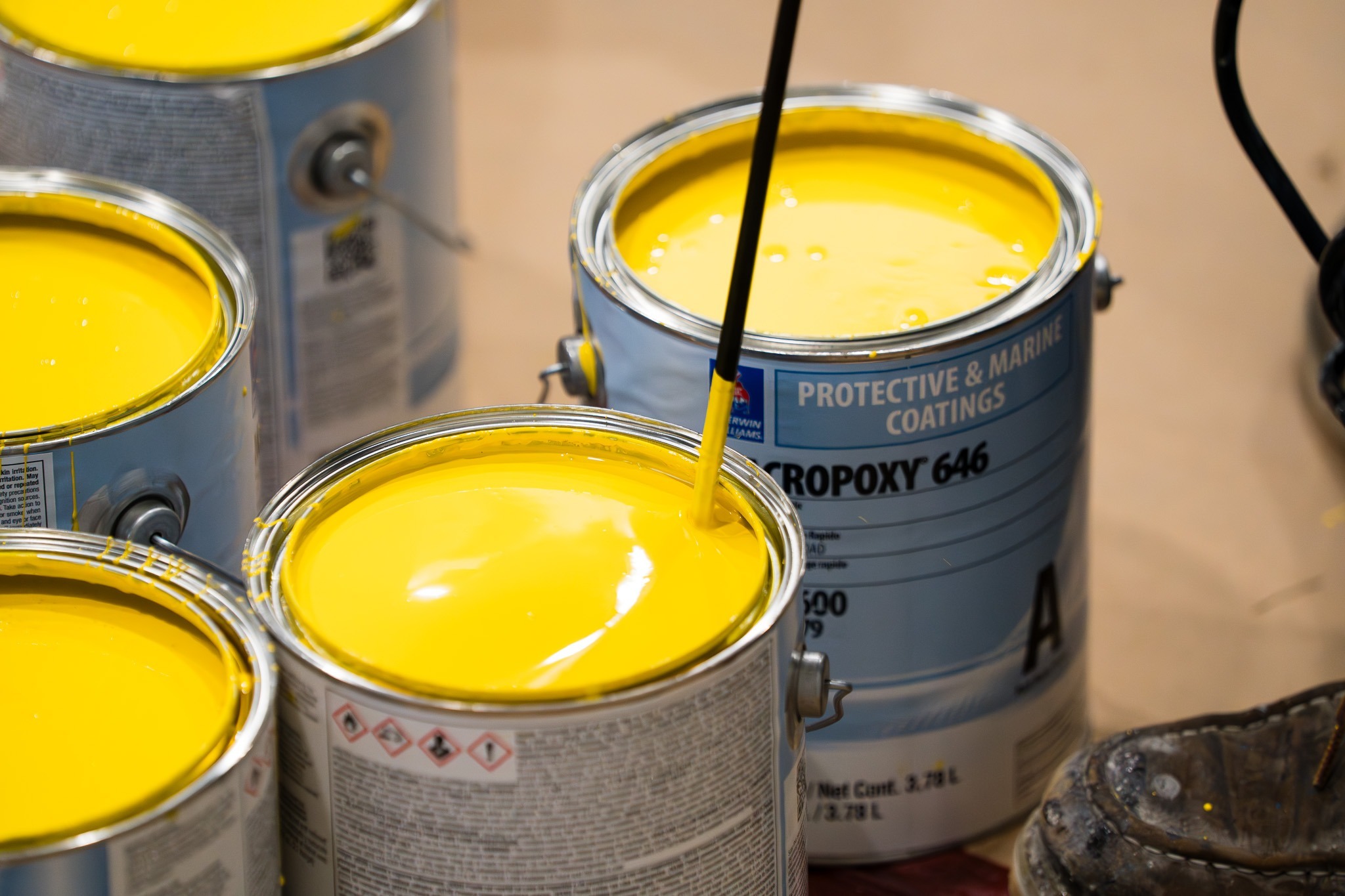
Depending on the environment, striping may be applied using epoxy, urethane, or other durable coating systems.
Improving Workplace Safety
One of the most important uses of line striping is improving workplace safety.
Industrial facilities often have multiple forms of traffic moving simultaneously, including:
- Forklifts
- Pedestrians
- Delivery vehicles
- Material handling equipment
Without clear boundaries, employees may unintentionally enter high-risk areas.
Line striping helps create visual separation between different activities, making it easier for workers to understand where they should and should not be.
This can help reduce:
- Slip and trip incidents
- Equipment collisions
- Pedestrian accidents
- Traffic confusion
Creating Designated Walkways
Many facilities use line striping to establish dedicated pedestrian walkways.
These pathways help employees safely move throughout the facility without entering active equipment zones.
Clearly marked walkways:
- Improve visibility
- Reduce confusion
- Support workplace safety programs
- Encourage consistent traffic patterns
In busy environments, designated walkways can significantly improve employee safety.
Organizing Storage Areas
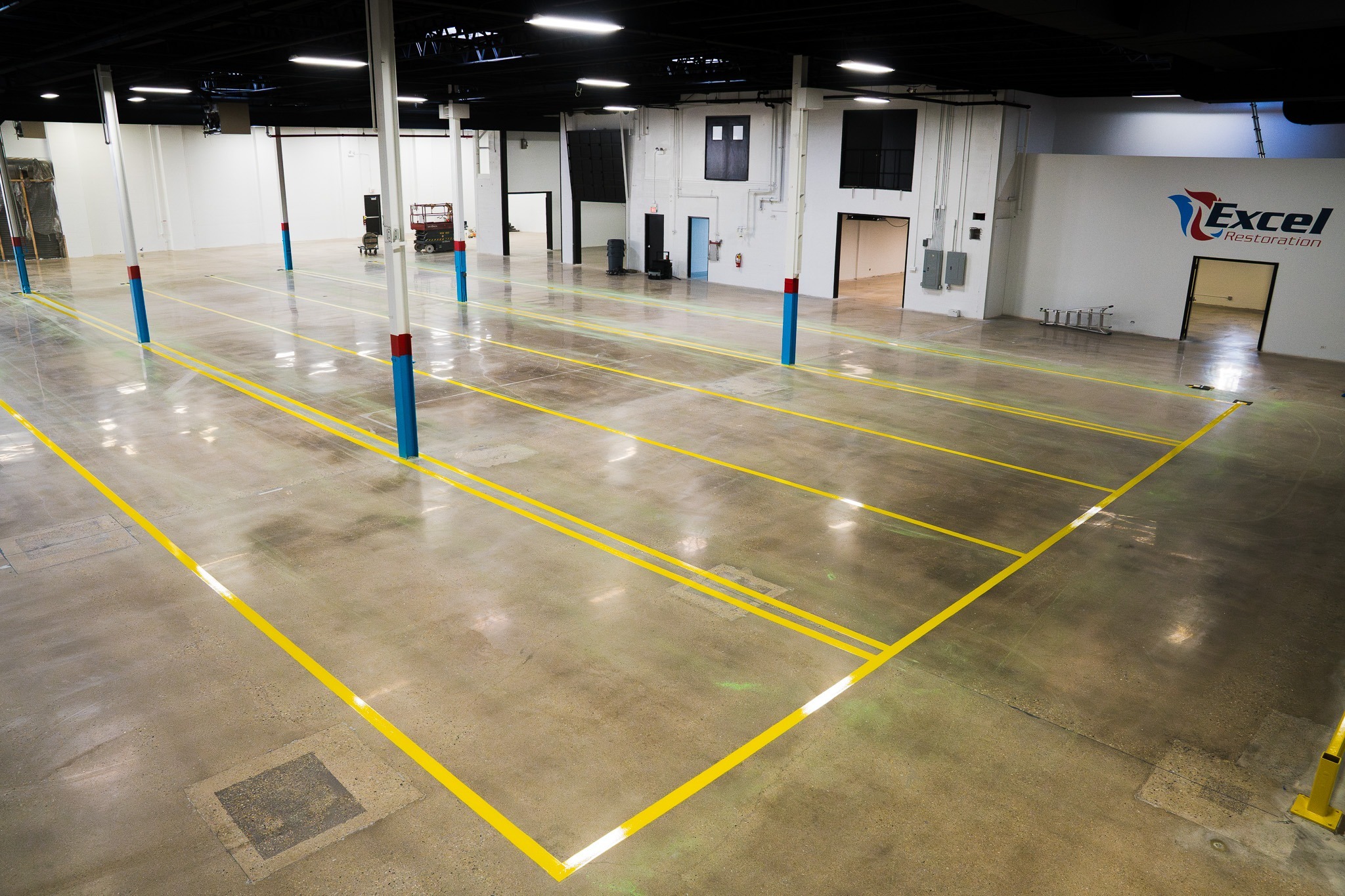
Warehouses and distribution centers frequently use line striping to organize storage locations.
Floor markings can identify:
- Pallet storage zones
- Inventory staging areas
- Shipping locations
- Receiving areas
- Temporary storage spaces
When storage areas are clearly marked, facilities often experience better organization and more efficient material handling.
Employees can quickly identify where materials belong, reducing clutter and improving workflow.
Defining Work Zones
Many manufacturing facilities use line striping to separate different operational areas.
For example, striping may identify:
- Production zones
- Quality control areas
- Equipment maintenance spaces
- Assembly stations
- Packaging areas
These visual boundaries help employees understand facility layouts and improve operational consistency.
Supporting OSHA and Safety Programs
While floor markings alone do not guarantee compliance, they are commonly used to support broader workplace safety initiatives.
Effective line striping can help facilities:
- Identify hazards
- Improve traffic management
- Mark emergency equipment locations
- Define restricted areas
Well-maintained floor markings are often part of a comprehensive safety program designed to reduce workplace risks.
Improving Traffic Flow
Traffic management is another major reason facilities invest in line striping.
Just like roads use painted lines to direct vehicles, industrial facilities use floor markings to guide internal traffic.
This can include:
- Forklift lanes
- One-way traffic routes
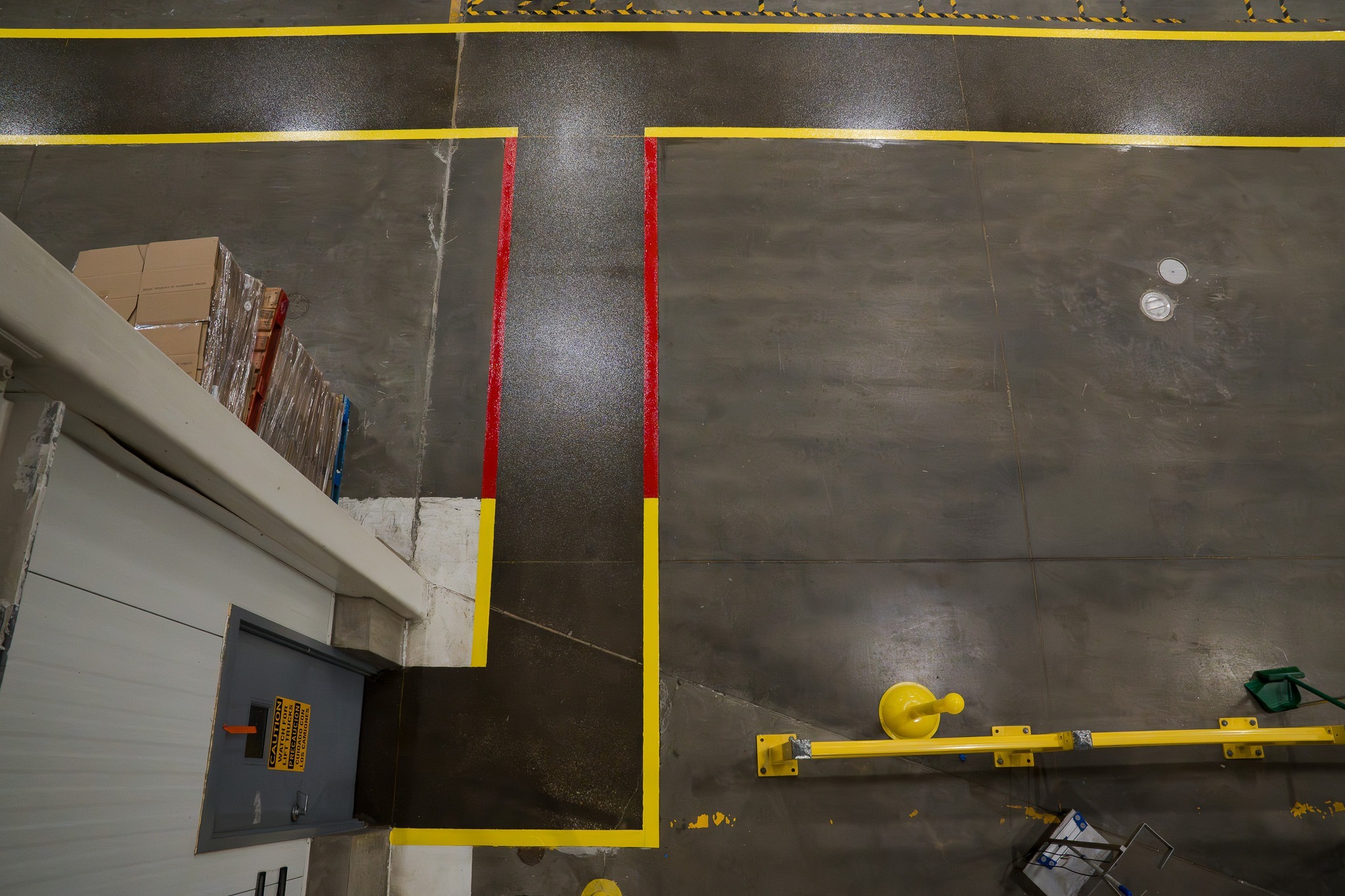
- Loading dock approaches
- Equipment travel paths
Clearly marked traffic routes help reduce congestion and improve operational efficiency throughout the facility.
Identifying Hazard Areas
Certain areas within a facility may require additional visual attention.
Line striping is often used to highlight:
- Electrical panels
- Emergency exits
- Fire equipment
- Loading zones
- High-risk machinery
Using highly visible colors helps employees quickly recognize these areas and maintain appropriate clearances.
Common Line Striping Colors and Their Meanings
Although facilities may customize their markings, some colors are commonly used throughout industrial environments.
Yellow
Yellow is often used for:
- Walkways
- Traffic lanes
- General caution areas
Red
Red commonly identifies:
- Fire protection equipment
- Emergency access zones
- Areas requiring immediate attention
Green
Green may indicate:
- Safety equipment
- First aid stations
- Emergency routes
White
White is frequently used for:
- Storage areas
- Workstations
- General organization markings
Color coding helps employees quickly understand facility layouts and operational requirements.
Why Maintenance Matters
Even the best line striping eventually wears down under constant traffic.
Forklifts, pallet jacks, cleaning equipment, and daily operations gradually reduce visibility.
When striping becomes faded:
- Safety benefits decrease
- Traffic confusion increases
- Organization suffers
Routine inspections and periodic restriping help maintain the effectiveness of floor markings and ensure they continue serving their intended purpose.
Choosing the Right Striping Material
Not all striping materials perform the same.
The best option depends on:
- Traffic volume
- Chemical exposure
- Cleaning procedures
- Facility conditions
Industrial-grade coatings typically provide better durability than temporary tapes or low-performance paints.
Selecting the appropriate material helps maximize the lifespan of the striping system.
Final Thoughts
Industrial line striping does much more than add color to a facility floor. It helps improve safety, organize operations, direct traffic, identify hazards, and create a more efficient work environment.
Whether used to separate forklifts from pedestrians, organize inventory storage, or support workplace safety programs, line striping remains one of the simplest and most effective tools available for improving facility operations.
To learn more about the lifespan and maintenance requirements of floor markings, read the next article: CustomCrete FAQ: How Long Does Line Striping Last?

Topics: