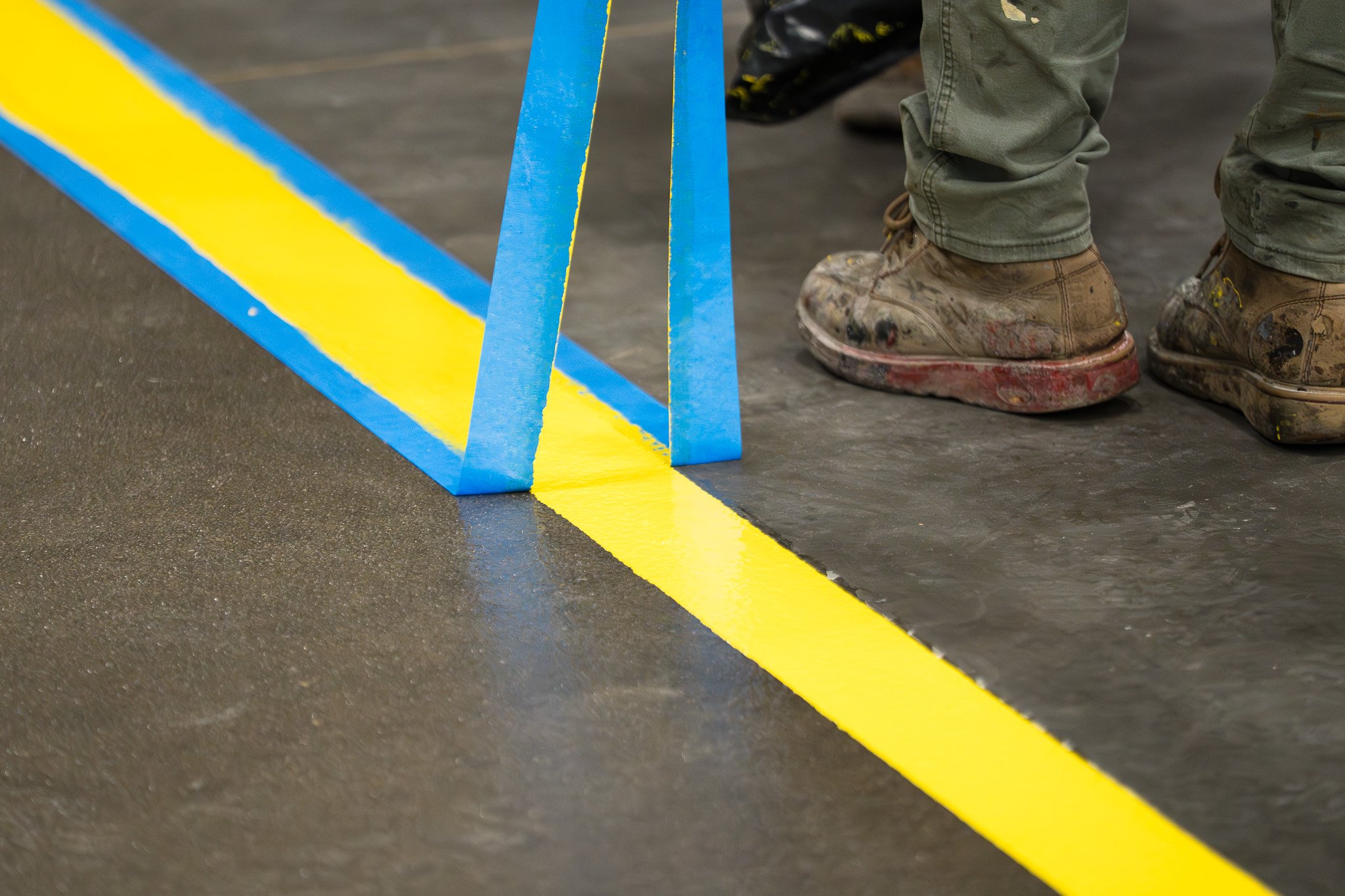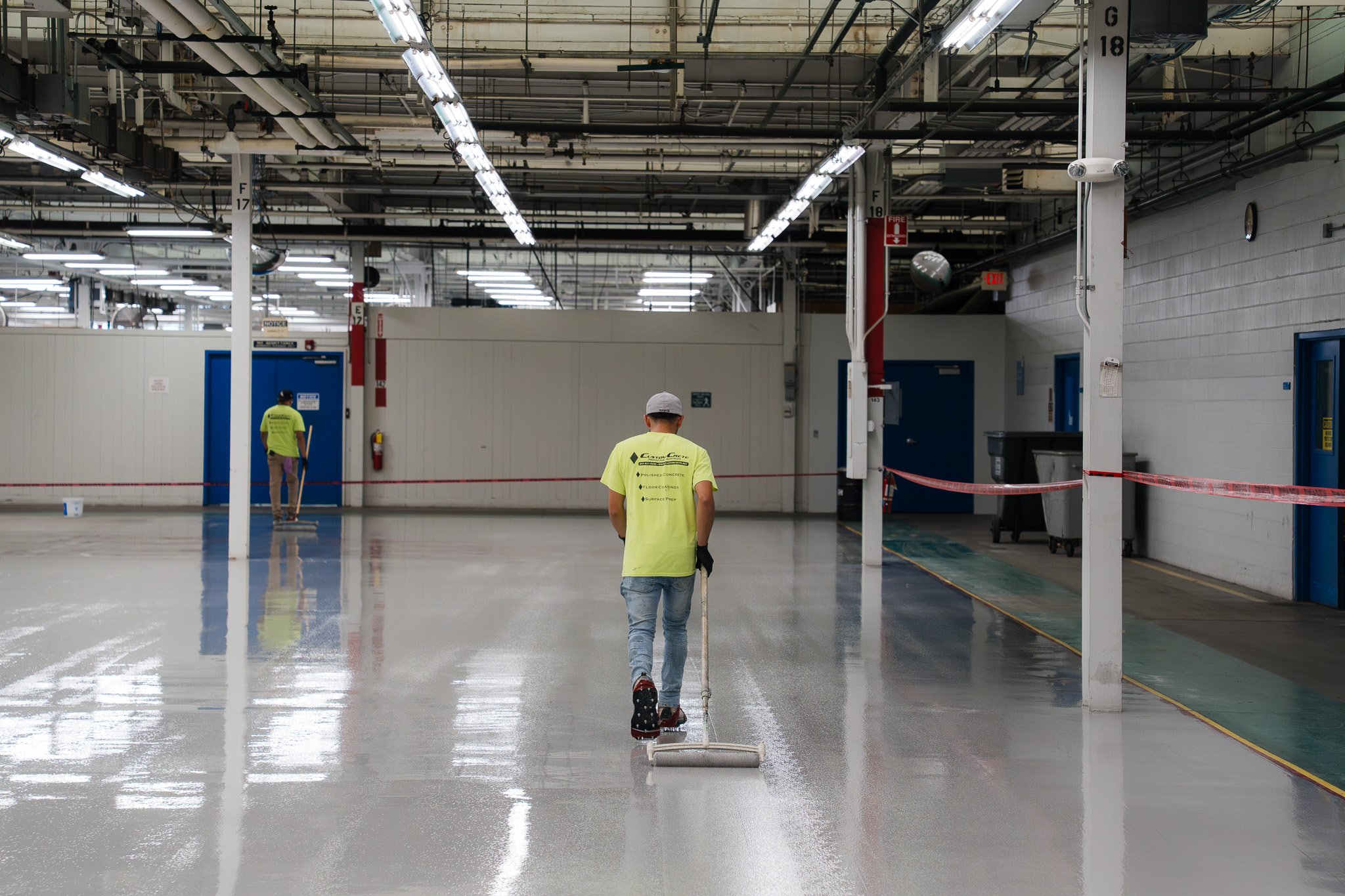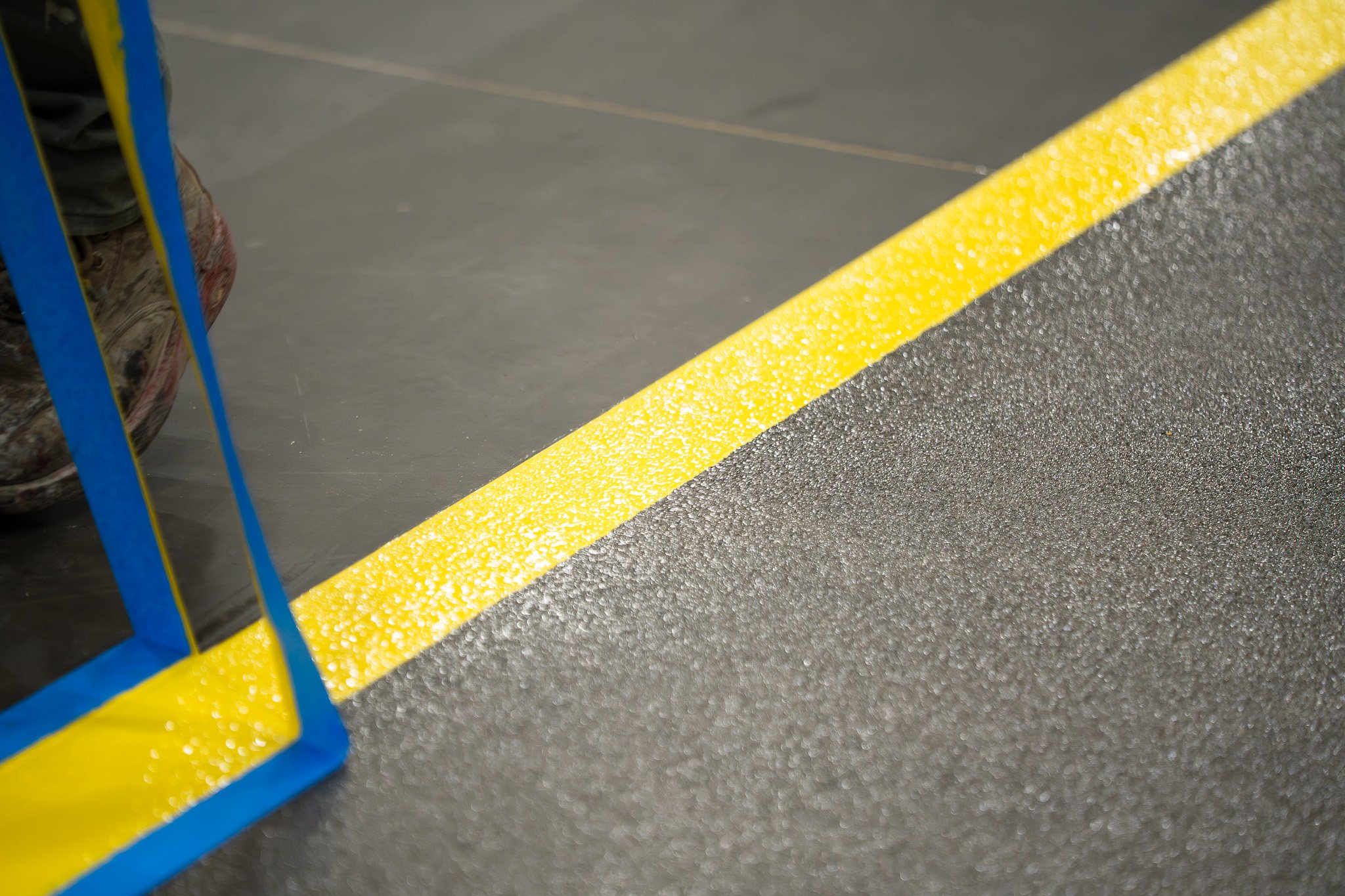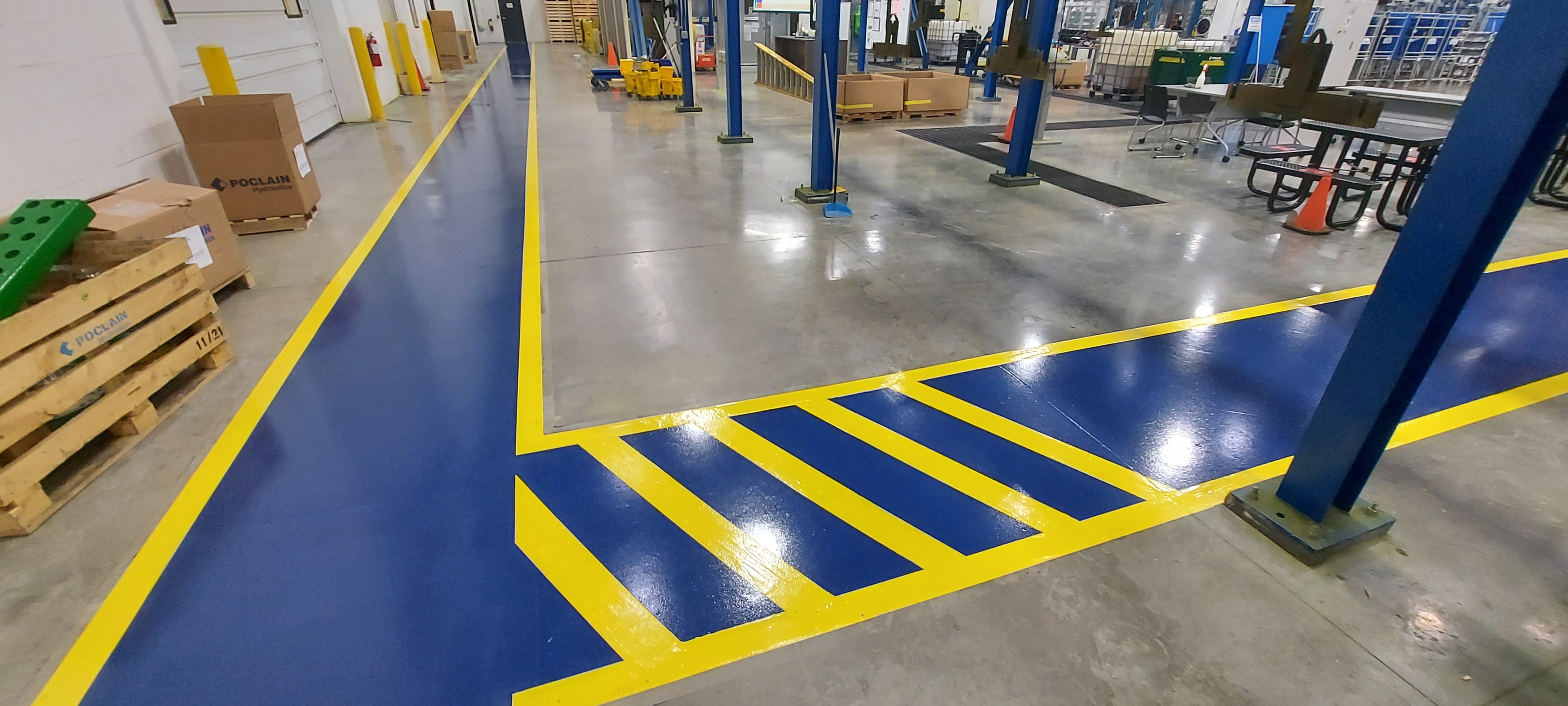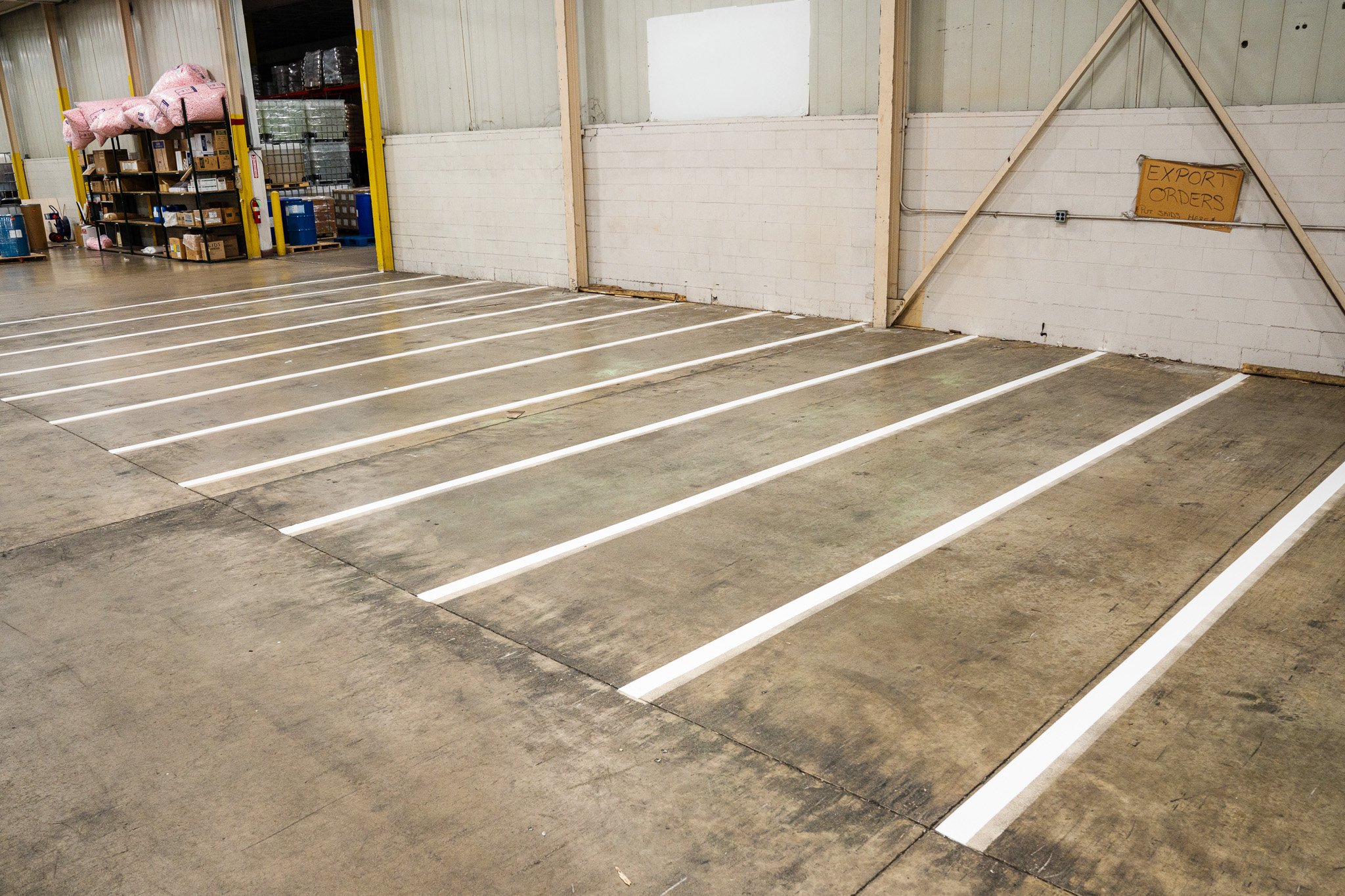
Floor markings can improve facility safety by making traffic patterns, work zones, hazards, and restricted areas easier to recognize. Clearly marked pedestrian walkways, forklift lanes, equipment boundaries, and loading zones give employees and visitors visual guidance for moving through a busy facility.
With nearly 20 years of experience and over 1 million square feet installed, CustomCrete has worked with commercial and industrial floors where organization and traffic management are important parts of daily operations. In this article, we'll explain where floor markings are commonly used and what they can—and cannot—do for facility safety.
Key Takeaways
- Floor markings help visually separate pedestrians, vehicles, equipment, storage, and work areas.
- Line striping can make traffic patterns and designated zones easier to identify, but markings should support—not replace—a larger facility safety plan.
- Colors, locations, widths, materials, and layouts should be selected based on how the facility actually operates and any applicable safety requirements.
How Do Floor Markings Support Facility Safety?
Industrial facilities can have employees, forklifts, carts, machinery, inventory, and delivery vehicles moving through the same space. Without clearly defined areas, it may be harder for people to know where they should walk, drive, load materials, or avoid entering.
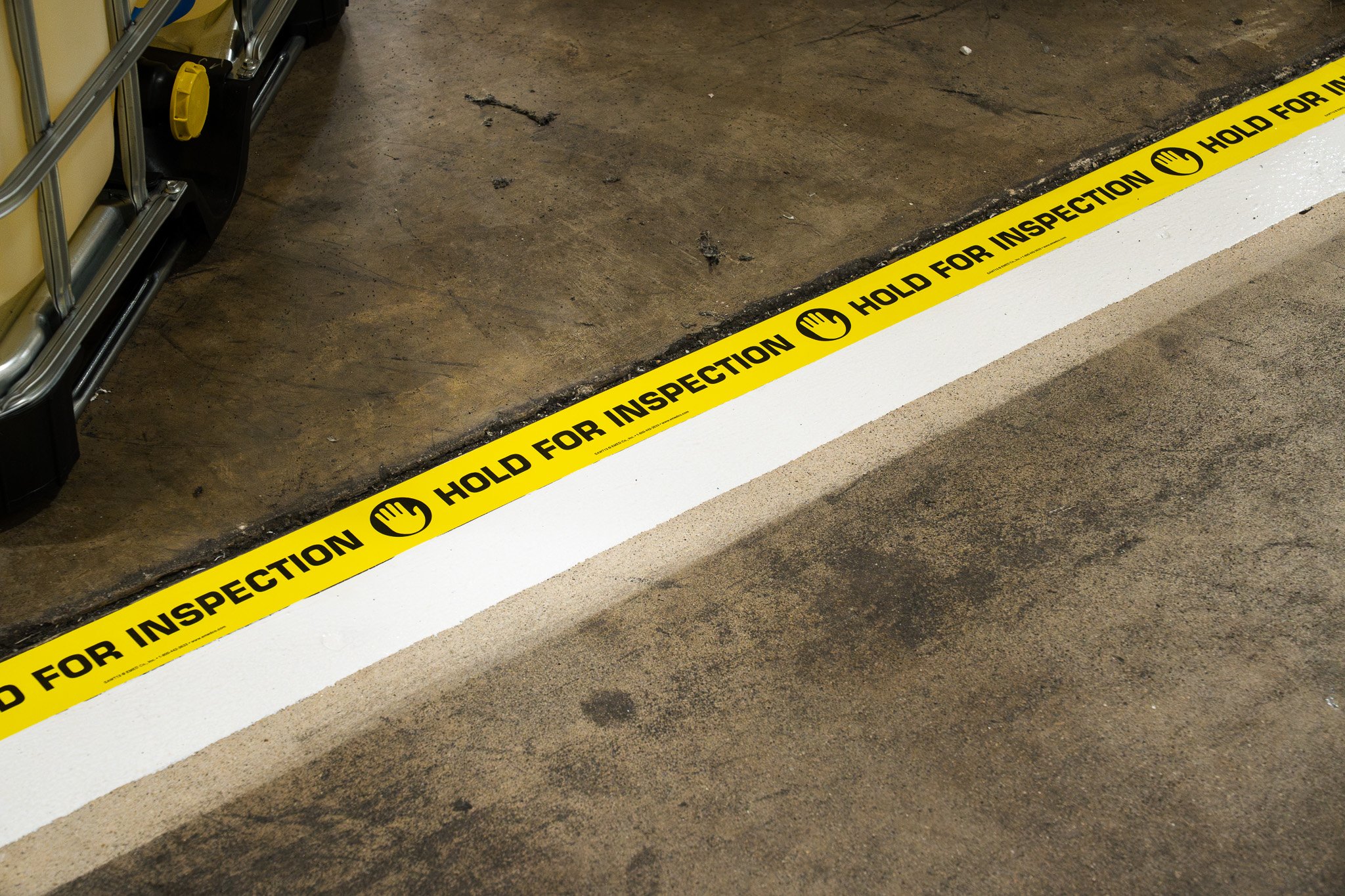
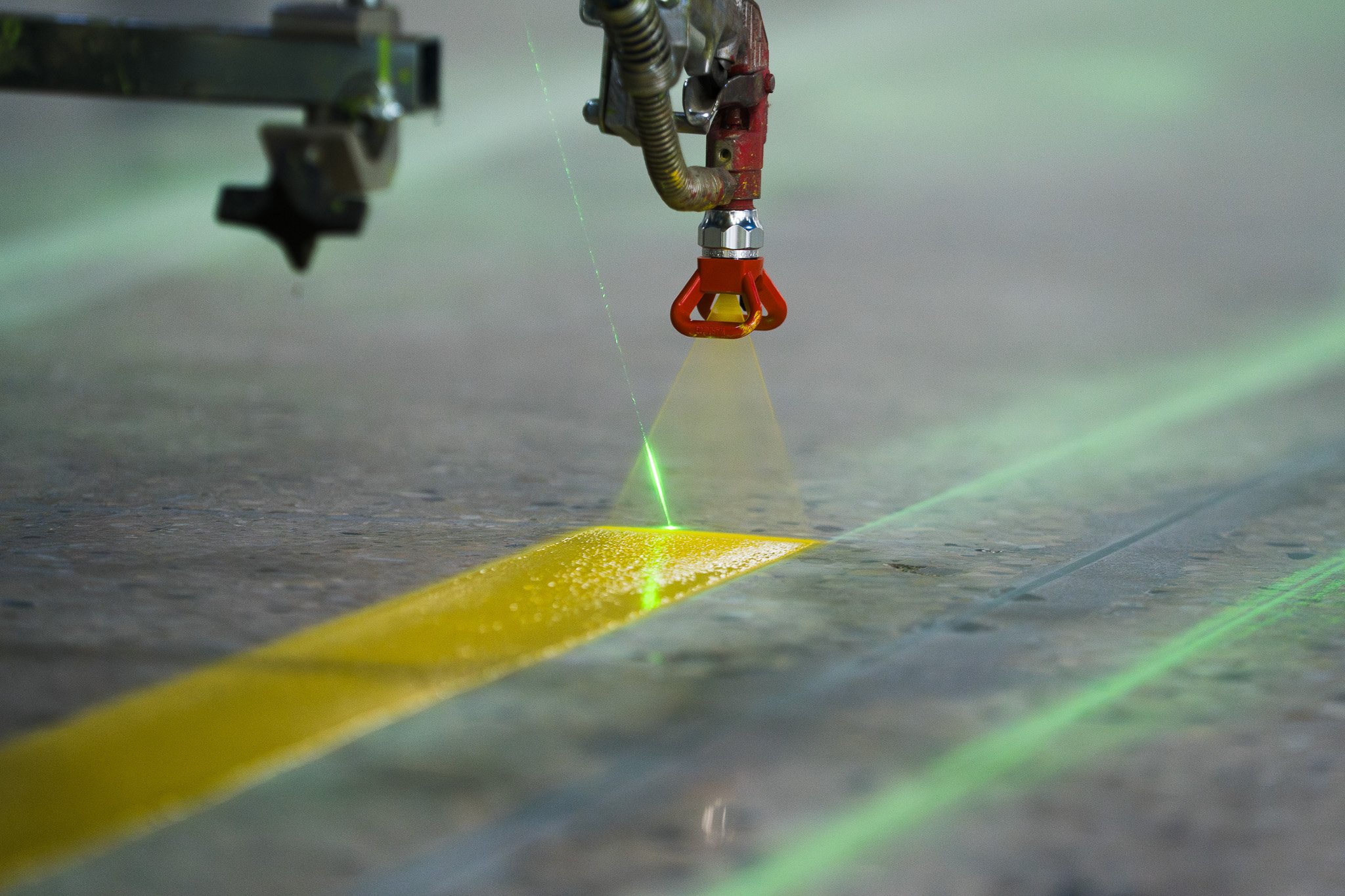
Floor markings create visual boundaries that help organize this movement. Instead of relying only on signs or employee knowledge, markings place instructions directly on the floor where traffic is occurring.
However, line striping alone does not make a facility safe. Employee training, signage, physical barriers, traffic rules, lighting, and other safety measures may also be necessary. Floor markings work best as one part of a broader traffic and workplace safety plan.
Pedestrian Safety Walkways
Pedestrian walkways are one of the most recognizable uses of line striping. These markings create designated paths for employees and visitors to follow as they move through warehouses, manufacturing plants, and other facilities.
Walkways can be especially useful in areas where pedestrians regularly travel near forklifts or other powered equipment. By creating a predictable route, both pedestrians and equipment operators have a clearer understanding of where foot traffic is expected.
The layout matters as much as the markings themselves. A walkway that repeatedly forces employees into vehicle traffic or ends in an unsafe location won't provide the same benefit as one designed around how people actually move through the facility.

Forklift Lanes and Loading Zones
Forklifts are another major reason facilities use line striping. Dedicated forklift lanes can establish preferred travel routes and help visually separate powered equipment from pedestrian areas.
Facilities can also use markings around loading docks, staging areas, and material transfer zones. These boundaries can show where pallets should be placed, where vehicles or equipment may operate, and which spaces need to remain open.
Directional arrows can provide additional guidance in areas with established traffic patterns. For example, a warehouse may use arrows to create one-way equipment routes through narrow or heavily traveled sections.
The goal is to make expected traffic behavior easier to recognize at a glance.
Equipment Boundaries and Restricted Areas
Not every floor marking is designed for traffic.
Lines can also identify boundaries around machinery, electrical equipment, production areas, or other spaces where access needs to be controlled. Depending on the facility, these markings may remind employees to maintain clearance around equipment or indicate that only authorized personnel should enter an area.
Some hazards require more than painted lines. Physical guards, barriers, signs, or other controls may be appropriate depending on the risk. A painted boundary should not be treated as a substitute for a physical barrier where one is required.
For this reason, facilities should determine what the marking is intended to communicate before deciding how a zone should be designed.
Storage Locations and Work Areas
Floor markings can improve organization as well as safety.
Warehouses and manufacturing facilities may designate specific areas for pallets, raw materials, finished products, waste containers, tools, or mobile equipment. This gives employees a clear visual reference for where items belong.
Defined storage locations can also help discourage materials from gradually spreading into pedestrian paths, forklift lanes, doorways, or other areas intended to remain accessible.
Similar markings can be used around work cells and production zones. By establishing visible boundaries, facilities can make it easier to distinguish between areas intended for production, storage, traffic, and access.
Emergency Access Areas and Directional Markings
Certain areas need to remain accessible during normal operations and emergencies. Depending on the facility and applicable requirements, markings may be used to help identify spaces around emergency equipment, exits, fire protection equipment, or access routes.
Facilities shouldn't assume that simply using a certain paint color automatically satisfies OSHA, fire code, or other requirements. The appropriate markings depend on the hazard, application, facility, and applicable standards.
Directional arrows, text, symbols, and other visual cues can also supplement line striping. These markings may help employees and visitors understand traffic flow without relying solely on signs mounted elsewhere in the facility.
What Makes Line Striping Effective?
Visibility is one consideration, but durability matters too.
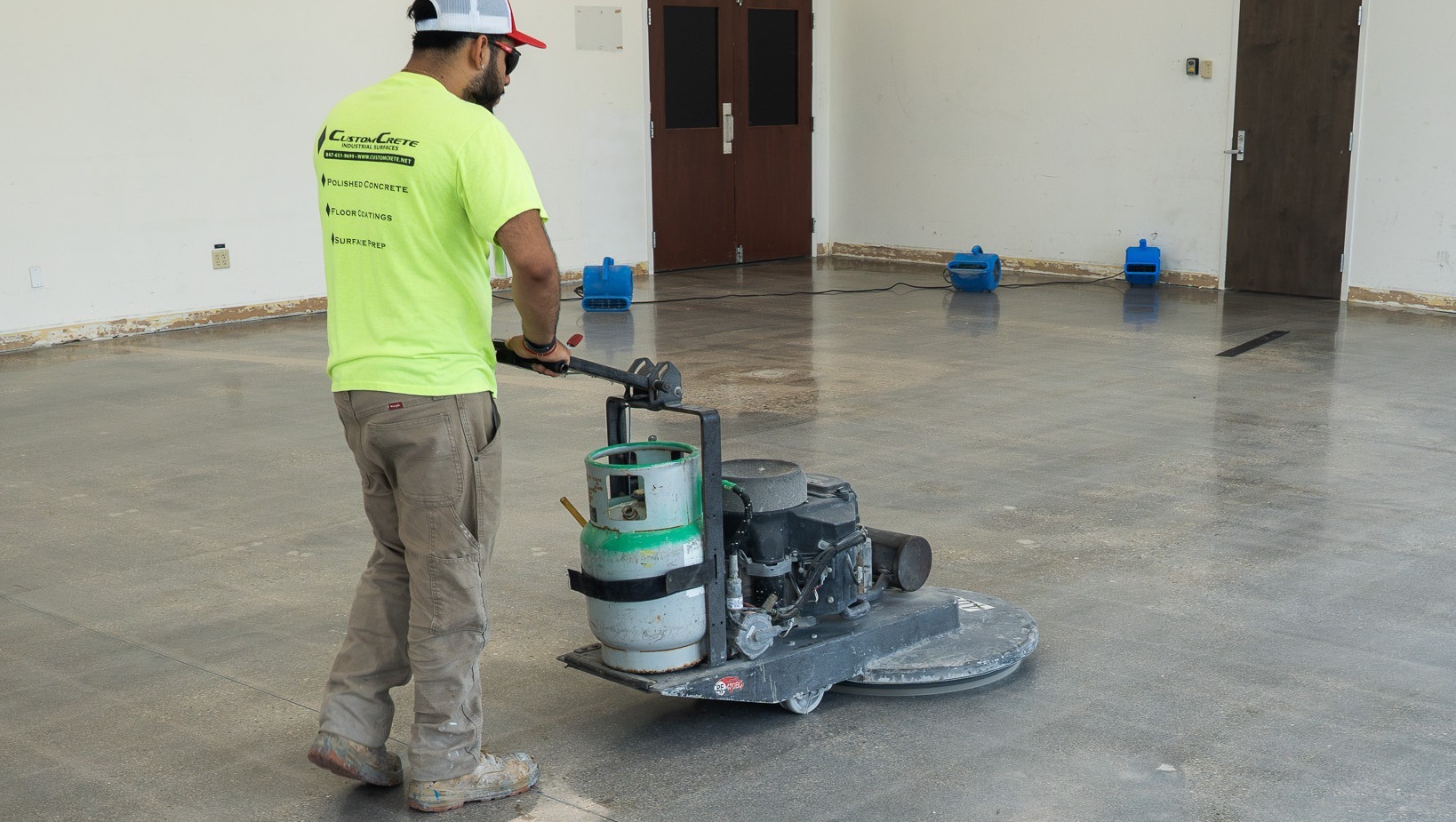
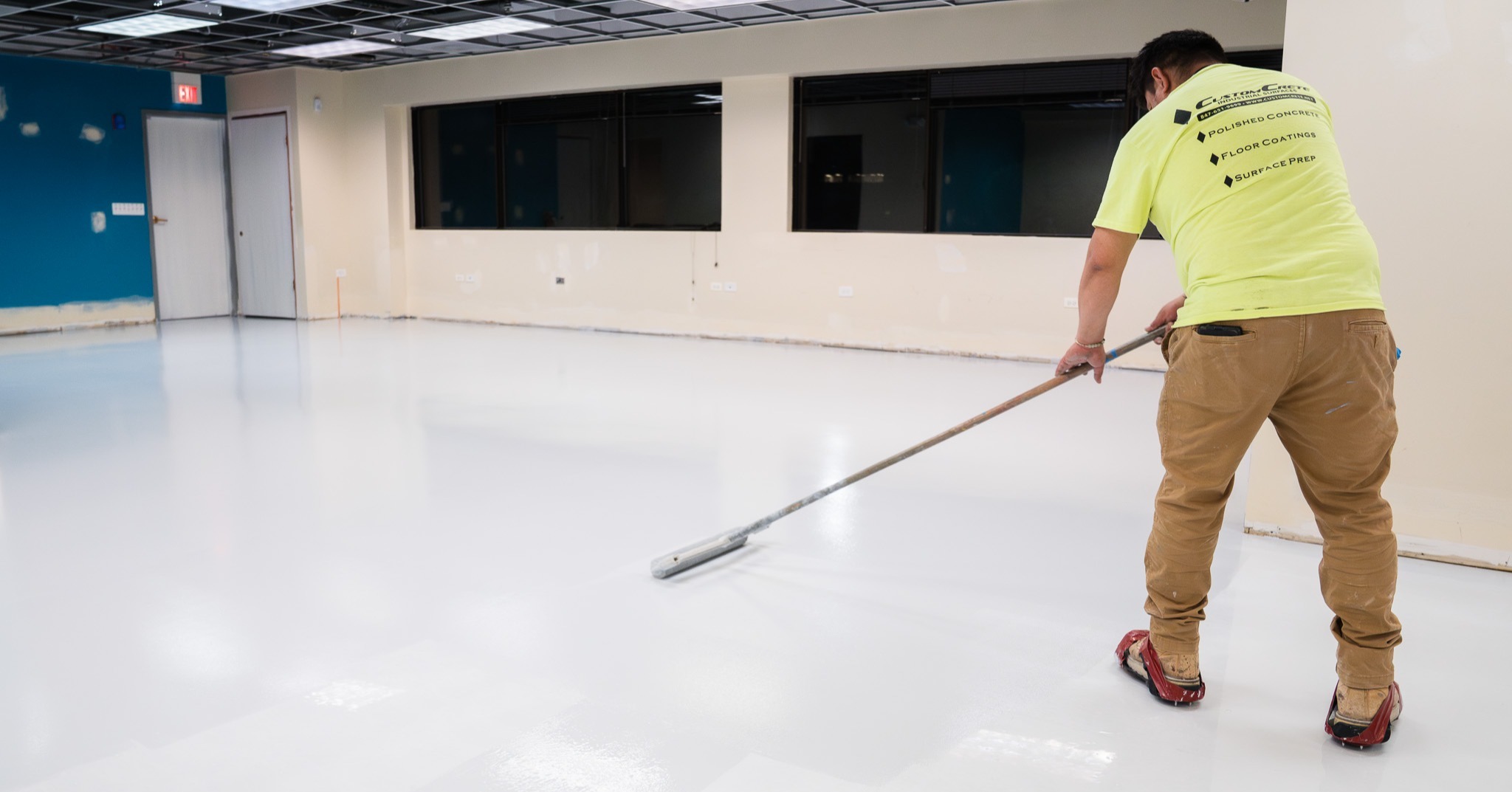
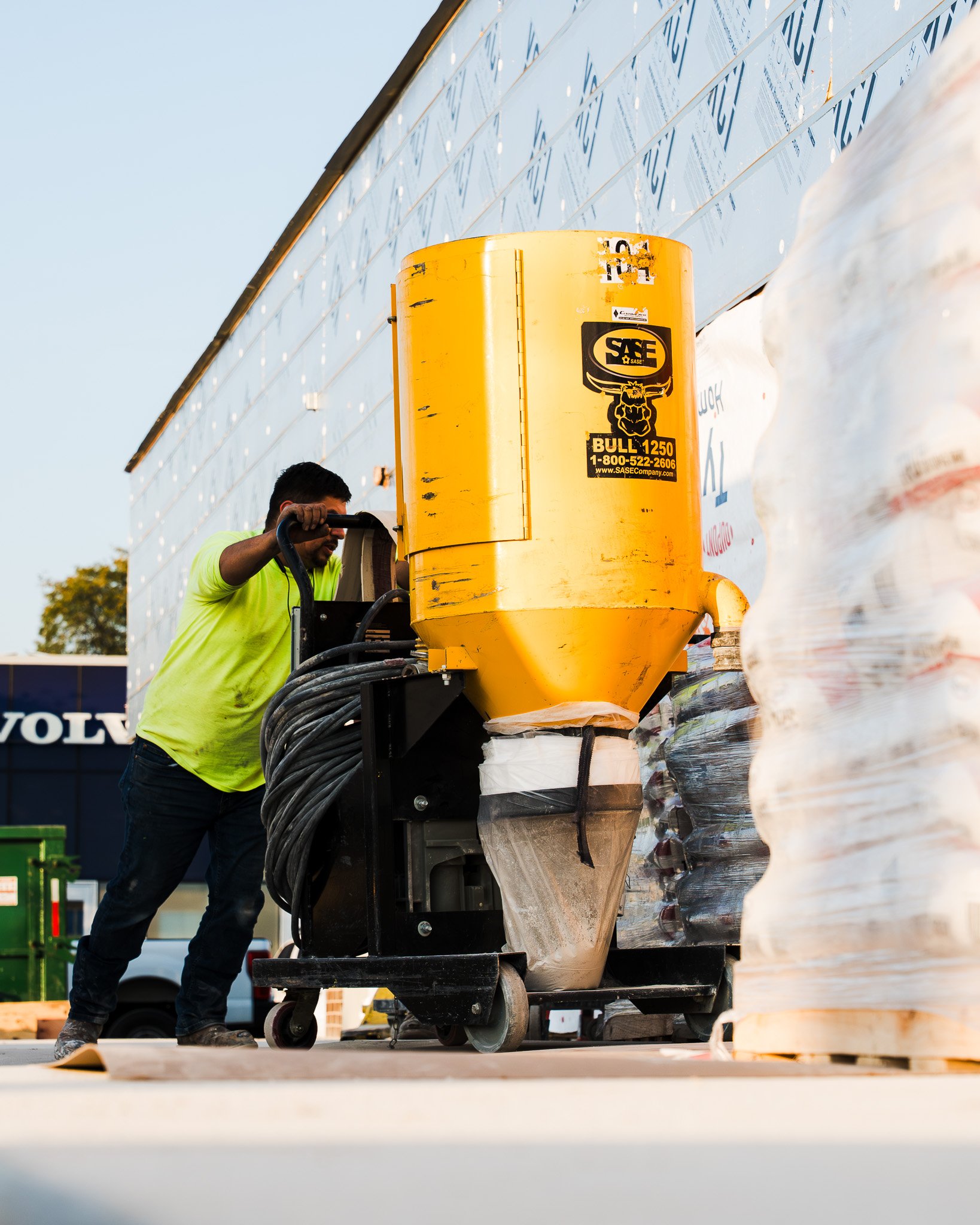
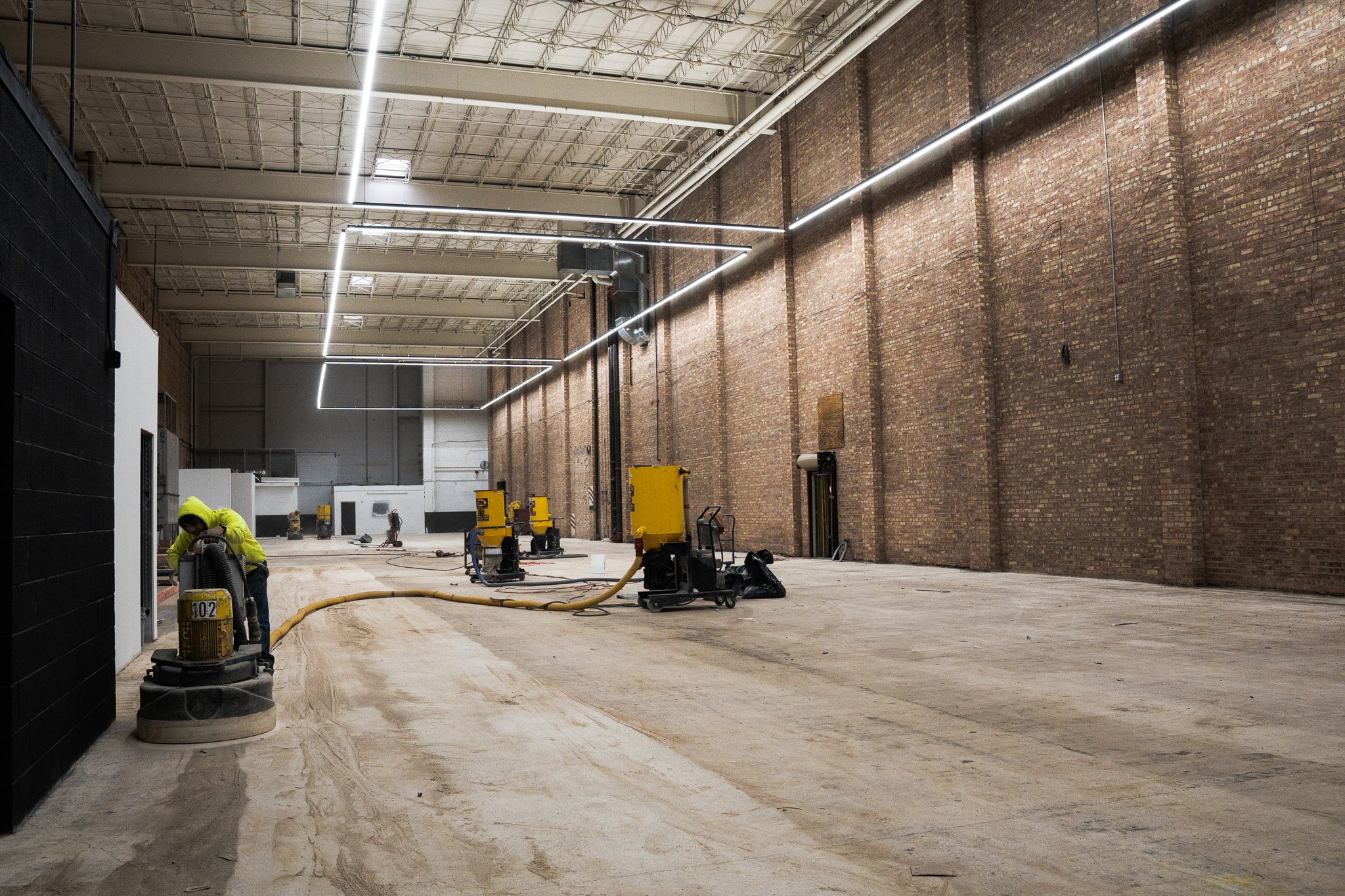
Before applying floor markings, the existing surface needs to be evaluated. Dirt, oils, failing coatings, or other contaminants can interfere with adhesion. High-traffic areas may also require different materials than lightly used spaces because forklift wheels and constant traffic can wear markings over time.
Color selection should be intentional rather than decorative. Facilities may already have an established color system for pedestrian traffic, equipment, hazards, storage, and restricted zones. Consistency can make those markings easier for employees to understand.
The layout should also be planned before installation. Walkways, forklift routes, loading zones, equipment boundaries, and storage areas need to work together rather than create conflicting instructions.

Final Thoughts
Floor markings can support facility safety by making it easier to understand where people, vehicles, equipment, and materials belong. Pedestrian safety walkways, forklift lanes, loading zones, restricted areas, equipment boundaries, storage locations, emergency access areas, and directional markings can all contribute to a more organized environment.
Their effectiveness depends on thoughtful planning. The markings should reflect actual traffic patterns and operating conditions while working alongside training, signage, barriers, and other required safety measures.
To see these concepts in action, watch “How Do Floor Markings Improve Facility Safety? Safety Walkways & Line Striping” for a visual explanation of how line striping and designated zones can be used throughout a facility.
Topics: