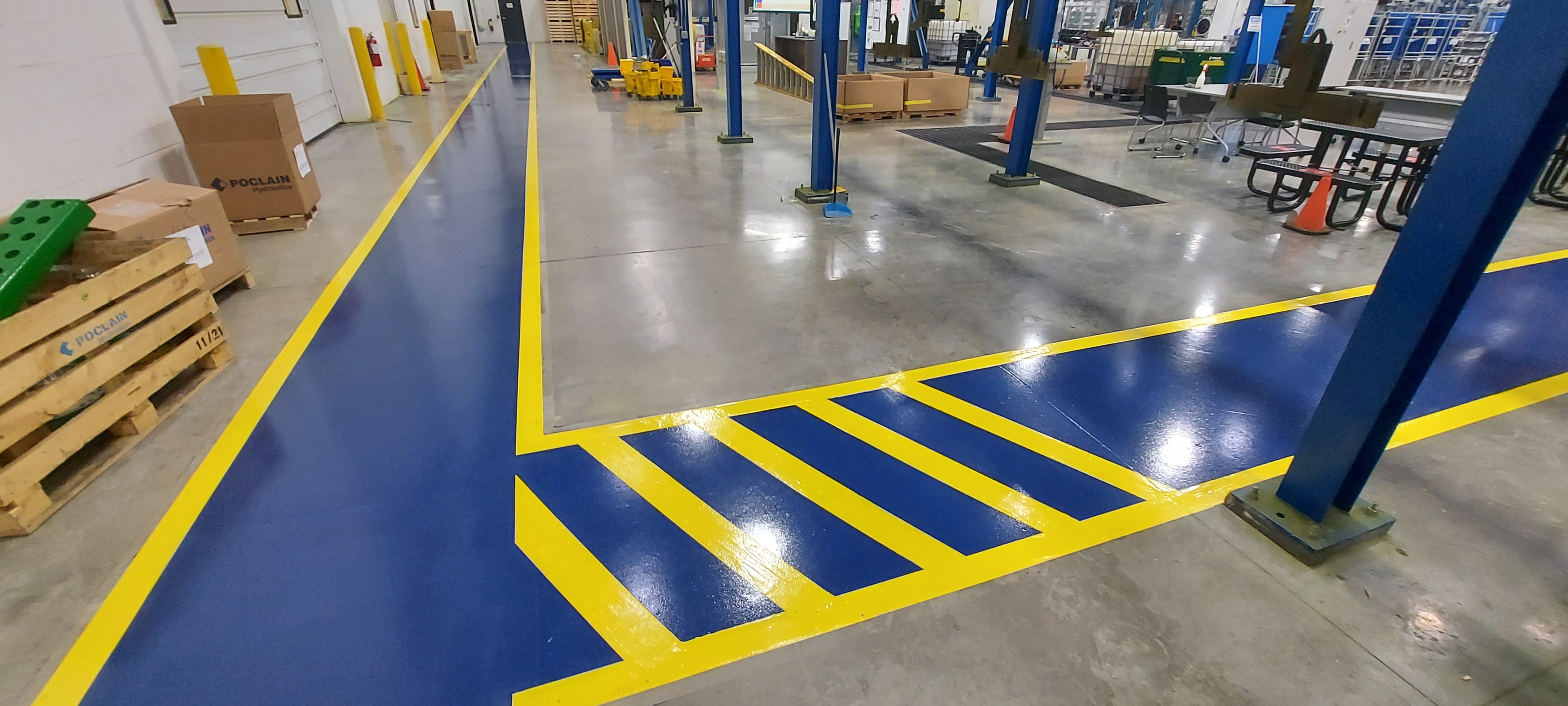
In busy manufacturing facilities, forklifts and employees often share the same floor space. Without clearly marked pedestrian walkways, this can create safety concerns, disrupt workflow, and increase the risk of workplace accidents.
That was the challenge facing National Safety Apparel at its Chicago manufacturing facility. Although the existing concrete flooring was in good condition, the facility needed a better way to separate employees on foot from areas used by heavy machinery.
CustomCrete was brought in to install epoxy safety walkways using a blue epoxy flooring system with yellow line striping. The goal was to create clearly defined pedestrian pathways without replacing the existing floor.
Key Takeaways
- The challenge: Forklifts and pedestrians were moving through shared areas, creating potential safety hazards and workflow inefficiencies.
- The solution: Blue epoxy safety walkways with yellow boundary lines to help distinguish pedestrian routes from surrounding traffic areas.
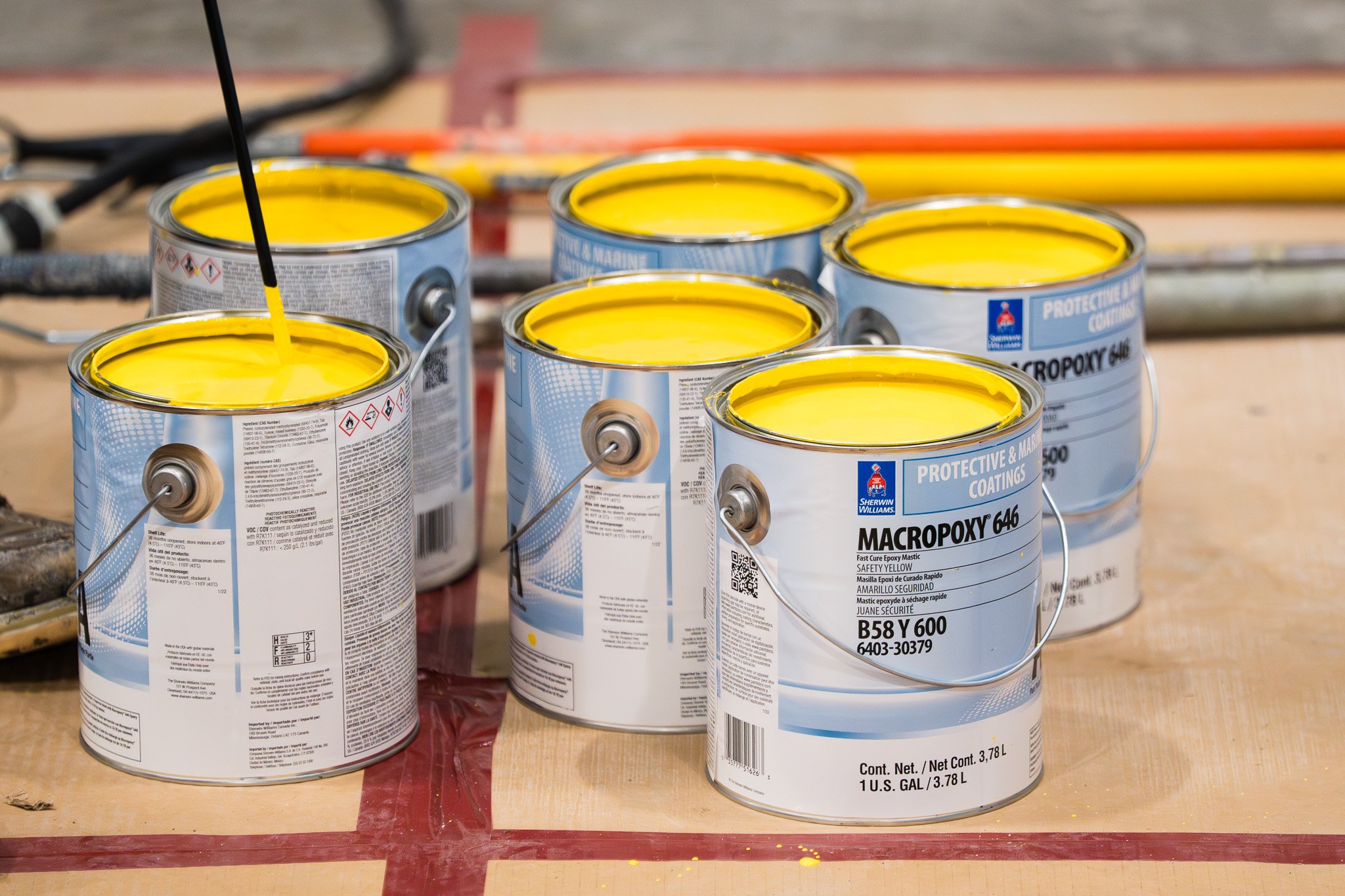
- The materials: Dudick Steri-Prime WB, Dudick Steri-Flor UV, Macropoxy, and Dudick Sealer 35.
- The outcome: Clearly marked pedestrian walkways designed to improve traffic organization and support safer movement throughout the facility.
The Challenge: When Forklifts and Pedestrians Share the Same Space
National Safety Apparel operates in an industrial manufacturing environment where employees and heavy machinery need to move efficiently throughout the facility.
Before the project, forklifts and pedestrians traveled through some of the same areas without clearly designated walking paths. While the existing floor was in good condition, the lack of defined pedestrian routes created an opportunity to improve workplace safety.
In manufacturing environments, forklifts can create hazards because of their size, weight, turning radius, and limited operator visibility. Employees walking through these areas may not always be visible to equipment operators, particularly near corners, storage areas, or busy intersections.
Without designated walkways, facilities may experience several challenges:
- Increased potential for forklift and pedestrian collisions.
- Confusion about where employees should walk.
- Disruptions caused by employees and equipment sharing travel routes.
- Difficulty maintaining organized traffic patterns.
For National Safety Apparel, the goal wasn't to replace the floor. It was to make the existing space safer and more organized through clearly marked pedestrian pathways.
The Solution: Blue Epoxy Safety Walkways With Yellow Line Striping
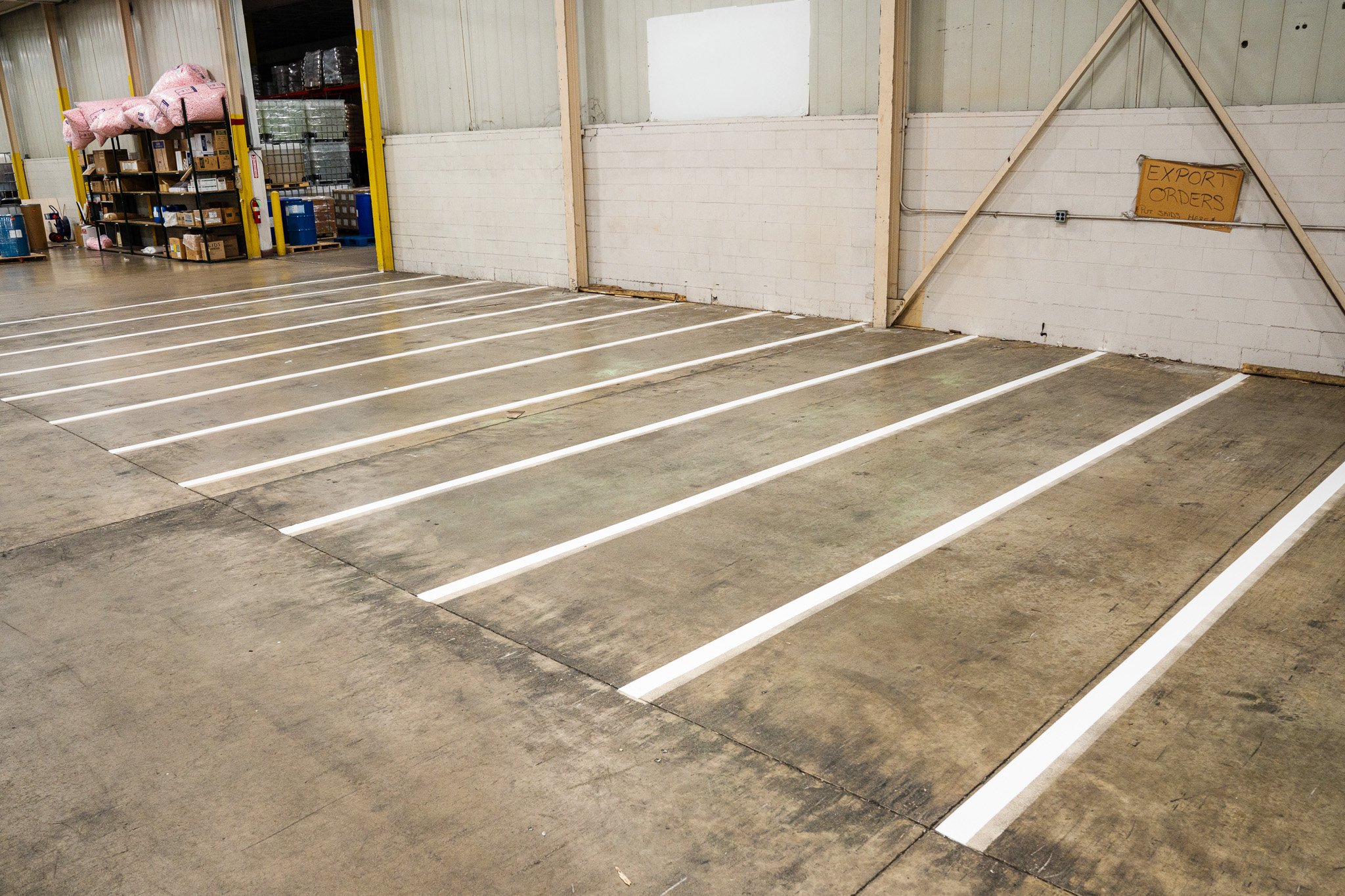
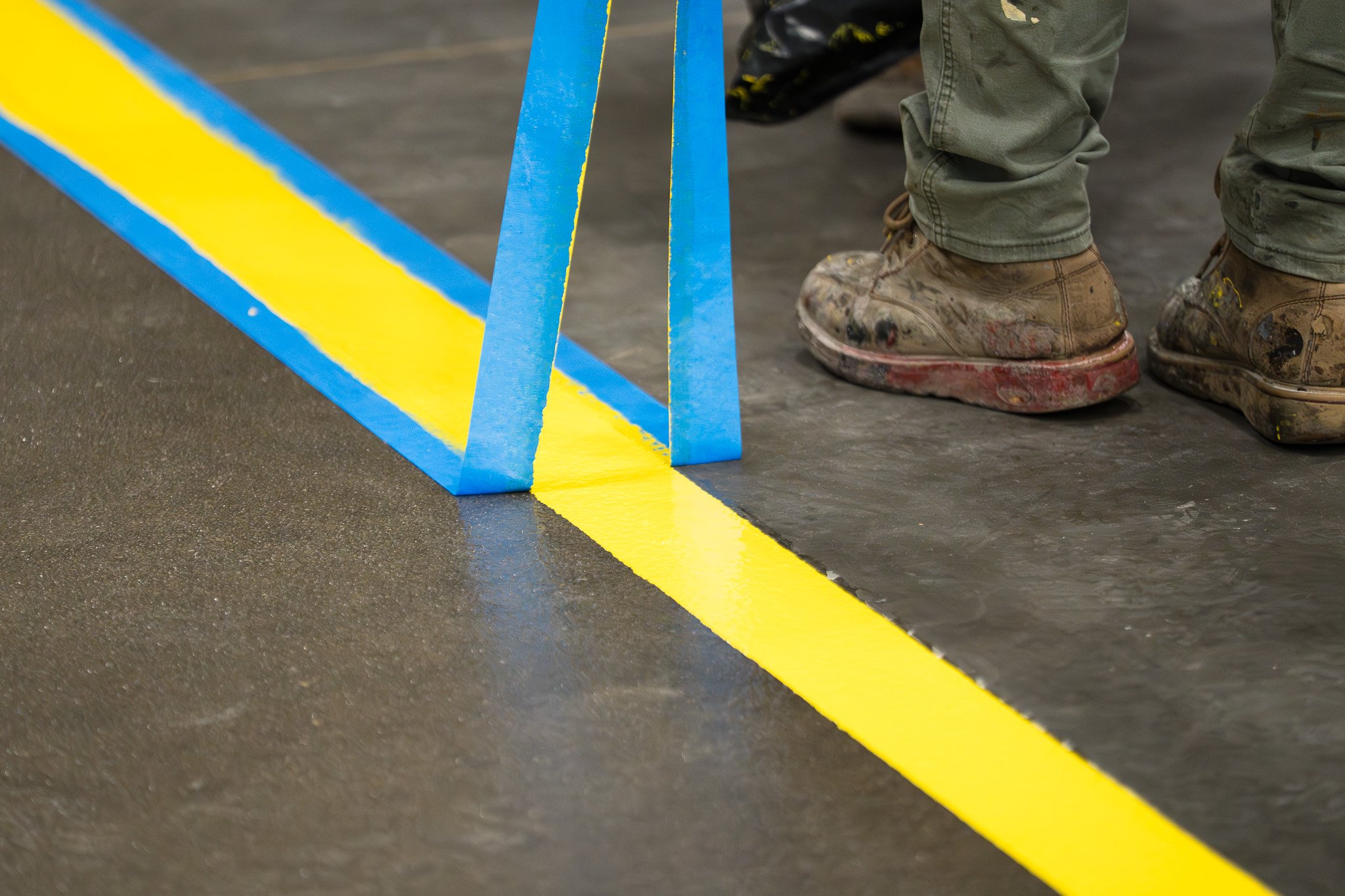
CustomCrete installed a blue epoxy walkway system bordered by yellow safety lines.
The blue surface was selected to create a visible pedestrian route, while the yellow striping helped distinguish the walkway boundaries from surrounding operational areas.

Epoxy was chosen because the facility needed a durable marking system suited to an industrial environment with heavy machinery. Unlike adhesive floor marking tape, which can peel or shift under demanding conditions, properly installed epoxy markings bond to a prepared substrate and can provide longer-lasting performance.
However, durability depends on several factors, including surface preparation, equipment traffic, cleaning practices, and the products used.
The completed design featured a glossy blue walkway with yellow borders. While the system was selected with durability and slip resistance in mind, actual slip resistance depends on the finished surface texture and environmental conditions. A glossy appearance alone does not establish slip-resistant performance.
For facilities considering epoxy safety walkways, it is important to evaluate both visibility and the conditions employees encounter, including moisture, dust, oils, and regular cleaning.
The Installation Process: From Floor Assessment to Final Safety Lines
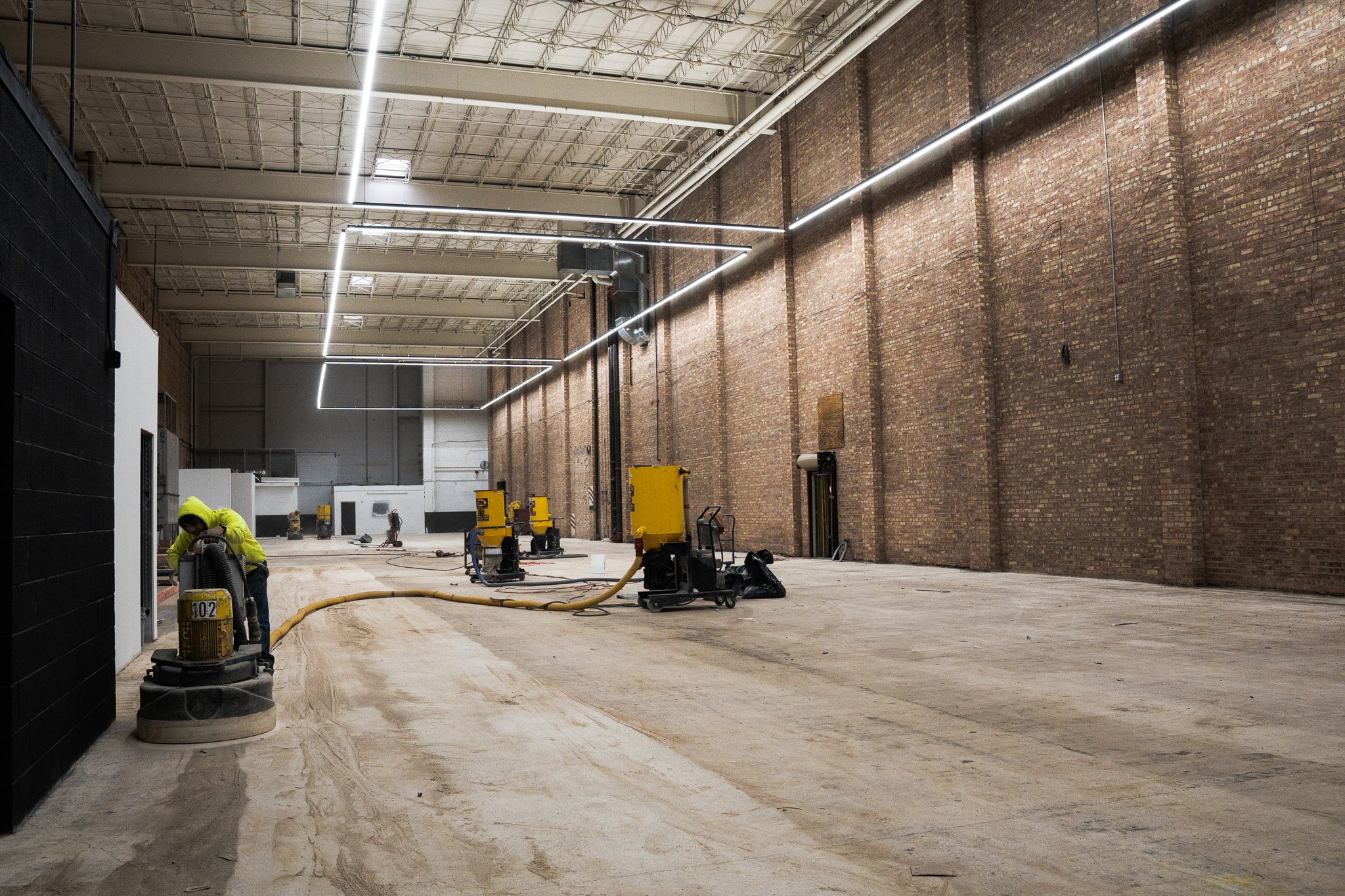
Because the existing concrete was in good condition, this project did not require demolition or major concrete repairs. Instead, the installation focused on preparing the designated walkway areas and applying the epoxy system.
Step 1: Assessing the Existing Floor
The CustomCrete team began by assessing the floor and identifying the areas where pedestrian walkways would be installed.
The existing surface was suitable for the planned work, eliminating the need for extensive repairs or replacement.
This initial assessment was important because the performance of epoxy coatings depends on the condition of the underlying floor. Even when concrete appears to be in good shape, installers must consider surface cleanliness, coating compatibility, and adhesion.
Step 2: Applying the Primer
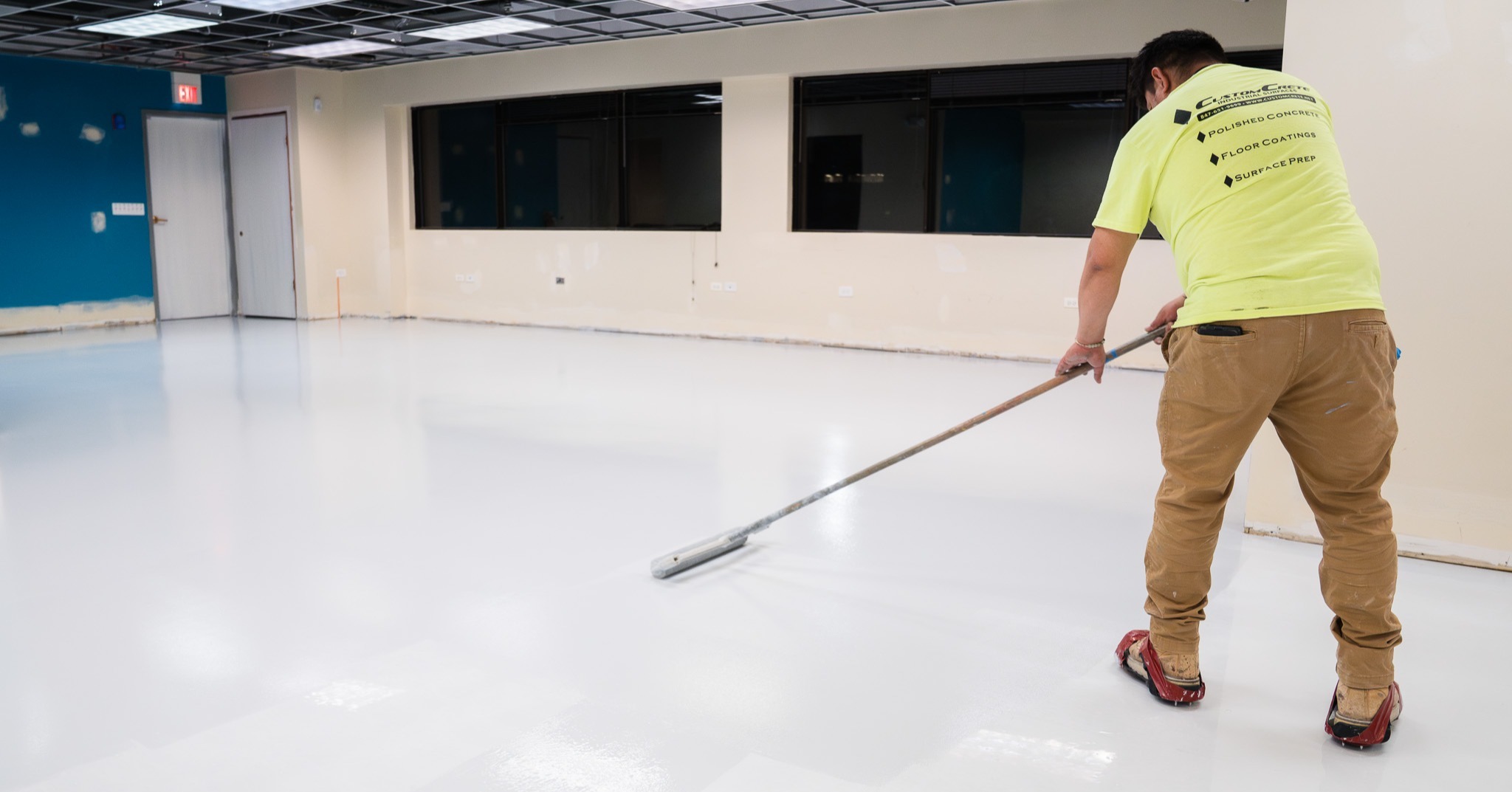
The first material applied was Dudick Steri-Prime WB, a primer used as part of the epoxy walkway system.
Primers help create a suitable bonding surface for subsequent coating layers. Proper adhesion is particularly important in industrial environments where flooring may experience frequent cleaning, foot traffic, and mechanical wear.

Step 3: Installing the Blue Epoxy Walkways
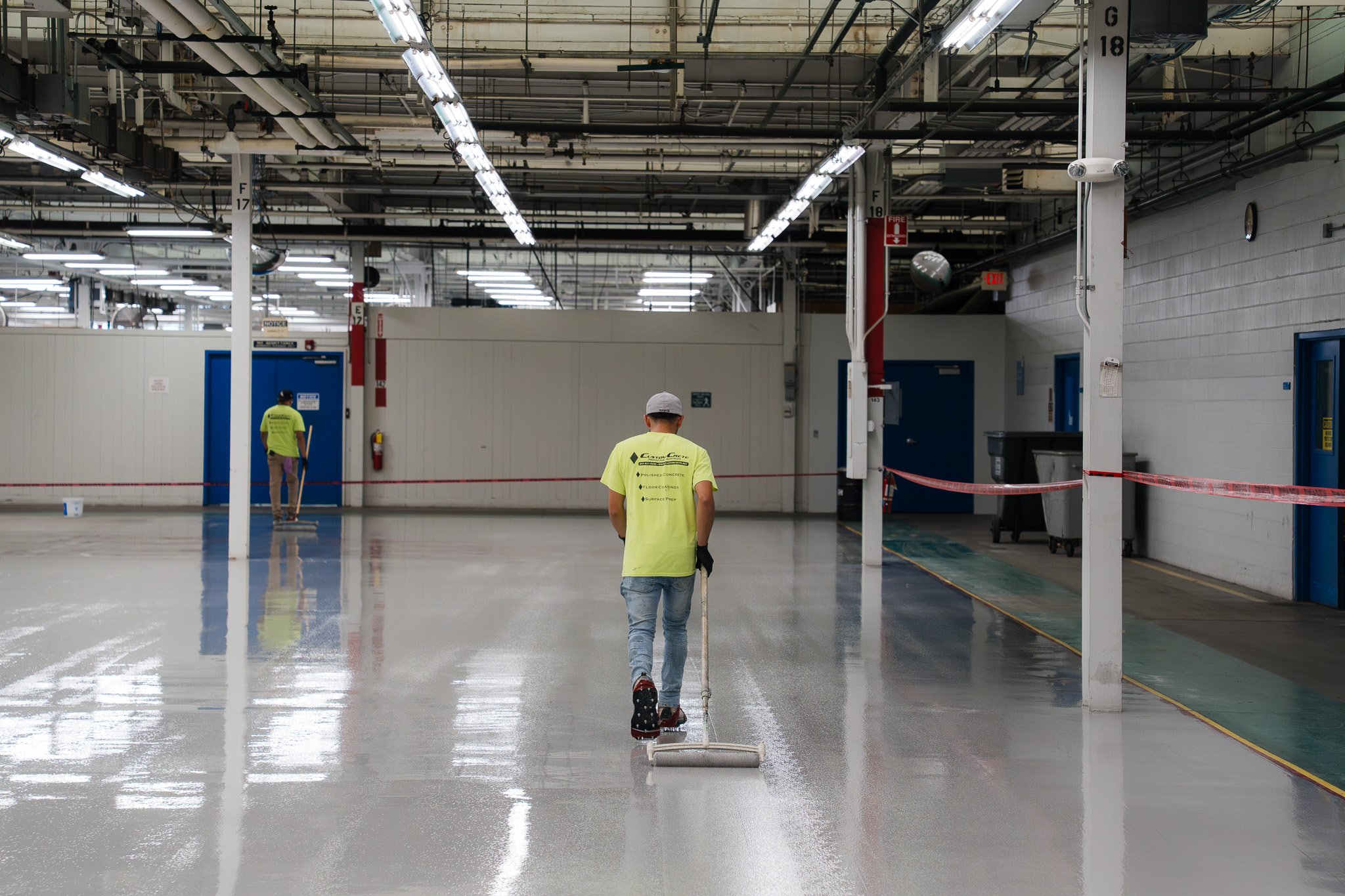
Once the primer was ready, the team applied Dudick Steri-Flor UV to create the blue pedestrian pathways.
The blue epoxy provided a distinct visual contrast against the surrounding floor, making it easier for employees to identify designated walking areas.
The epoxy system was selected to withstand the demands of the manufacturing environment while providing a consistent finish.

Step 4: Preparing the Edges and Adding Yellow Safety Lines
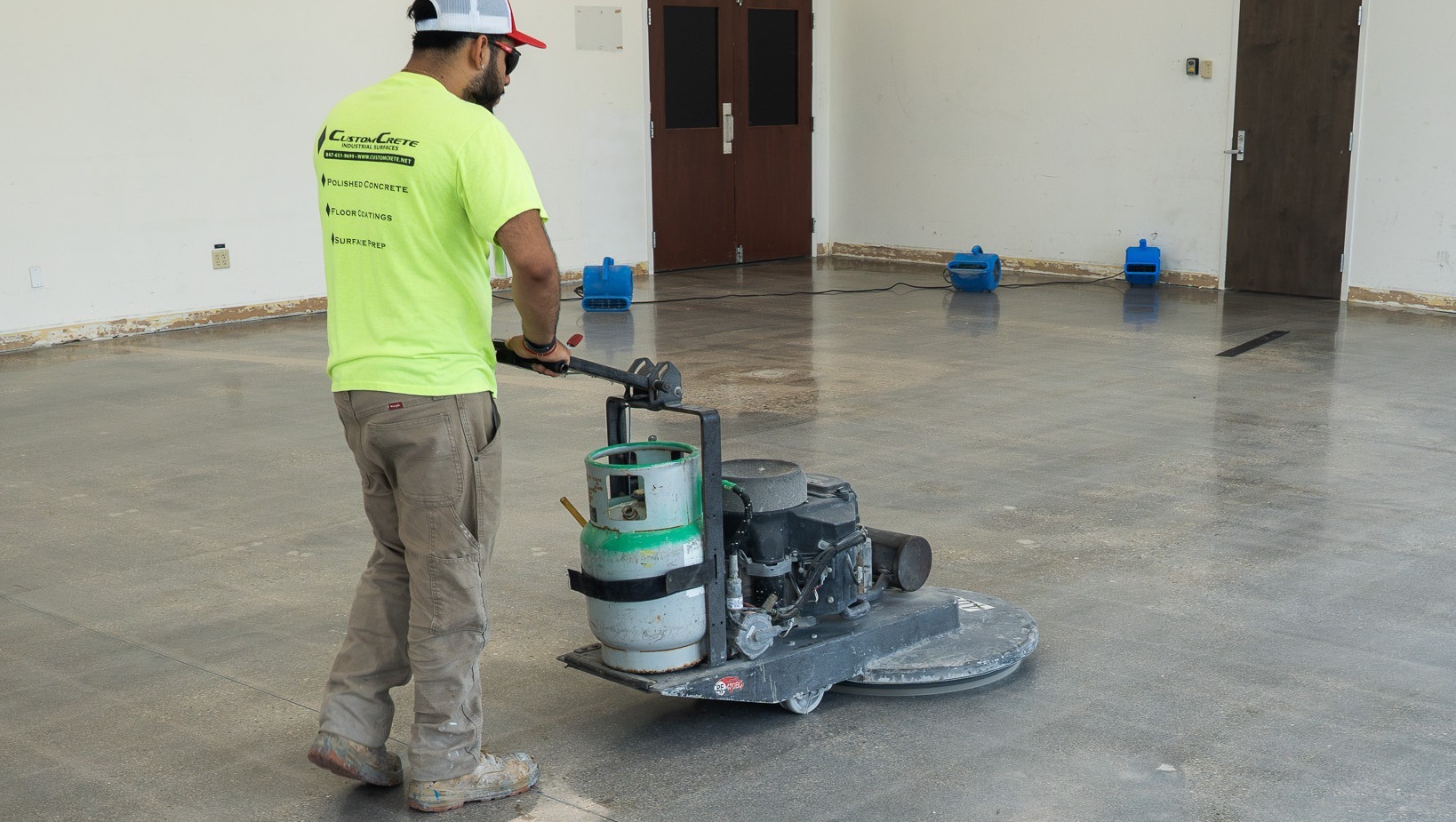
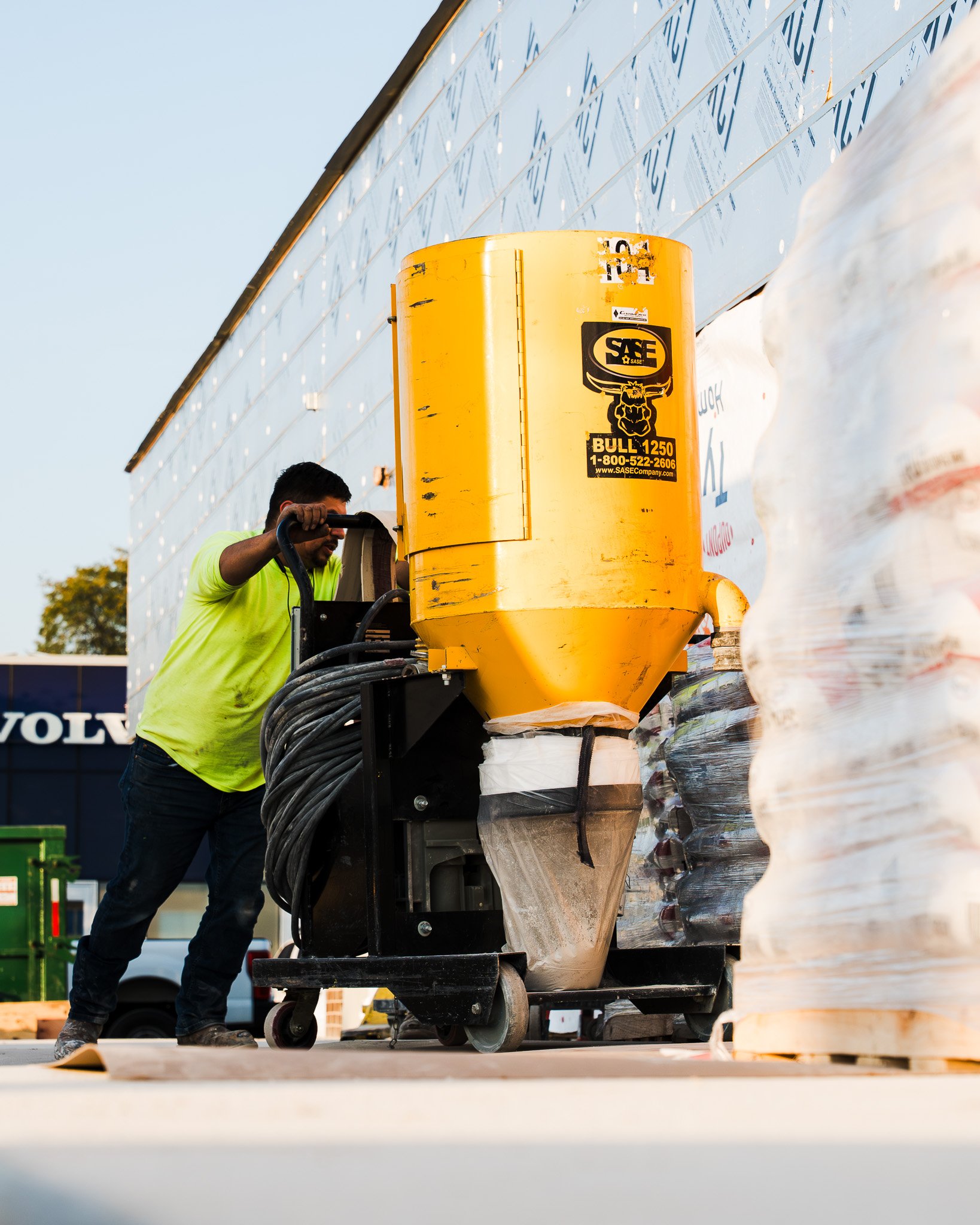
After installing the blue walkways, the team used an Impacts Americas shot blaster to clean up and prepare portions of the walkway edges.

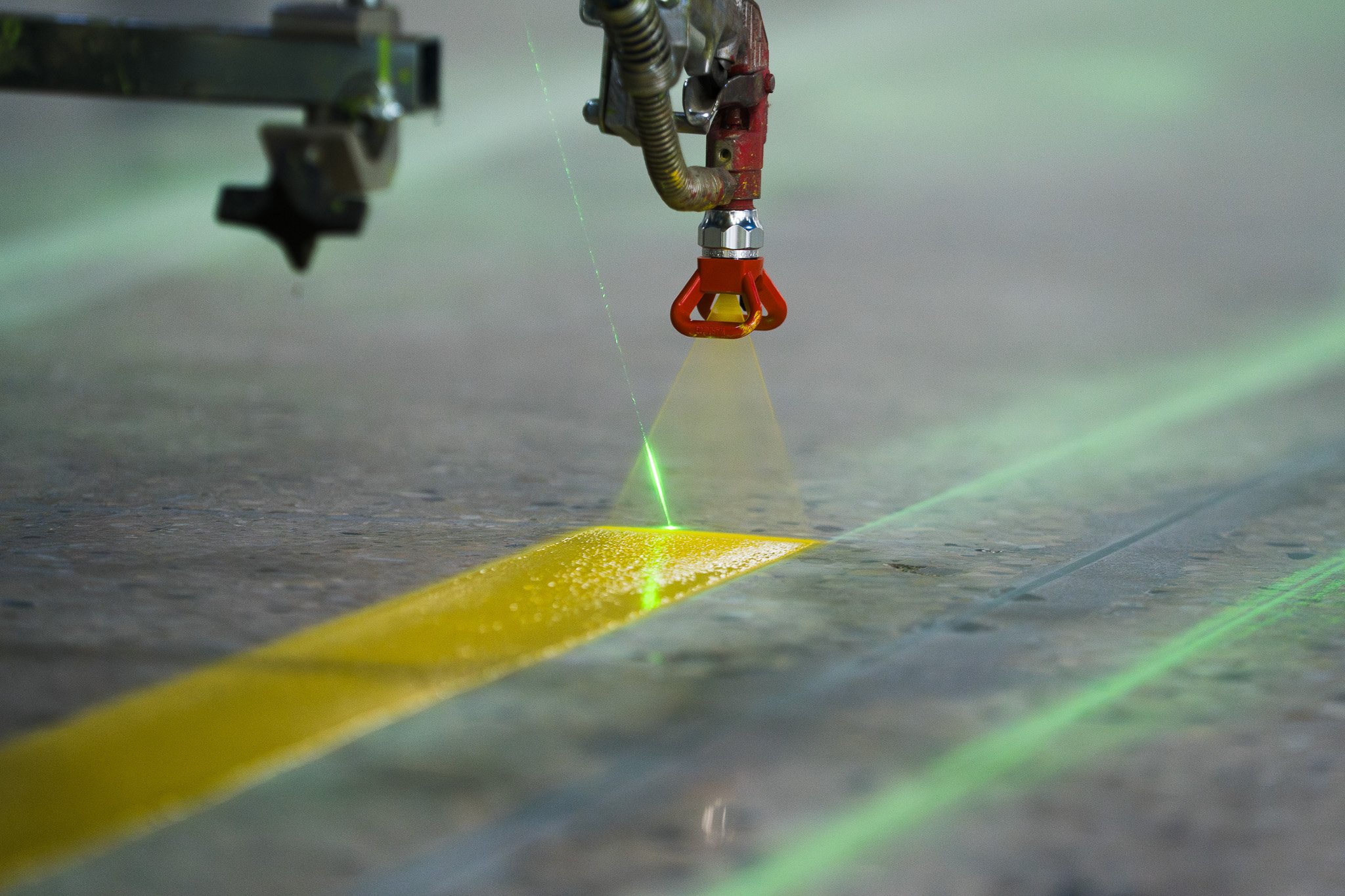
This helped establish defined boundaries for the yellow line striping.
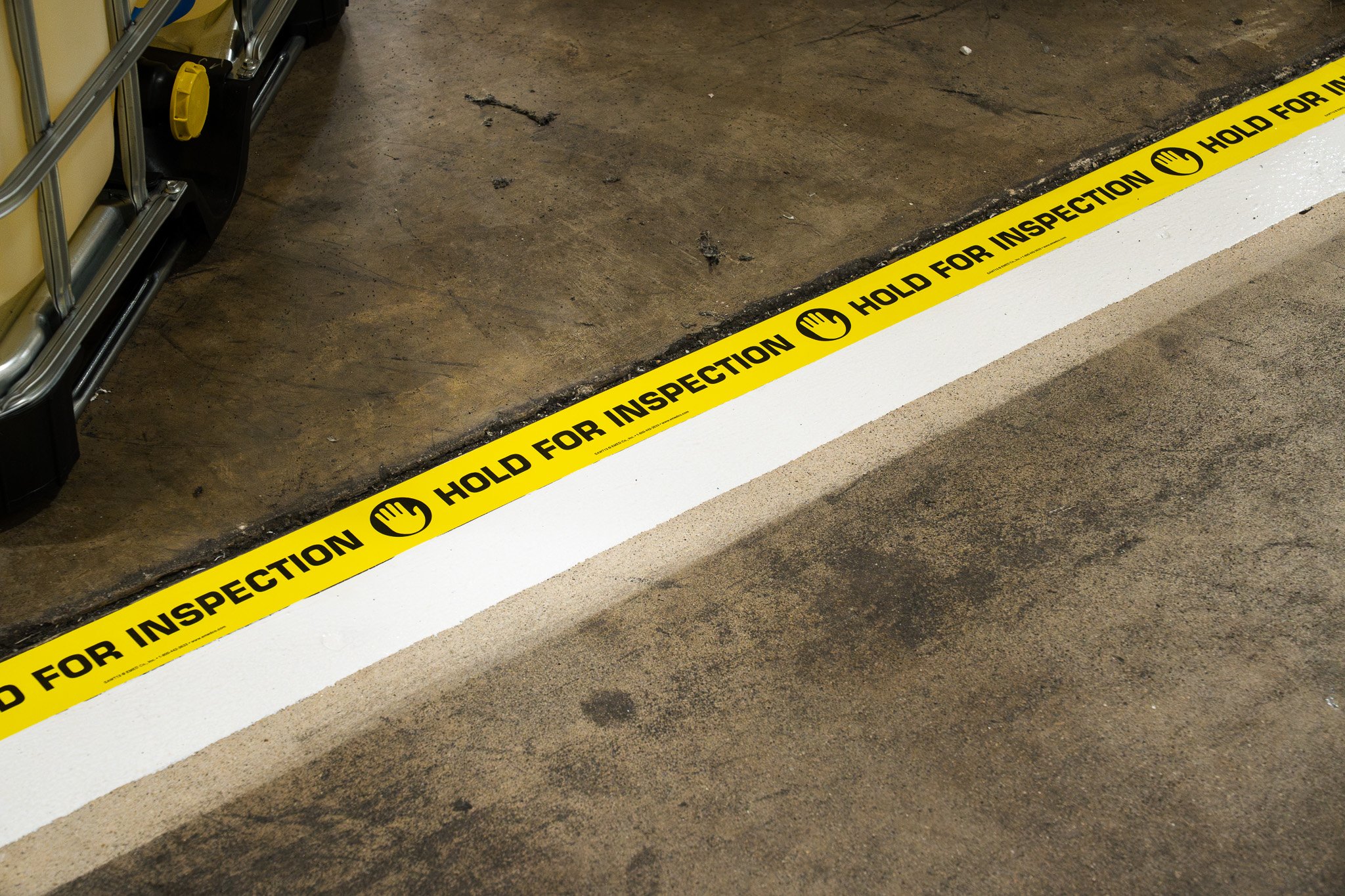
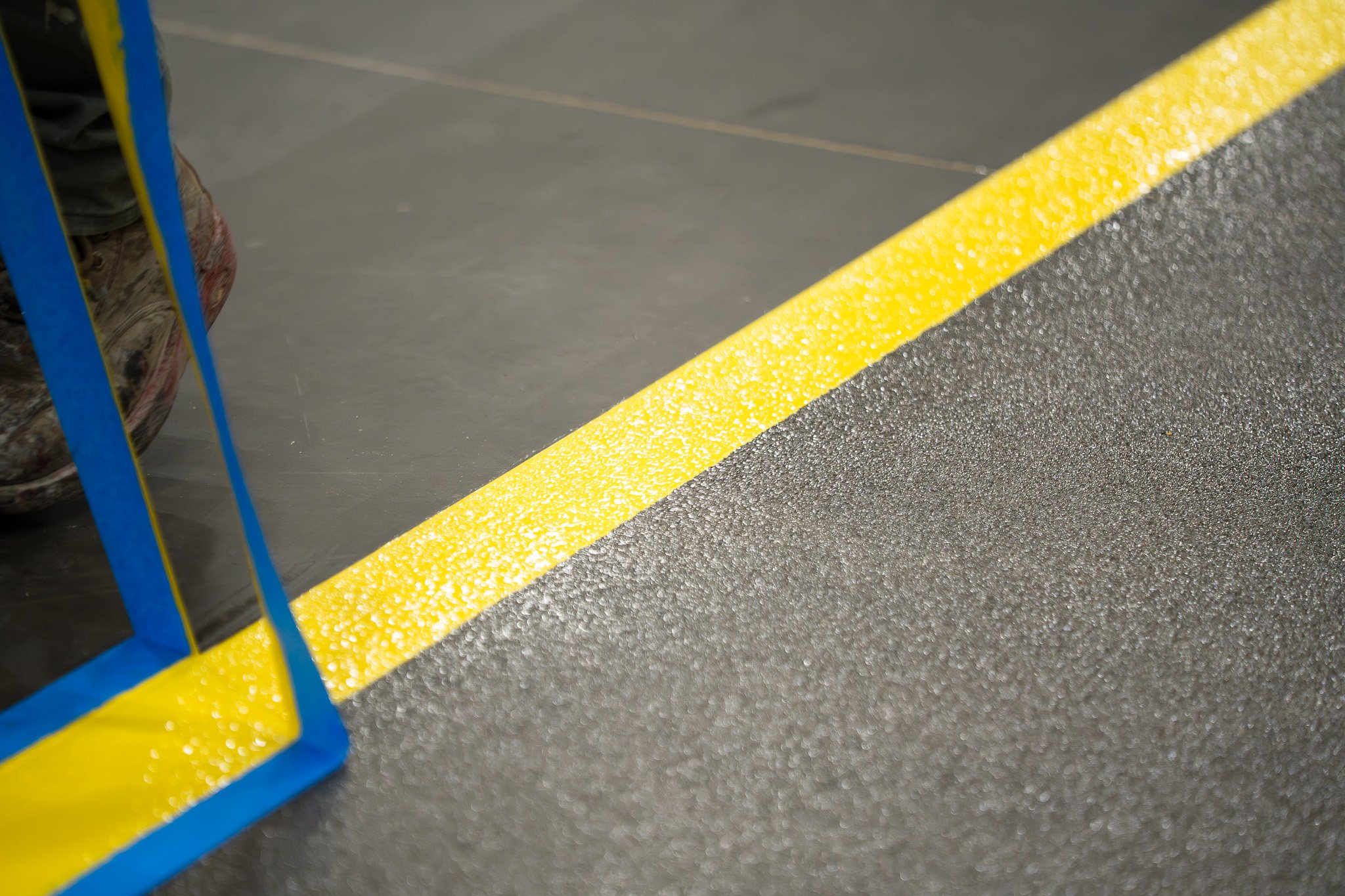
The team then applied Macropoxy to create the yellow lines along the outside edges of the blue pedestrian paths.

These contrasting colors helped distinguish walking areas from surrounding floor space.
Step 5: Completing the Protective Finish
Dudick Sealer 35 was also used as part of the finishing system.
The combination of primer, blue epoxy, yellow striping, and sealer created a finished walkway system intended for the facility's operational needs.
Unlike a complete flooring replacement, this installation focused specifically on designated pedestrian routes, allowing National Safety Apparel to improve its existing floor layout without replacing otherwise functional flooring.
The Results: More Defined Walkways and Better Traffic Organization
The completed project provided National Safety Apparel with clearly defined blue pedestrian walkways bordered by yellow safety lines.
The new markings made pedestrian routes more visible and established a clearer distinction between walking areas and spaces used by industrial equipment.

The project delivered three practical improvements:
1. Clearer pedestrian routes: Employees could more easily identify the areas intended for foot traffic.
2. Improved traffic organization: Defined pathways helped establish a more structured layout for pedestrian movement around manufacturing operations.
3. Durable industrial floor markings: The epoxy system was selected for an environment where heavy machinery and regular facility activity can place significant demands on floor surfaces.
National Safety Apparel expressed satisfaction with the completed project and provided positive testimonial feedback.
Although no formal reduction in incidents or productivity improvement was measured, the installation addressed the facility's original concern by creating clearly marked pedestrian routes.
What Other Manufacturing Facilities Can Learn From This Project
One of the most important lessons from this project is that improving facility safety does not always require replacing the existing flooring.
When a concrete floor is structurally sound and in good condition, adding designated pedestrian walkways can be a practical way to improve traffic organization without undertaking a full flooring renovation.
However, the right floor marking method depends on the facility.
For example, adhesive floor marking tape may be appropriate for facilities that frequently change layouts. Painted lines can provide a lower-cost option for areas with lighter traffic. Epoxy safety walkways may be worth considering when facilities need more durable markings in demanding industrial environments.
It is also important to recognize that floor markings are only one part of a complete traffic safety plan. Physical barriers, designated forklift routes, employee training, and clear intersection controls may also be necessary, depending on the facility's risks.
For National Safety Apparel, epoxy safety walkways provided a way to make pedestrian routes more visible while maintaining the existing floor.
Looking to Improve Safety Walkways in Your Facility?
Clearly marked pedestrian routes can help manufacturing facilities organize traffic, distinguish walking areas from equipment routes, and support workplace safety.
Whether your facility needs epoxy safety walkways, industrial line striping, or a more extensive flooring solution, understanding your existing floor conditions and daily traffic patterns is the first step toward choosing the right approach.
Request a Quote to discuss your facility's flooring needs with the CustomCrete team.

Topics: