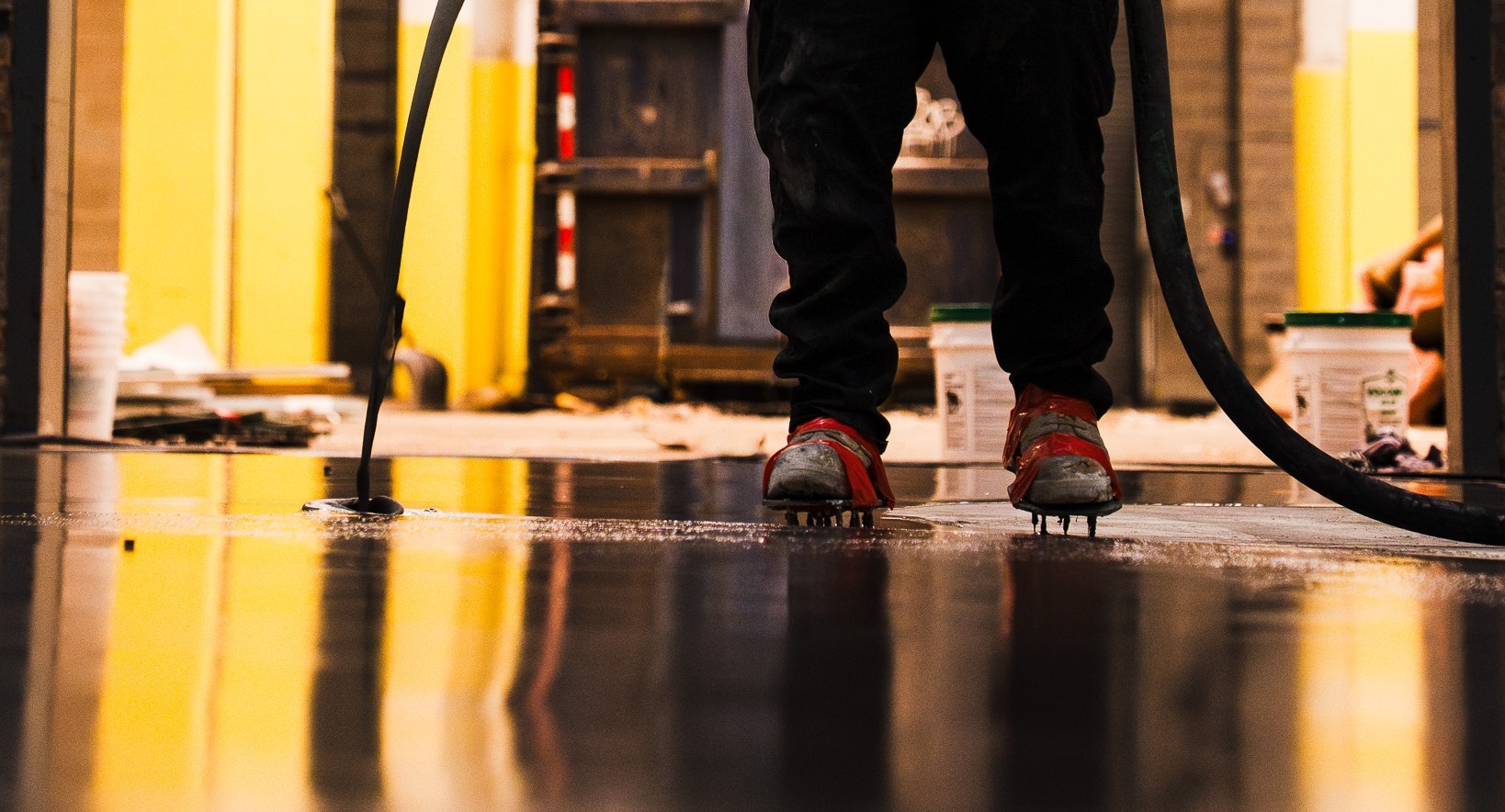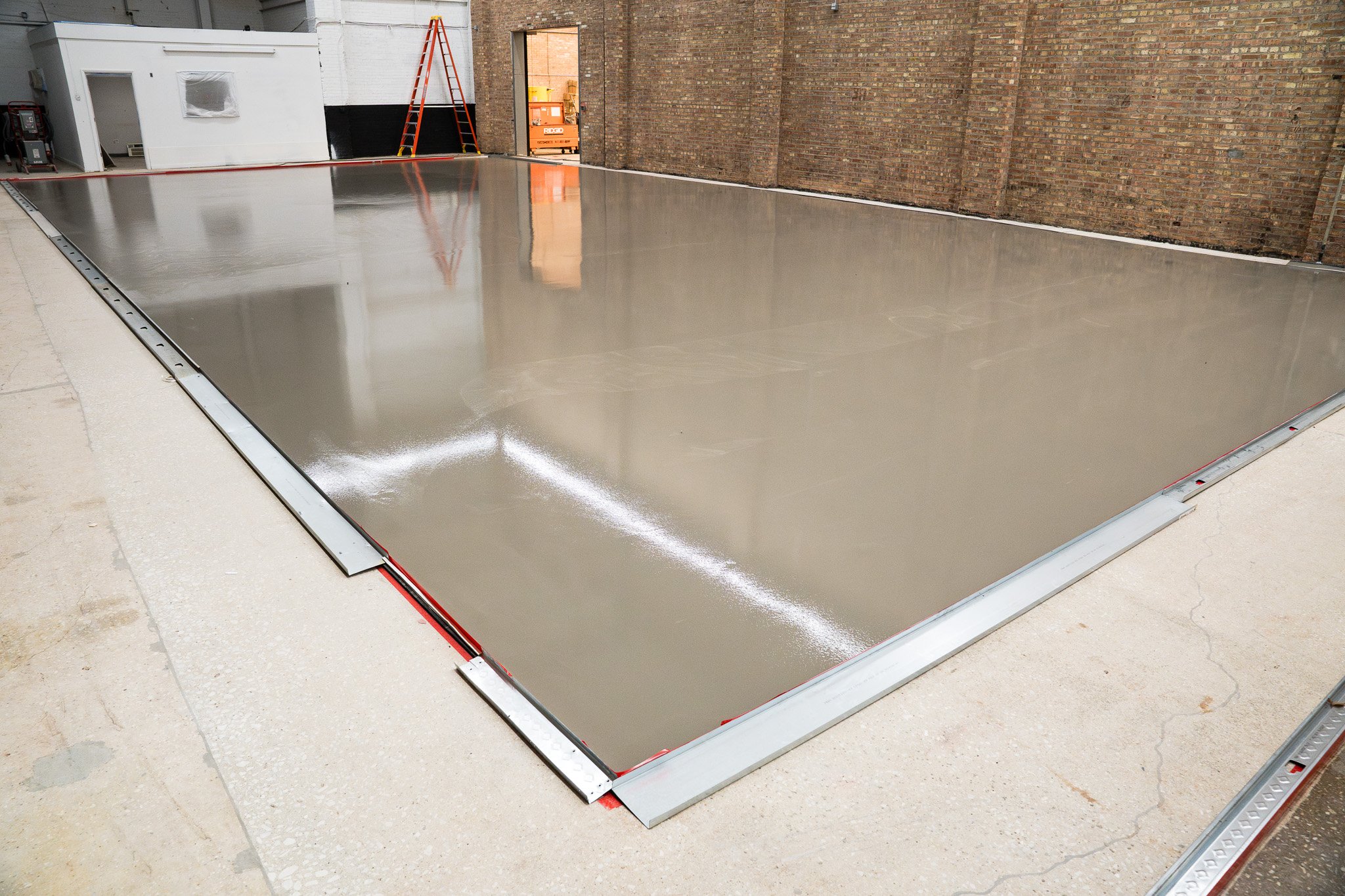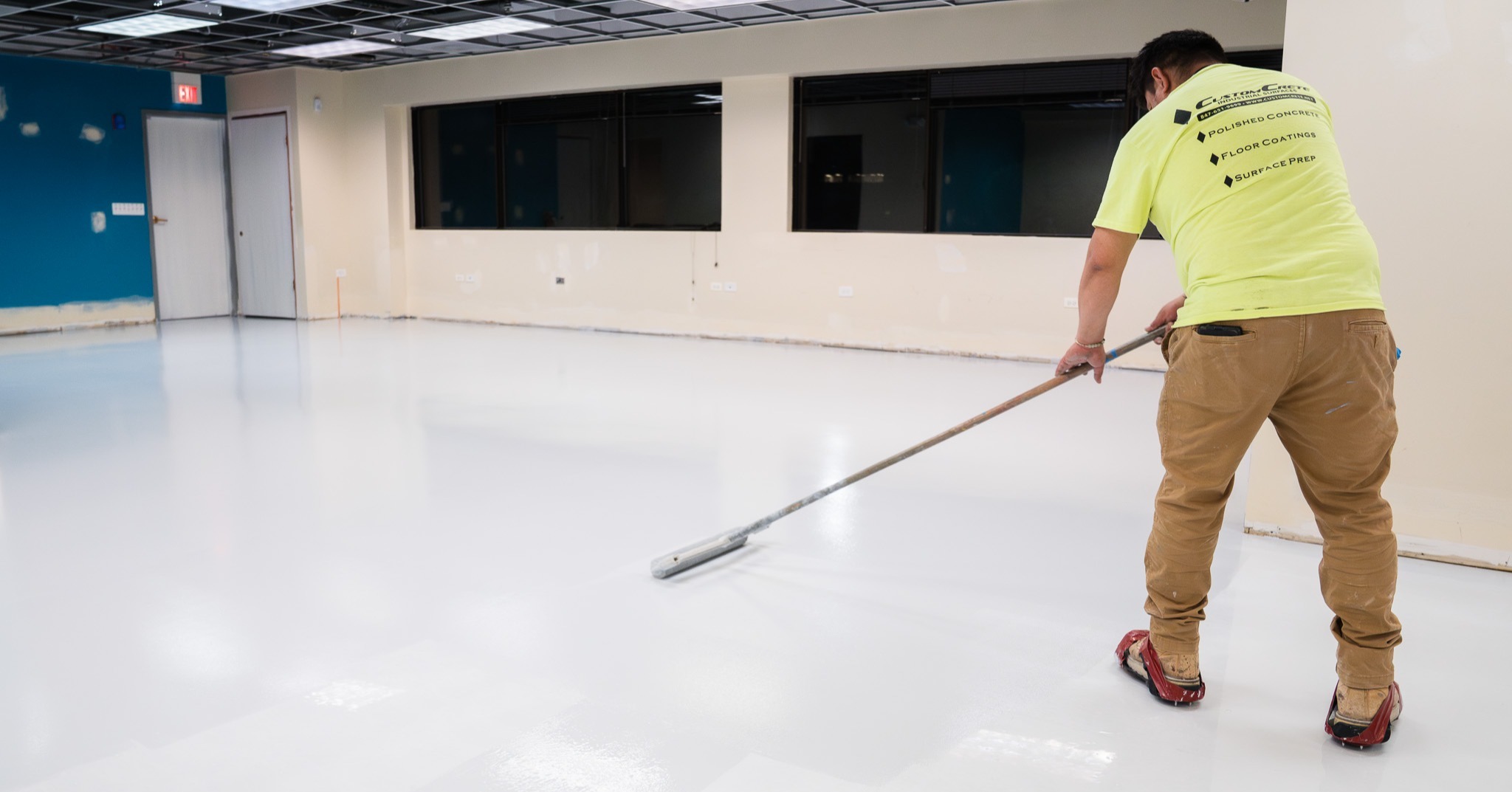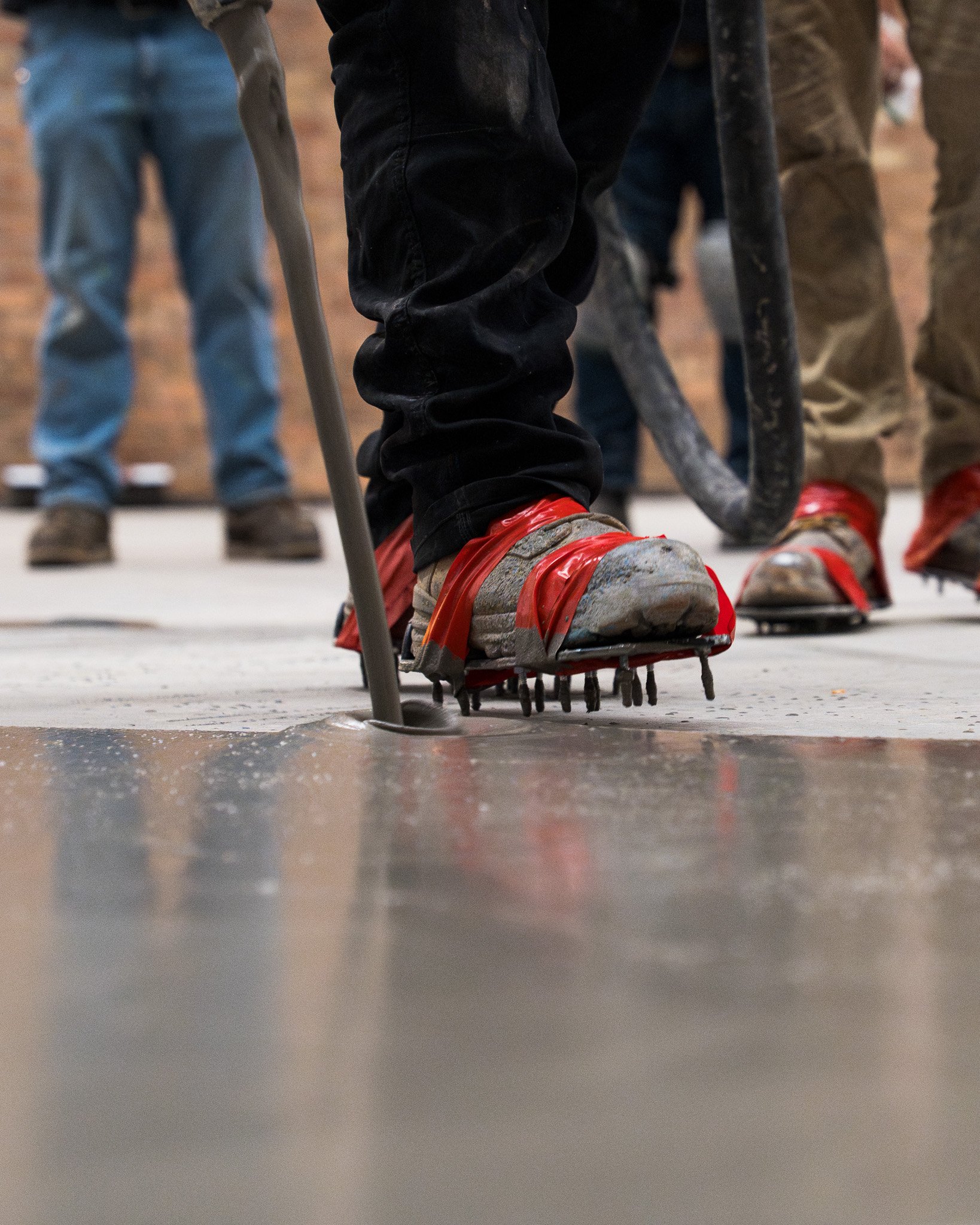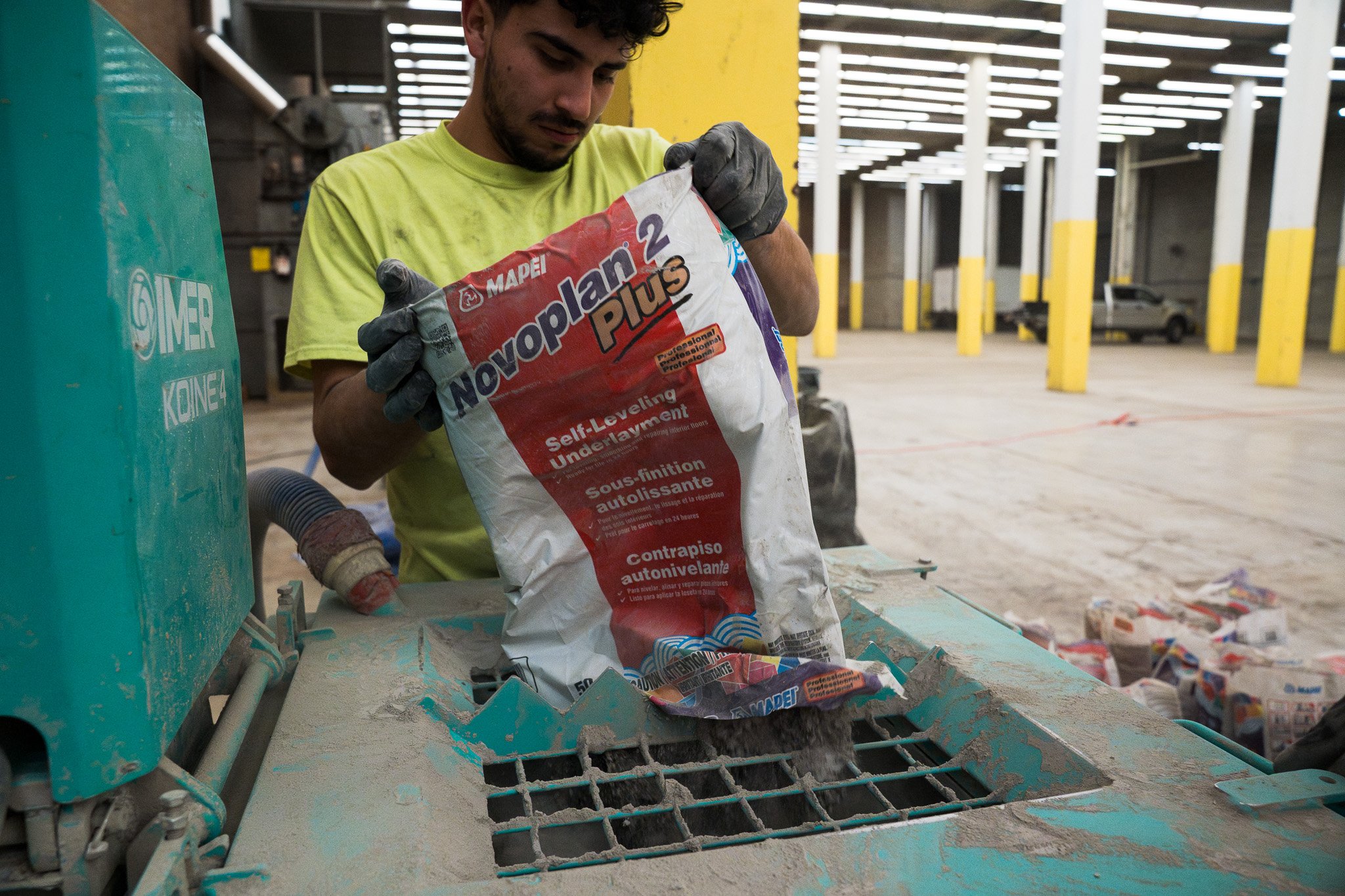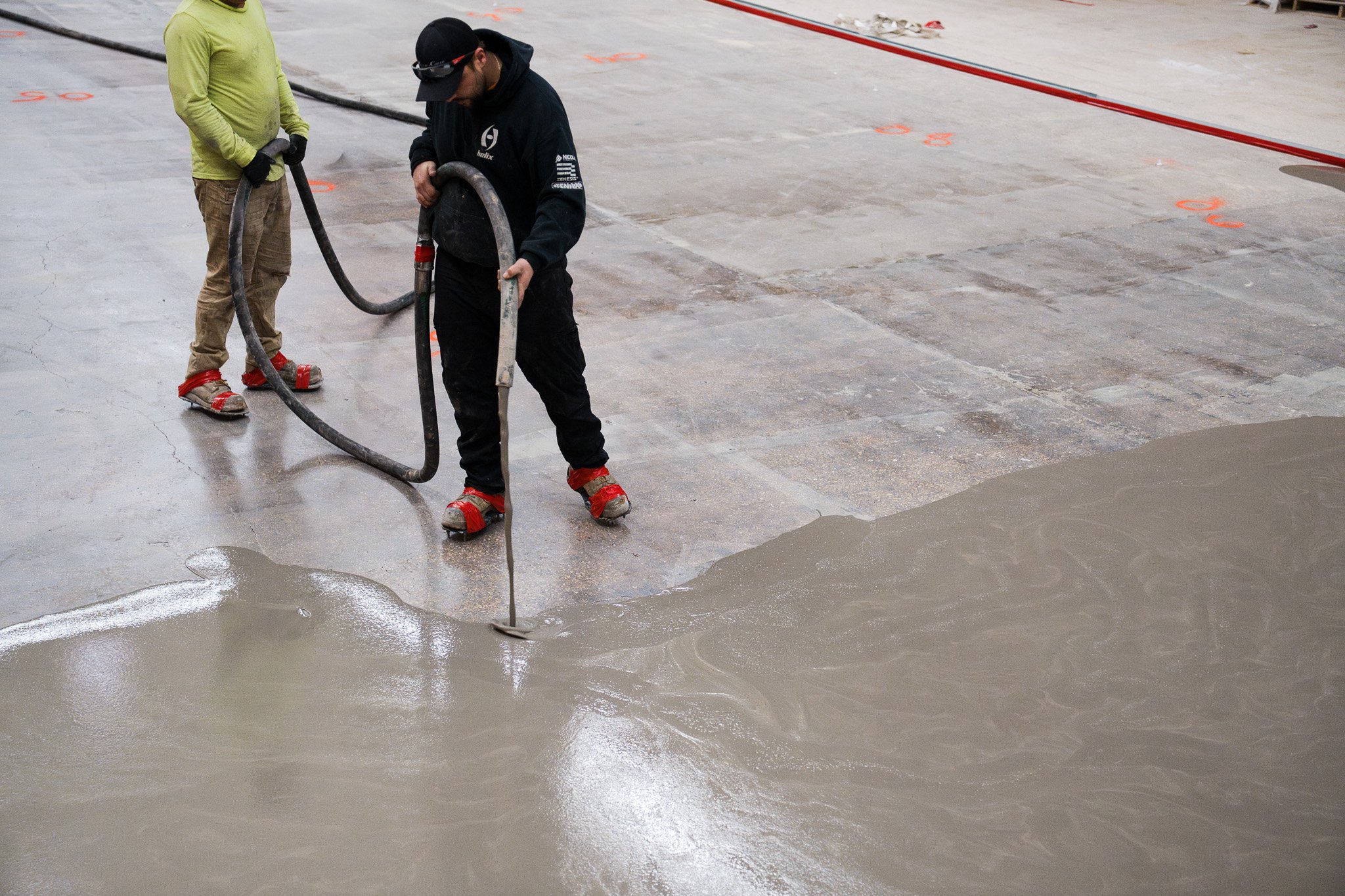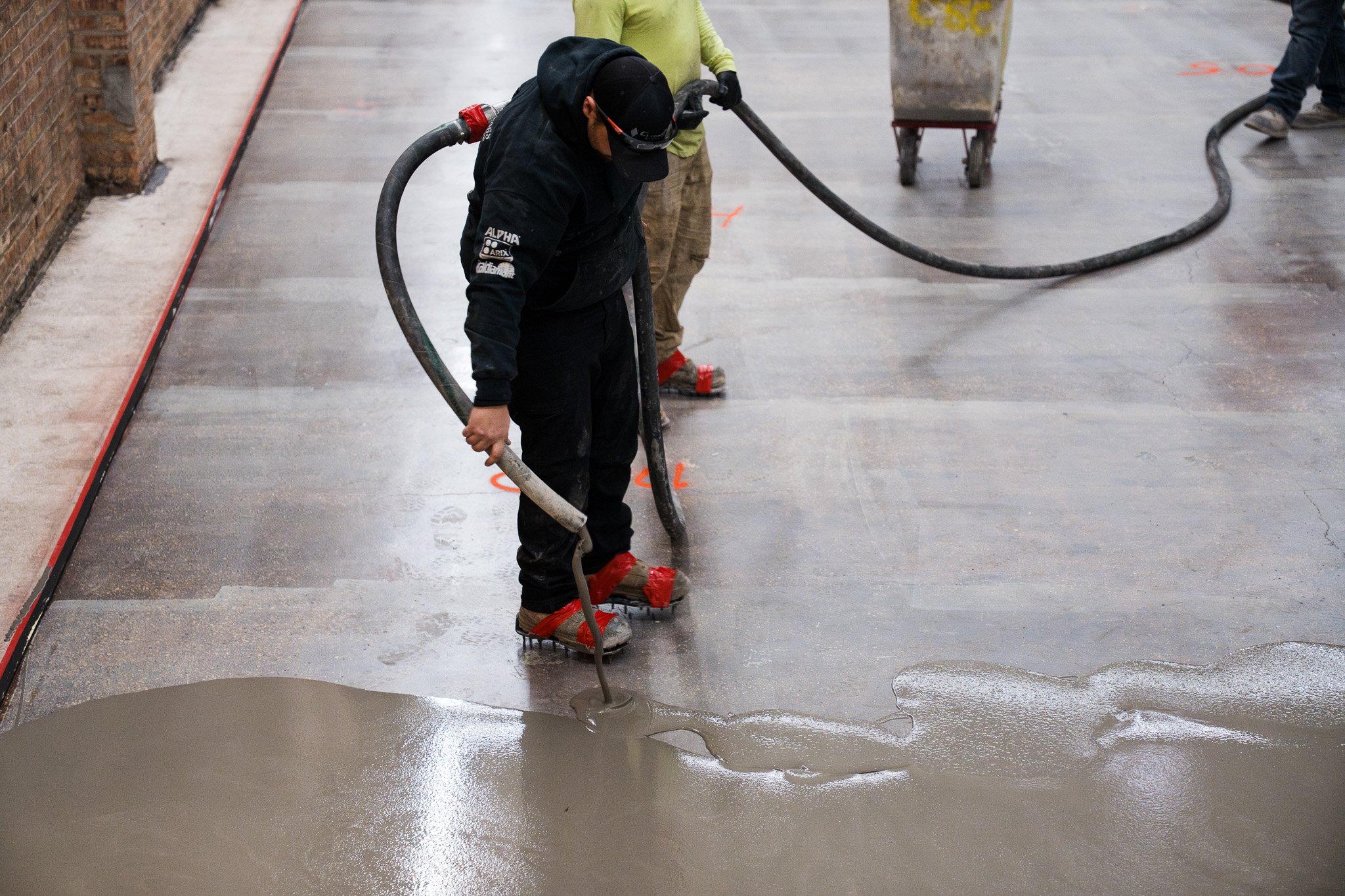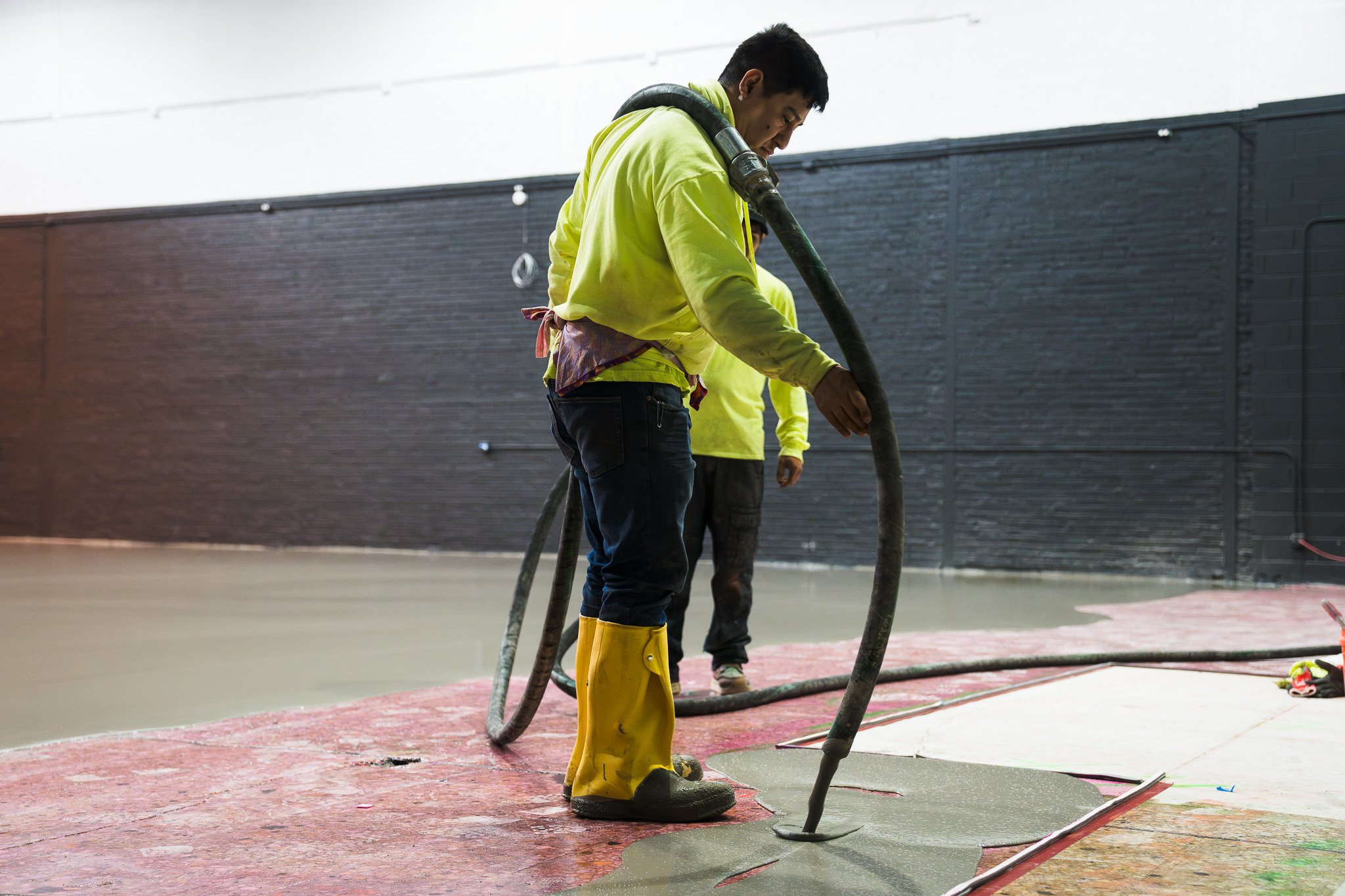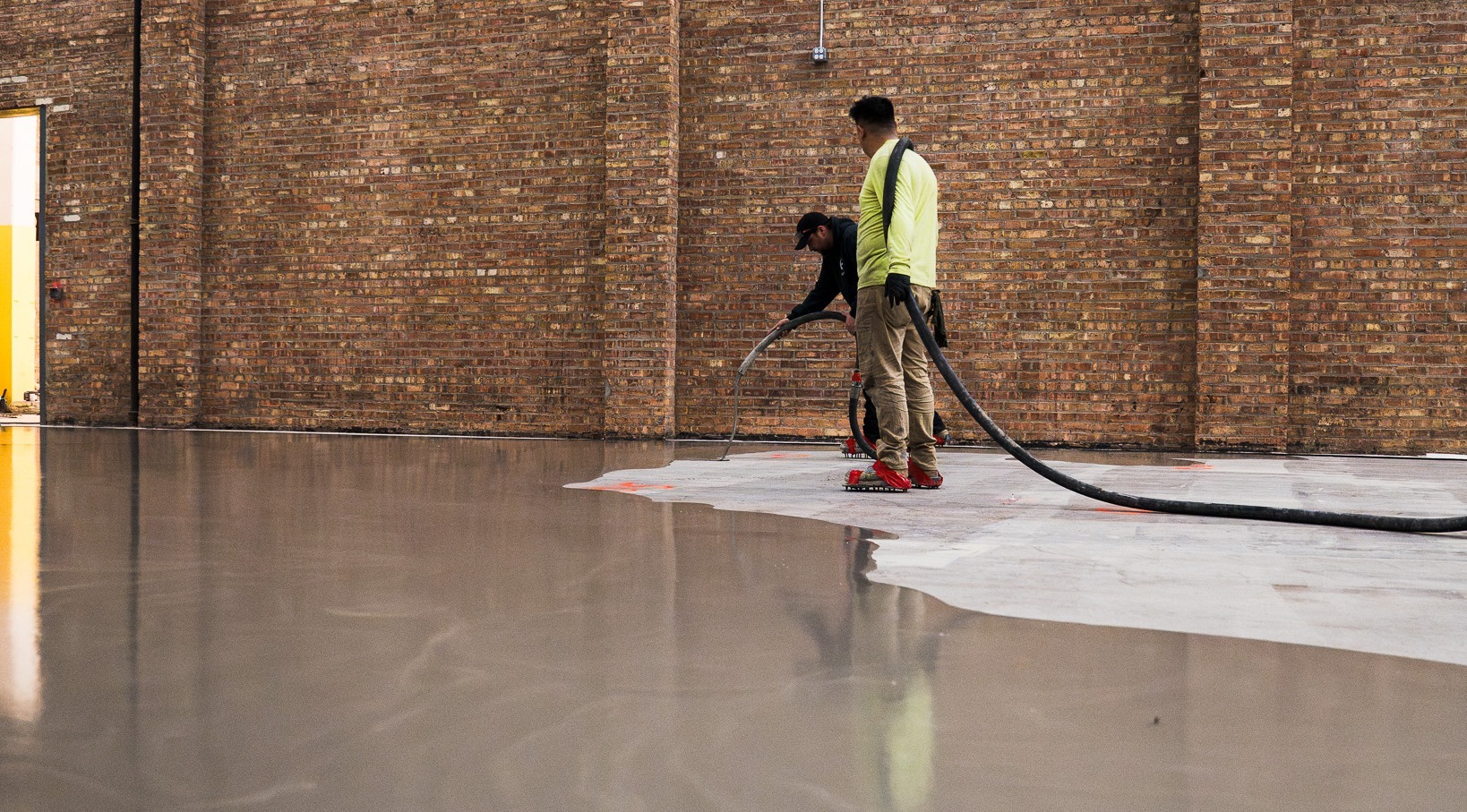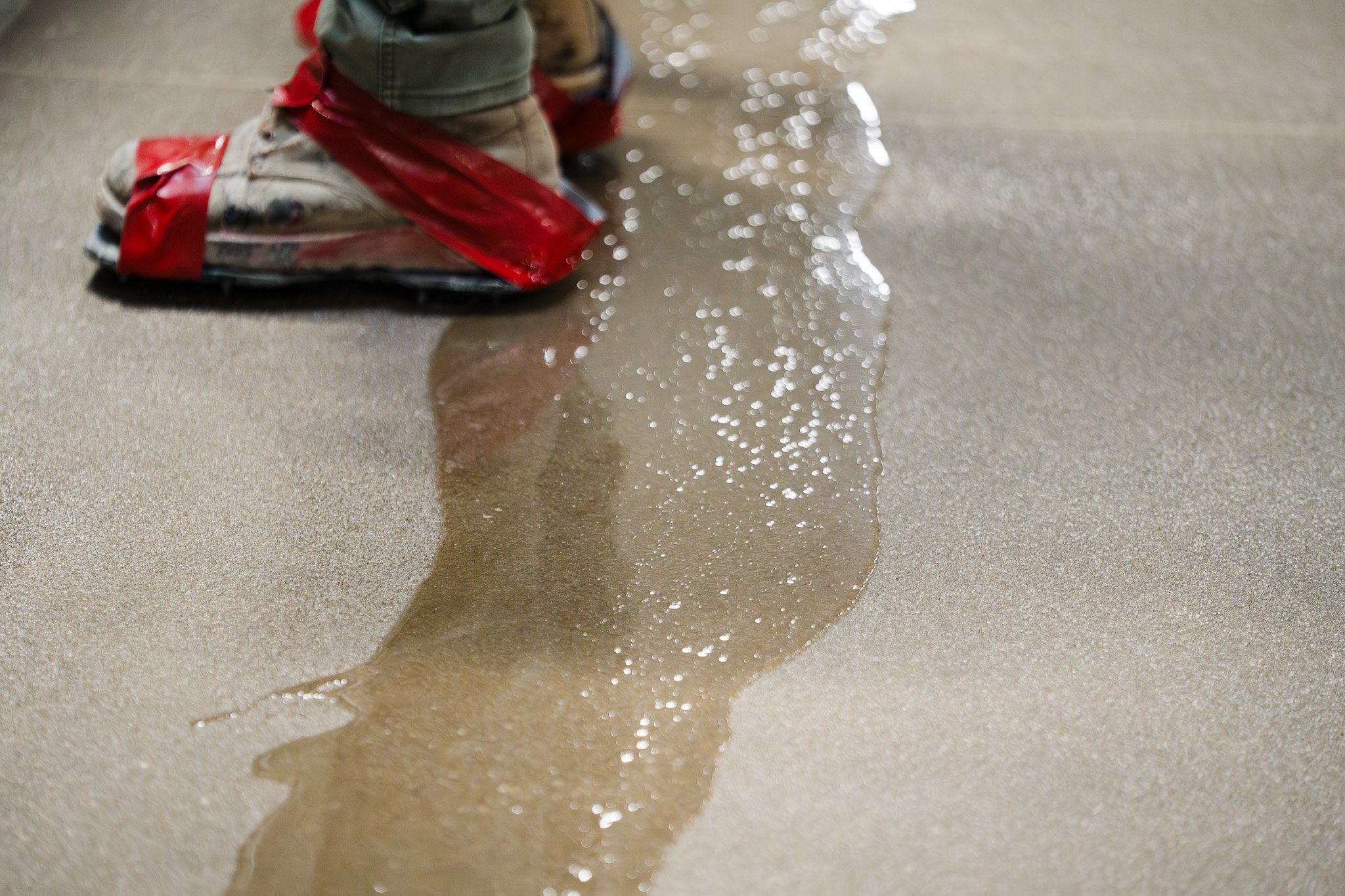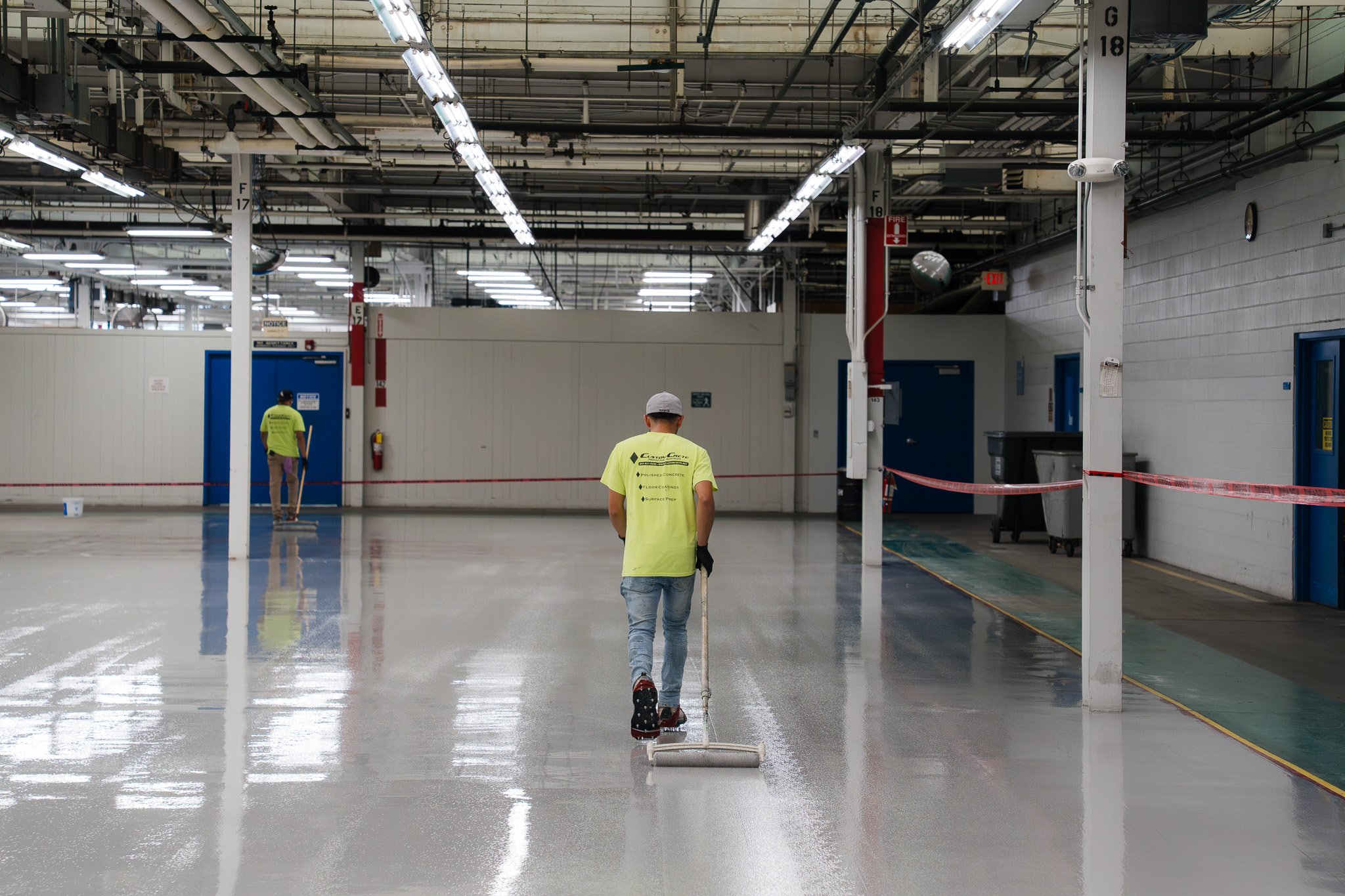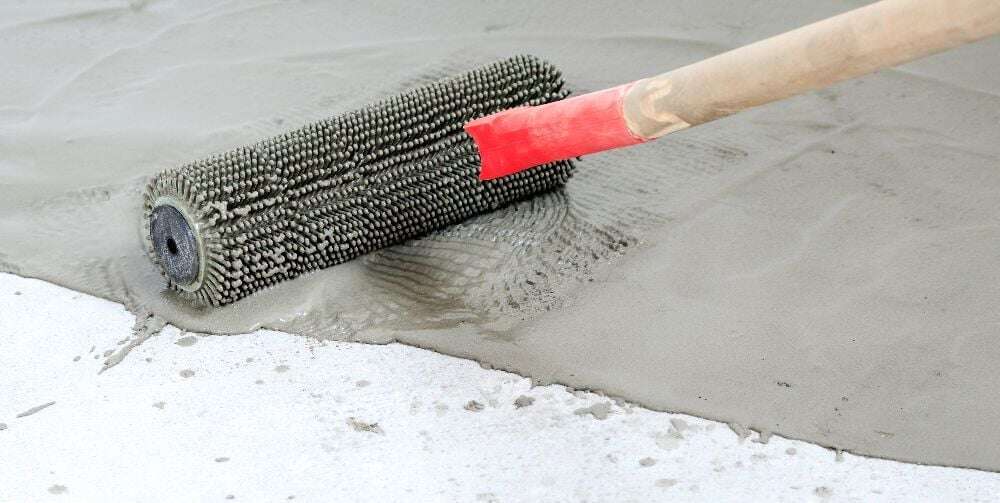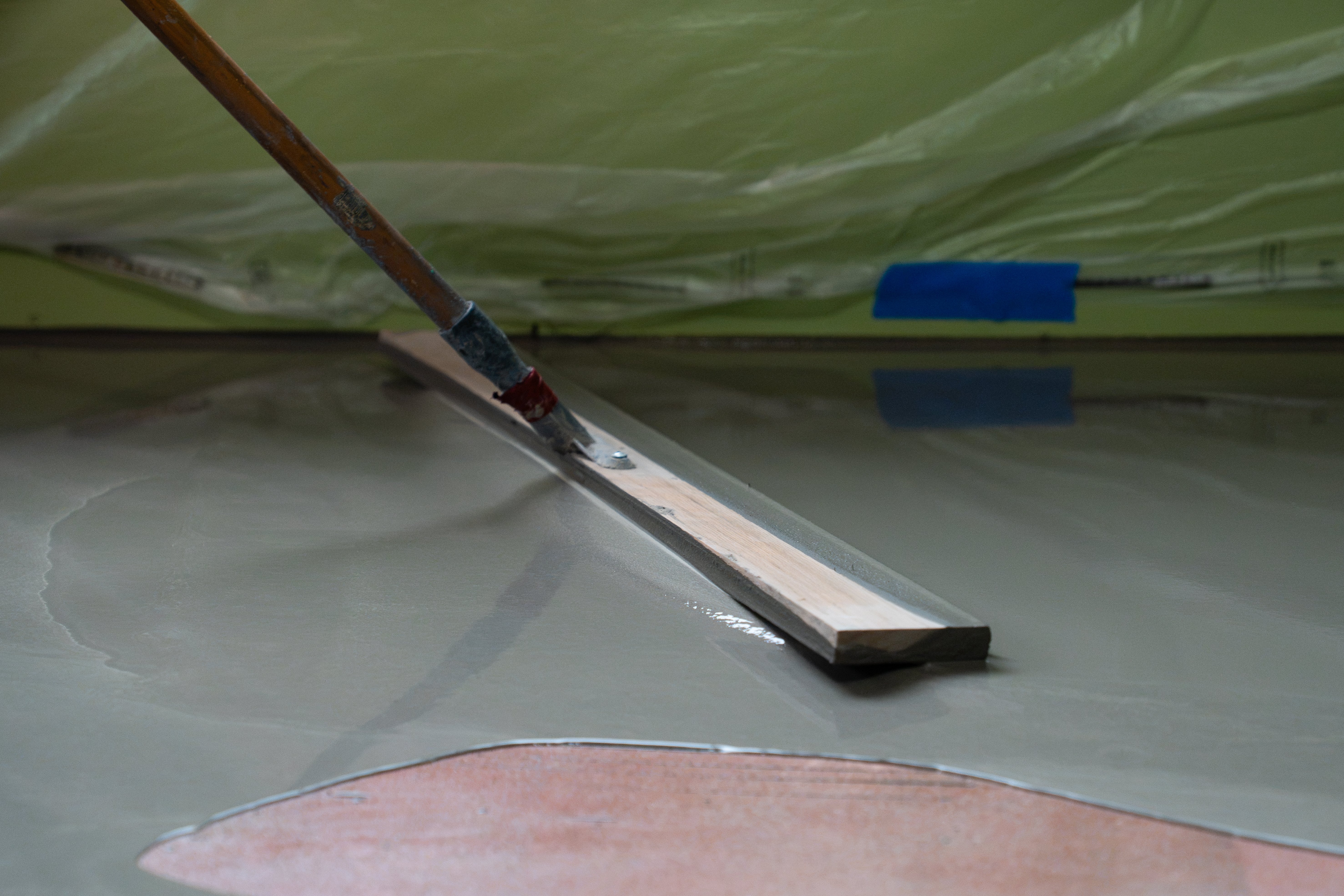
An uneven concrete floor may need self-leveling when there are widespread low spots, variations in elevation, or an inconsistent surface that cannot be efficiently corrected through grinding or localized patching alone. Self-leveling concrete is commonly used to create a flatter, more uniform surface before installing flooring or as part of certain concrete overlay projects.
However, not every uneven floor needs to be self-leveled. The right repair method depends on how uneven the slab is, what caused the problem, and what type of finished flooring will be installed.
At CustomCrete, this question often comes up from facility managers and property owners trying to determine how much preparation an existing concrete slab needs before a flooring project.

What Is Self-Leveling Concrete?
Self-leveling concrete, often called self-leveling underlayment, is a cement-based material designed to flow across a properly prepared surface and fill low areas.
Despite the name, the material does not simply correct every floor problem on its own. The concrete must first be evaluated and prepared, and the self-leveling product must be installed at the appropriate thickness.
Once installed, it creates a smoother and more consistent surface for the flooring system that follows.
What Are Signs a Floor May Need Self-Leveling?
Self-leveling may be considered when a concrete slab has:
- Multiple low spots across a large area
- Significant elevation differences
- Uneven transitions between sections
- Surface variations left after flooring demolition
- An inconsistent surface that could affect the finished flooring
For example, removing tile or another existing floor can reveal low areas or irregularities that need to be corrected before the next flooring system is installed.
When Is Grinding Better Than Self-Leveling?
Grinding is often a better option when the problem involves high spots rather than low spots.
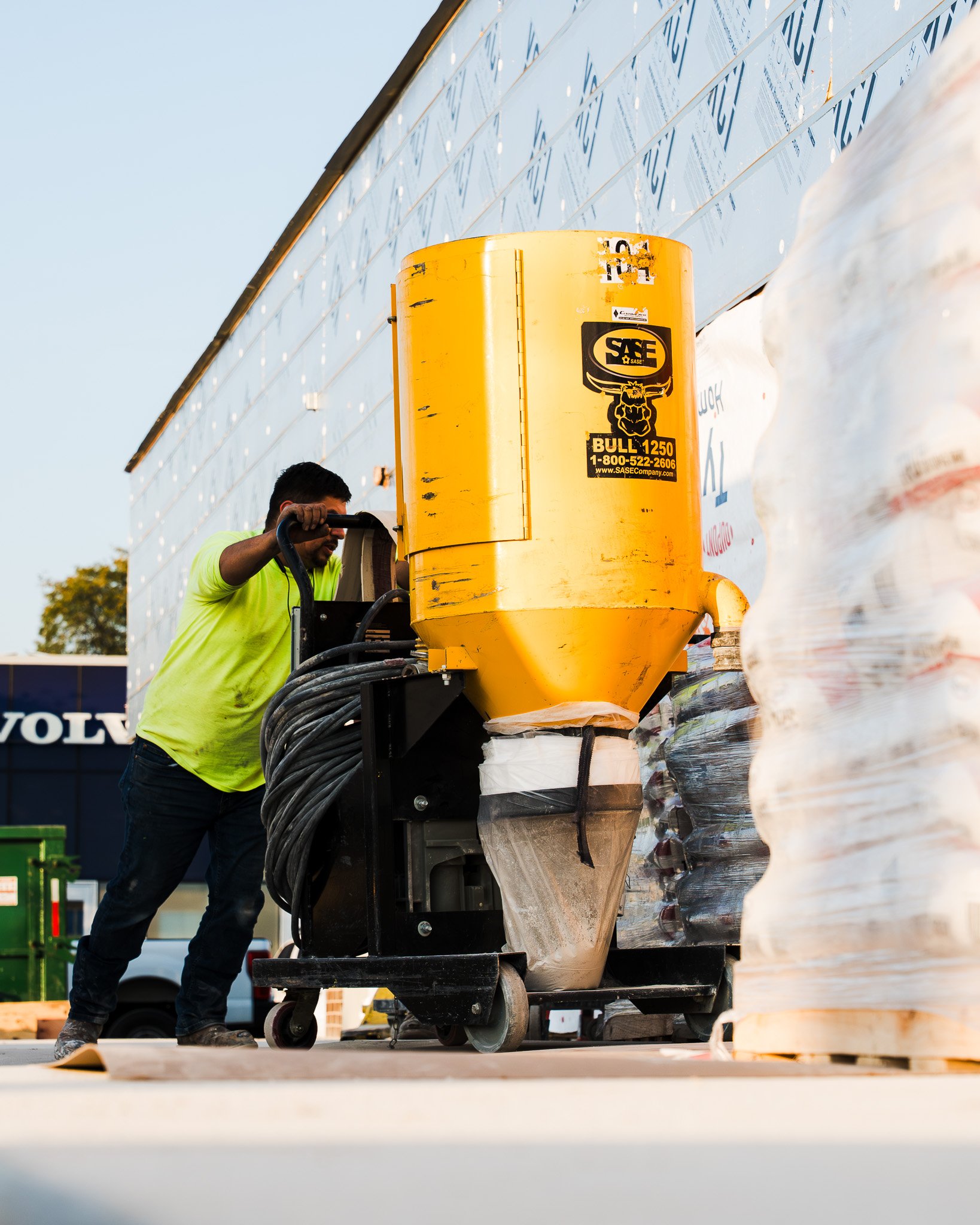
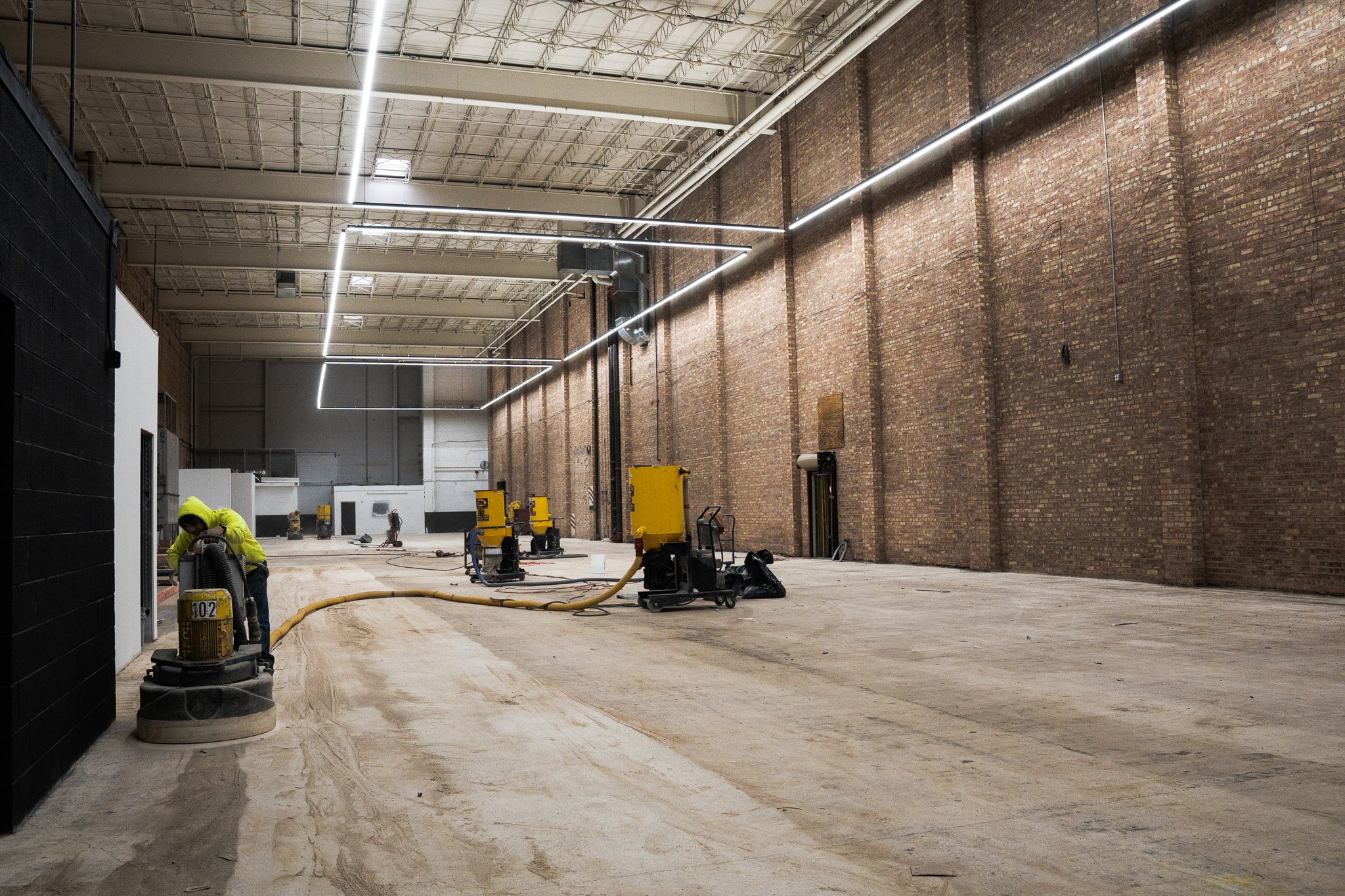
A concrete grinder can remove raised areas and smooth localized imperfections without adding material across the entire floor. Minor unevenness may also be corrected through a combination of grinding and patching.
In some projects, contractors use both methods: grinding high areas first and applying self-leveling material where larger low areas remain.
Does Every Floor Need to Be Perfectly Level?
No. A floor does not always need to be perfectly level to receive a coating.
The more important requirement may be flatness, depending on how the space will be used. Some floors are intentionally sloped toward drains, particularly in food processing, manufacturing, and other wet environments.
Applying self-leveling material without considering drainage could interfere with the intended slope of the floor.
What Should Be Checked Before Self-Leveling?
Before installing self-leveling concrete, the slab should be evaluated for moisture, cracks, damaged concrete, contaminants, and existing coatings or adhesives.
The cause of the unevenness matters as well. If settlement or structural movement is causing the floor to change elevation, adding self-leveling material may not solve the underlying problem.
Proper surface preparation and the correct primer are also important for creating a strong bond between the existing concrete and the new material.

Final Thoughts
An uneven concrete floor may need self-leveling when low spots and elevation changes are too widespread to correct efficiently with grinding or patching alone. However, grinding, patching, or a combination of methods may be more appropriate depending on the slab.
Once you've determined that self-leveling is needed, the next step is selecting the appropriate material. Read “How to Choose the Right Self-Leveling Concrete for Overlay Projects” to compare the factors that should guide that decision.
Topics: