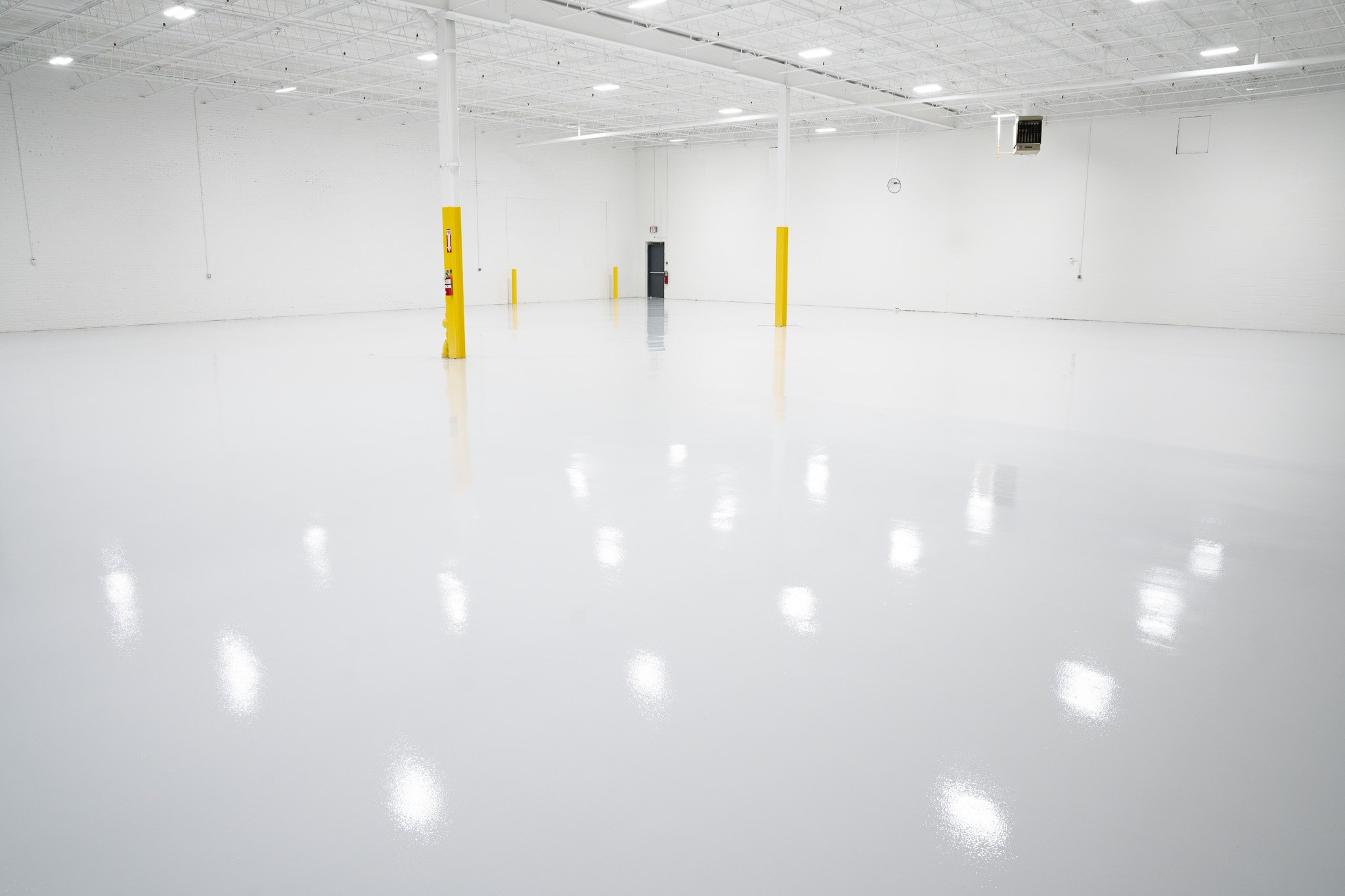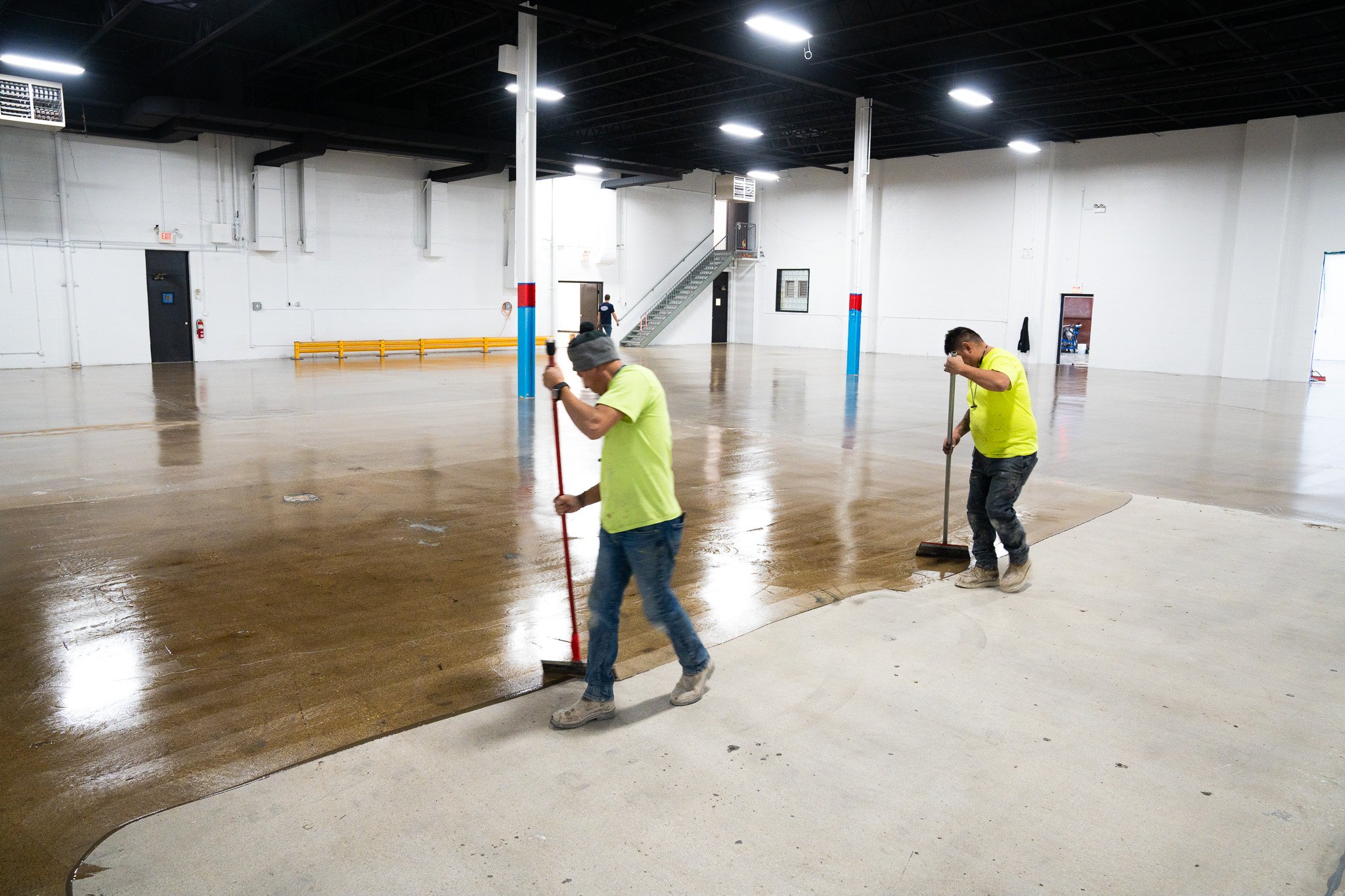


Can you recoat an industrial epoxy floor without moving the machines? In many cases, yes. Contractors can work around and underneath existing equipment using specialized grinding tools, careful preparation, and a planned installation schedule. However, the condition of the existing floor, equipment accessibility, and coating requirements determine whether this approach is practical.
With nearly 20 years of experience and over 1 million square feet installed, CustomCrete has worked on industrial flooring projects where moving equipment wasn't an option. This article explains the industrial epoxy floor recoating process, the challenges involved, and what facility managers should consider before starting.
Key Takeaways
- Industrial epoxy floors can sometimes be recoated without removing machinery, but accessibility and floor conditions must be evaluated first.
- Surface preparation around equipment requires additional planning, specialized tools, and careful attention to edges and tight spaces.
- Working around existing equipment may reduce relocation costs, but it can increase installation time and labor.

Can You Recoat an Epoxy Floor Without Moving Equipment?
Industrial facilities often have large production machines, presses, conveyors, and other equipment that cannot easily be relocated.
Moving this equipment can be expensive and may require disconnecting electrical systems, adjusting production schedules, or hiring specialized rigging crews.
Fortunately, industrial epoxy floor recoating doesn't always require an empty facility.
If the existing concrete and coating are suitable for recoating, contractors may be able to prepare and install a new flooring system around equipment foundations, machine legs, and accessible spaces underneath machinery.
However, this approach has limitations. Areas that cannot be safely reached or properly prepared may need to remain untreated. A contractor should identify these locations before promising a complete installation.

Step 1: Evaluate the Existing Epoxy Floor
Before recoating begins, the contractor needs to determine whether the existing epoxy can support another coating system.
An old floor may appear worn but still have good adhesion to the concrete underneath. In that situation, recoating may be possible after the surface is properly prepared.
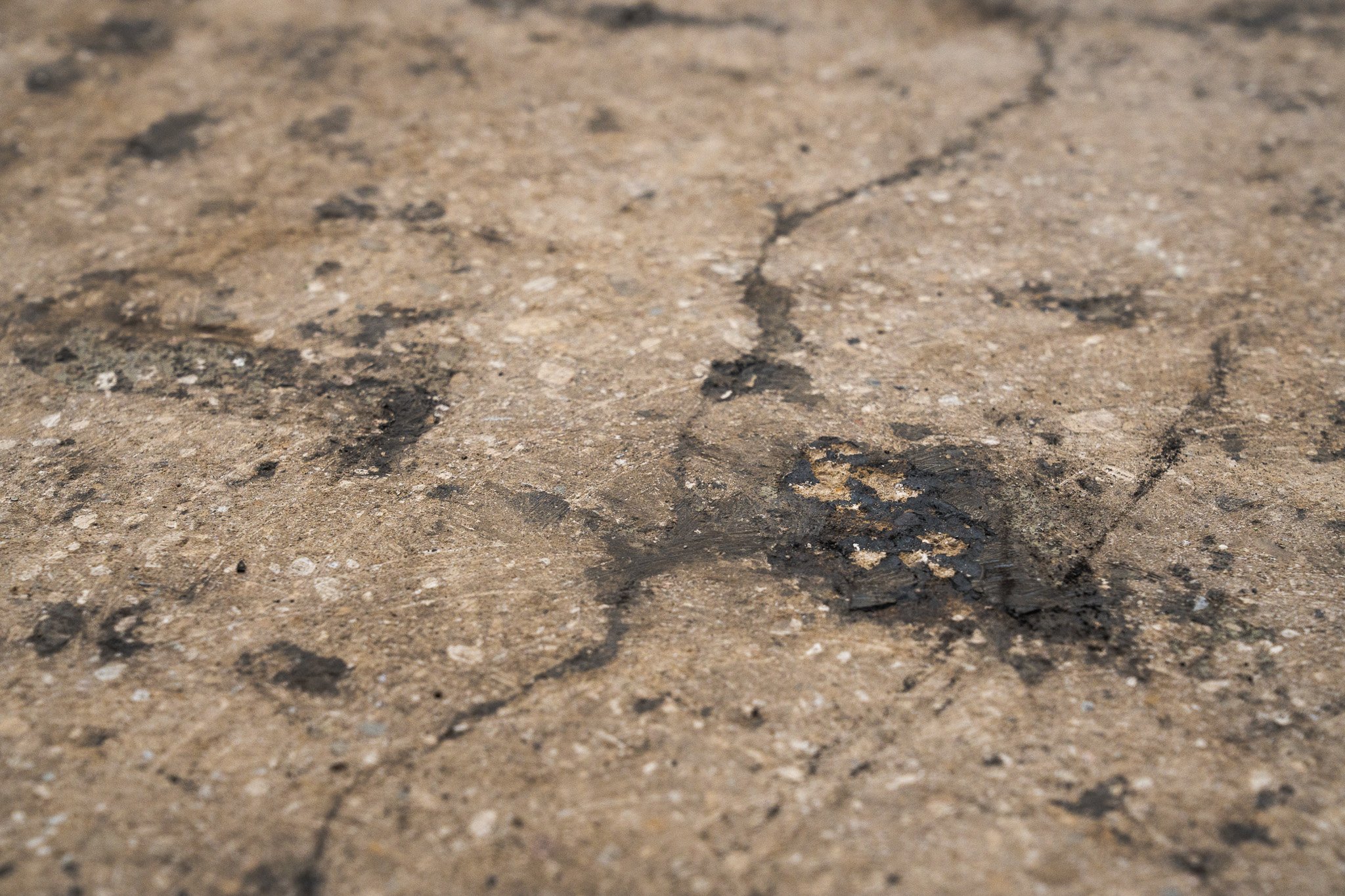
However, peeling, bubbling, widespread delamination, or moisture-related failures can indicate problems that a new topcoat won't solve.
Contractors should evaluate the condition of the existing coating, identify damaged areas, and determine whether repairs or complete removal are necessary.
The new coating must also be compatible with the existing surface. Simply applying fresh epoxy over an old floor without checking adhesion and compatibility can lead to premature failure.
Step 2: Plan Around the Equipment
Working around machinery requires more planning than coating an open warehouse floor.
Before installation, contractors need to identify equipment locations, available working space, electrical connections, machine foundations, and areas that cannot be accessed safely.
This evaluation helps determine which tools can reach the floor and whether the coating can be applied consistently throughout the project.
The facility and contractor should also coordinate equipment shutdowns, lockout/tagout requirements where applicable, ventilation, dust control, and employee access.
Even when machines remain in place, they may need to be shut down or isolated during certain stages of installation.
Step 3: Prepare the Concrete Around Machinery
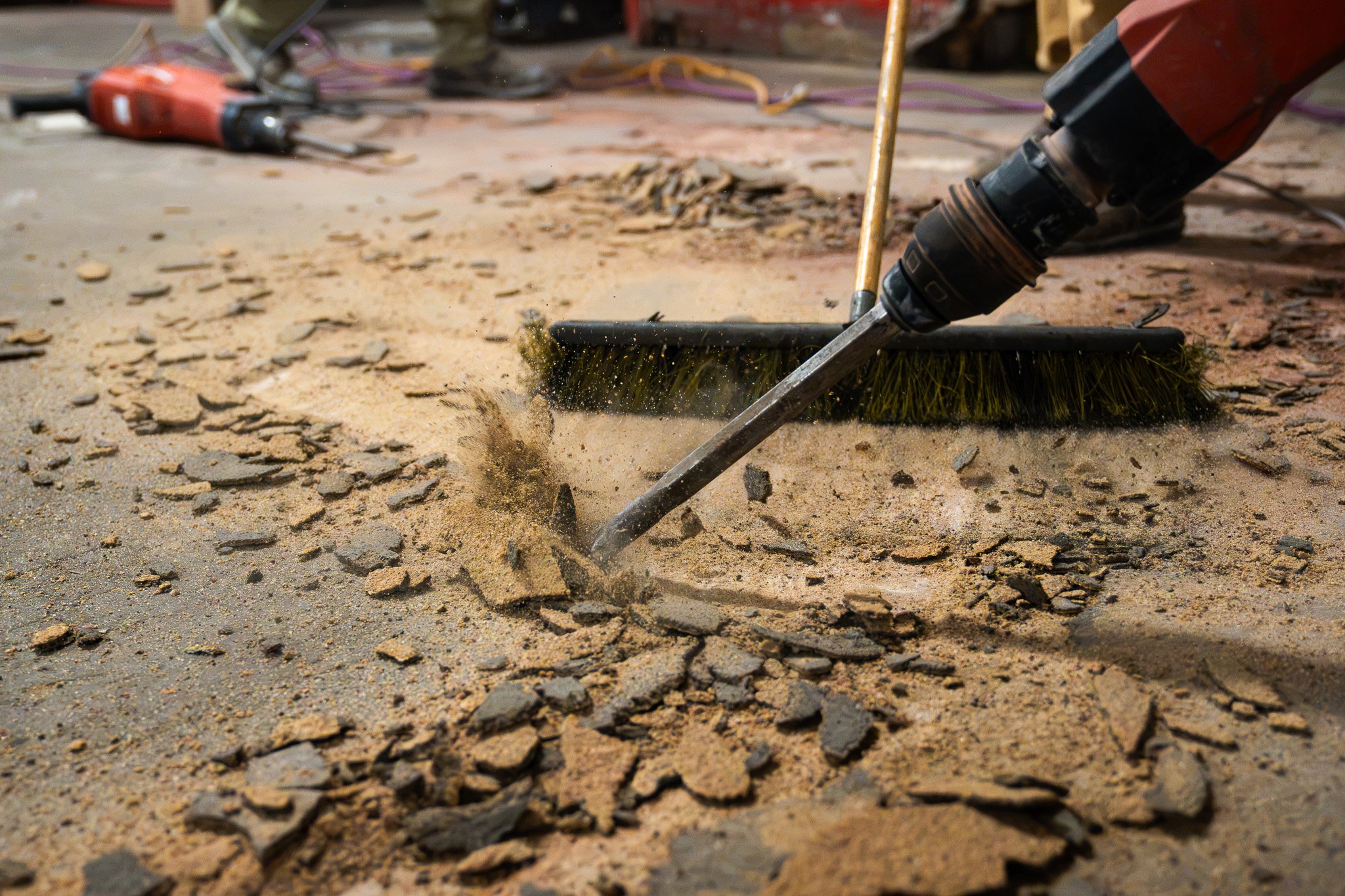
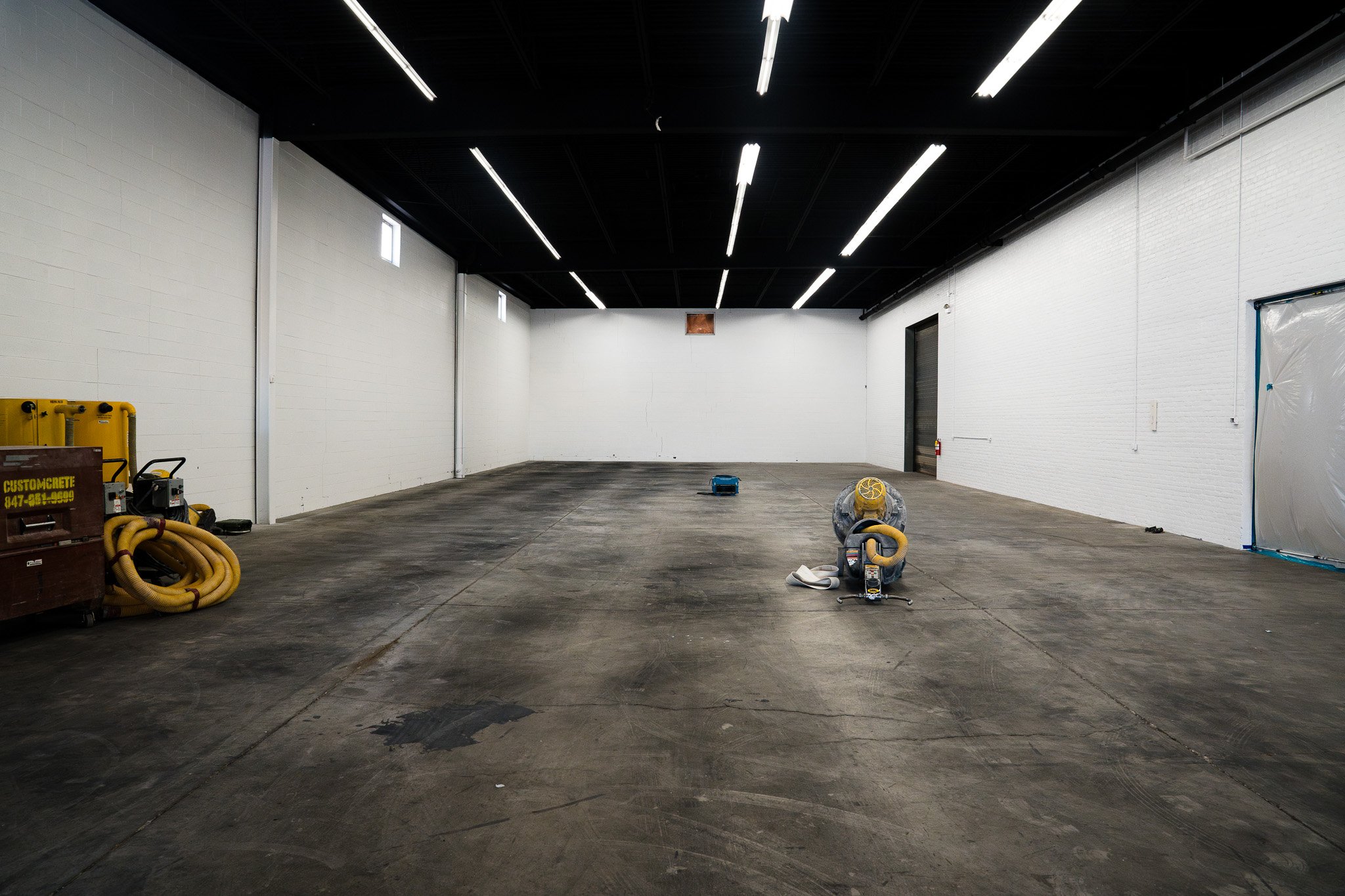
Surface preparation is one of the most challenging parts of recoating an industrial floor around existing equipment.
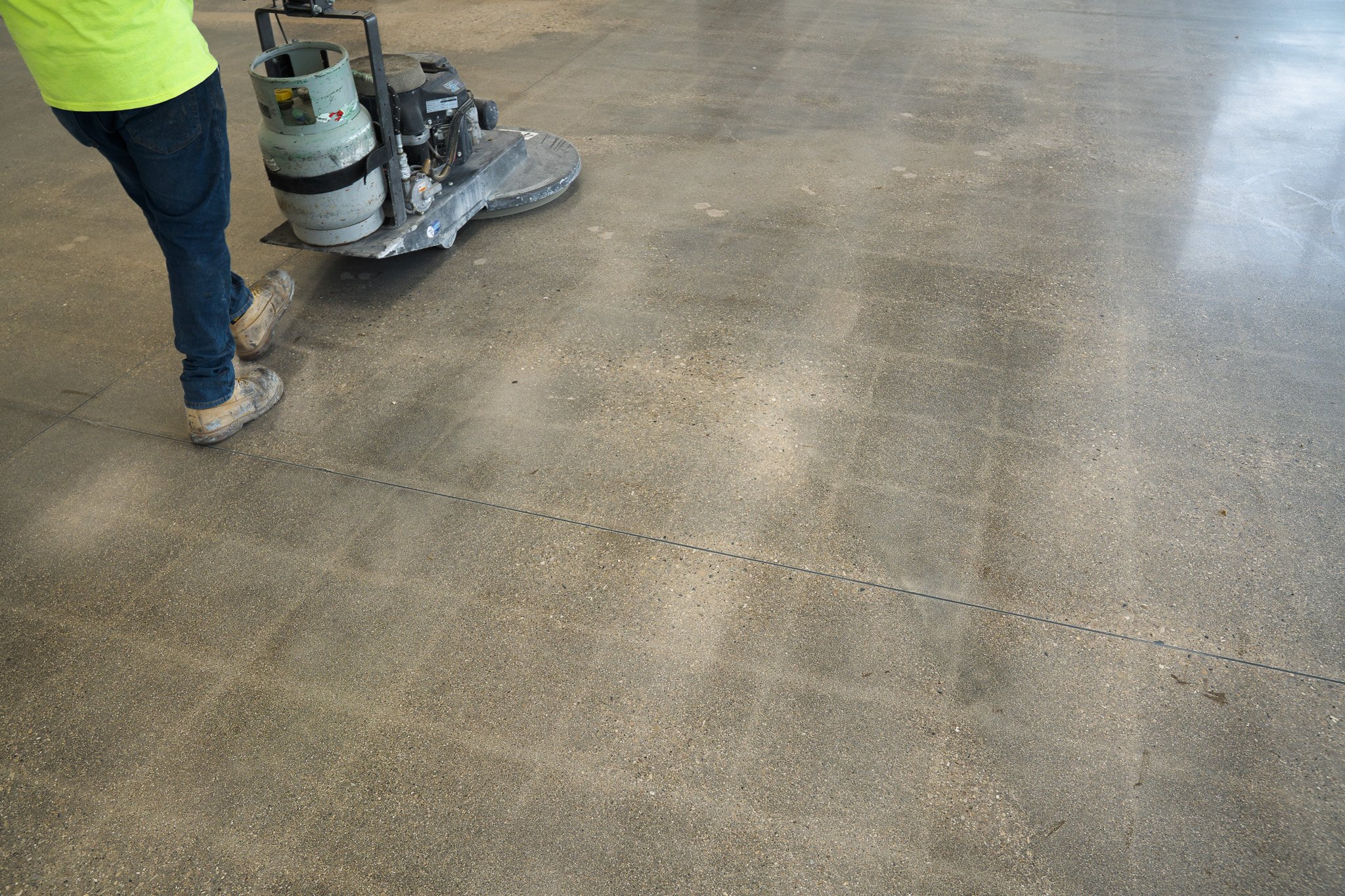
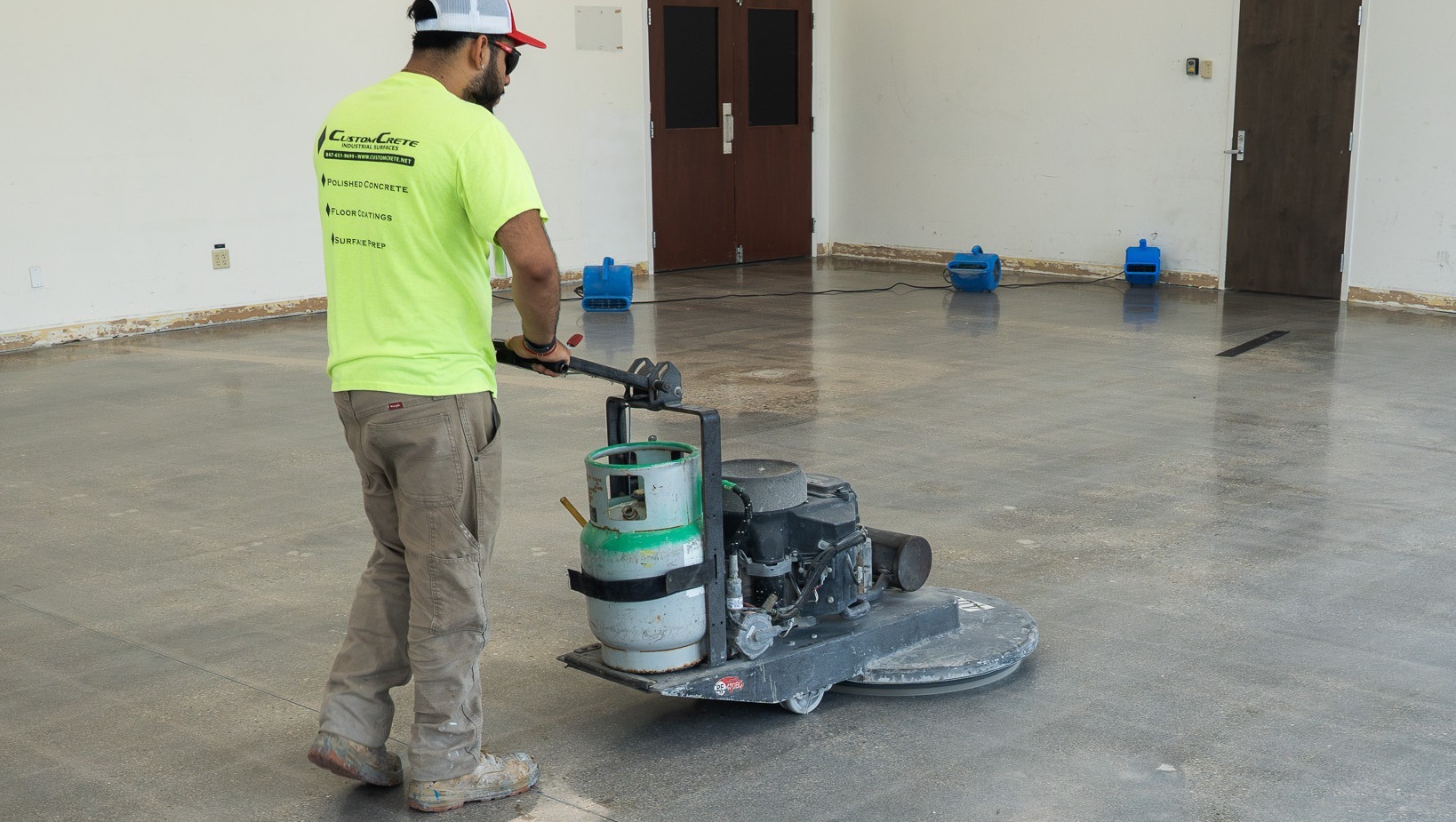
Large industrial grinders work efficiently in open areas, but they may not fit underneath machines or between closely spaced equipment.
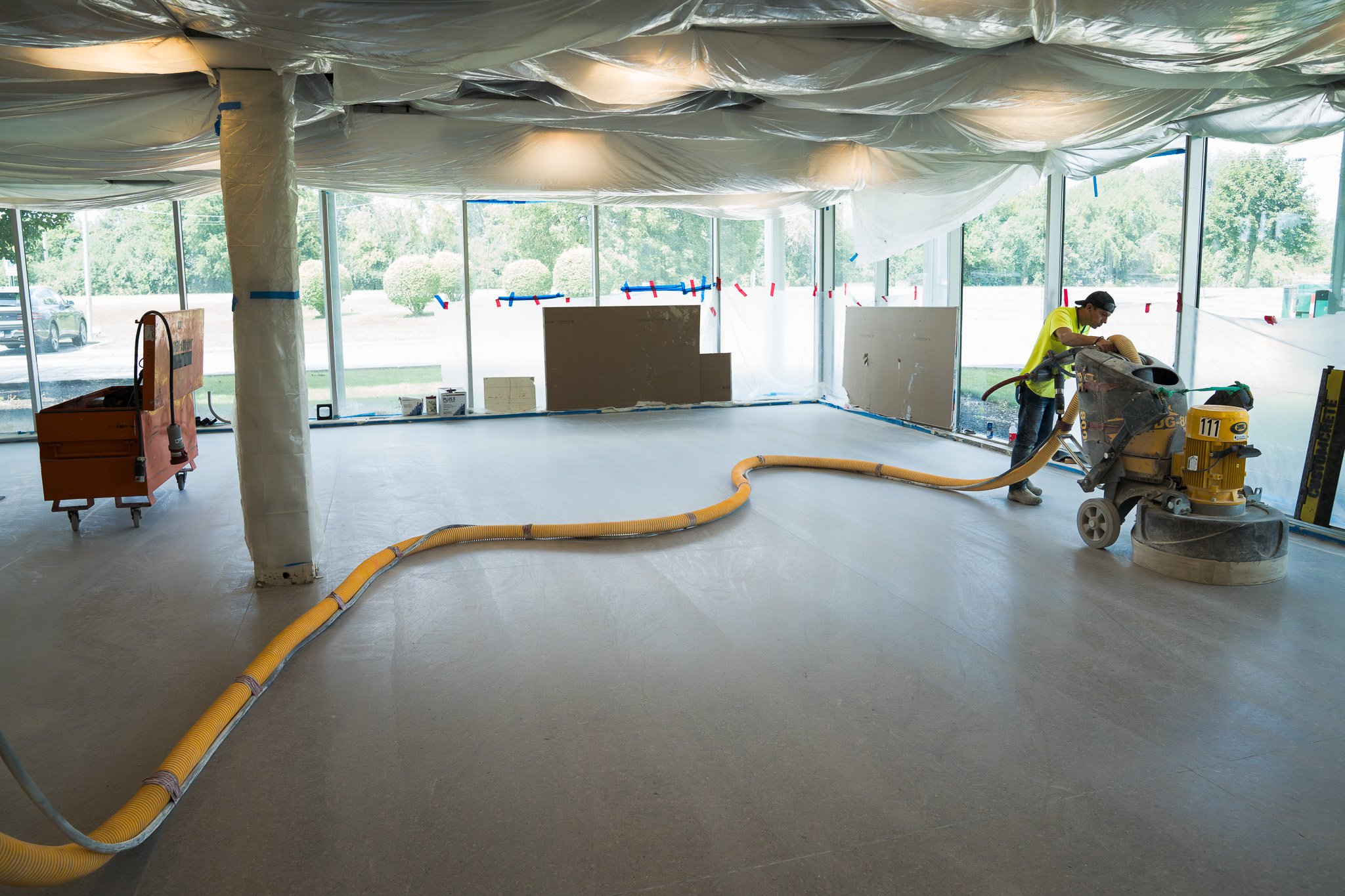
Contractors may use smaller grinders, edge grinders, and handheld tools to prepare these difficult locations.
The goal is to remove contaminants, address loose or failing material, and create a surface profile suitable for the new coating.
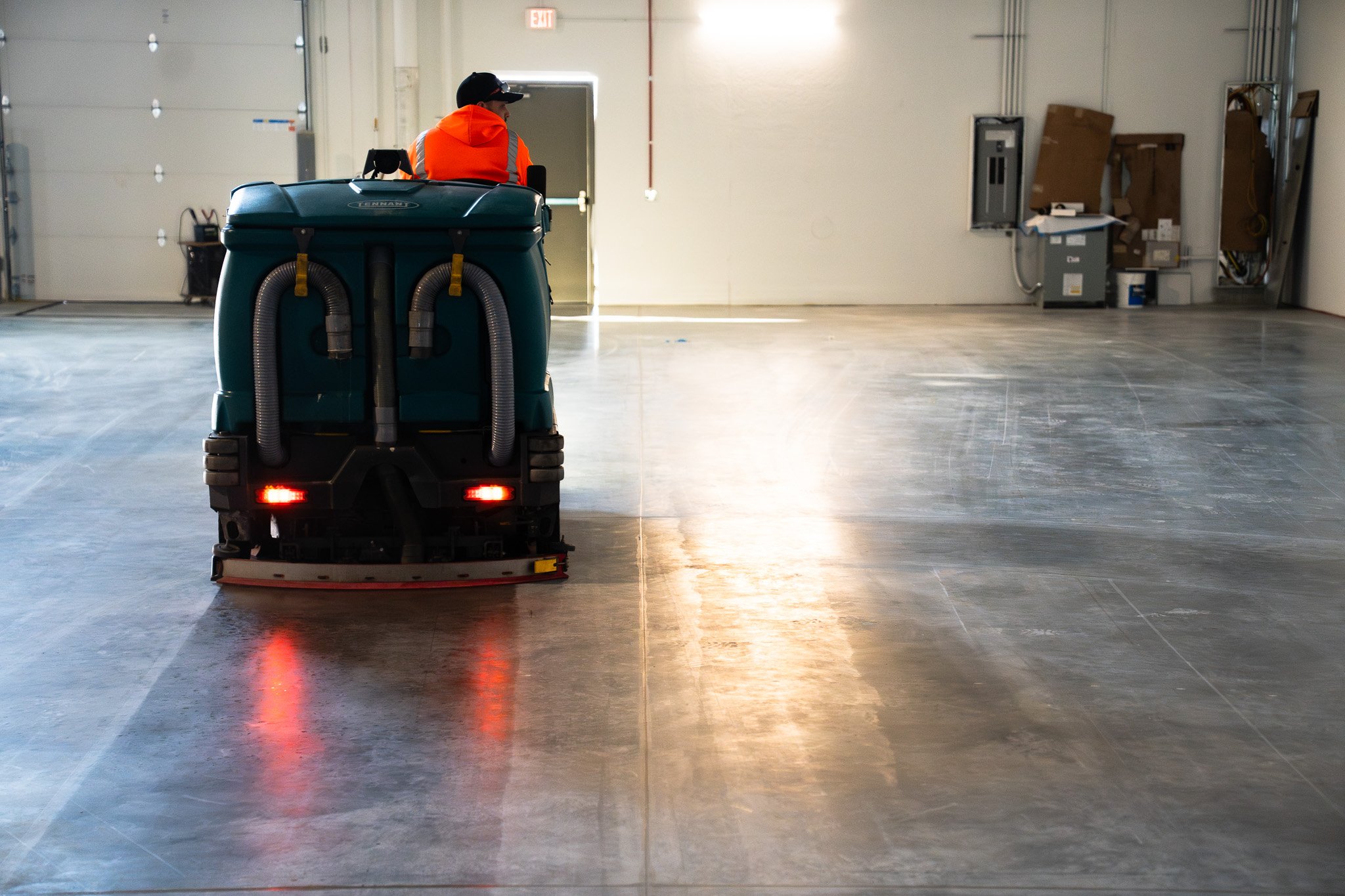
Dust collection and cleaning are especially important around machinery. Grinding dust can settle on equipment, collect in tight spaces, or interfere with coating adhesion if it isn't properly removed.
Some areas may require additional hand preparation, which can increase labor and project costs.
Step 4: Repair Damaged Areas Before Recoating
After surface preparation, damaged sections of the floor may need repairs.
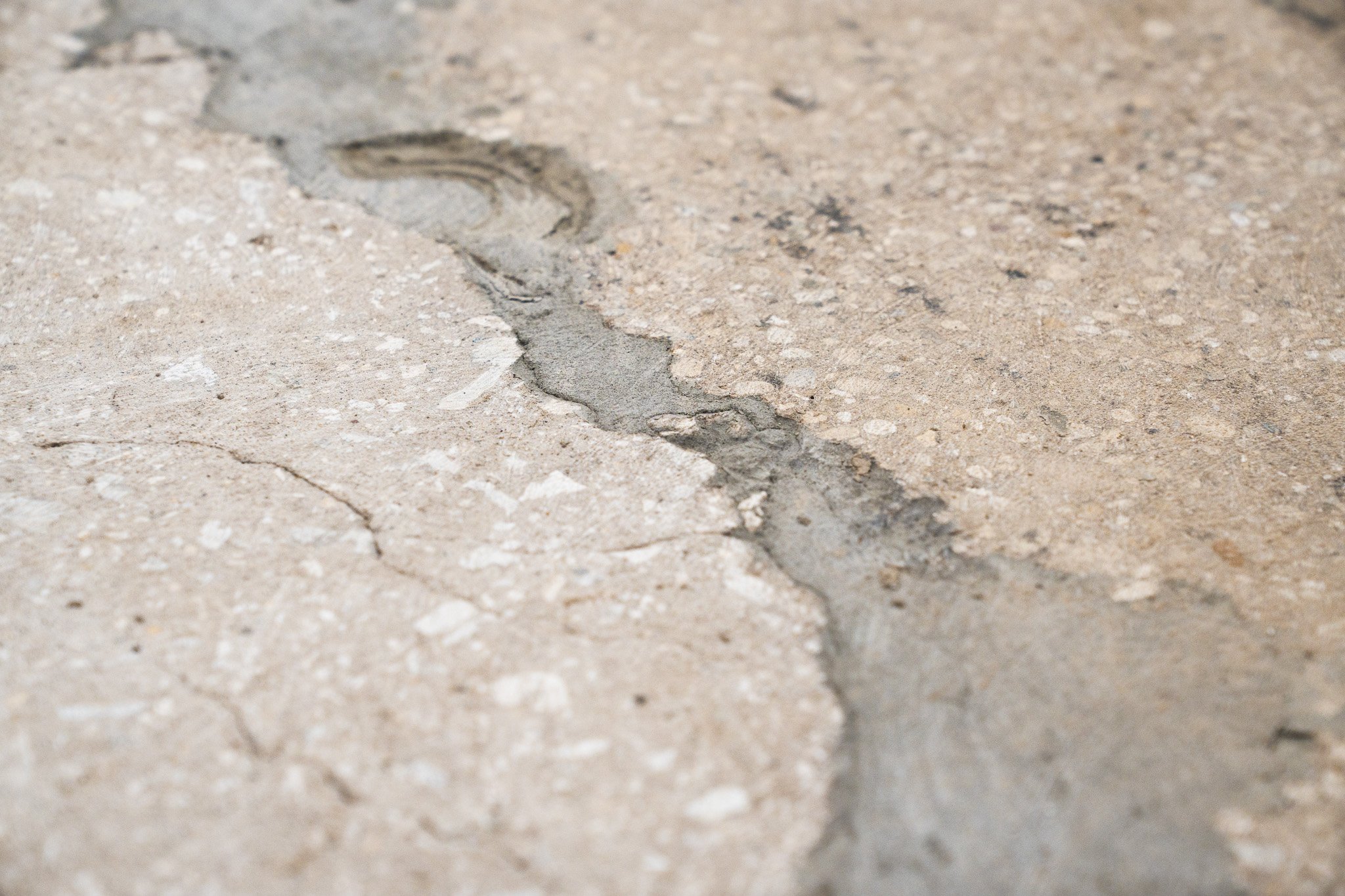
Common issues include cracks, chips, worn coatings, damaged joints, and small areas of deteriorated concrete.
Depending on the condition, contractors may use compatible repair materials to fill defects and create a more consistent surface before applying the new system.
However, repairs must address the actual problem. Filling a moving crack or coating over concrete affected by moisture won't necessarily prevent future damage.
The contractor should also consider whether repairs near equipment foundations require a different approach from repairs in open floor areas.
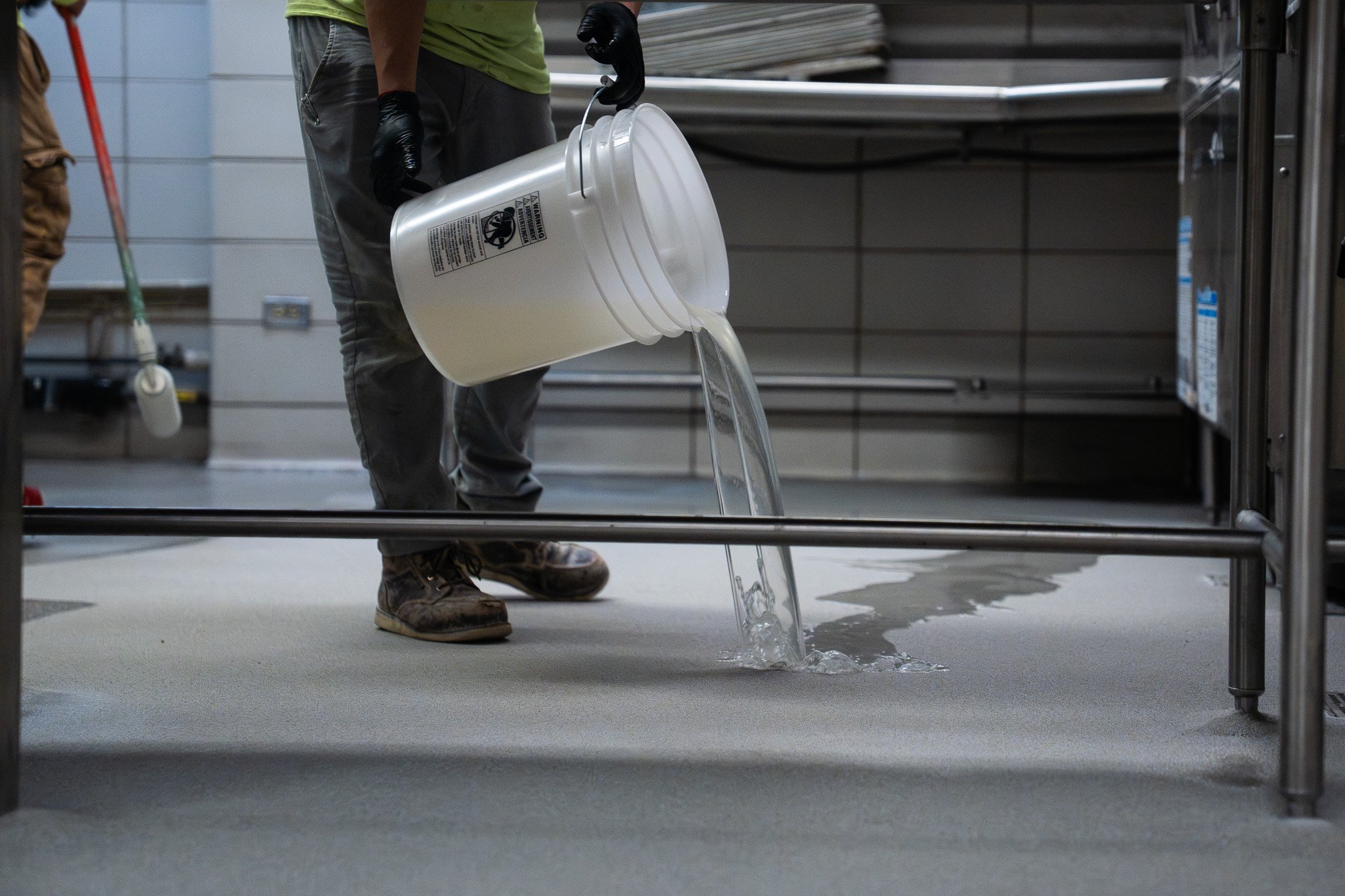
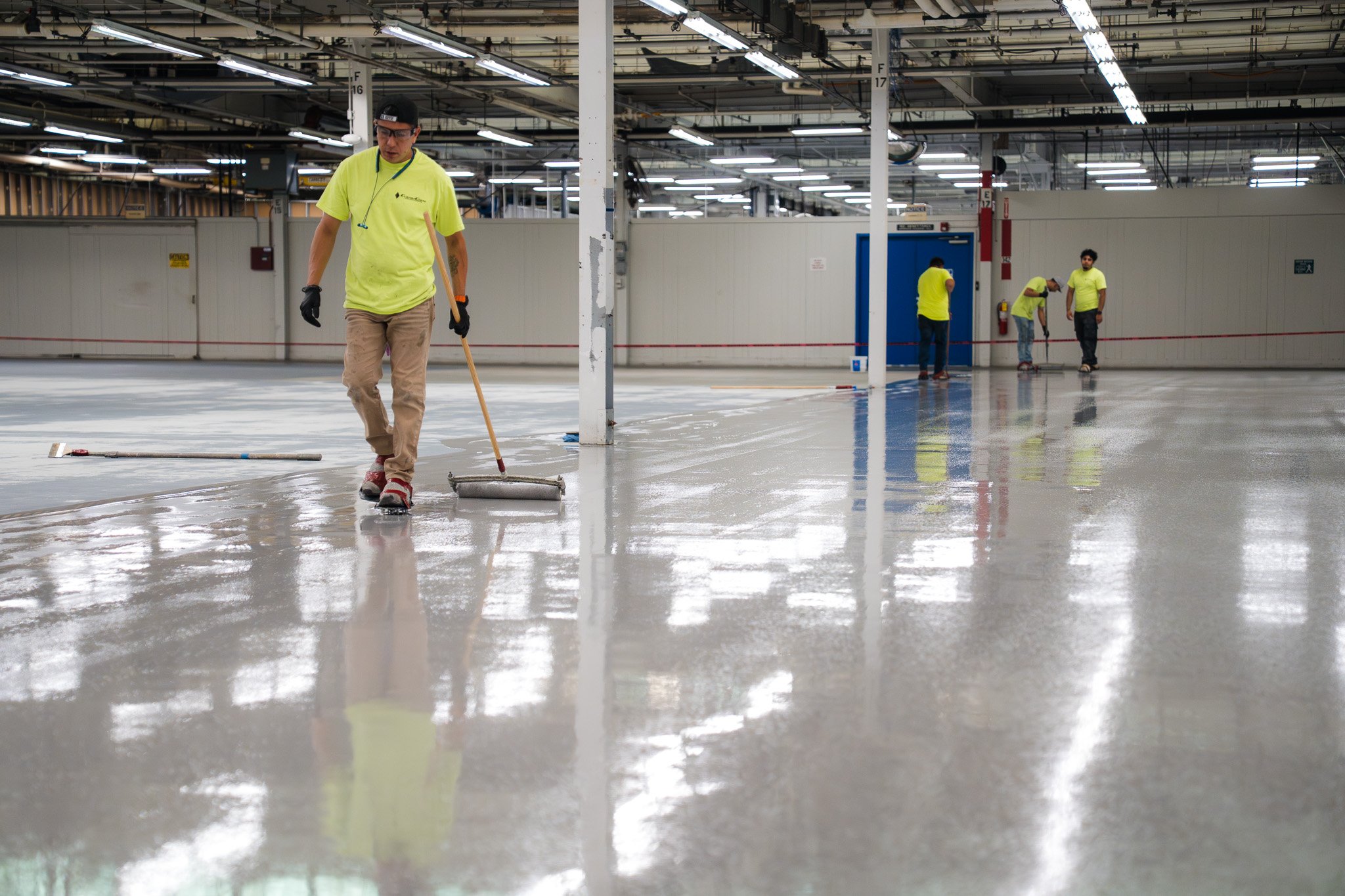
Step 5: Apply the New Epoxy Flooring System
Once preparation and repairs are complete, the new coating system can be installed.
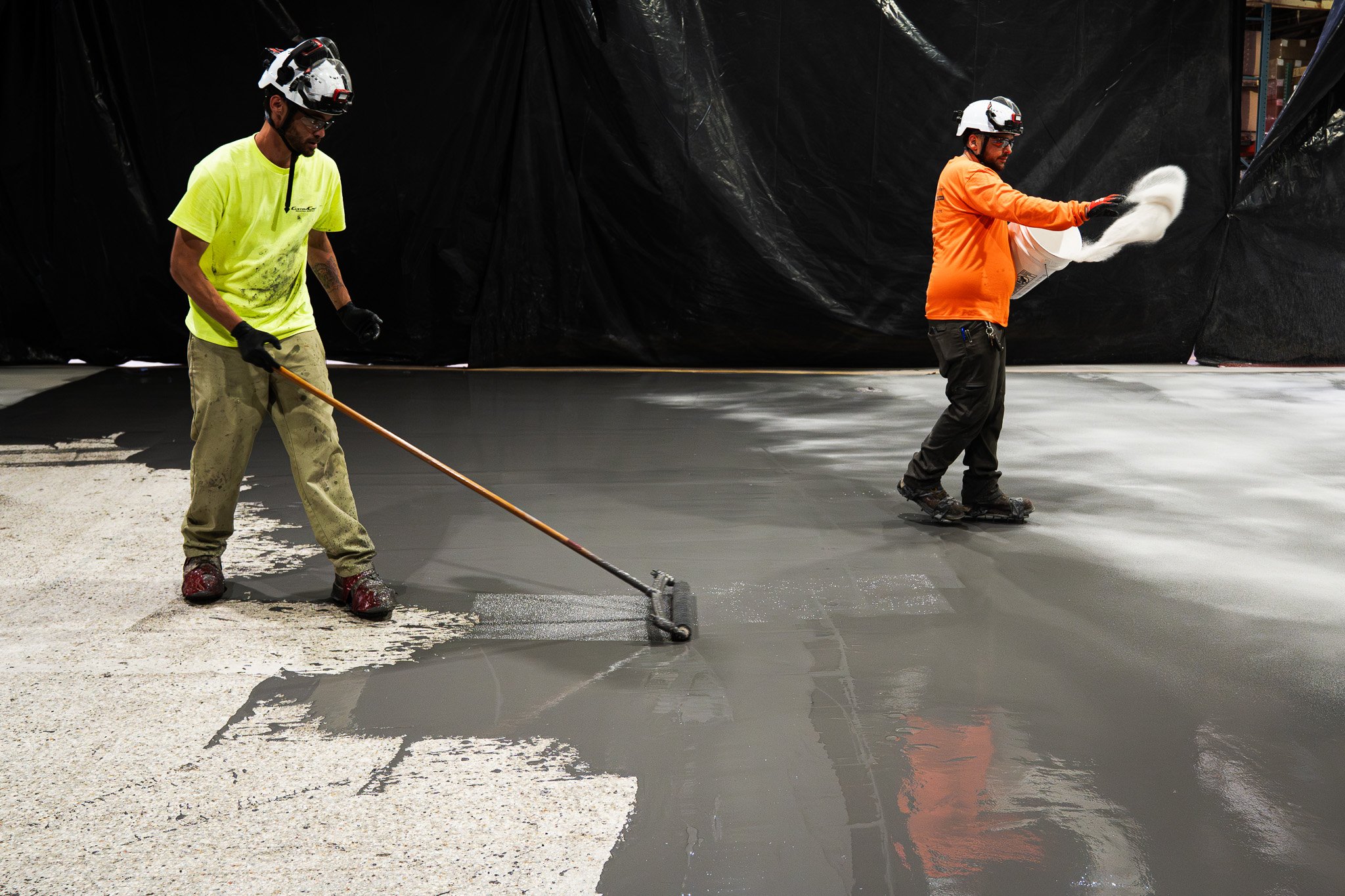
Depending on the project, installation may include a primer, epoxy body coat, and protective topcoat.
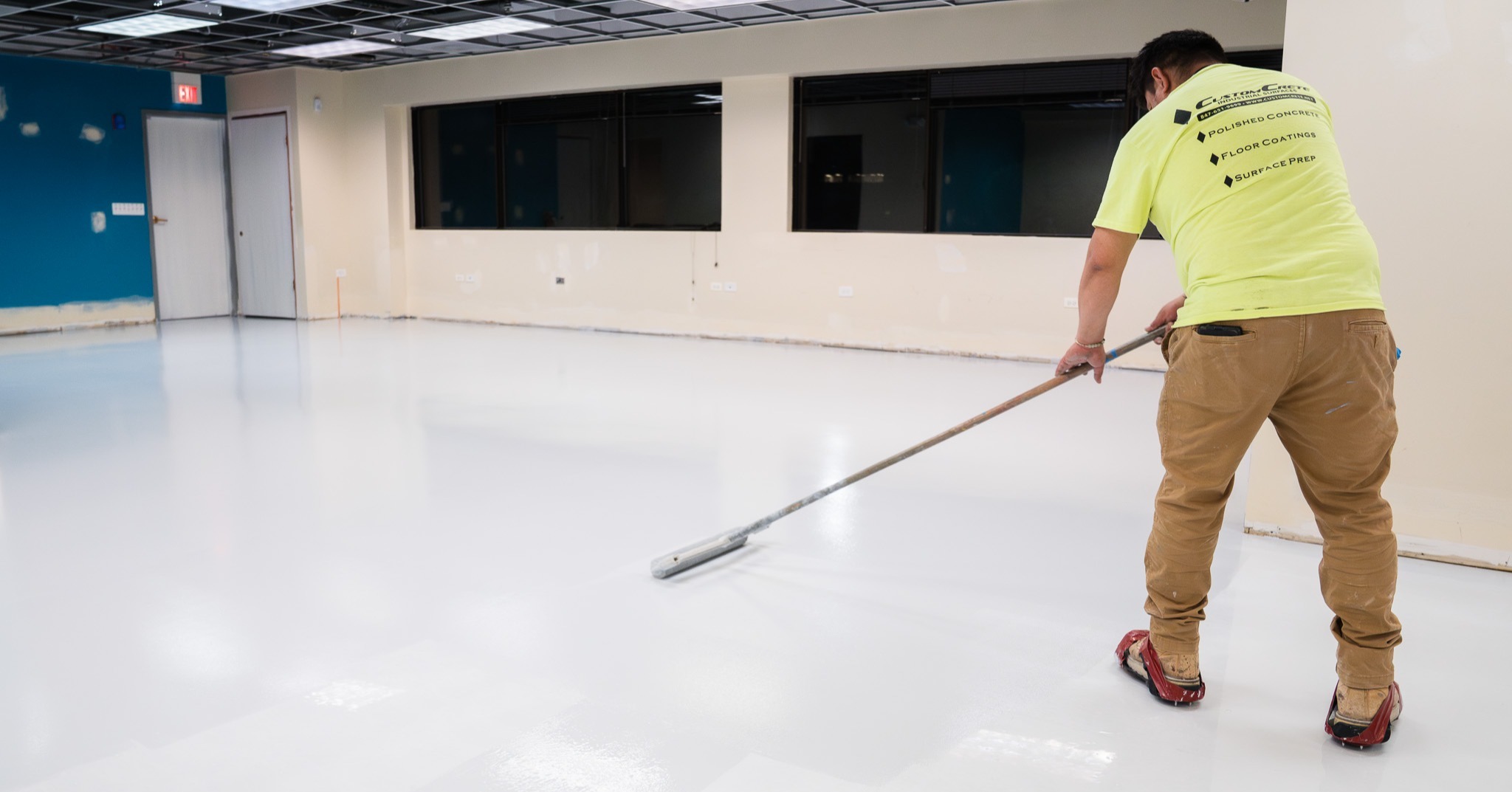
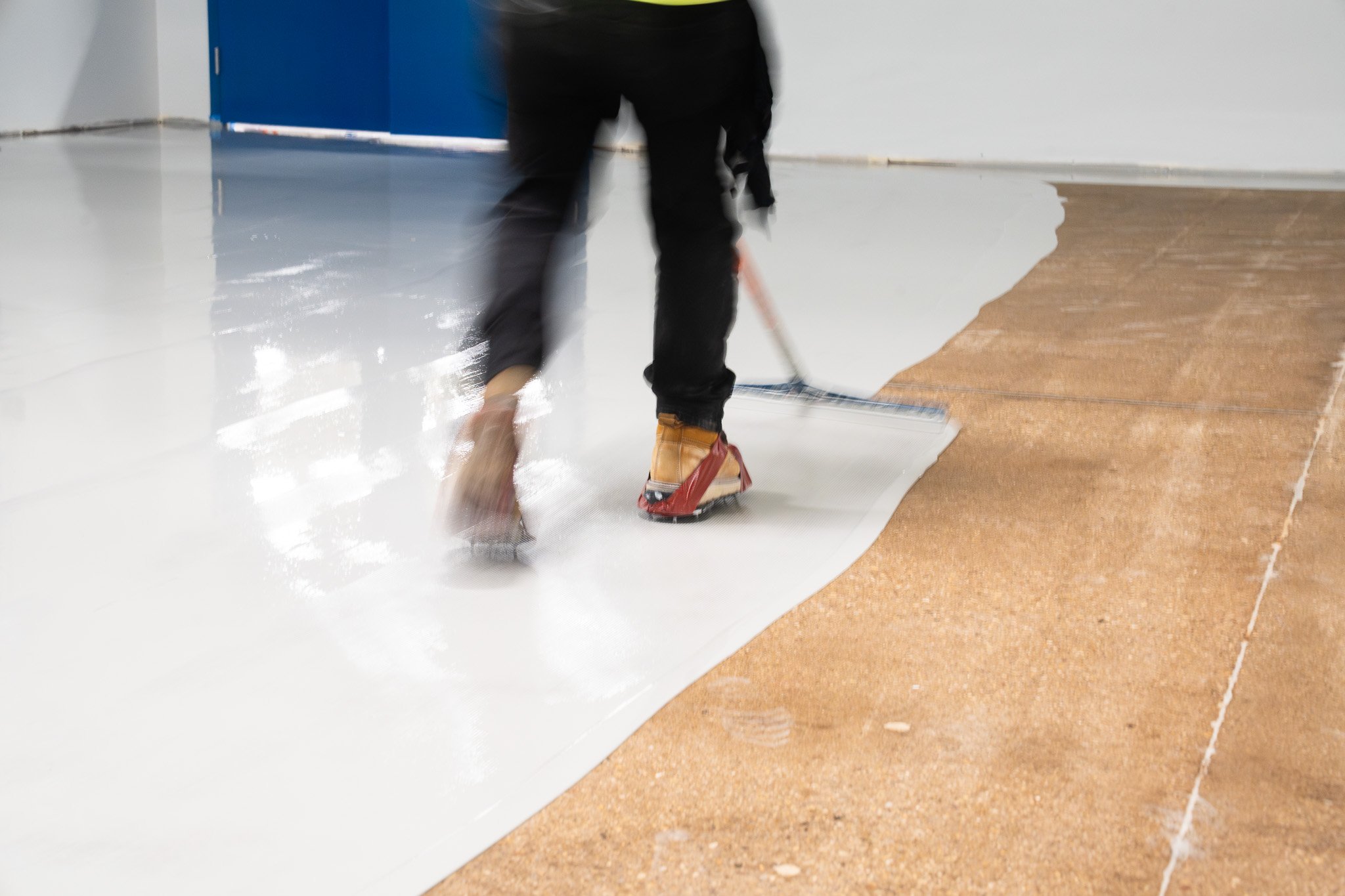
Working around equipment requires careful application near machine bases, edges, and tight spaces. Rollers, brushes, and other application tools may be used where larger equipment cannot reach.
Coating thickness and coverage should remain consistent with the manufacturer's requirements.
A polyurethane topcoat may also be selected when additional abrasion resistance or other performance characteristics are needed.
The specific products should be chosen based on the facility's traffic, chemical exposure, cleaning procedures, and operating conditions.
Step 6: Allow Proper Curing Before Resuming Production
One challenge with industrial epoxy floor recoating is finding enough time for preparation, installation, and curing.
Manufacturing facilities may operate multiple shifts, making extended shutdowns difficult.
Some projects can be completed over weekends, holidays, or planned maintenance periods. However, accelerated schedules may increase labor costs and limit the products that can be used.
The floor must reach the required cure level before normal operations resume. Walking on a coating and operating heavy machinery over it may require different waiting periods.
Facility managers should confirm the expected return-to-service schedule before approving the project.
Real Project Example: Plastics Manufacturing Facility in South Elgin, IL
A plastics manufacturing facility in South Elgin, Illinois, needed to replace its worn epoxy flooring without moving the existing production equipment.
The project covered approximately 3,100 square feet, and the machinery had to remain in place throughout installation.

CustomCrete's five-person crew worked around and underneath the equipment to prepare and recoat the floor.
The flooring system included:
- Primer: Dudick Steri-Prime WB
- Epoxy: Dudick Steri-Flor UV
- Topcoat: Dudick Sealer 35 polyurethane with Carboline High-Wear Filler
The work was completed on Friday and Saturday, allowing the facility to resume operations on Monday morning.
This project demonstrates how careful planning, specialized preparation, and coordinated scheduling can make it possible to recoat an industrial floor without relocating major equipment.
However, not every facility can achieve the same turnaround. Equipment accessibility, floor condition, coating selection, and curing requirements can all affect the schedule.
Final Thoughts
Recoating an industrial epoxy floor around existing equipment is possible in many facilities, but it requires more than applying a new coating over the old surface.
Contractors must evaluate the existing floor, plan around machinery, prepare tight spaces, complete necessary repairs, and select a coating system that fits the facility's operating conditions.
Keeping equipment in place may reduce relocation costs and disruption, but restricted access can increase preparation time and installation complexity.
To see how this process works on an actual manufacturing floor, watch our video, "How We Recoat an Epoxy Floor Without Moving the Machines," featuring CustomCrete's project at a plastics manufacturing facility in South Elgin, IL.