
Industrial and commercial facilities rely on flooring systems that can withstand heavy use, maintain cleanliness, and support worker safety. Traditional flooring—whether tile, vinyl, or bare concrete—often falls short in these environments because seams, grout lines, and porous surfaces allow moisture, bacteria, and chemicals to penetrate. That’s where Fluid-Applied Flooring comes in.
Designed to be poured and spread in liquid form, fluid-applied systems create a seamless, durable surface engineered to hold up under demanding conditions. With years of experience installing resin floors across the Midwest, CustomCrete has seen how these systems transform production plants, warehouses, laboratories, and commercial spaces into safer, more efficient environments.
Below, we break down what Fluid-Applied Flooring is, how it works, and why it’s becoming the preferred choice for facilities ready for long-term flooring performance.
What Is Fluid-Applied Flooring?
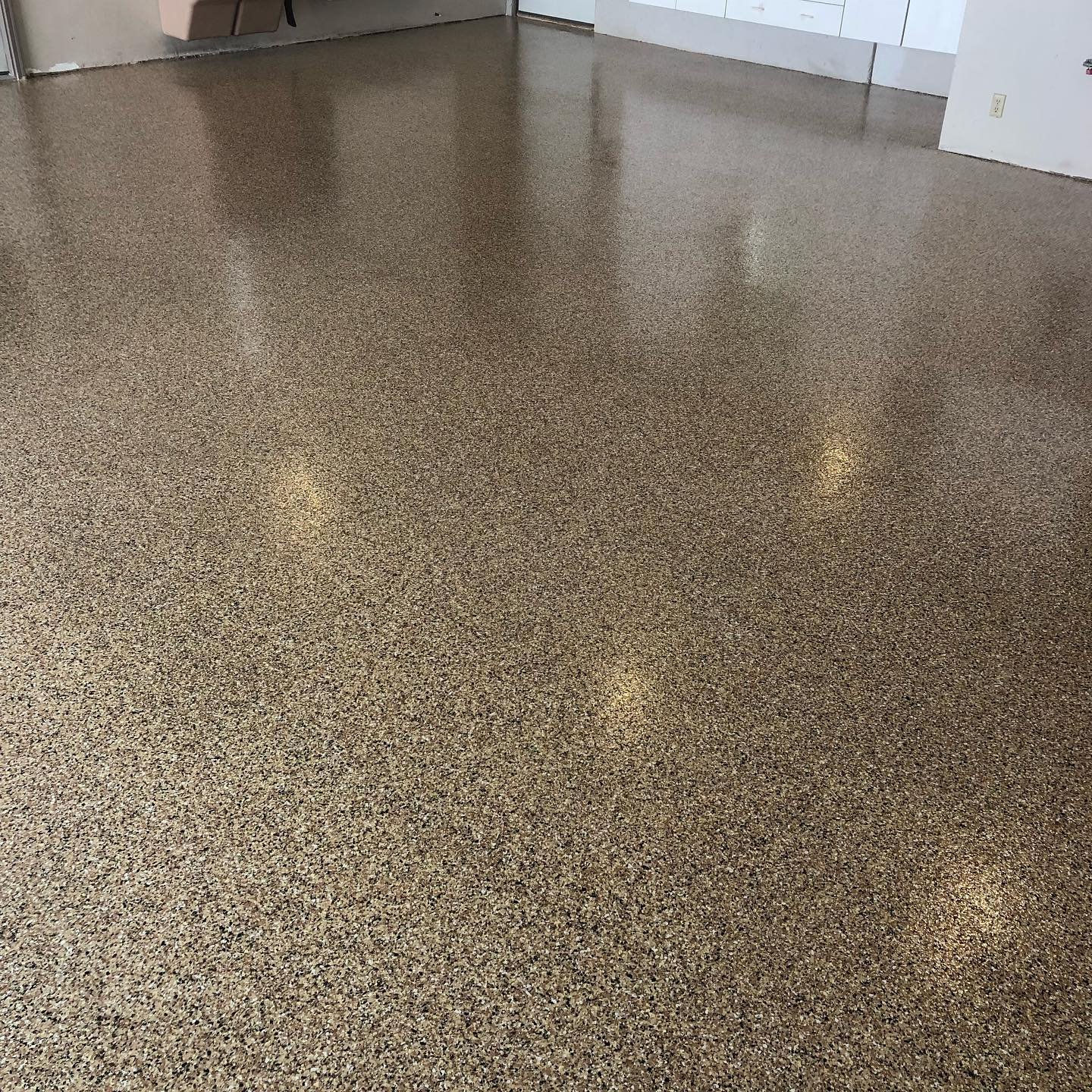
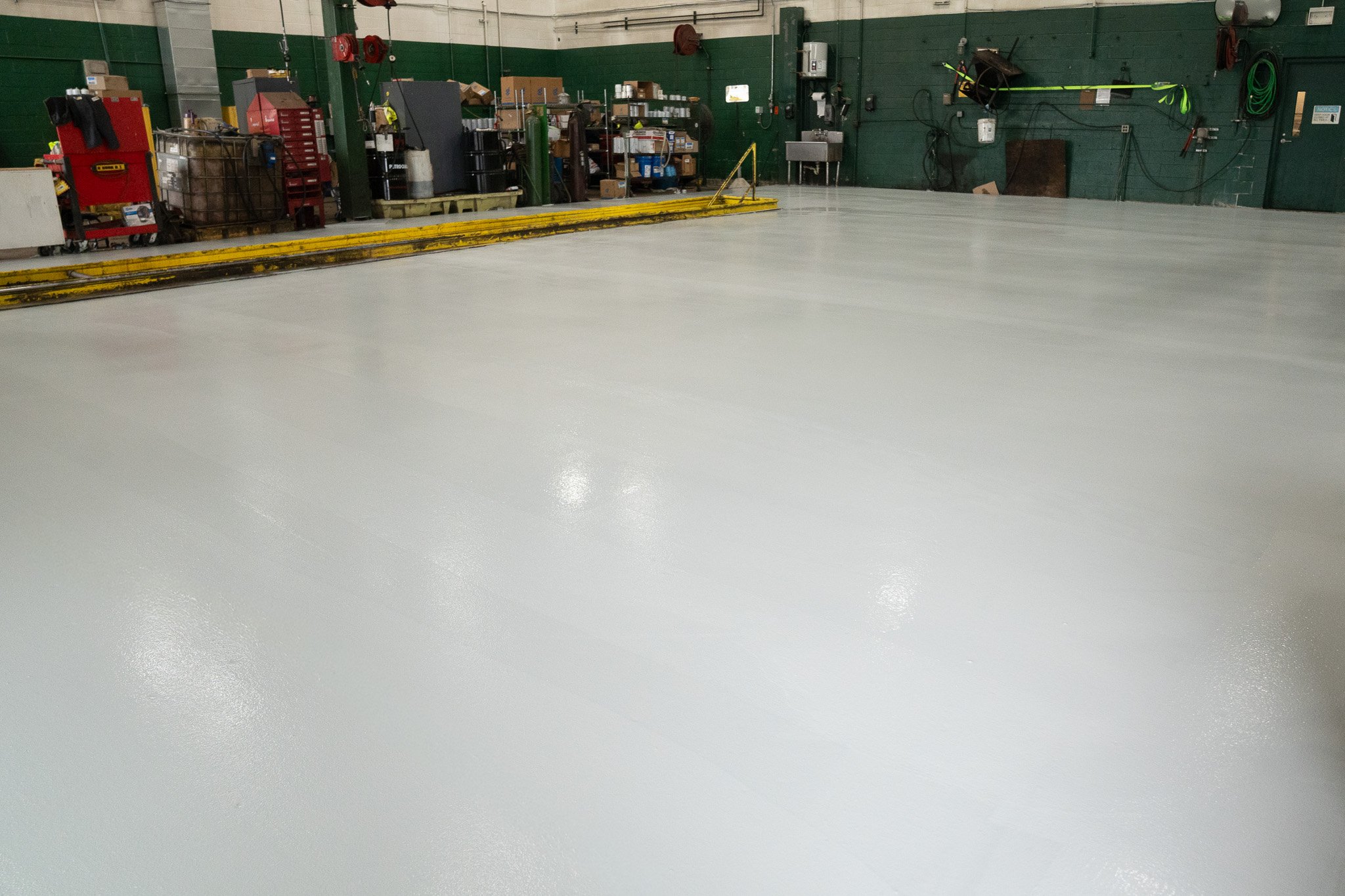
Fluid-Applied Flooring refers to a resin-based system—often epoxy, urethane cement, or polyaspartic—that is applied as a liquid and then cures into a solid, seamless surface. Because it bonds directly to the concrete substrate, the finished floor becomes an extremely strong, continuous layer without joints, seams, or gaps.
This construction makes fluid-applied floors different from conventional materials. Instead of laying individual pieces, installers create one unified surface designed for durability, hygiene, and resistance to environmental stress.
Common Types of Fluid-Applied Flooring
- Epoxy Systems: Known for chemical resistance and durability in manufacturing and warehouse spaces.
- Urethane Cement: Ideal for facilities that face extreme temperature changes or hot washdowns.
- Polyaspartic Coatings: Fast curing and UV-stable, often used in facilities needing minimal downtime.
Each system can be customized in thickness, texture, and finish to match specific facility requirements.
How Fluid-Applied Flooring Works
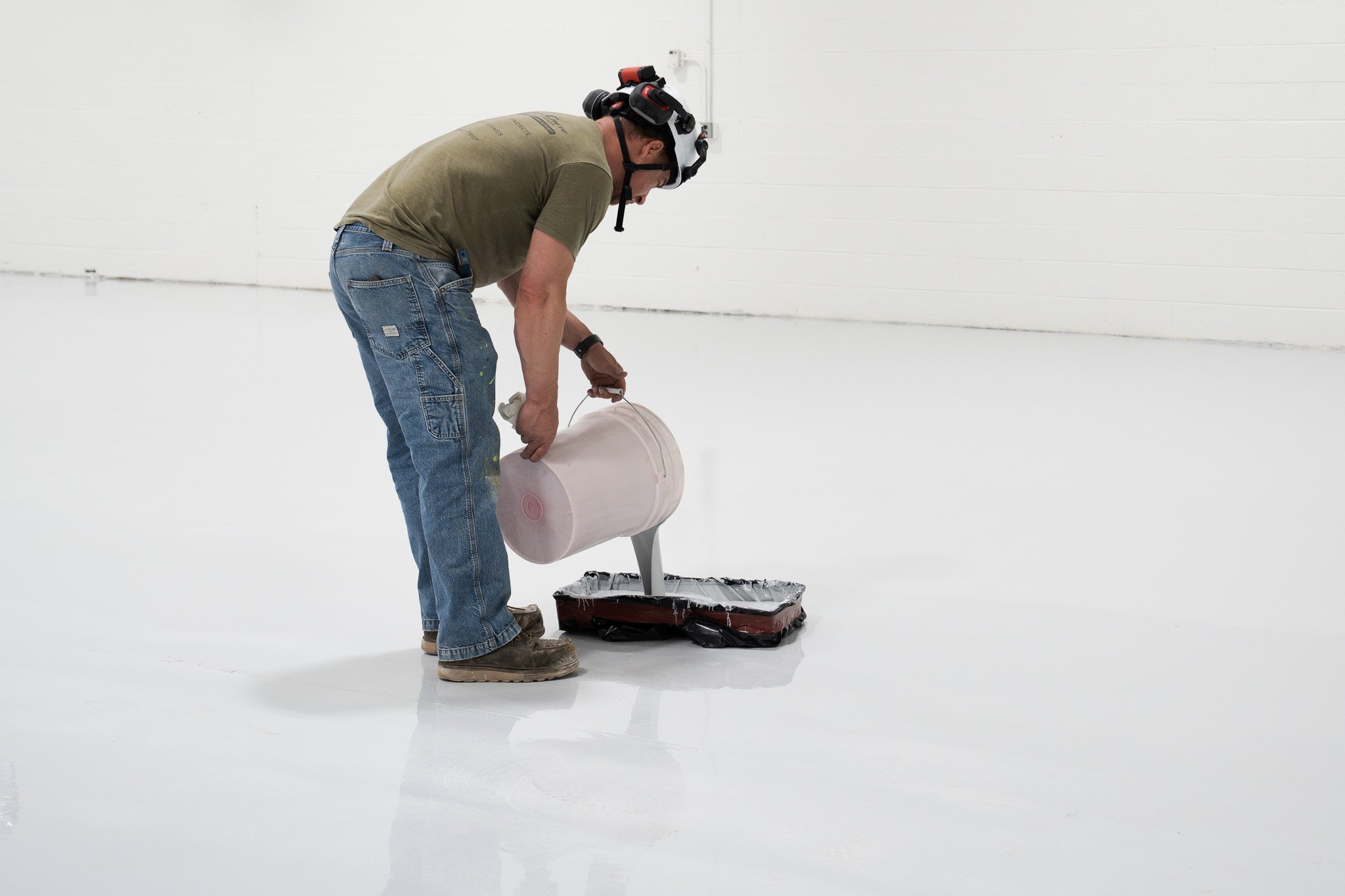
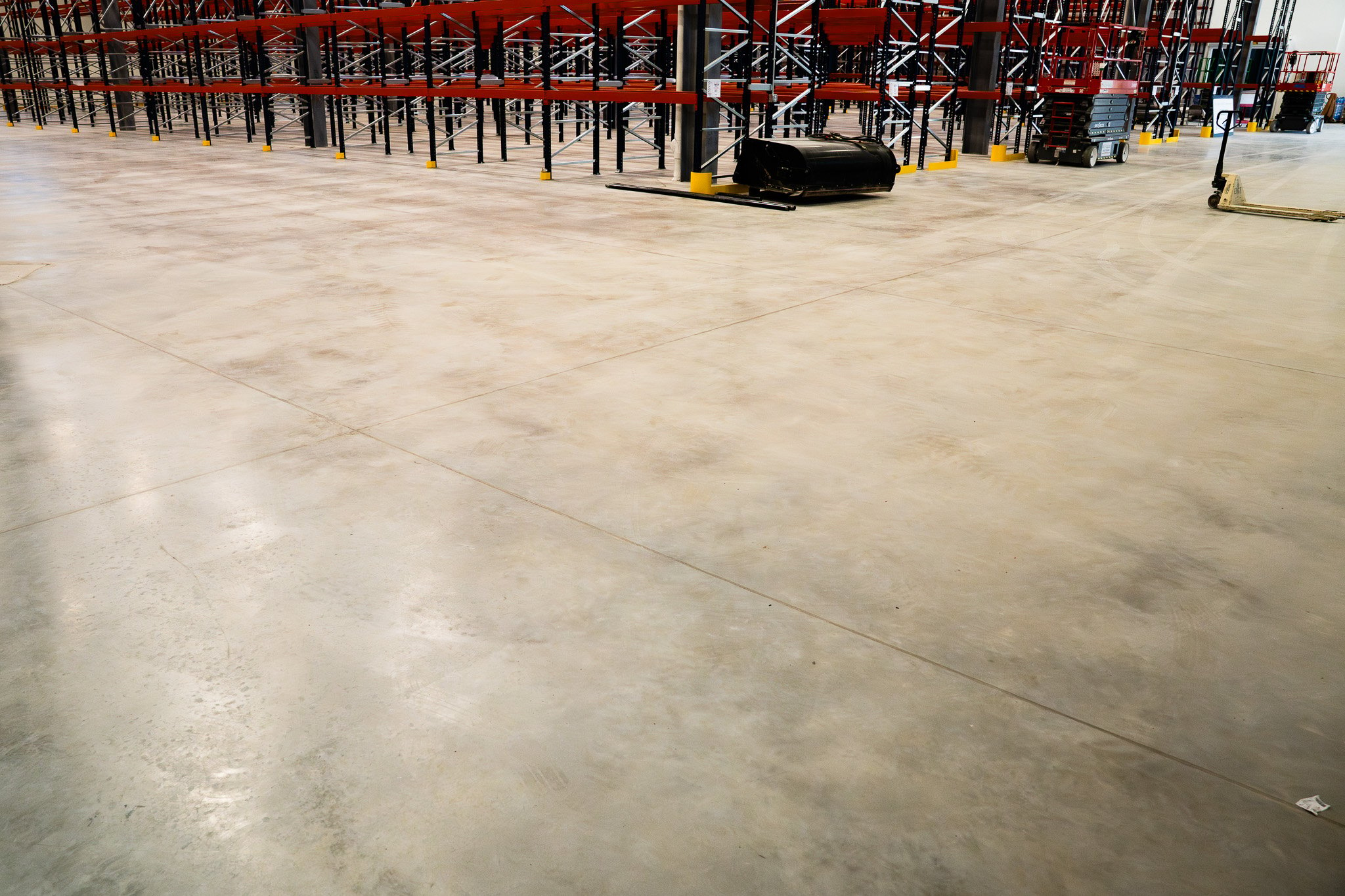
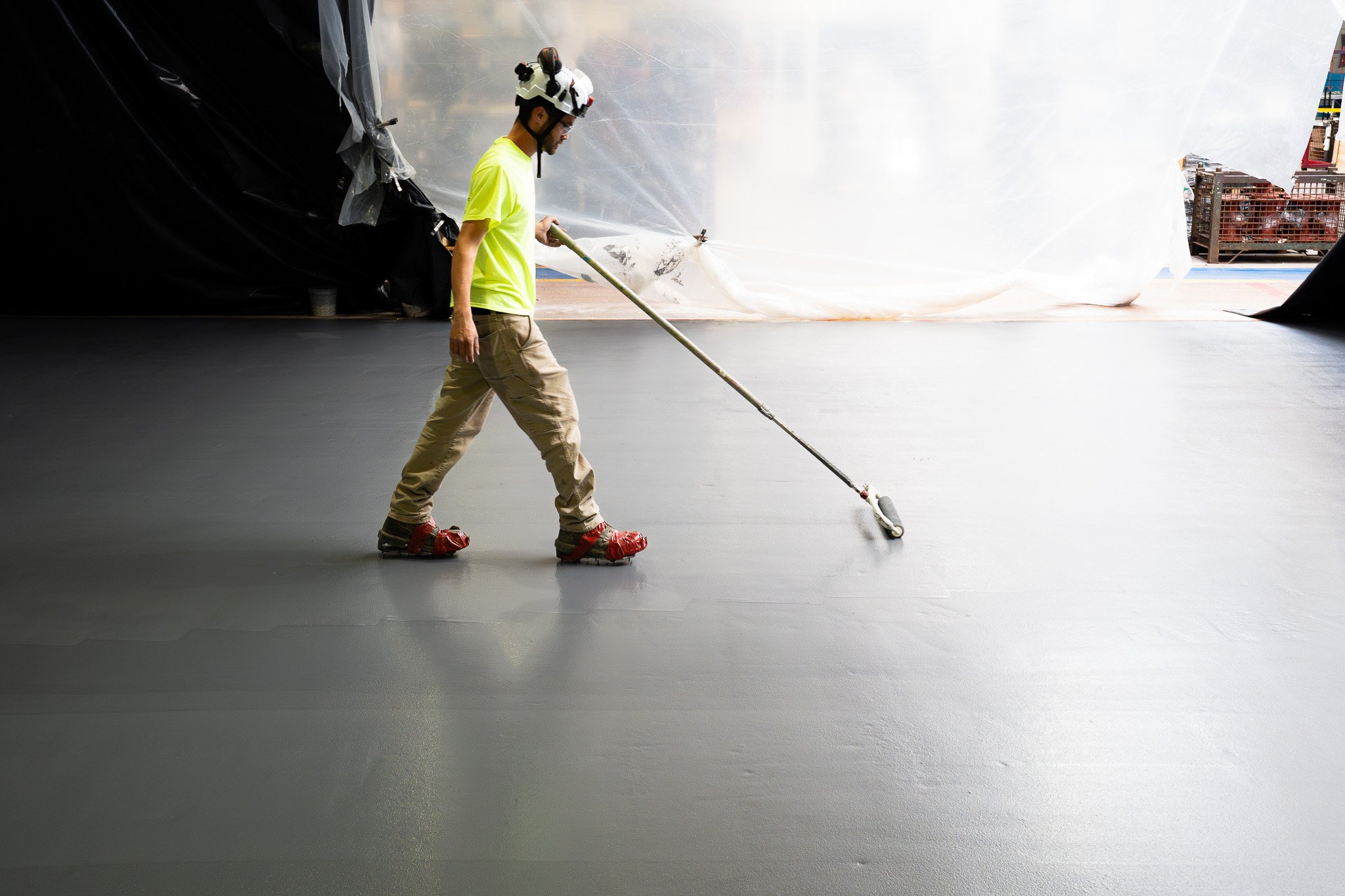
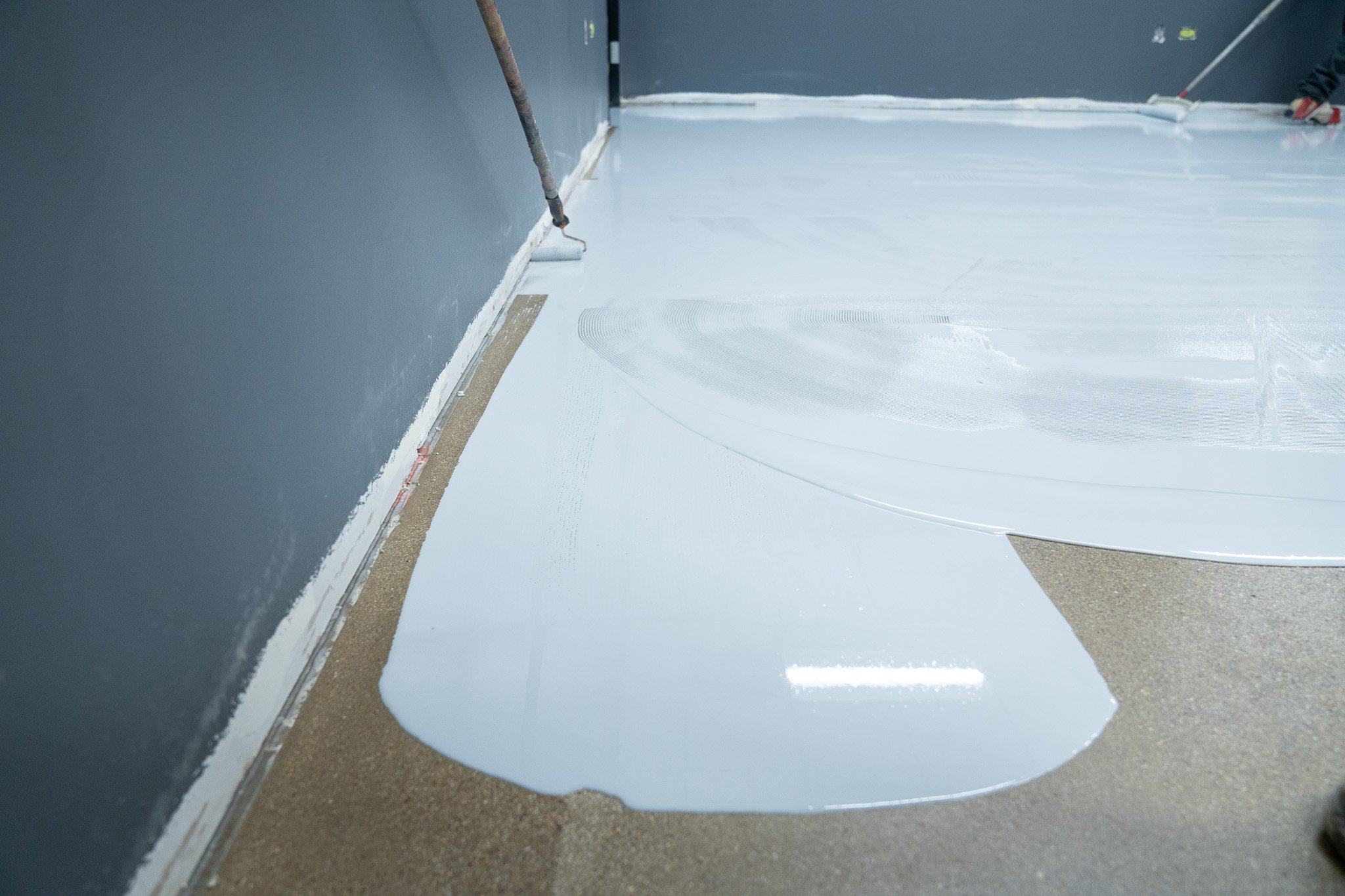
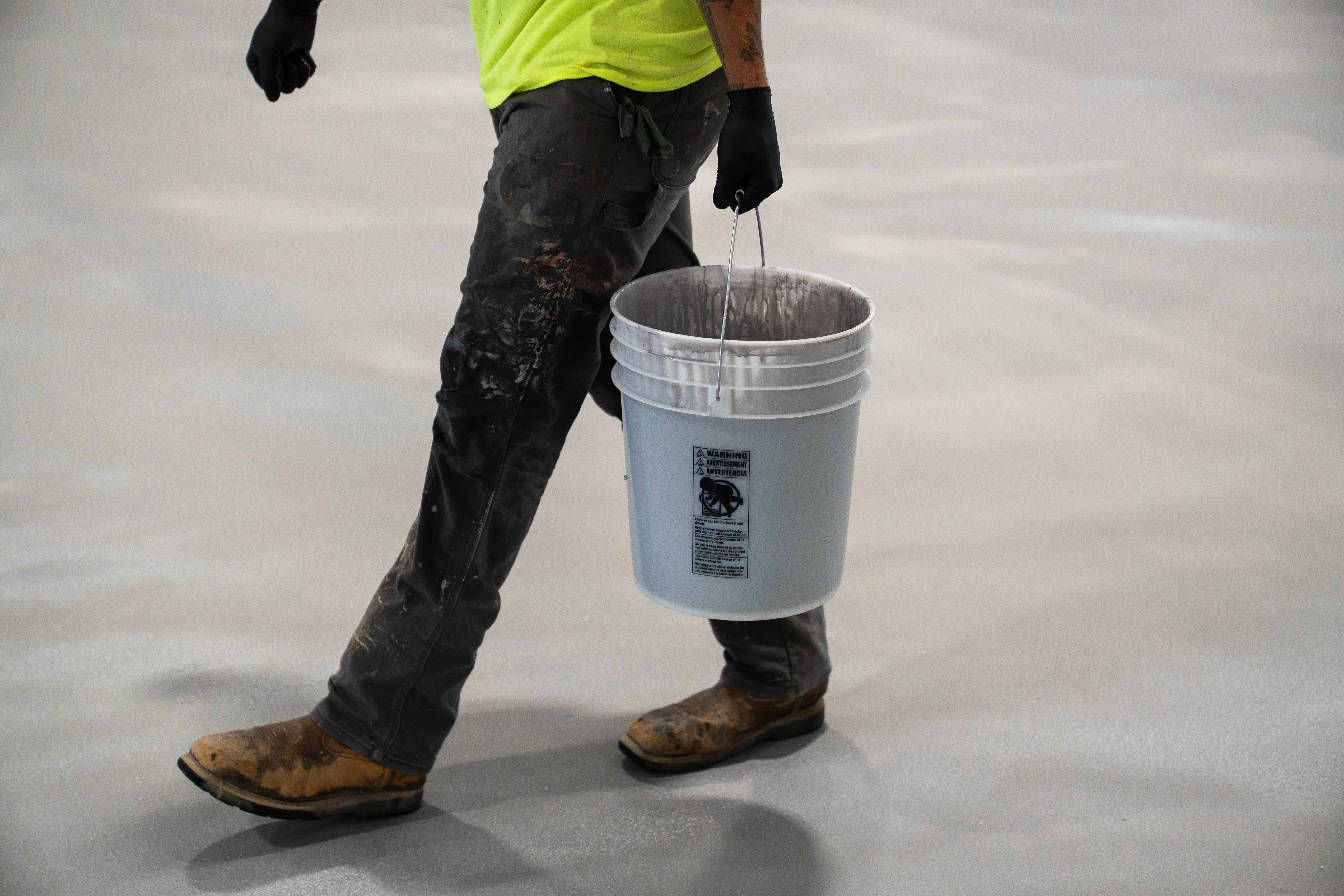
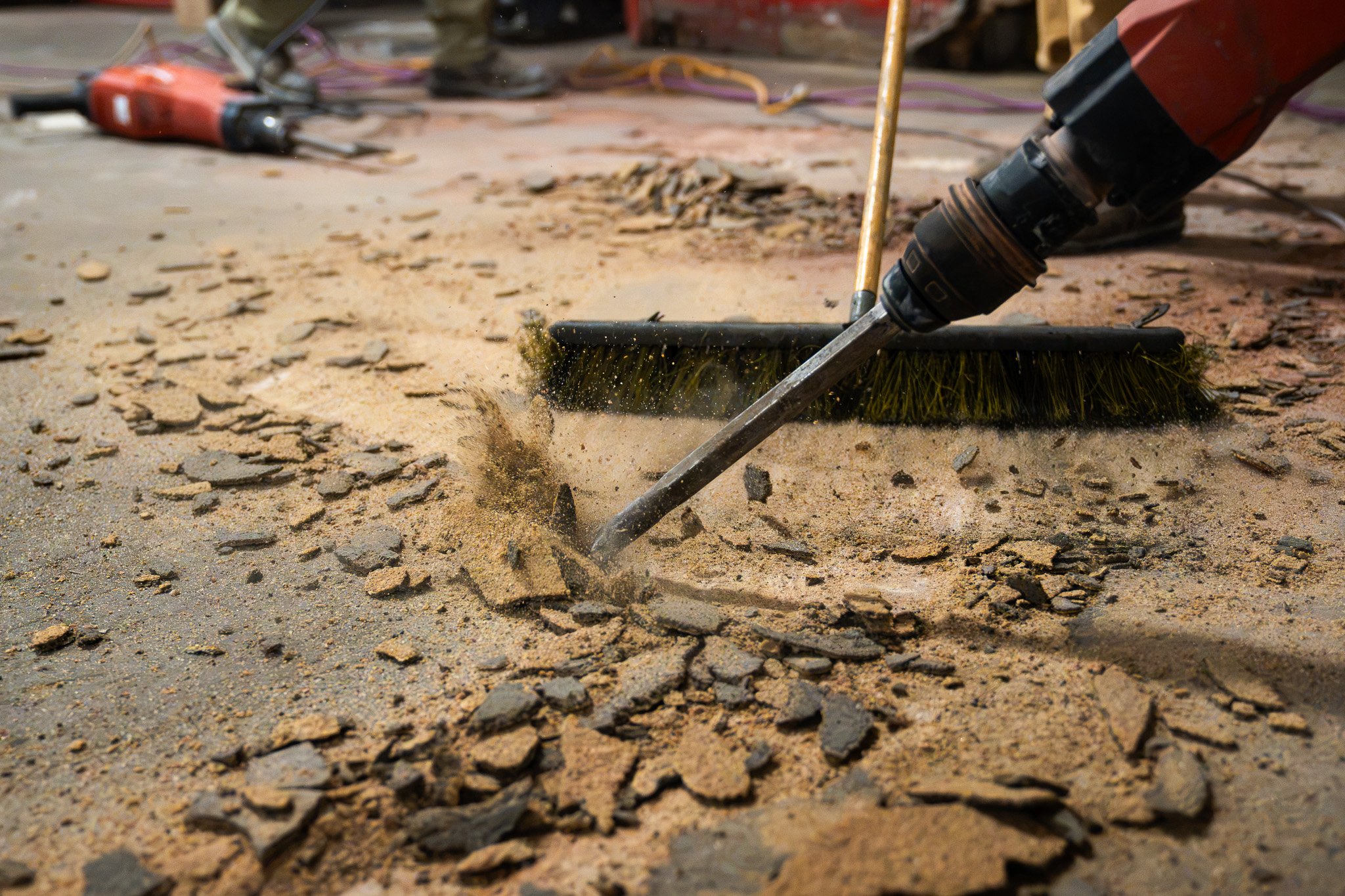
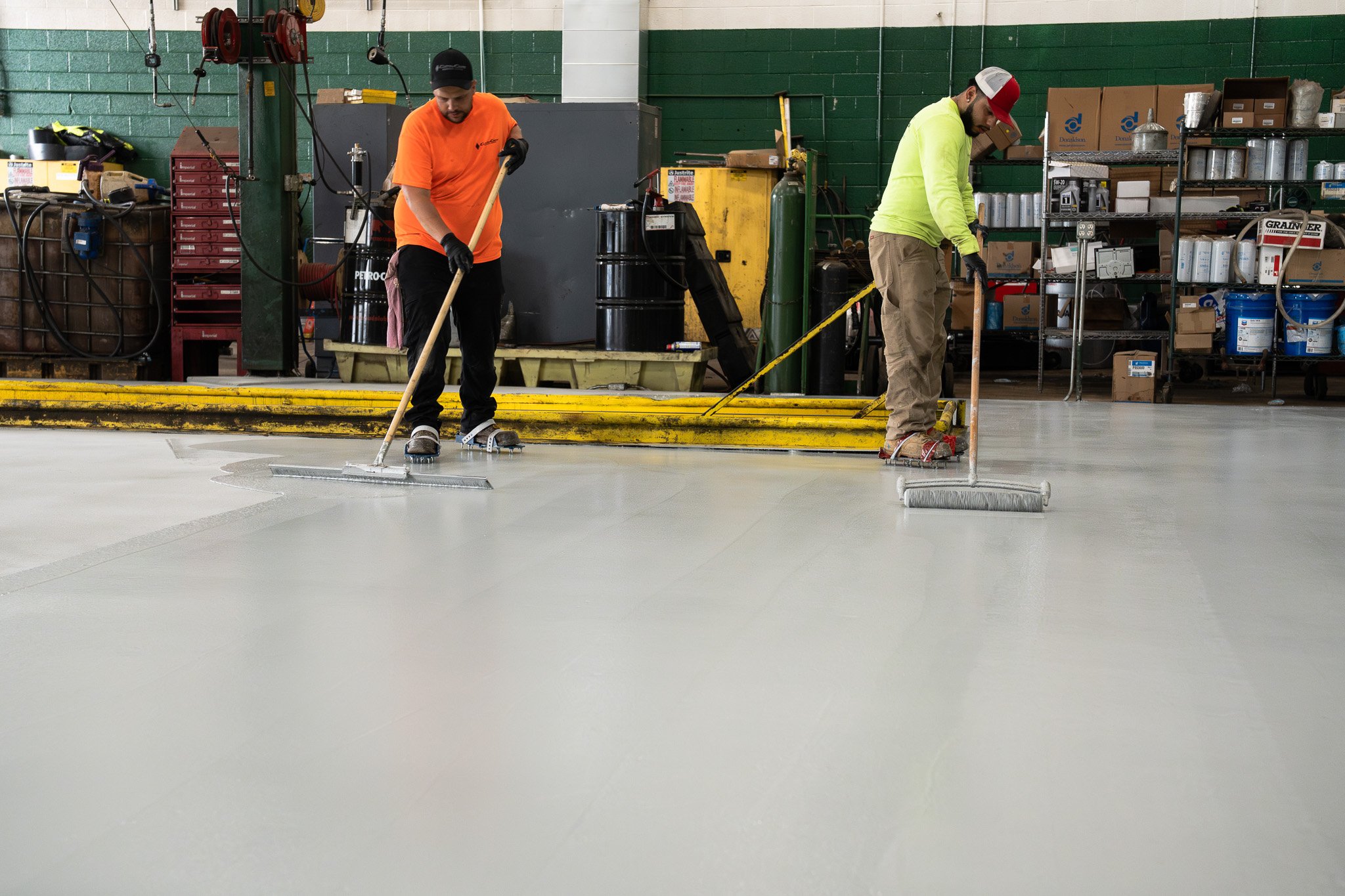
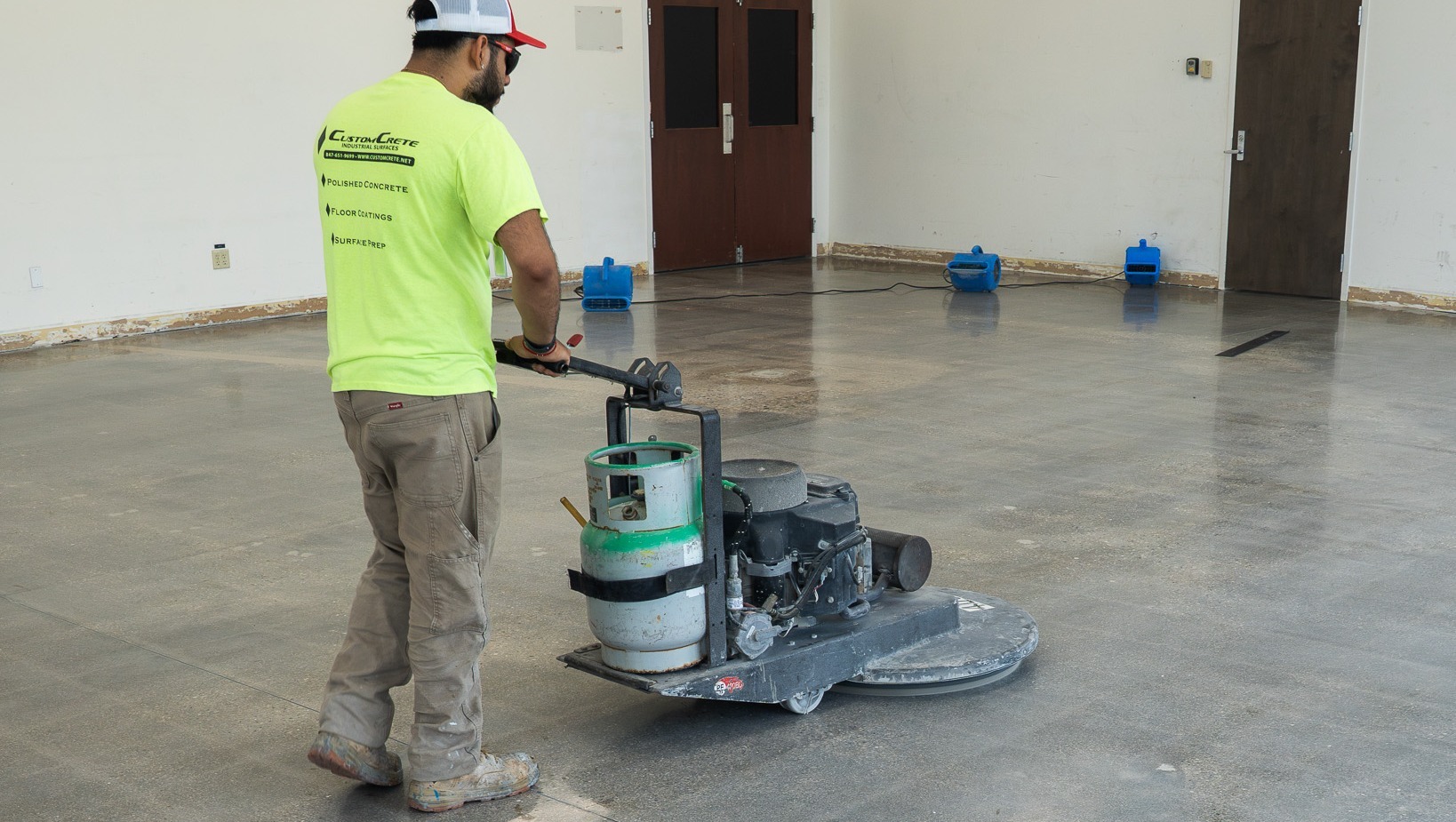
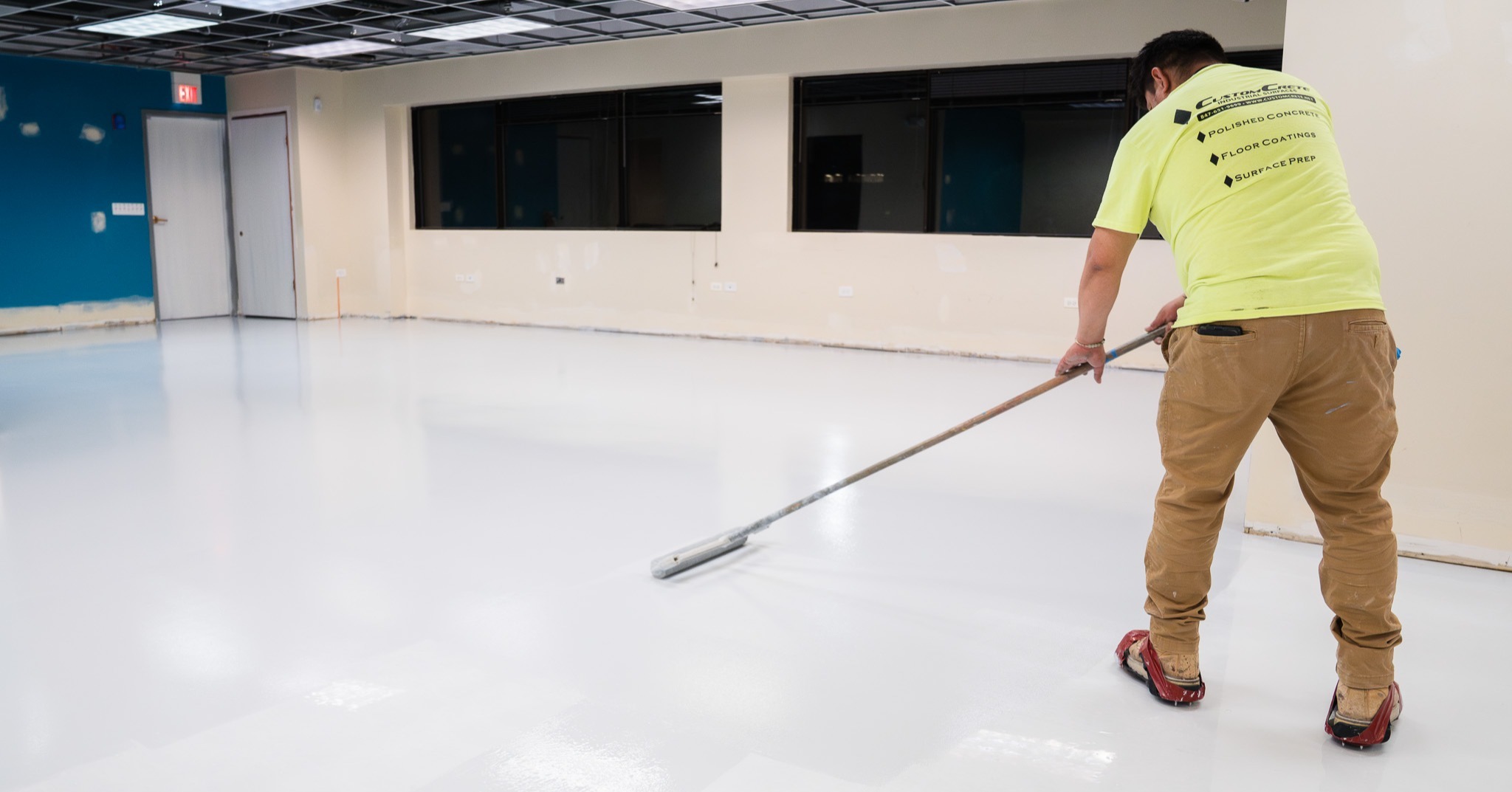
The installation process begins with surface preparation, which is one of the most critical steps. The concrete must be mechanically profiled—typically through grinding or shot-blasting—to ensure strong adhesion. Once the surface is properly prepared, the resin material is mixed and poured onto the floor in liquid form.
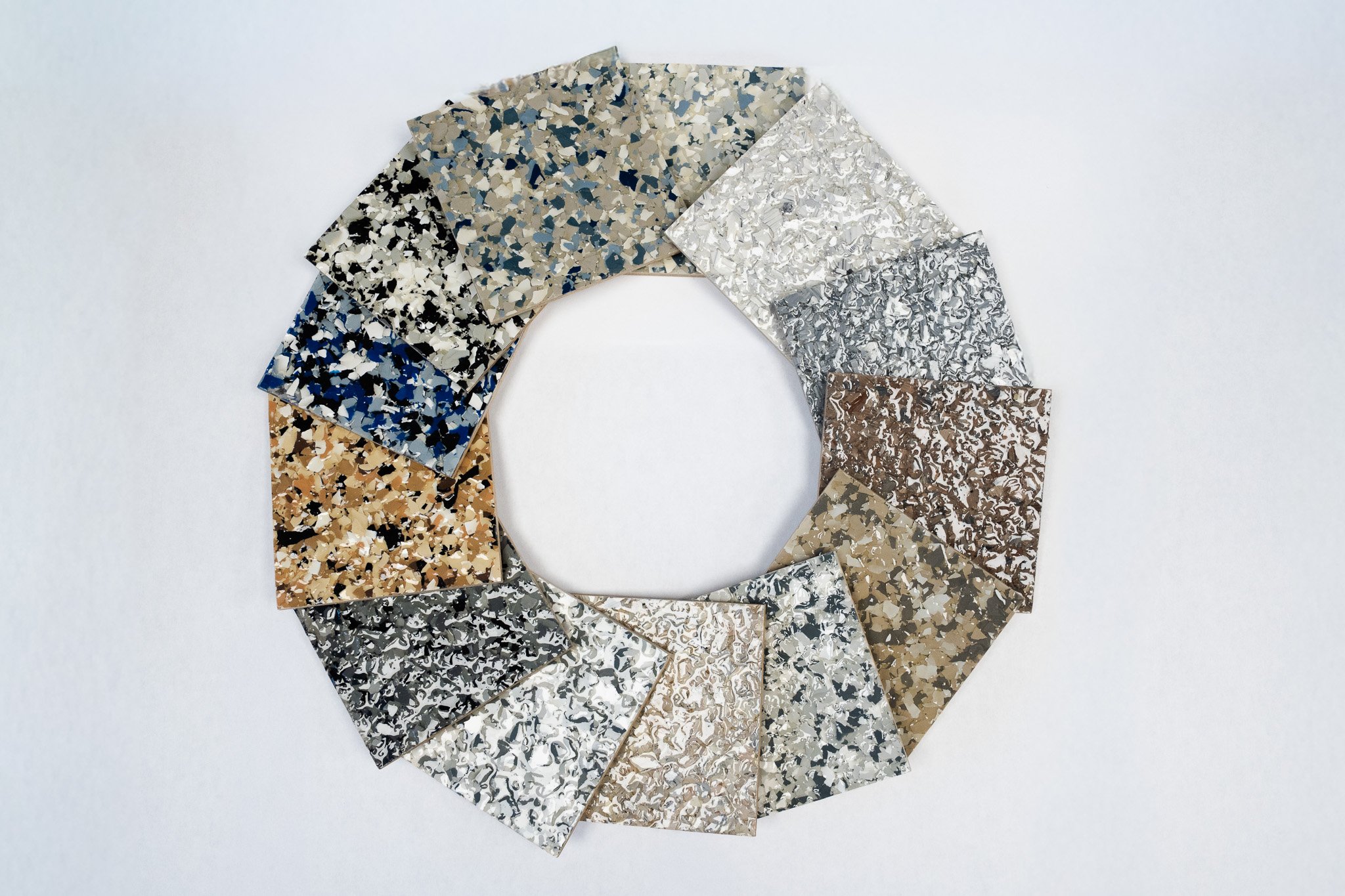
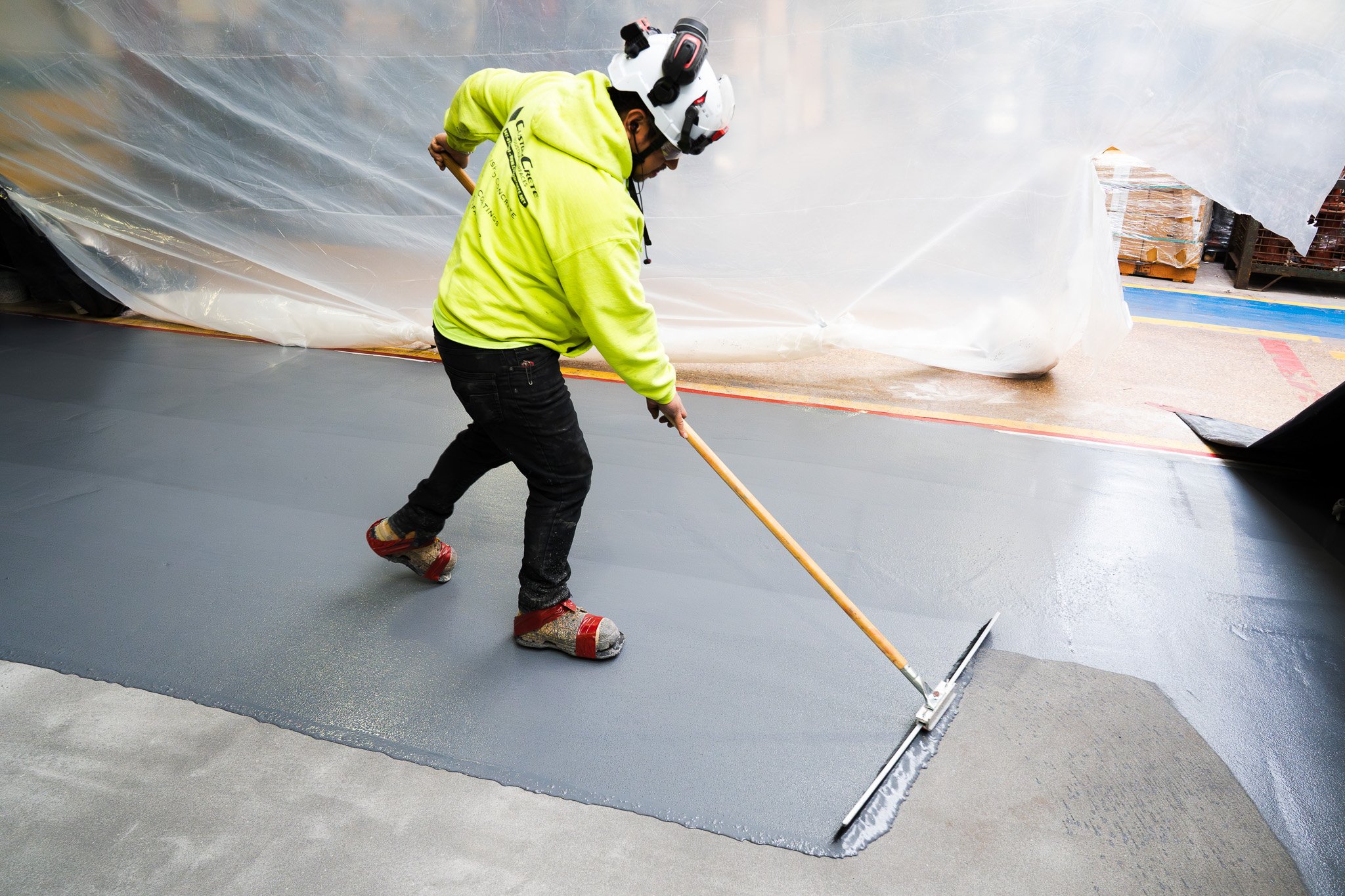
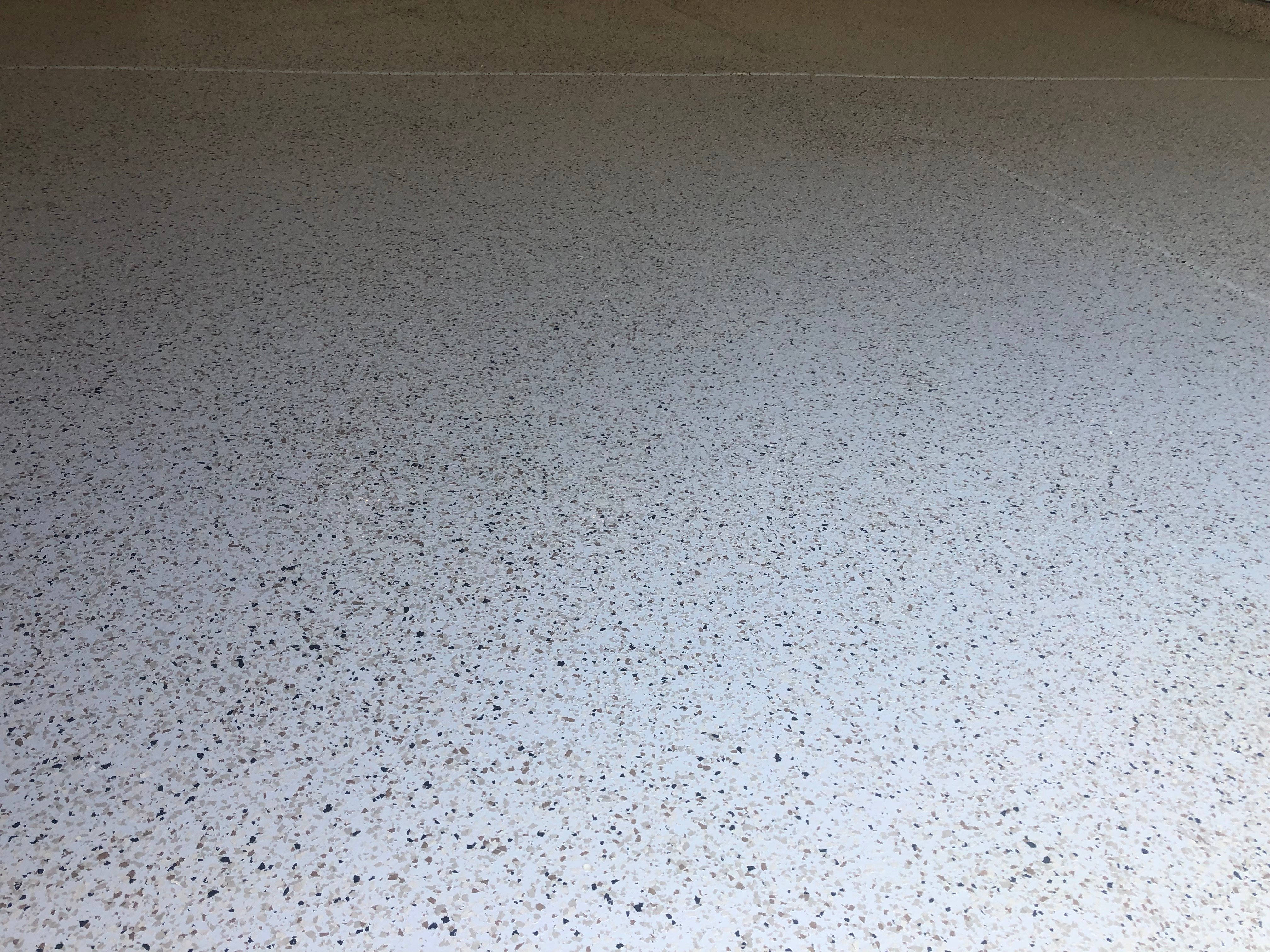
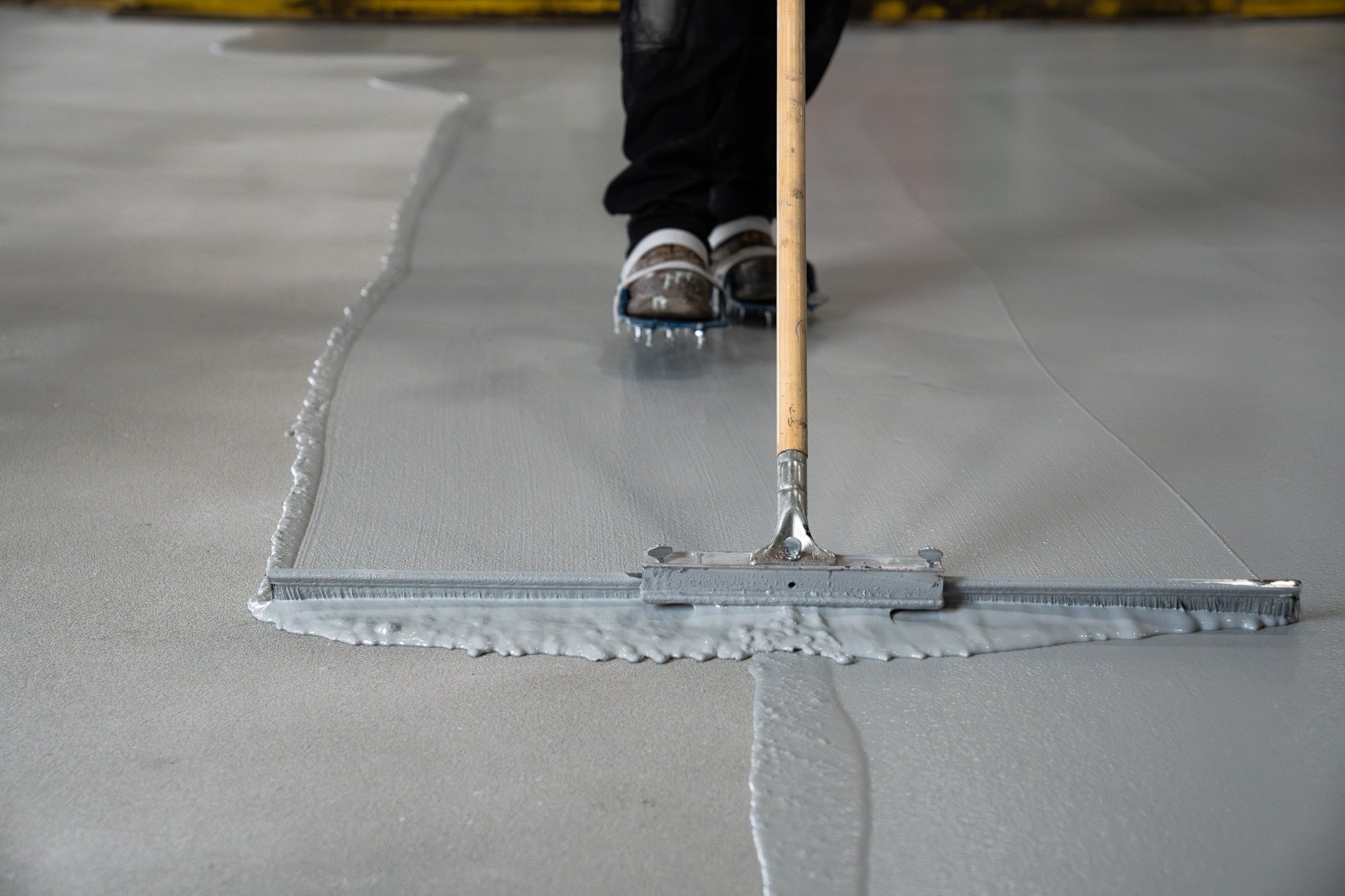
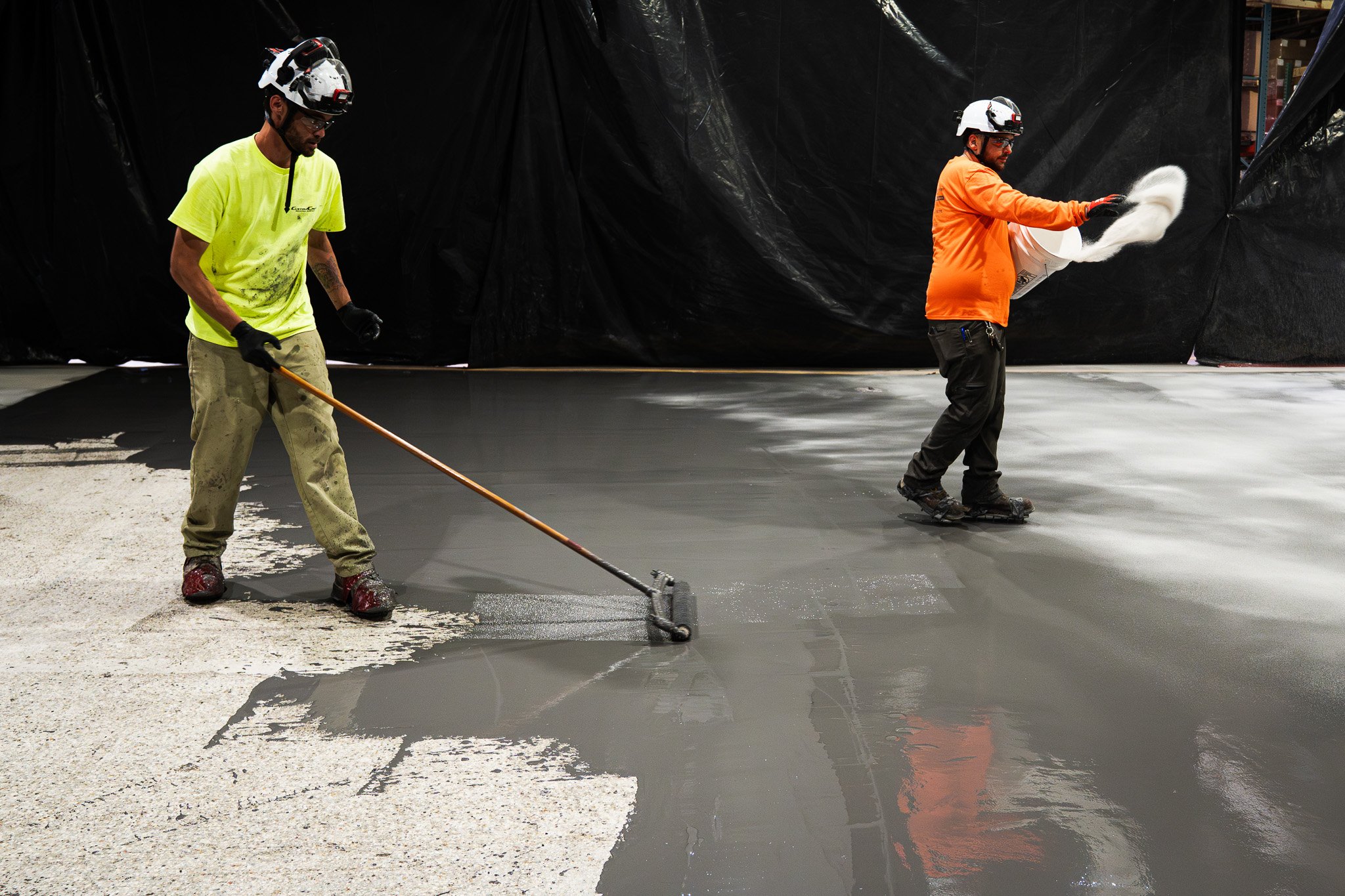
As the material spreads, it levels itself and bonds tightly to the concrete below. Depending on the chosen system, installers may also broadcast aggregates (like quartz or aluminum oxide) into the wet coating to increase texture, slip resistance, or durability.
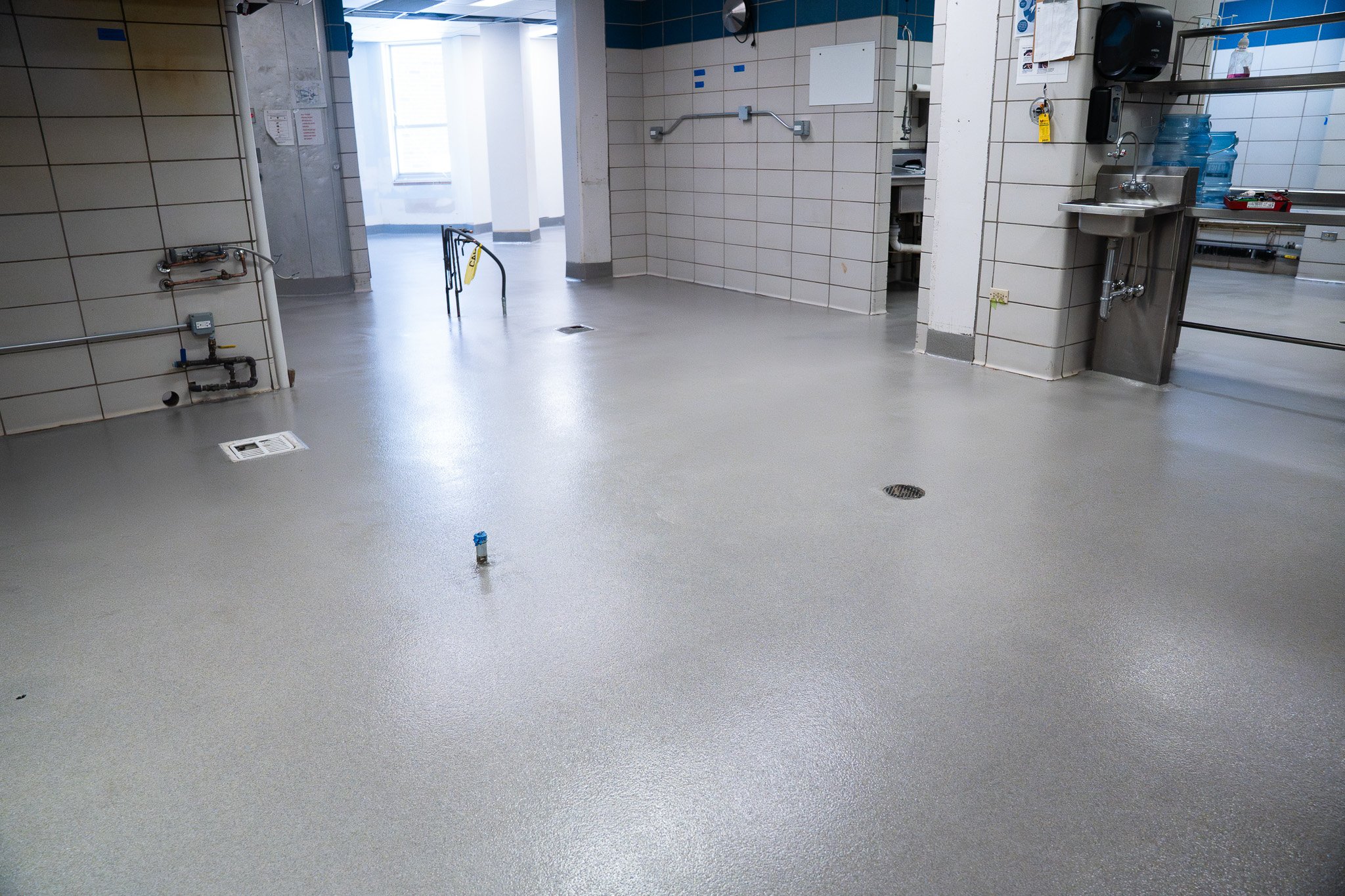
After curing, the floor becomes a solid, joint-free surface designed to withstand chemicals, traffic, moisture, and cleaning cycles.
Key Steps in the Installation Process
- Surface profiling: Ensures adhesion by opening the concrete pores.
- Priming (if needed): Helps seal the slab and improve bonding.
- Pouring and spreading: Resin is applied evenly and allowed to self-level.
- Broadcasting additives: Used for slip resistance or decorative finishes.
- Topcoating: Adds chemical resistance, gloss, or UV protection.
The result is a long-lasting flooring system built to perform under intense industrial conditions.
Seamless Protection for High-Demand Facilities
One of the biggest advantages of Fluid-Applied Flooring is its seamless, non-porous surface. In environments where cleanliness and sanitation matter—such as food and beverage plants, pharmaceutical labs, chemical processing facilities, and commercial kitchens—seams and joints are a major risk.
Tile grout lines, vinyl seams, and expansion gaps all trap debris, moisture, and bacteria. Fluid-applied systems eliminate these collection points, making it easier to maintain a hygienic environment and stay compliant with regulatory standards.
Hygiene Benefits Include:
- No seams, grout, or joints
- Smooth, cleanable surfaces
- No place for dirt or contaminants to hide
- Excellent compatibility with sanitizing chemicals and washdowns
For any facility where cleanliness is tied to safety or product quality, a seamless floor is a major advantage.
Durability and Chemical Resistance
Beyond hygiene, fluid-applied floors are known for their exceptional durability. Once cured, these systems resist abrasion, impact, and wear caused by forklifts, pallet jacks, and heavy machinery. This makes them ideal for warehouses, loading docks, manufacturing facilities, and high-traffic commercial spaces.
Epoxy and urethane cement systems are also highly resistant to chemicals, oils, solvents, and corrosive substances. This is especially important in sectors like automotive, food processing, laboratories, and chemical manufacturing, where spills are common.
Durability Advantages
- High impact resistance
- Long-lasting under heavy machinery and traffic
- Resistant to chemicals, oils, and caustic cleaners
- Maintains structural integrity even in harsh environments
With proper installation and maintenance, fluid-applied floors can last 10–20 years or longer.
Slip Resistance and Safety
Despite being smooth and seamless, Fluid-Applied Flooring can be engineered for slip resistance. Facilities can choose from multiple textures depending on the level of traction needed.
For example, lightly textured finishes are ideal for environments requiring easy cleaning, while heavier textures are used in wet or greasy areas to reduce slip hazards.
Safety Enhancements
- Customizable textures
- Built-in slip resistance
- Color coding for walkways and traffic lanes
- UV-stable options for areas with natural light
This makes fluid-applied systems adaptable to both safety and hygiene requirements.
Low Maintenance and Long-Term Value
Unlike tile or vinyl floors, fluid-applied systems don’t require waxing, grout cleaning, or frequent patch repairs. Their seamless design reduces maintenance time and lowers total ownership costs. Most facilities benefit from simple sweeping, mopping, or power scrubbing to keep the floor in top condition.
Because the system bonds directly to the concrete, it also prevents dusting—a common issue in aging slabs—while reducing the spread of airborne particles.
Maintenance Advantages
- No grout or seams to clean
- Stain and spill resistant
- Easy to sanitize
- Lower long-term repair costs
For facilities with tight maintenance budgets or high sanitation standards, these benefits make fluid-applied floors a practical investment.
FAQ: Fluid-Applied Flooring
- How long does Fluid-Applied Flooring take to install?
Depending on the system, installation may take 1–4 days. Polyaspartic systems cure faster, while urethane cement and epoxy require more controlled curing times. - Can fluid-applied floors be used in cold rooms or freezers?
Yes. Urethane cement systems handle extreme temperatures and thermal shock commonly found in cold storage and freezer areas. - Will this type of flooring work on older concrete?
Most older floors can be repaired, profiled, and coated as long as the substrate is structurally sound. Moisture testing determines whether additional mitigation is needed.
Final Thoughts
Fluid-applied flooring is one of the most versatile, durable, and sanitary solutions available for industrial and commercial environments. Its seamless design, chemical resistance, and long-term performance make it ideal for production facilities, warehouses, laboratories, food plants, and more.
If you’re exploring whether Fluid-Applied Flooring is right for your space, continue learning with our next article: “How Fluid-Applied Flooring Creates Seamless, Hygienic Surfaces in Production Areas”.

Topics:

.jpg?width=2048&height=1365&name=CC108559%20(1).jpg)
.jpeg?width=1638&height=1020&name=CC109349%20(1).jpeg)
.png?width=11520&height=9216&name=Untitled%20design%20(56).png)