
Not every commercial flooring system needs a membrane. But when waterproofing, minor substrate movement, or existing cracks are concerns, adding a flooring membrane can provide protection that the coating alone may not be designed to offer.
With nearly 20 years of experience and over 1 million square feet installed, CustomCrete has worked with commercial and industrial floors that require different layers based on the condition of the concrete and the environment. In this article, we'll explain what a membrane does and when the additional layer may be worth considering.
Key Takeaways
- A flooring membrane is an additional layer installed between the prepared substrate and other components of the flooring system.
- Depending on the product, membranes may provide waterproofing, crack isolation, or greater flexibility to accommodate minor movement.
- Not every project needs a membrane. Its value depends on the substrate, location, exposure, and flooring system being installed.

What Is a Flooring Membrane?
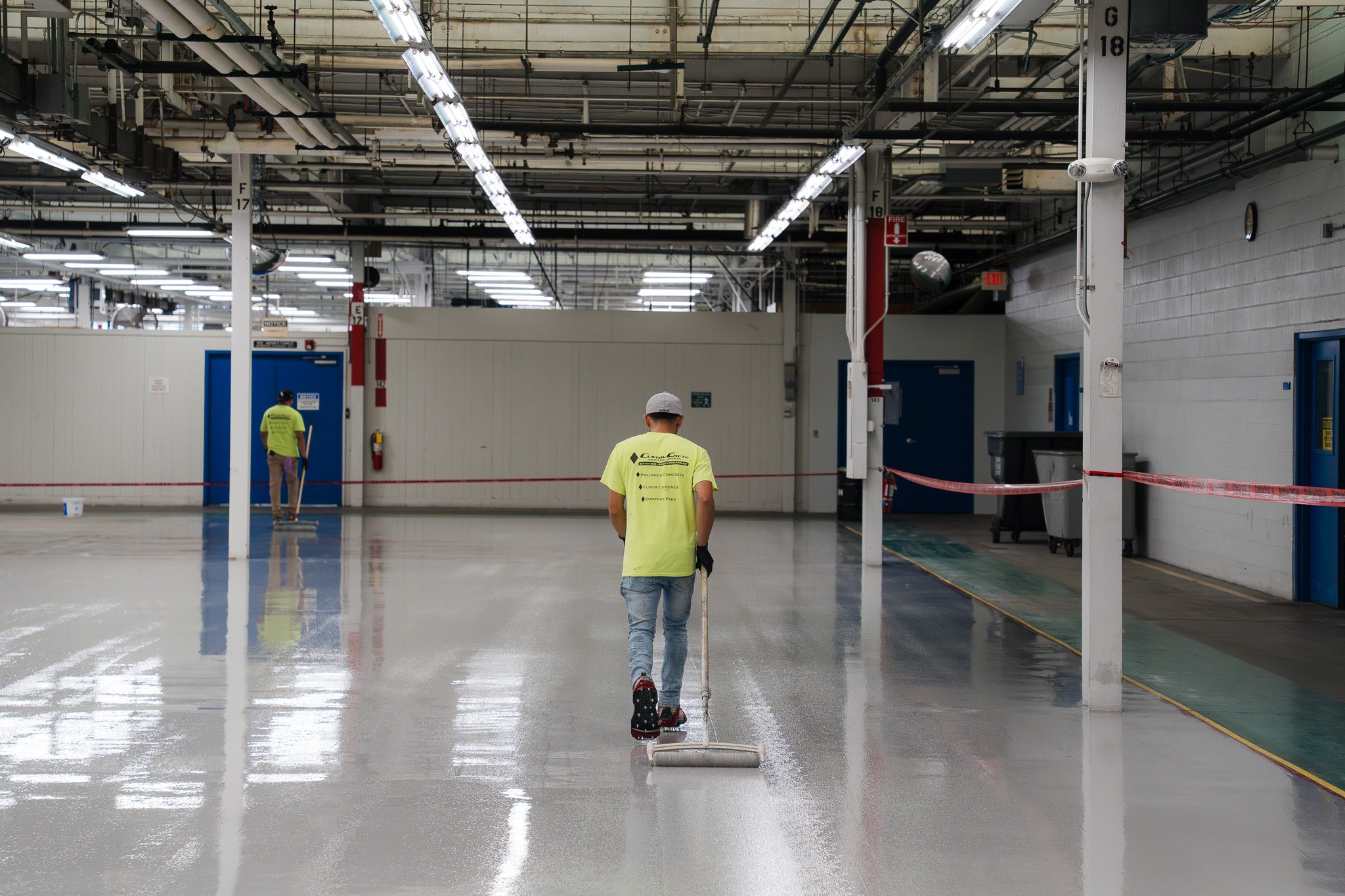
A flooring membrane is a protective layer incorporated into a multi-layer flooring system. Depending on the specific product, it may be installed over a primer and beneath subsequent coating, broadcast, or finish layers.
Unlike the topcoat, which serves as the exposed wearing surface, a membrane typically works underneath the finished floor. Its purpose depends heavily on its chemistry and design. Some membranes are formulated primarily for waterproofing, while others are designed to help isolate cracks or accommodate limited movement in the concrete.
This is why the term "membrane" doesn't refer to one universal product. The membrane has to be selected for the problem the flooring system is intended to address.

Why Would a Commercial Floor Need a Membrane?
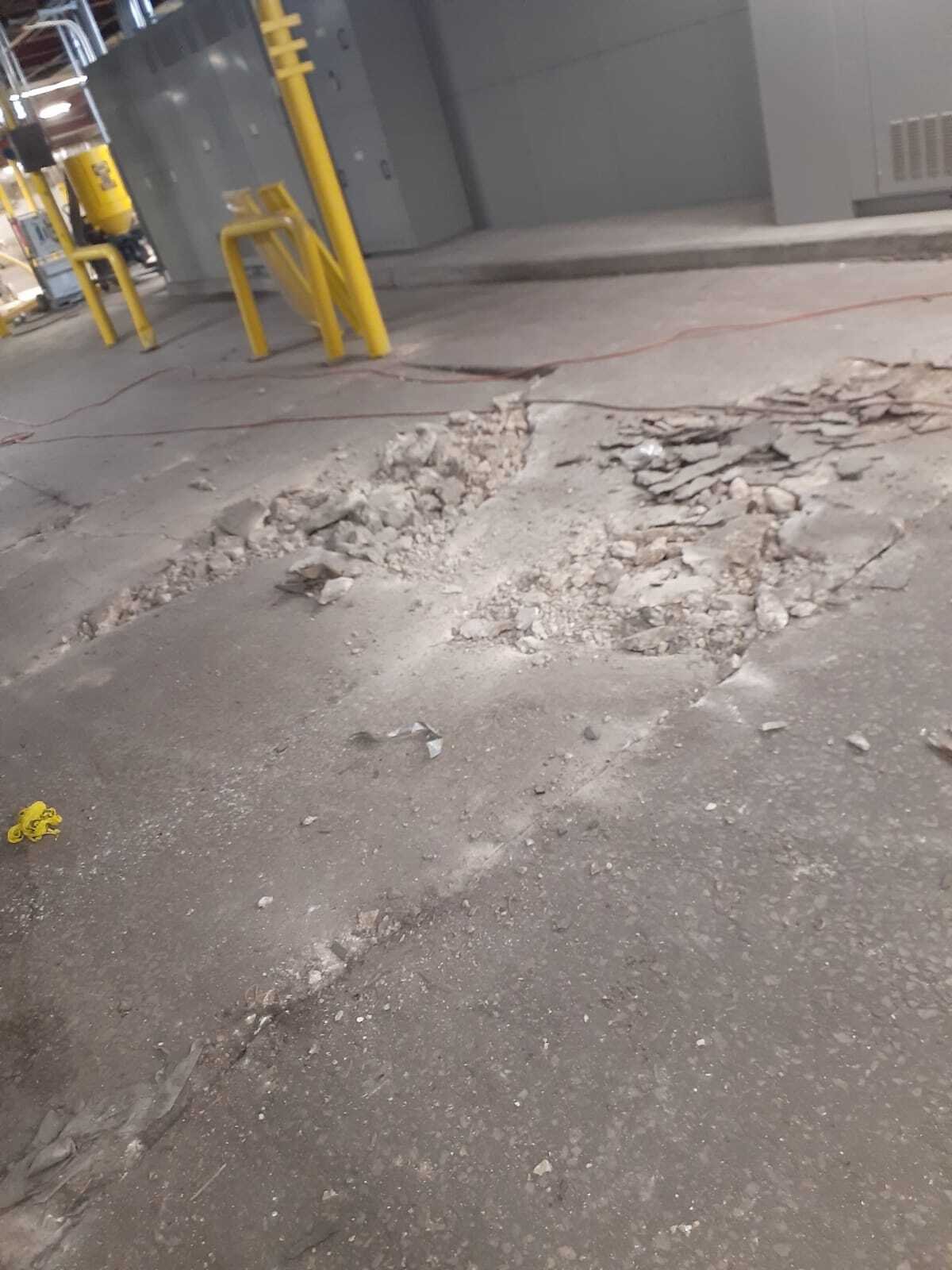
Concrete is a rigid material, but it isn't completely static. Slabs can develop cracks or experience minor movement from temperature changes, shrinkage, building movement, and other conditions.
Many resinous coatings are also relatively rigid. If the concrete moves or an existing crack changes, that stress can sometimes transfer through the flooring system and become visible at the surface.
Certain flexible membrane systems are designed to help separate or reduce the transfer of that movement into the finished coating. This can be especially useful when a project has known substrate conditions that require more protection than a standard coating system provides.
However, a membrane shouldn't be viewed as a way to fix every concrete problem. Significant structural movement, unstable cracks, or major slab issues may require repairs or evaluation before any flooring system is installed.
How Can a Flooring Membrane Help With Cracks?
Some membranes are designed to bridge existing cracks or provide crack isolation between the concrete and the finished flooring system. Their added flexibility allows the membrane to accommodate a limited amount of movement without immediately transferring that stress to the coating above.
The amount and type of movement a membrane can handle varies by product. An installer should evaluate the crack itself, including its width, location, condition, and whether it appears stable or active.
Expansion joints and other intentionally moving joints also require special consideration. Applying a membrane over a joint doesn't automatically eliminate the need for proper joint treatment. Manufacturer specifications and the expected movement of the slab should determine how these areas are handled.
When Is Waterproofing the Main Reason for a Membrane?
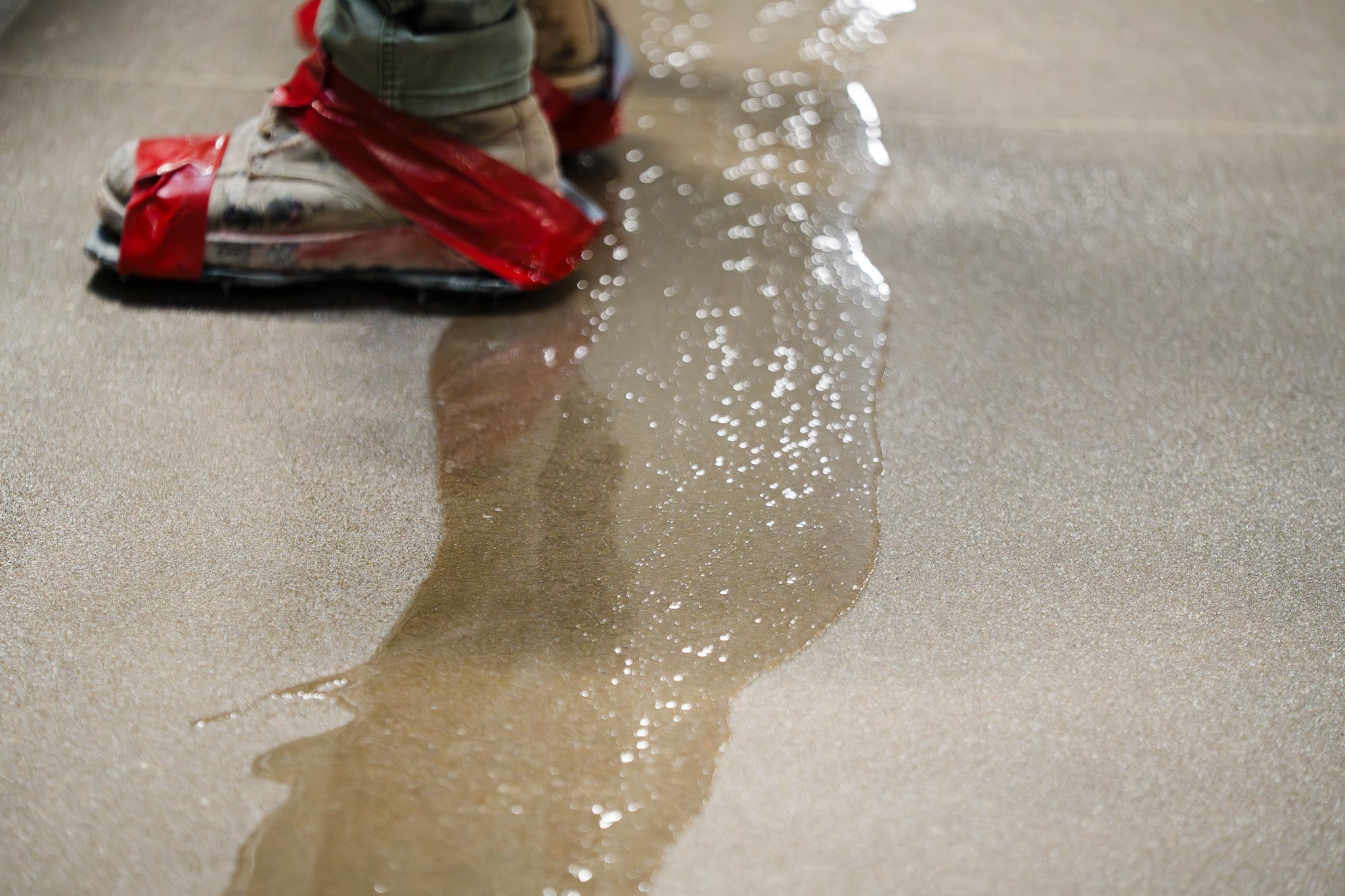
Waterproofing can be another reason to incorporate a membrane, particularly in areas where preventing water from reaching the substrate or spaces below is a priority.
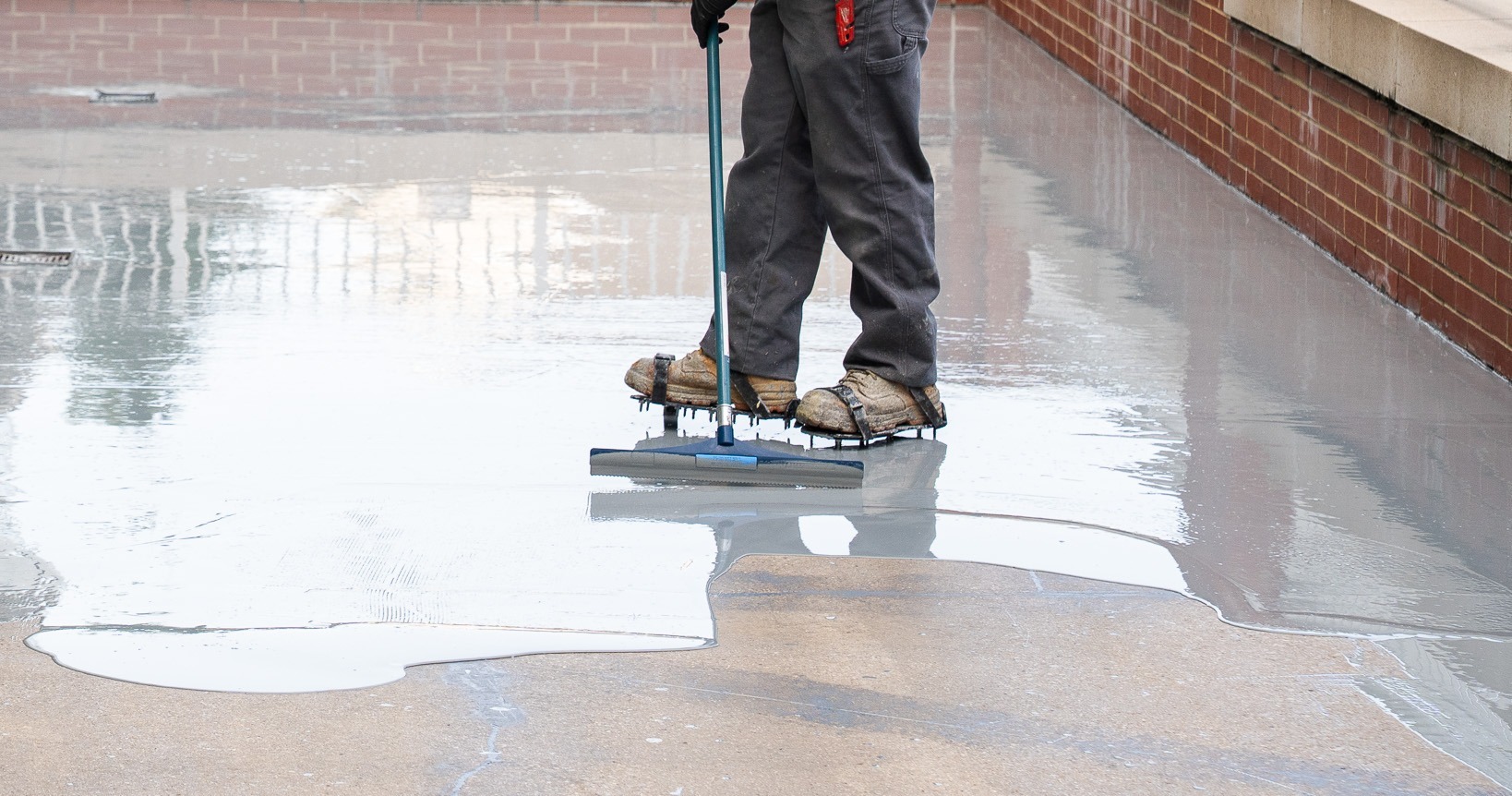
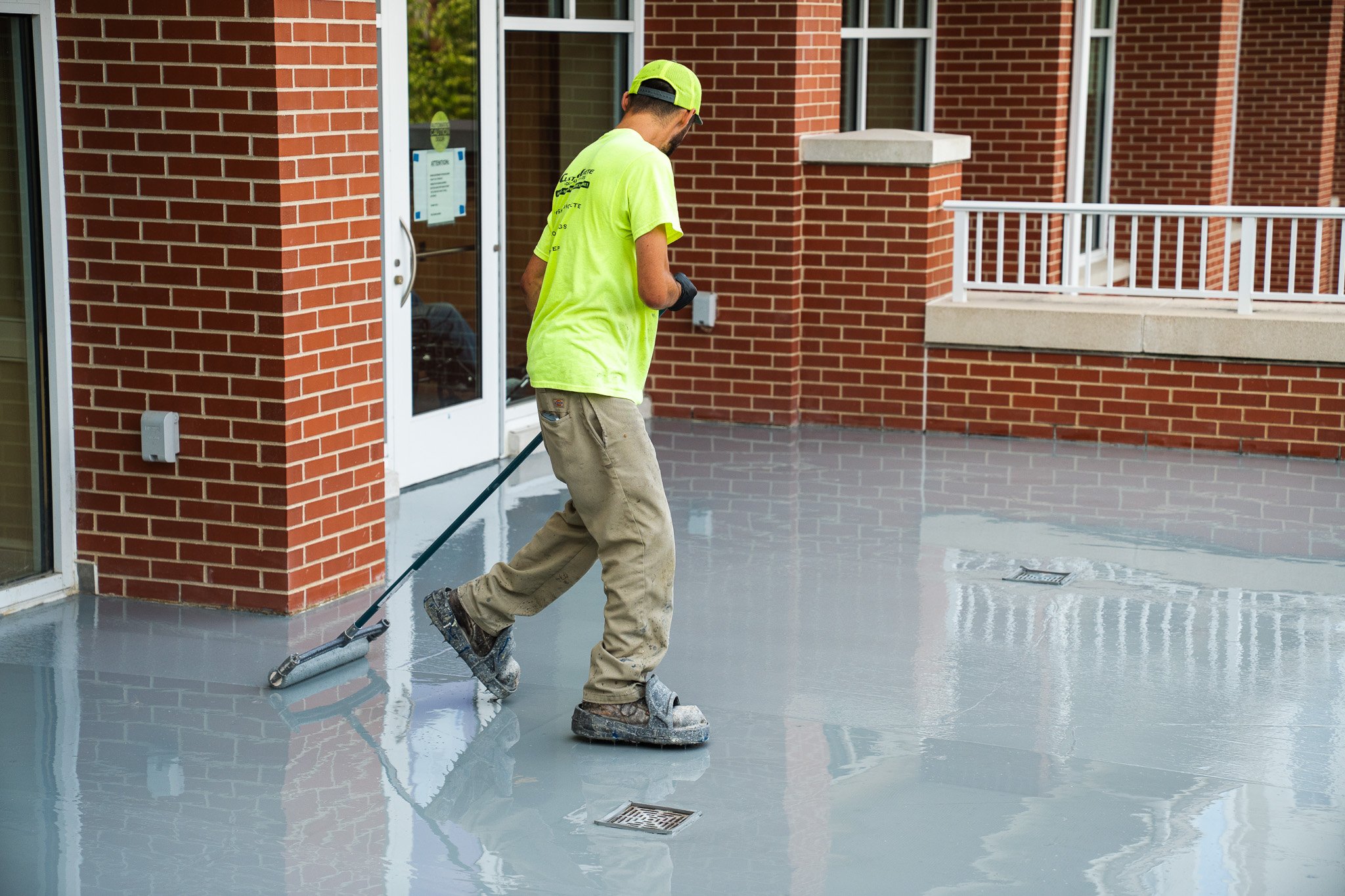
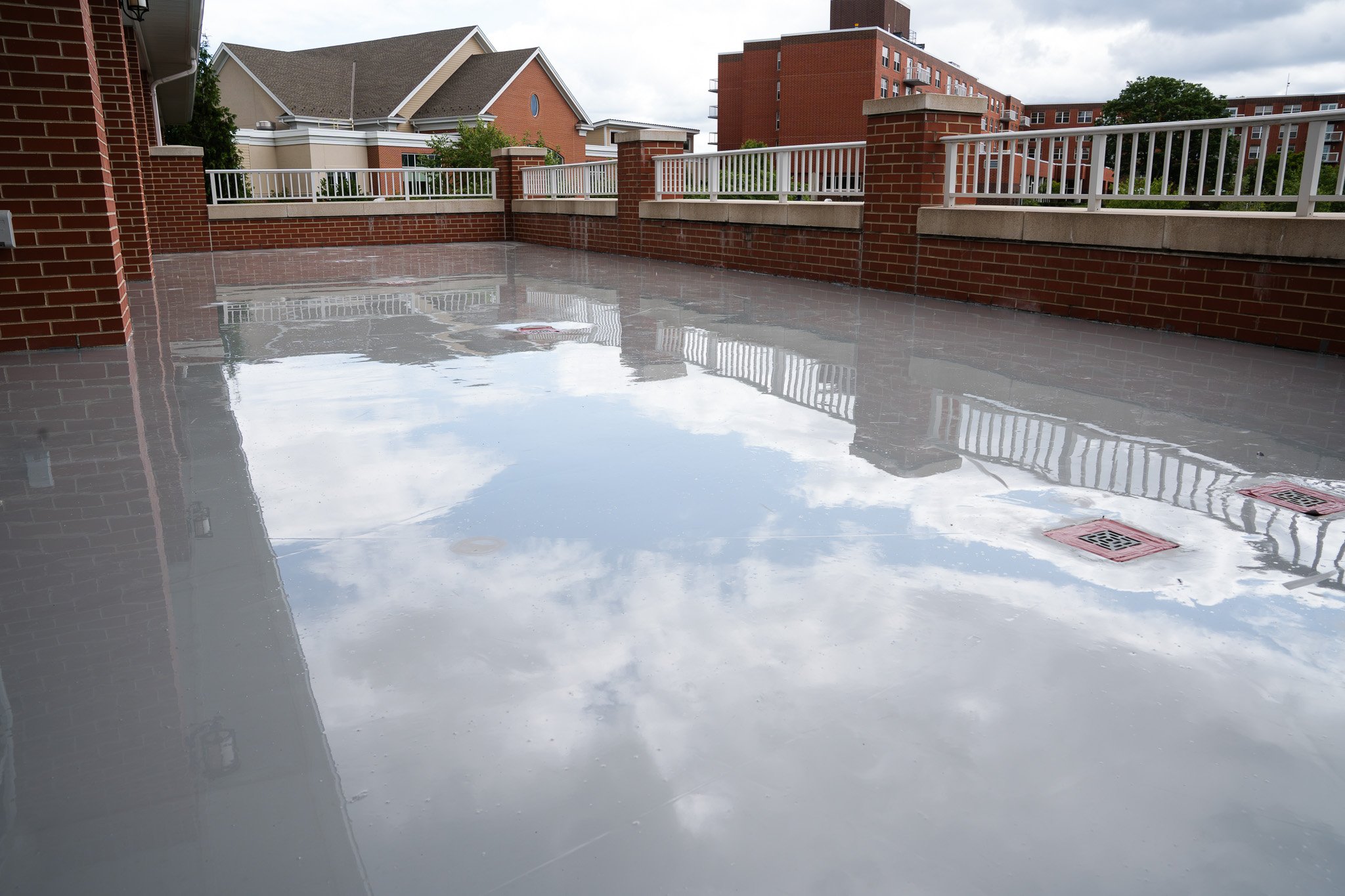
Commercial balconies, elevated decks, some mechanical areas, and other spaces exposed to water may require more than a decorative or wear-resistant coating. A waterproofing membrane can become part of a larger flooring assembly designed to manage that exposure.
In these applications, details around drains, penetrations, edges, transitions, and walls can be just as important as the membrane itself. A waterproof layer is only effective if the entire system is installed according to its intended design.
It's also important to distinguish waterproofing membranes from moisture vapor mitigation systems. A membrane intended to keep water from moving downward through a floor assembly may not be designed to control moisture vapor coming upward through a concrete slab. These are different problems and may require different products.
Does Every Commercial Flooring System Need a Membrane?
No. Adding a membrane when the project doesn't require one can increase material costs, labor, installation time, and system thickness without providing a meaningful benefit.
For example, a stable interior concrete slab with no waterproofing requirement and minimal movement concerns may perform well with proper preparation, primer, coating, and topcoat. The exact system depends on the facility and its operating conditions.
A membrane becomes more relevant when there is a specific reason for it. Before including one, consider the condition of the concrete, existing cracks, expected movement, water exposure, location of the floor, drainage, and the requirements of the coating system being installed.
The goal isn't to add as many layers as possible. It's to make sure each layer has a purpose.
What Should You Ask Before Adding a Membrane?
If a contractor recommends a membrane, ask what problem that layer is intended to solve. Is it being installed for waterproofing, crack isolation, flexibility, or another performance requirement?
You should also understand how the membrane works with the rest of the proposed flooring system. Membranes, primers, coatings, broadcast materials, and topcoats need to be compatible and installed at the appropriate thicknesses.
Finally, ask about the limitations. A flooring membrane may help accommodate certain substrate conditions, but it cannot correct structural problems or guarantee that a concrete slab will never crack or move.
Knowing exactly why the membrane is included makes it easier to determine whether the additional cost and installation steps make sense for your project.

Final Thoughts
Some commercial floors need more than a standard coating system. When water exposure, existing cracks, or minor substrate movement are concerns, a flooring membrane can provide an additional layer of protection between the concrete and finished surface.
Other projects may not benefit enough from a membrane to justify the added expense. The decision should be based on the condition of the concrete, the environment, and the performance expected from the finished floor.
If you're planning a commercial or industrial flooring project and aren't sure whether your system needs a membrane, request a quote from CustomCrete. The existing slab and project conditions can be evaluated to determine which layers make sense for the space and which may not be necessary.

Topics:

.jpg?width=6139&height=4093&name=CC100396%20(1).jpg)