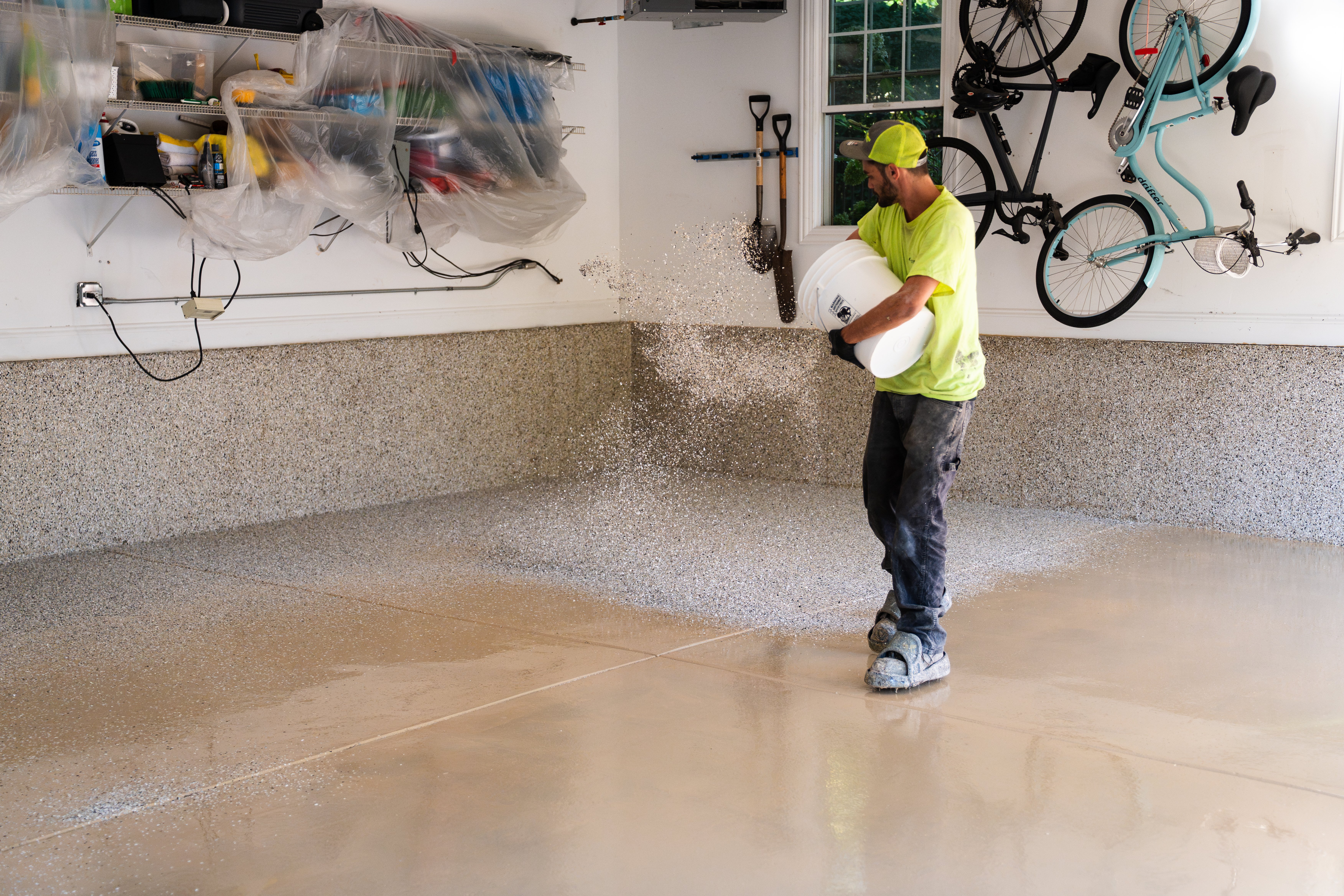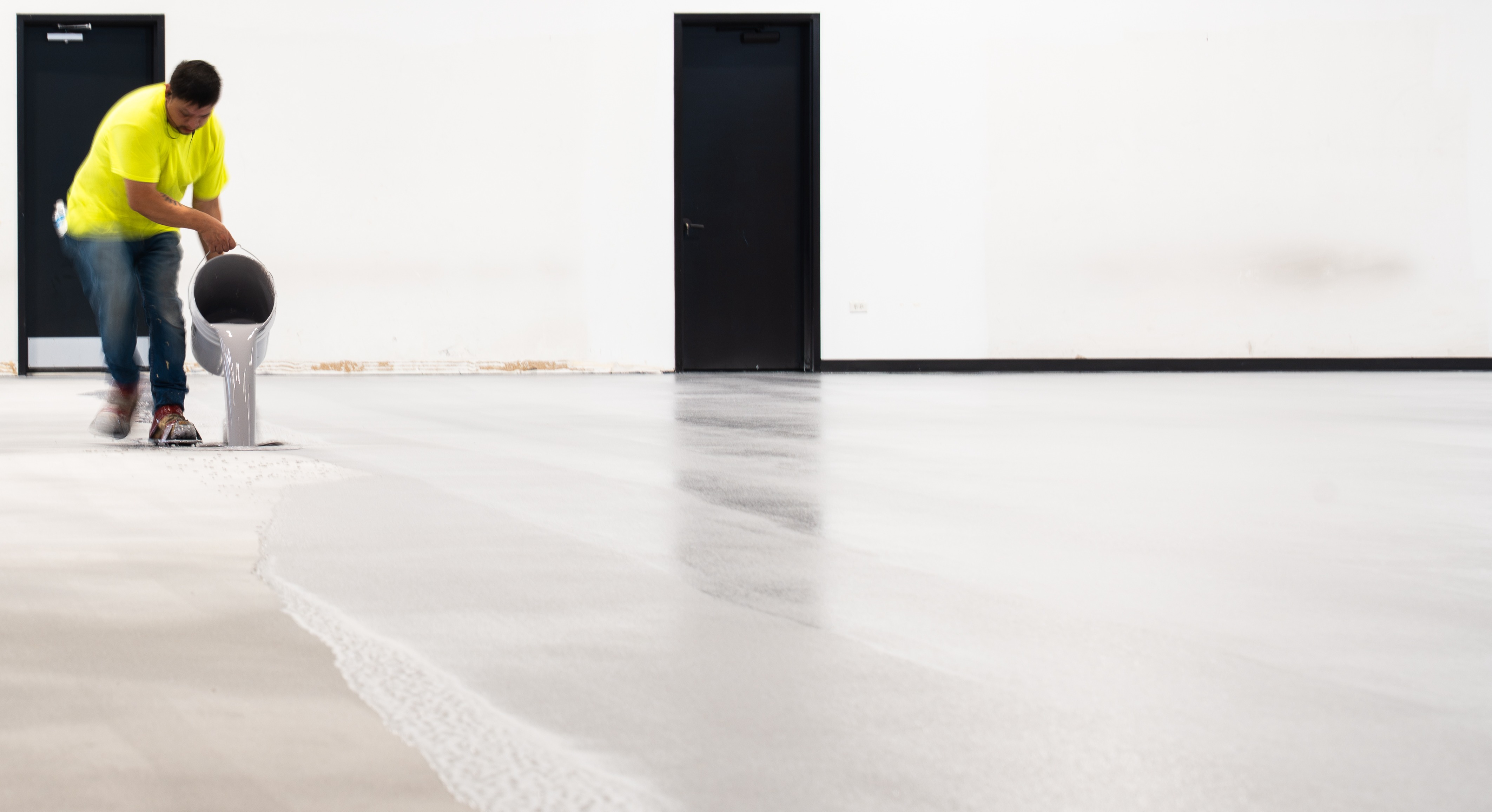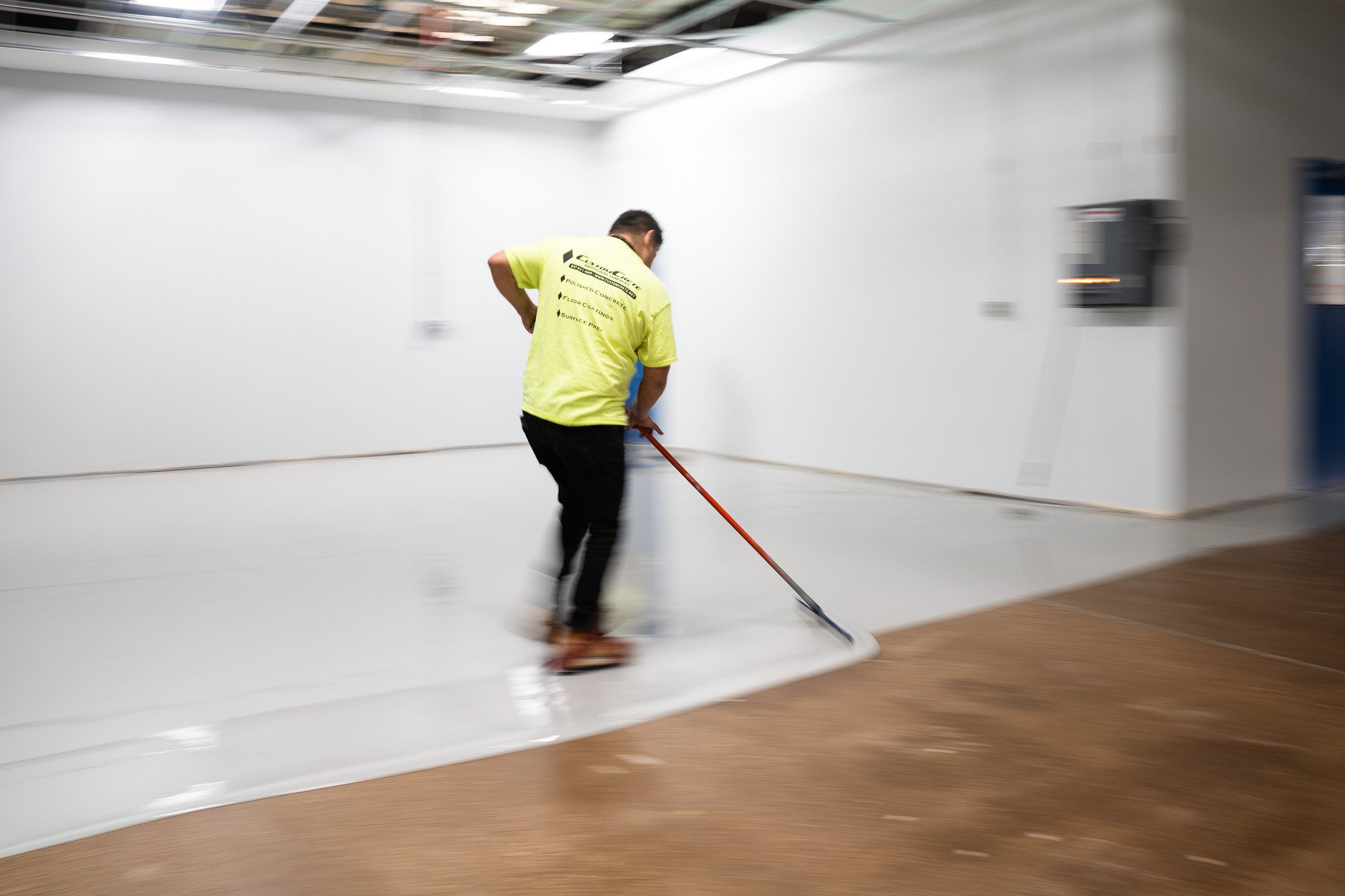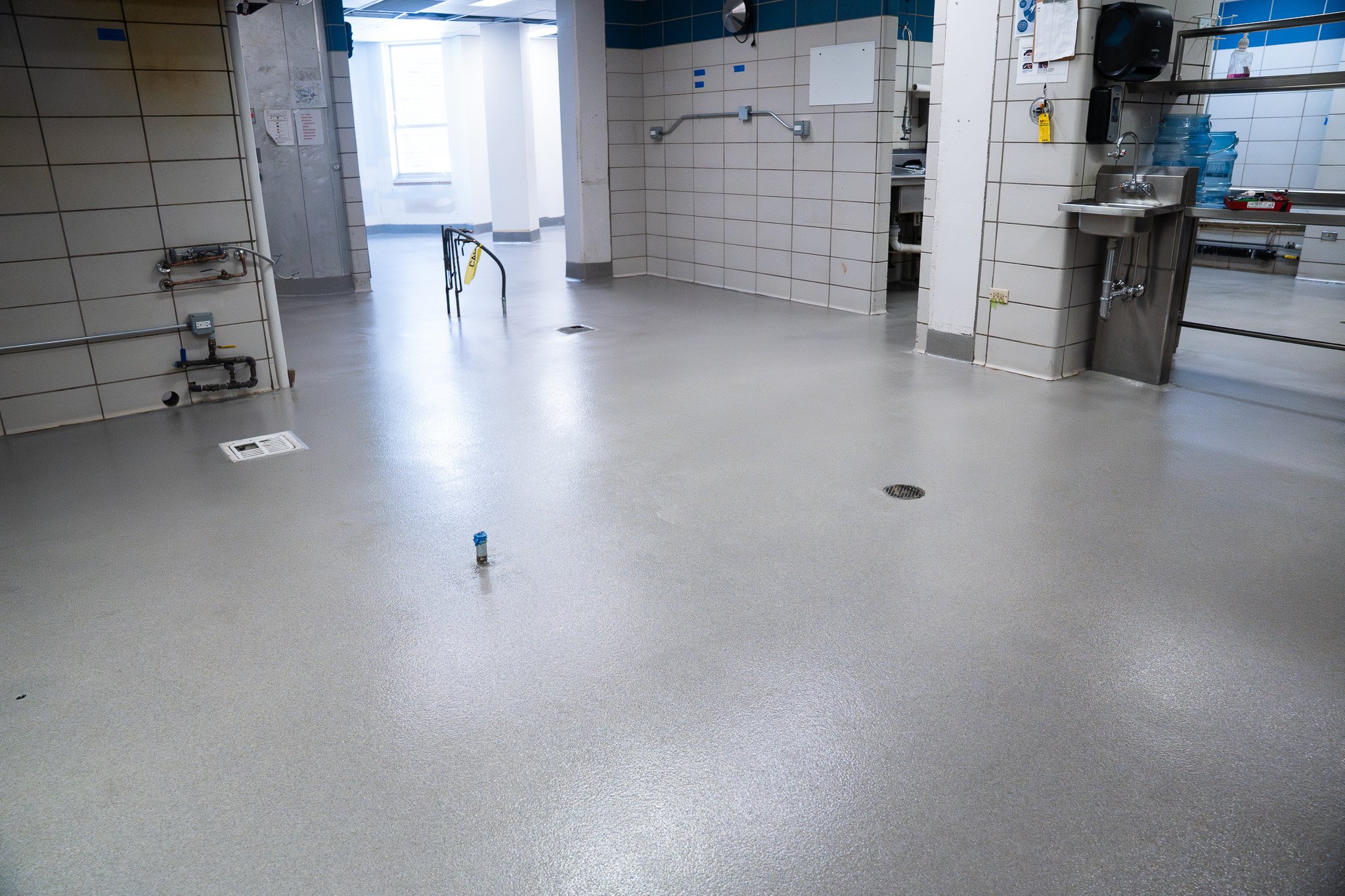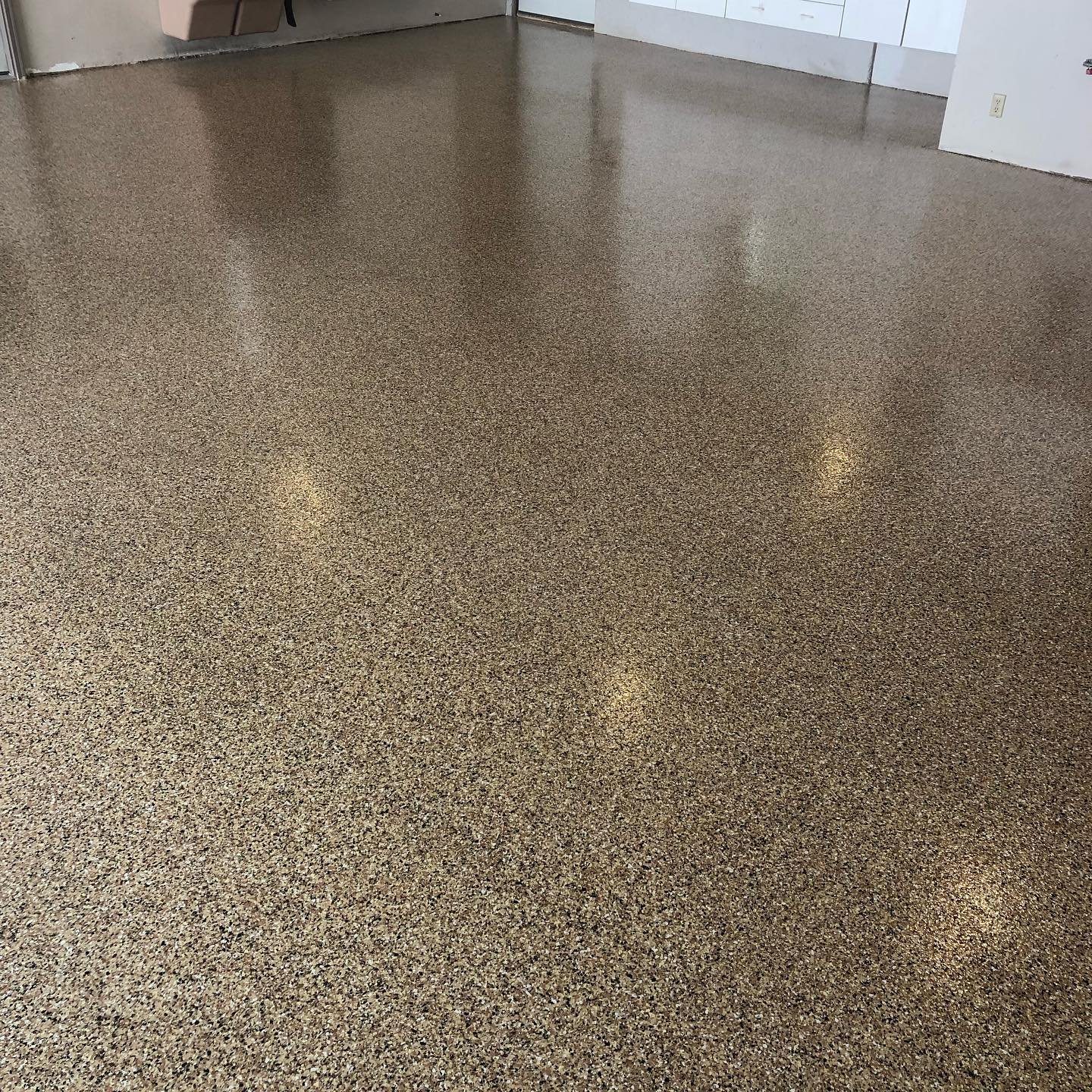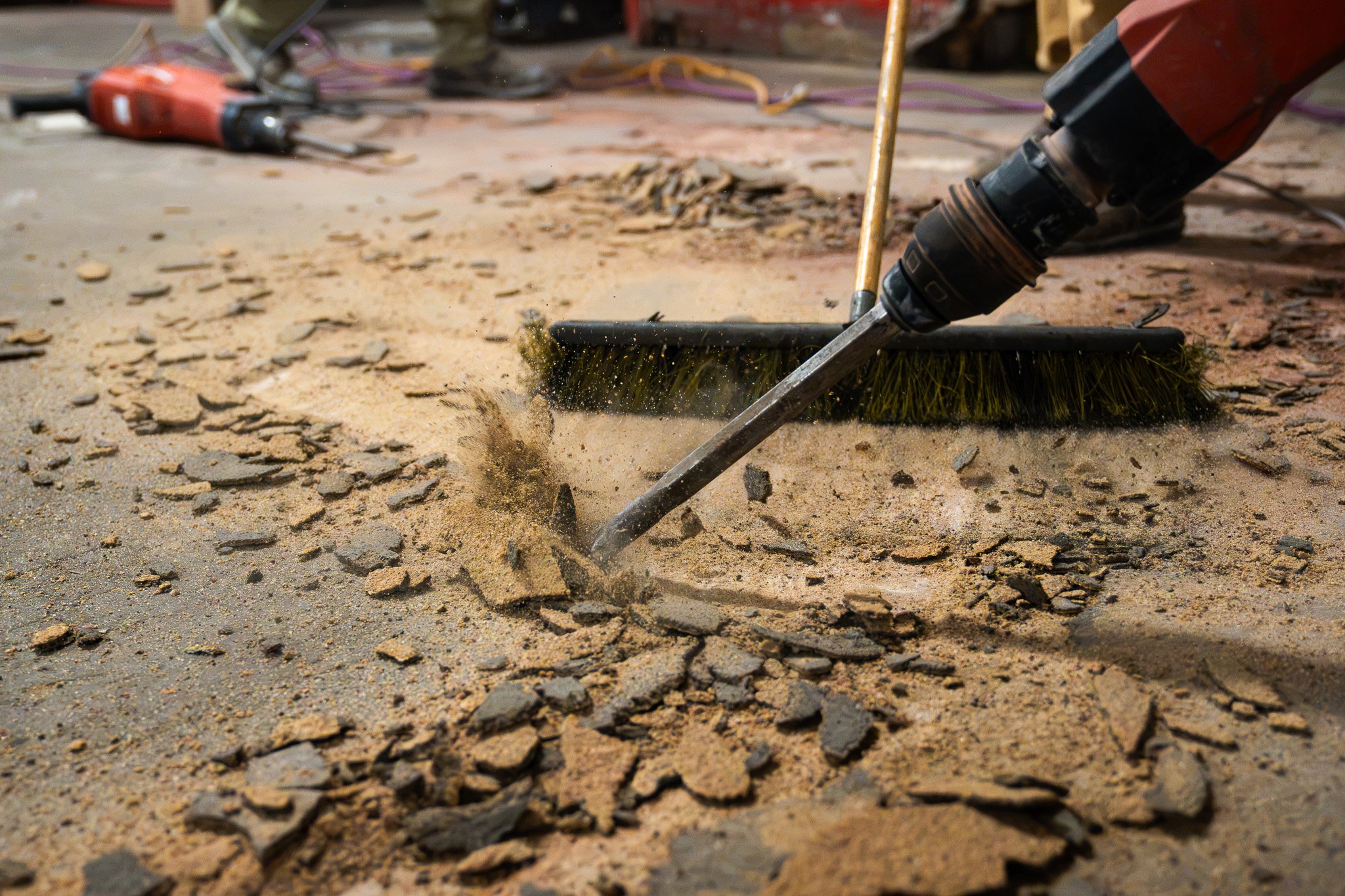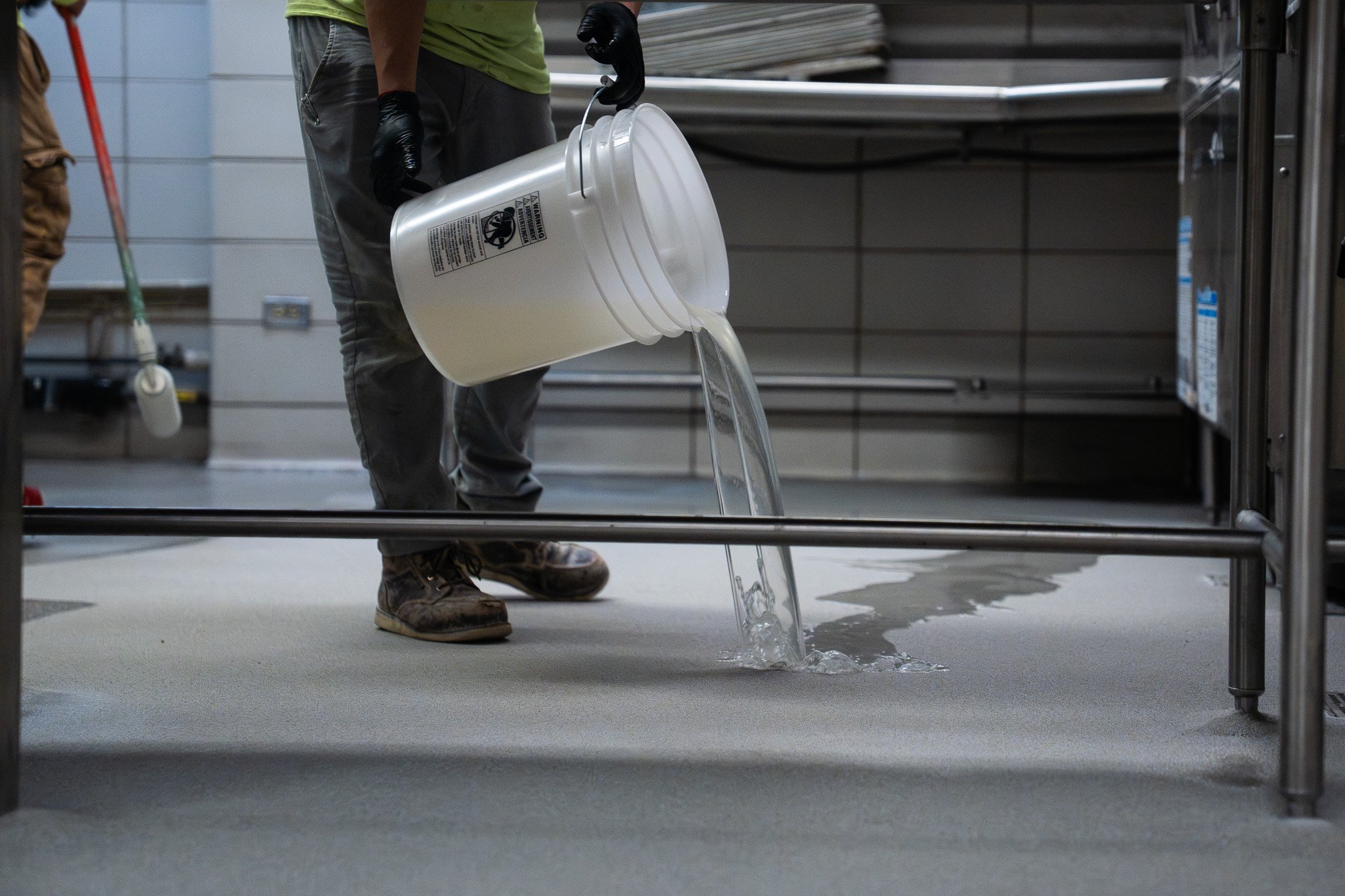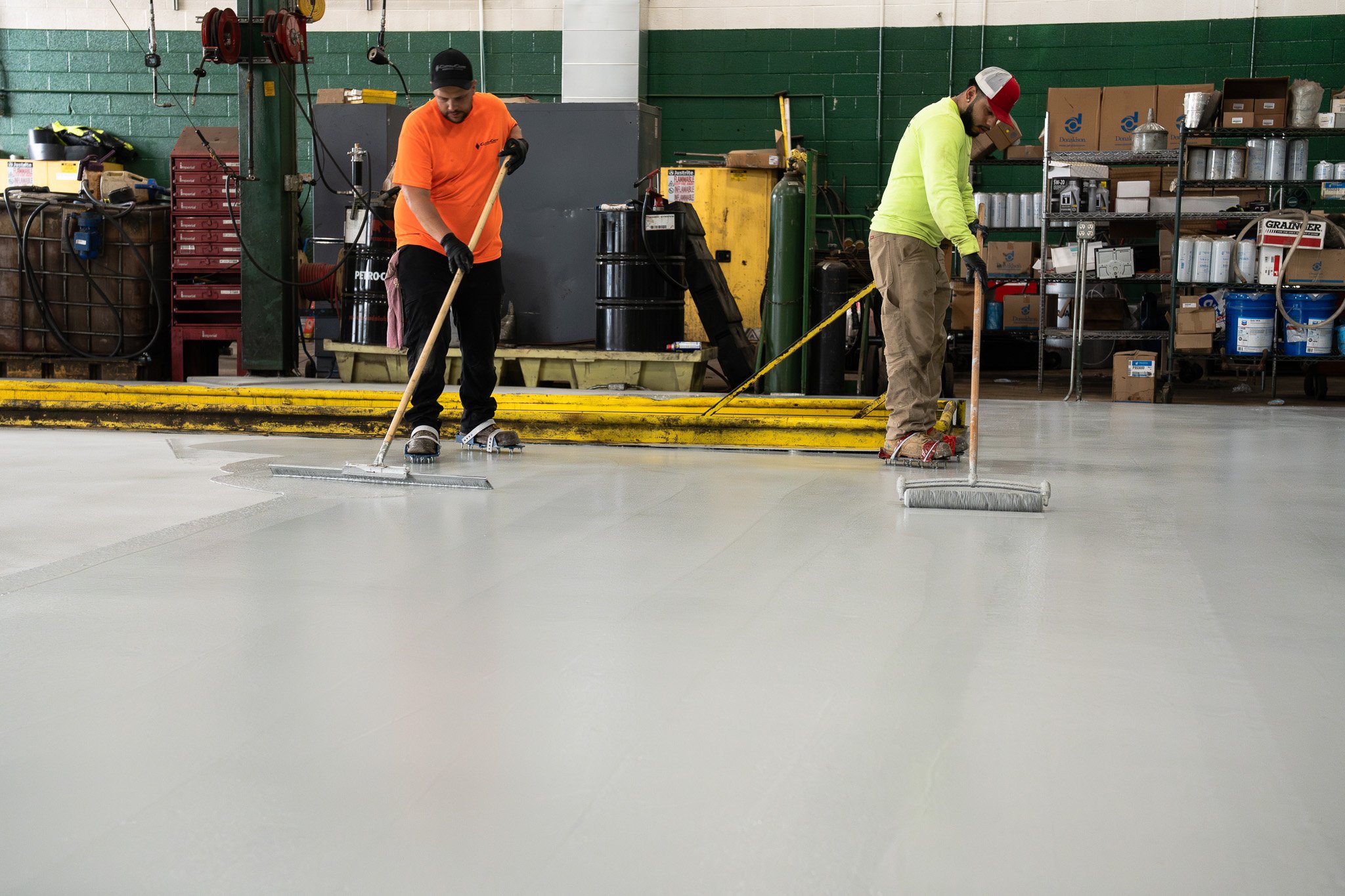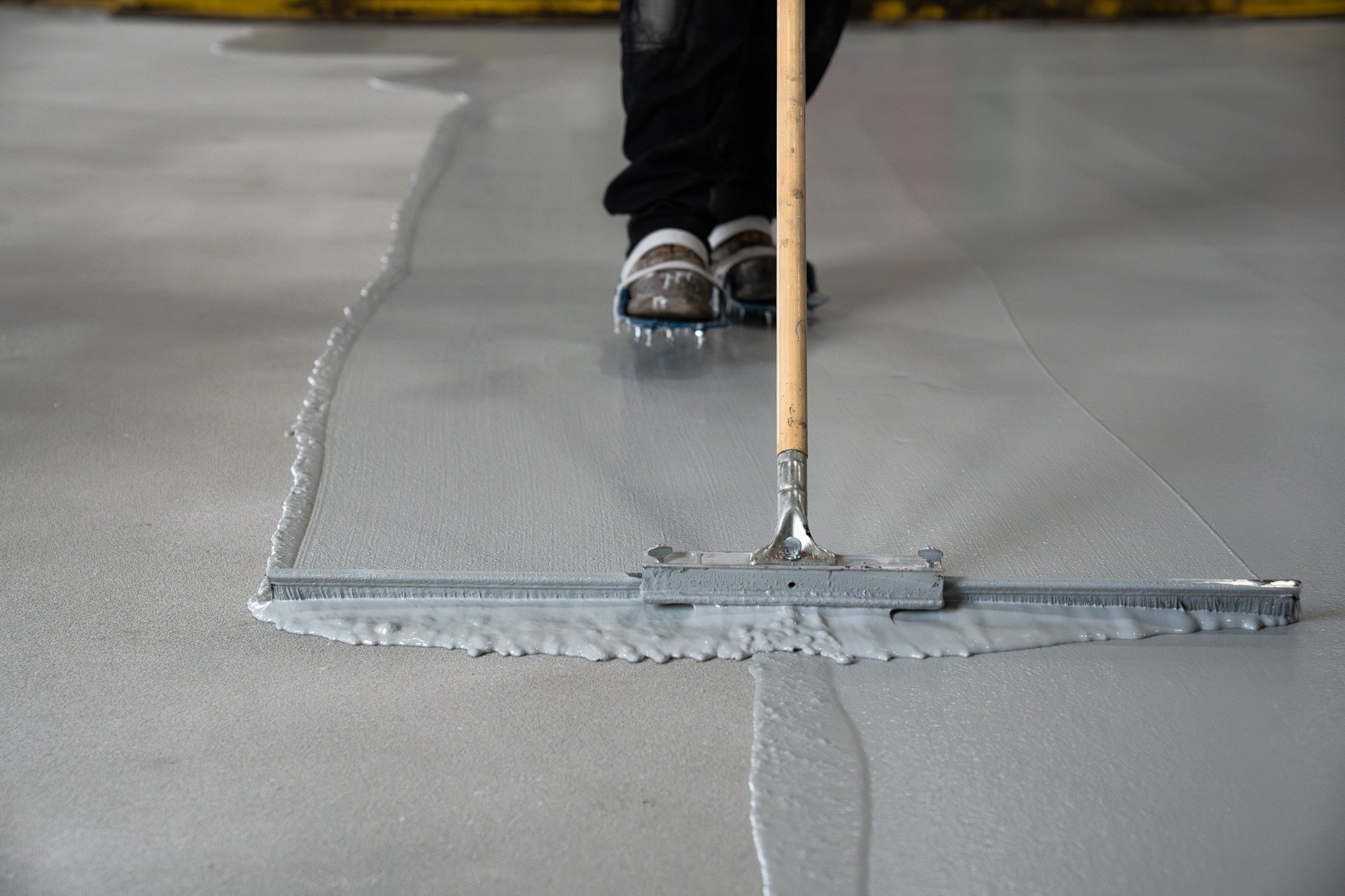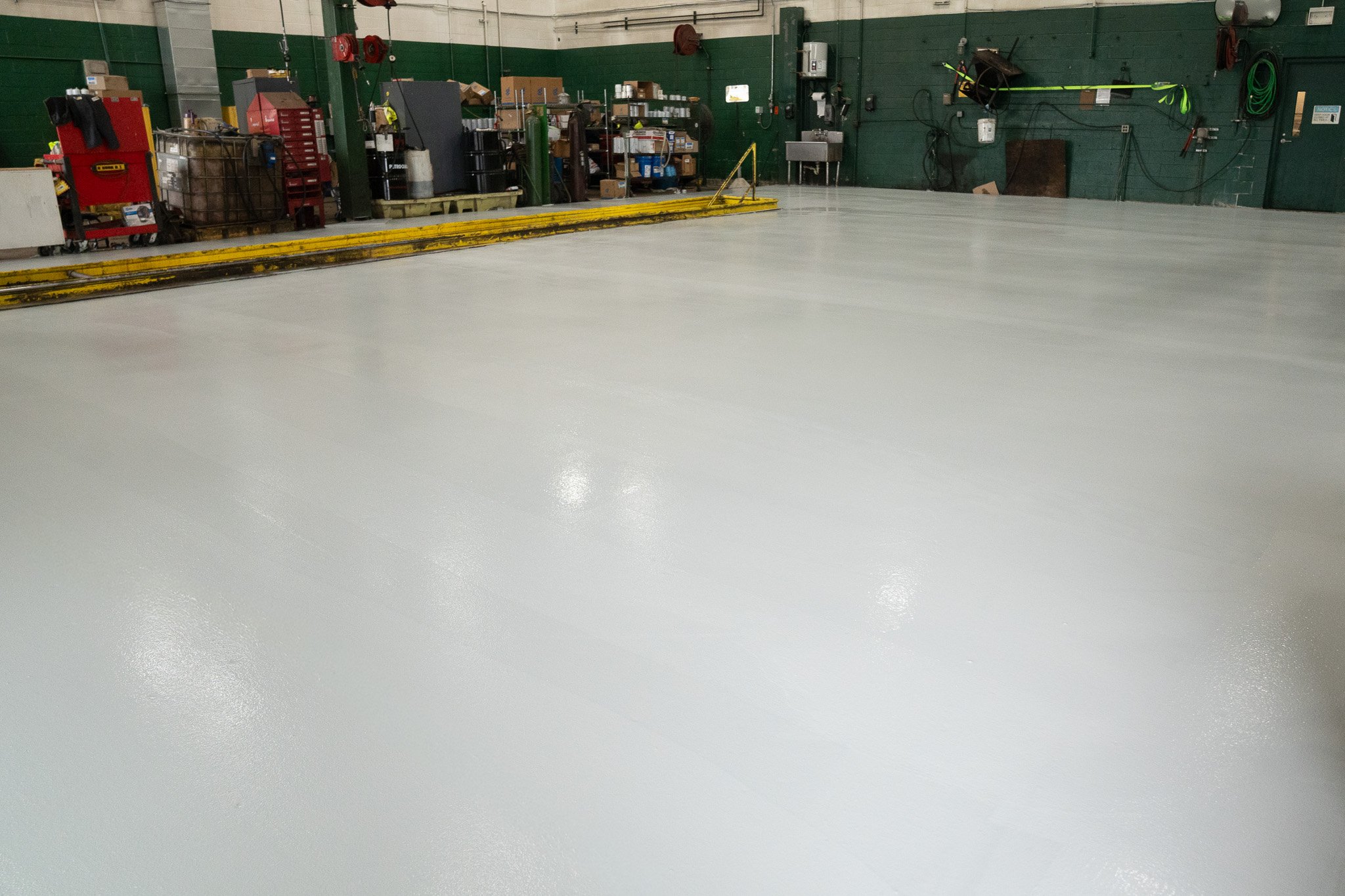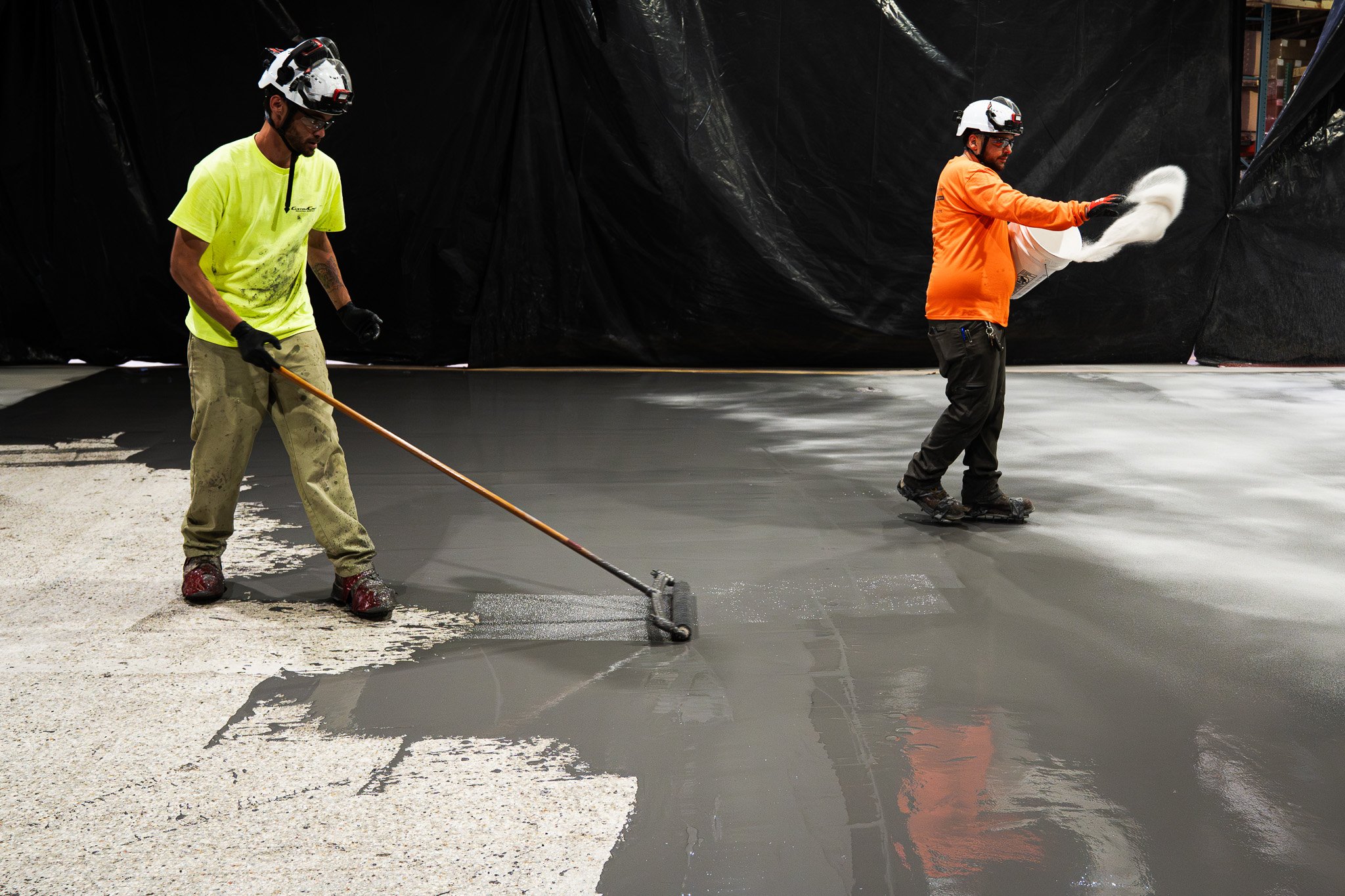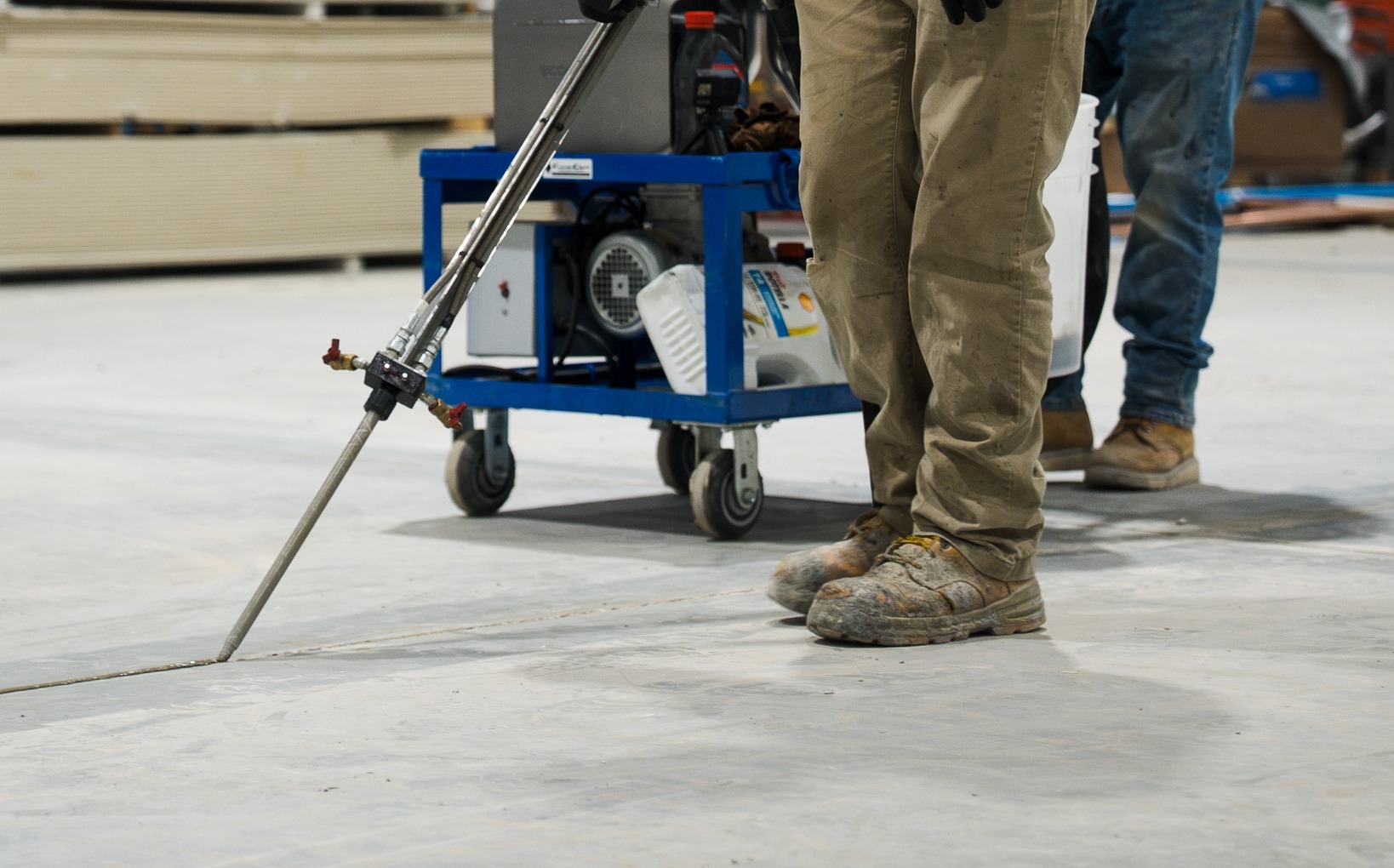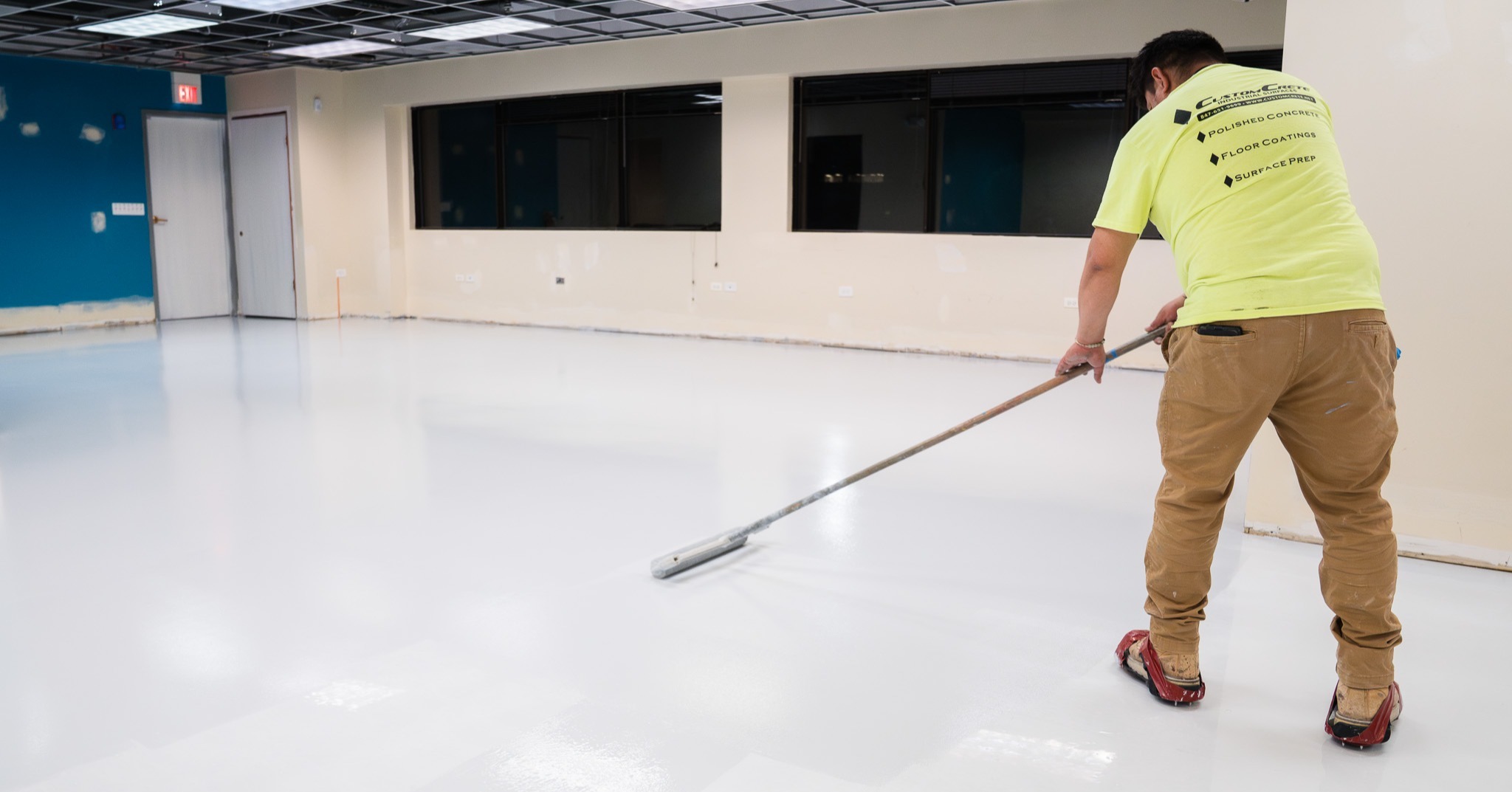


An epoxy floor may feel sticky after installation because the coating has not fully cured, the temperature or humidity affected curing, or the epoxy was improperly mixed or applied. Some temporary tackiness can be normal during the curing process, but an epoxy floor that stays sticky beyond the manufacturer's recommended cure time may indicate an installation problem.
Understanding why an epoxy floor feels sticky can help facility managers and property owners determine whether the coating simply needs more time or requires professional evaluation.
At CustomCrete, questions about epoxy flooring curing problems often come from facilities concerned about installation timelines, durability, and when their new floors can safely return to service.

How Long Should an Epoxy Floor Take to Cure?
Most industrial epoxy flooring systems allow light foot traffic within approximately 12 to 24 hours under suitable conditions. However, full curing can take several days, depending on the product, temperature, humidity, and coating thickness.
During this period, the epoxy undergoes a chemical reaction that transforms the liquid material into a hardened surface.
If the floor still feels sticky after the manufacturer's recommended curing period, further investigation may be necessary.
What Causes an Epoxy Floor to Stay Sticky?
Several factors can prevent an epoxy coating from curing correctly.
1. Incorrect Mixing Ratios
Most industrial epoxies contain two components: resin and hardener. If these materials are not mixed in the manufacturer's required proportions, the coating may remain soft or sticky.
2. Low Temperatures
Cold conditions can slow the chemical reaction responsible for curing. If temperatures fall below the product's recommended range, curing may take longer or become incomplete.
3. Improper Mixing
Even when the correct amounts are used, insufficient mixing can leave areas of uncured material.
4. Moisture and Humidity
Excessive moisture or unsuitable humidity conditions can interfere with certain epoxy systems, contributing to surface defects or curing problems.
5. Incorrect Application Thickness
Applying epoxy outside the manufacturer's recommended thickness range can affect curing and overall performance.
Is a Sticky Epoxy Floor Always a Sign of Failure?
Not necessarily. A newly installed epoxy floor may feel slightly tacky while it is still curing.
However, persistent stickiness, soft spots, or areas that transfer material when touched can indicate an epoxy coating that is not curing properly.
A separate issue called amine blush can sometimes leave a waxy, greasy, or sticky-feeling film on the surface. This surface condition is different from uncured epoxy and may require a different corrective approach.
Can a Sticky Epoxy Floor Be Fixed?
Yes, but the correct repair depends on what caused the problem.
If the epoxy is simply curing slowly, additional time under appropriate environmental conditions may be sufficient.
If the material was incorrectly mixed or failed to cure, the affected coating may need to be removed and replaced. Applying another coating over uncured epoxy generally does not solve the underlying problem.
A flooring contractor should evaluate the surface before recommending repairs.
How Can Epoxy Curing Problems Be Prevented?
Proper installation practices can significantly reduce the risk of a sticky epoxy floor.
These include:
- Following manufacturer mixing ratios
- Thoroughly mixing both components
- Monitoring temperature and humidity
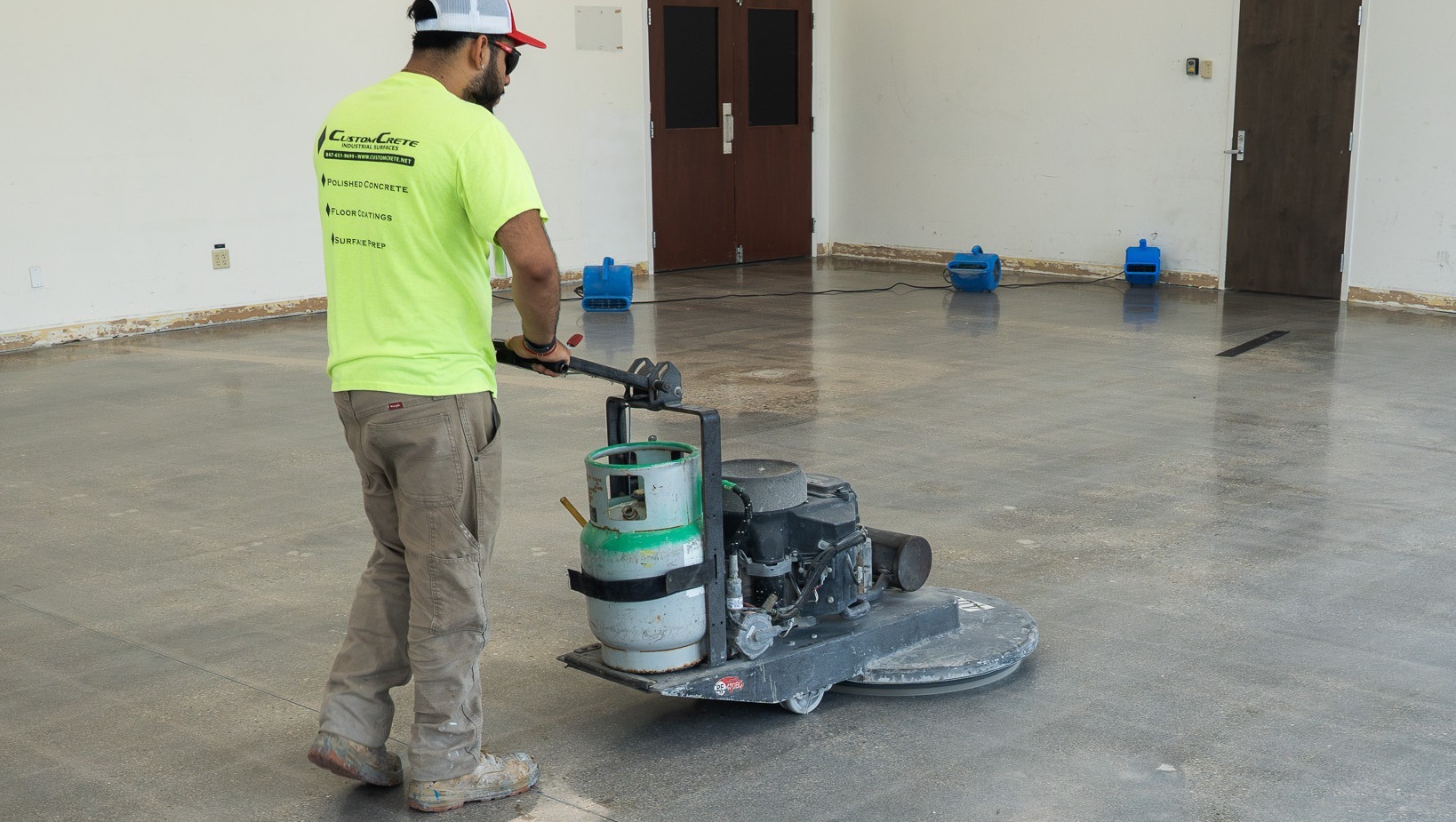
- Preparing the concrete correctly
- Applying coatings at the specified thickness
- Allowing adequate curing time before use
Final Thoughts
An epoxy floor that feels sticky after installation may simply need additional curing time, but persistent tackiness can indicate mixing, moisture, temperature, or application problems.
Identifying the cause before using the floor or applying additional coatings helps prevent further damage and unnecessary repairs.
For more information about epoxy flooring installation, curing, and maintenance, visit CustomCrete's Learning Center. If you're planning a flooring project or need help evaluating an existing epoxy floor, you can also request a quote to discuss your options.
Topics: