Chemical manufacturing facilities need flooring that can withstand more than everyday foot traffic. Chemical exposure, regular cleaning, and constant use can gradually wear down protective coatings, leaving the concrete underneath vulnerable to damage.
At Rita Corp's chemical manufacturing facility in Crystal Lake, Illinois, the existing flooring system had started flaking and peeling from daily wear. Although the underlying concrete remained in relatively good condition, the deteriorating coating made cleaning more difficult and left areas increasingly exposed to potential chemical damage.
CustomCrete was brought in to remove the failing coating, repair the concrete, and install a new chemical resistant epoxy flooring system. The project involved concrete grinding, crack and joint filling, a textured epoxy broadcast system, and a protective topcoat designed for the facility's daily operating conditions.
Key Takeaways
- The challenge: The existing floor coating was flaking and peeling, making cleaning more difficult and increasing the risk of chemical damage to the concrete.
- The solution: A textured, gray epoxy flooring system designed to provide chemical resistance, durability, and a more manageable cleaning surface.
- The installation: A crew of four to five completed concrete grinding, crack and joint repairs, a double epoxy broadcast system, and a protective topcoat.
- The result: A renewed industrial floor designed to better withstand daily manufacturing activity and chemical exposure without replacing the existing concrete.
The Challenge: A Worn Floor in a Chemical Manufacturing Environment
Project: Rita Corp | Crystal Lake, IL | Chemical Manufacturing
In chemical manufacturing facilities, flooring plays an important role in protecting the concrete underneath. When coatings begin to deteriorate, chemicals, moisture, and daily wear can create additional maintenance concerns.
At Rita Corp, the existing flooring system had started flaking and peeling after years of use. While the concrete itself was still in good condition, the worn coating created an uneven surface that was increasingly difficult to clean.
The facility needed a flooring update that could address three main concerns:
- Chemical exposure: The new flooring needed to help protect the concrete from chemicals used or encountered during daily operations.
- Daily wear: The surface needed to withstand regular foot traffic and manufacturing activity.
- Cleanability: A more continuous, seamless surface would make routine cleaning and maintenance easier.
Leaving the existing coating untreated could have allowed the peeling to continue. As more of the concrete became exposed, chemicals could potentially penetrate the surface and cause further deterioration.
Rather than replacing concrete that was still in good condition, the project focused on removing the failing coating and installing a new protective system.

Choosing the Right Flooring: Why Epoxy Was Selected Over Urethane Cement
Several flooring systems can be used in chemical manufacturing environments, but not every facility requires the same level of protection.
For Rita Corp, CustomCrete selected a chemical resistant epoxy flooring system because it offered a balance of durability, chemical resistance, cleanability, and installation cost.
Epoxy flooring creates a relatively seamless protective surface that can help prevent certain chemicals and contaminants from reaching the concrete. It also offers a range of finishes and textures that can be customized to the facility's working conditions.

Urethane cement was another potential option. This flooring system is often used in facilities exposed to high temperatures, thermal shock, moisture, or demanding chemical conditions. However, urethane cement can have a higher installation cost than epoxy.
Because Rita Corp's requirements could be addressed with an appropriately selected epoxy system, it provided a more cost-effective solution for the project.
It's important to understand that not all epoxy products offer the same chemical resistance. Performance depends on the specific coating formulation, chemical type, concentration, exposure time, and operating conditions.
For facilities comparing industrial flooring options, these factors should be evaluated before selecting a system.
The Installation Process: From Failing Coating to Textured Epoxy Flooring
The installation required removing the existing coating, repairing areas of the concrete, and building a new protective flooring system.
A crew of four to five CustomCrete installers completed the project while the facility was not operating. This allowed the team to work without normal manufacturing traffic interfering with surface preparation and coating application.
Step 1: Removing the Existing Flooring and Grinding the Concrete
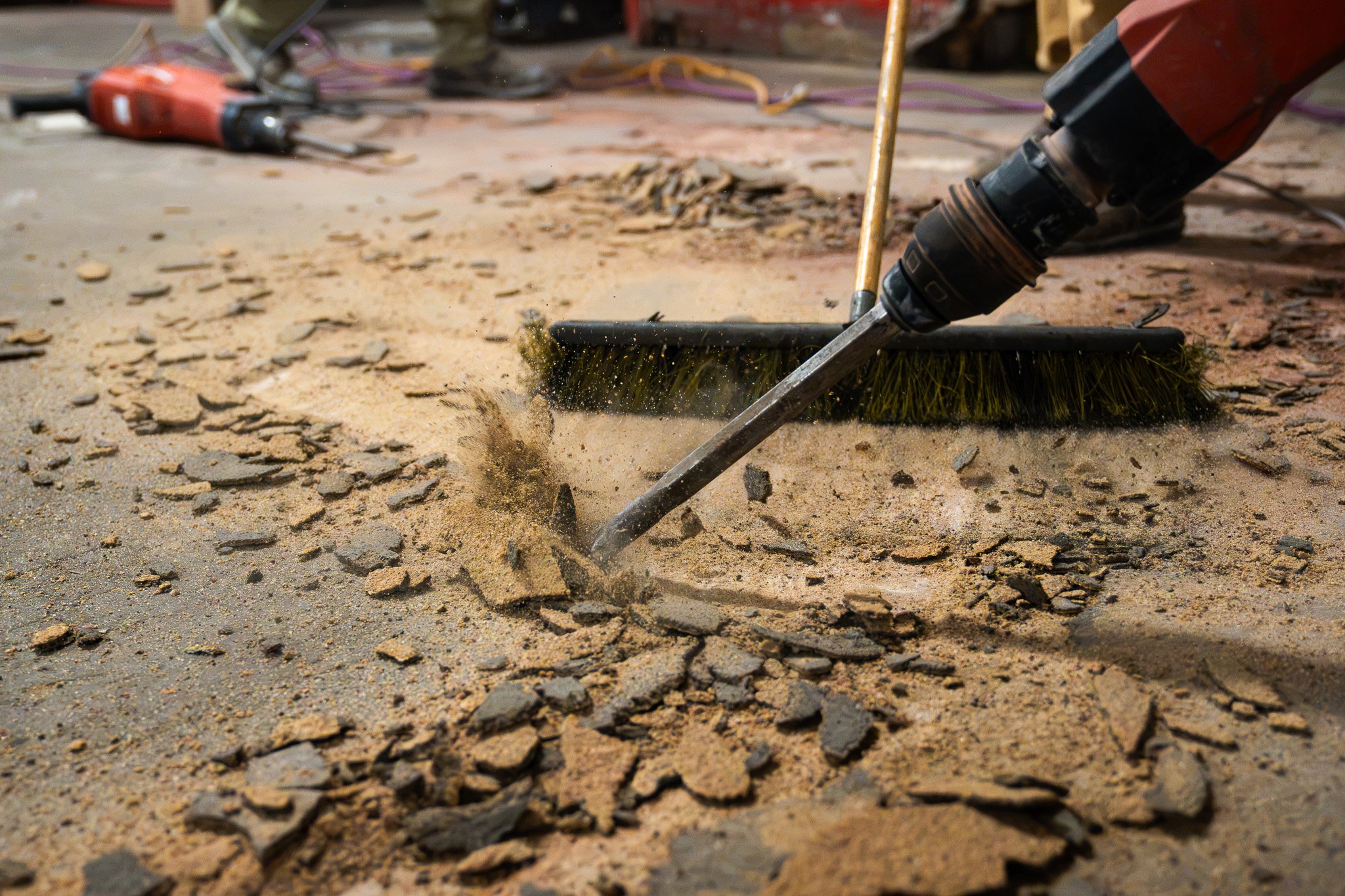
The first major step was removing the deteriorating coating.
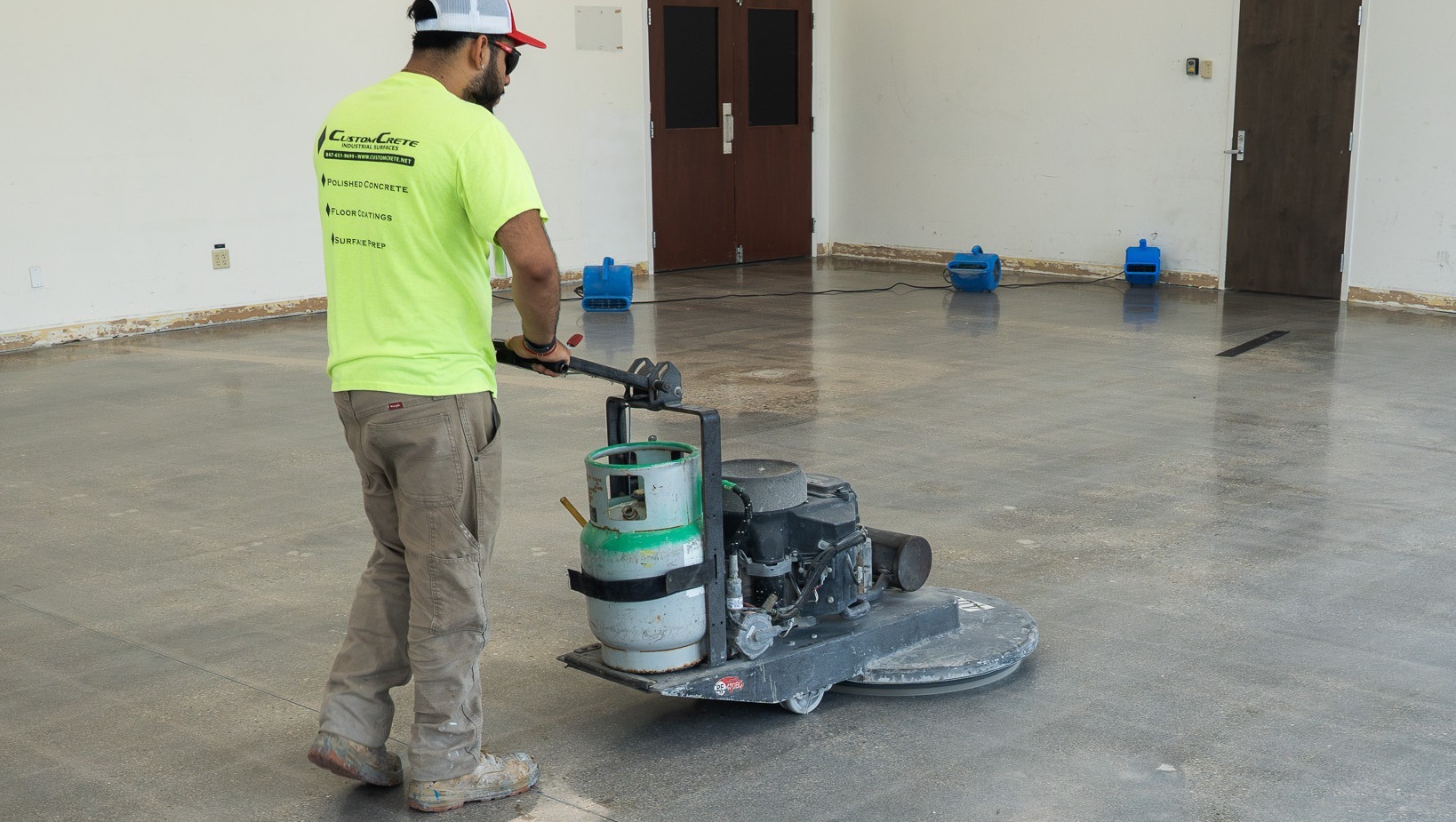
The crew used SASE floor grinders, handheld grinders, and SASE vacuums to remove the existing flooring material and prepare the concrete for the new epoxy system.

Concrete grinding serves two important purposes. First, it removes existing coatings and surface contaminants. Second, it creates a suitable surface profile that helps the new epoxy bond to the concrete.
Proper surface preparation is one of the most important factors in the long-term performance of industrial epoxy flooring. Even high-quality coatings can fail prematurely when applied over poorly prepared concrete.

Step 2: Repairing Cracks and Filling Joints
Although the existing concrete was in good overall condition, some areas required repairs before coating installation.
The crew filled cracks and addressed joints throughout the main project area using joint filler tools and appropriate repair materials.

These repairs helped create a more consistent surface for the new flooring system.
Cracks and joints require careful evaluation because they do not all serve the same purpose. Some can be repaired or filled before coating, while moving joints may need to remain functional to accommodate concrete movement.

Step 3: Installing the Double Epoxy Broadcast System
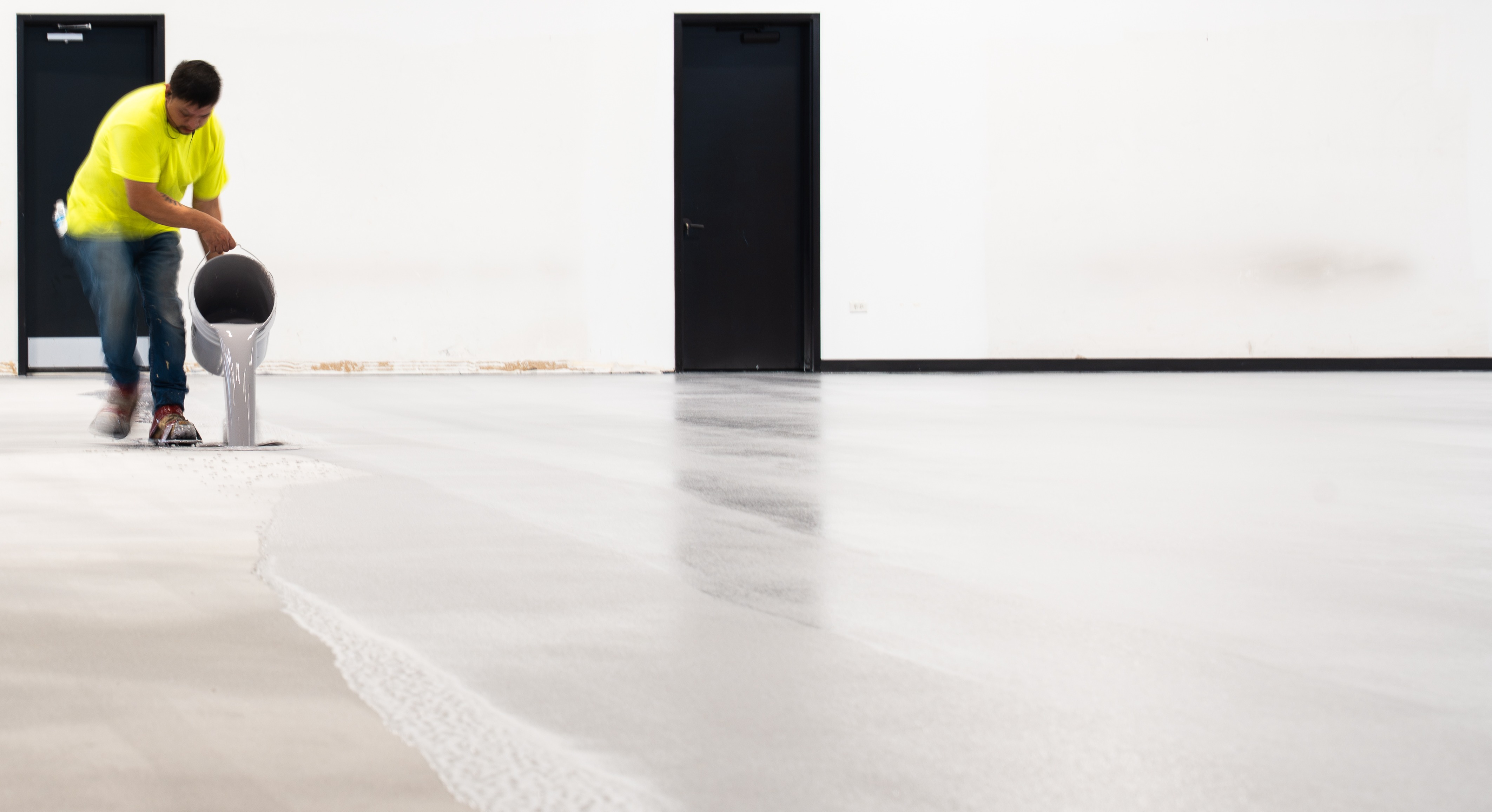
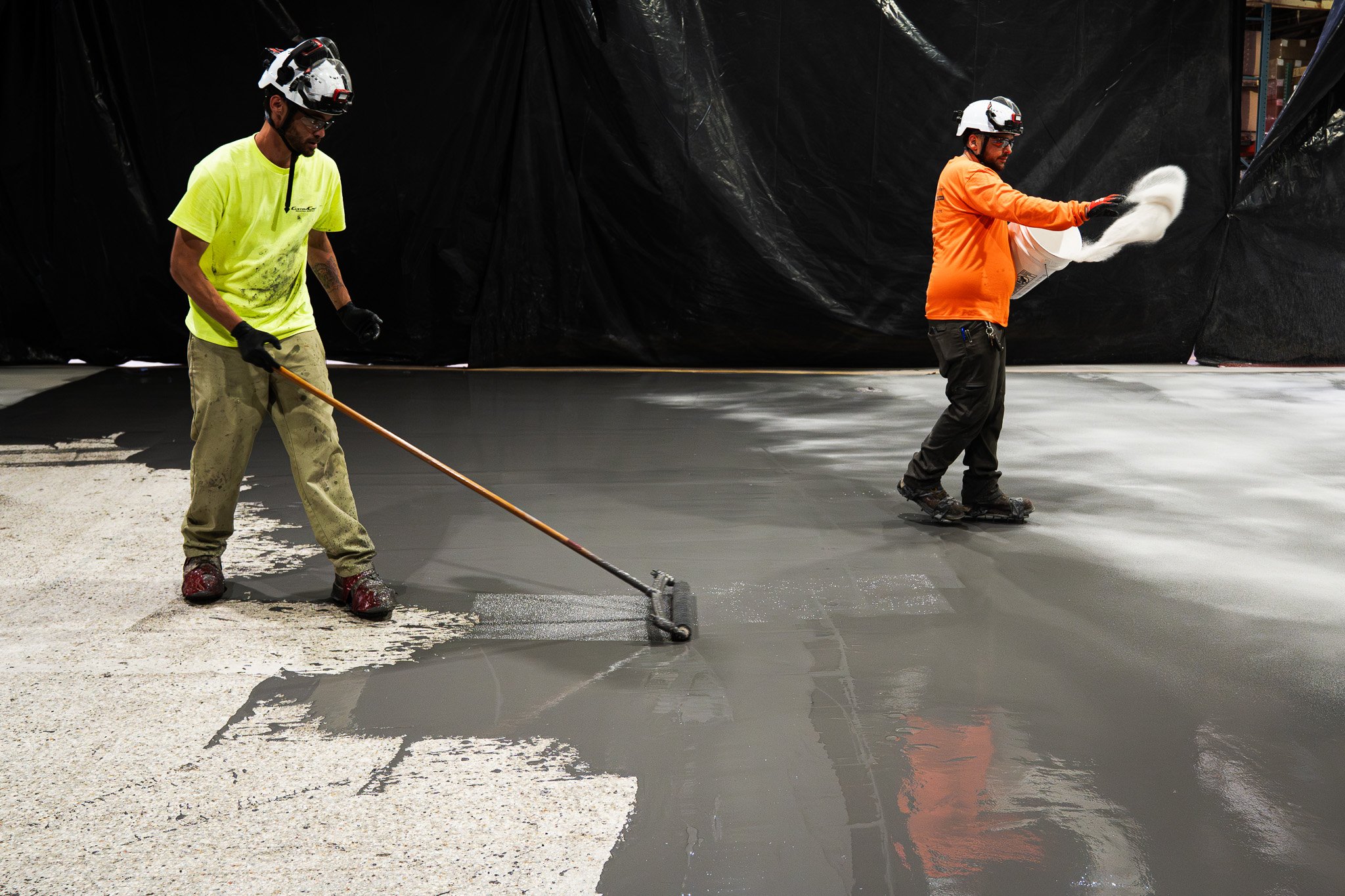
Once the surface was prepared, the team began installing the new Dudick epoxy flooring system.
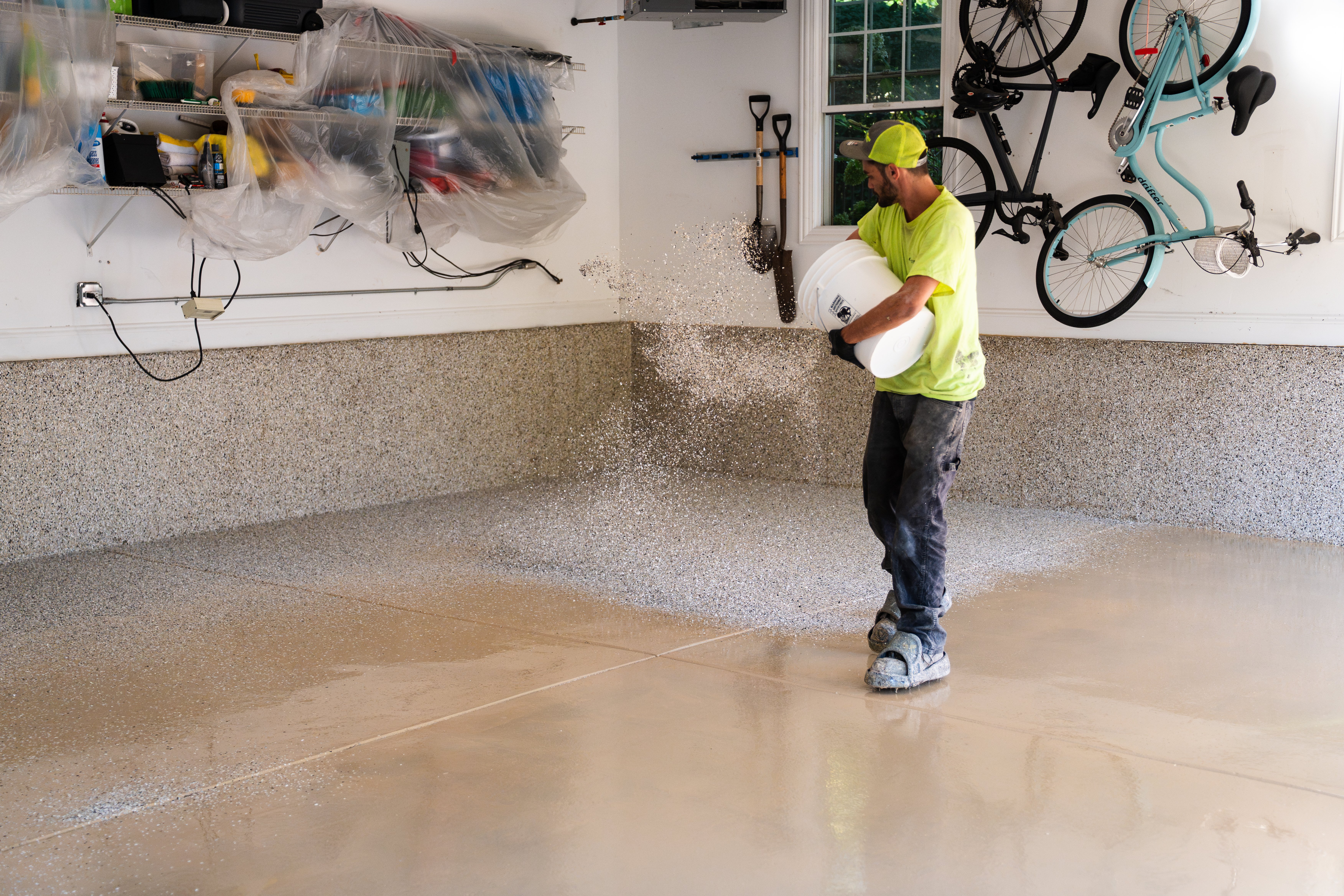
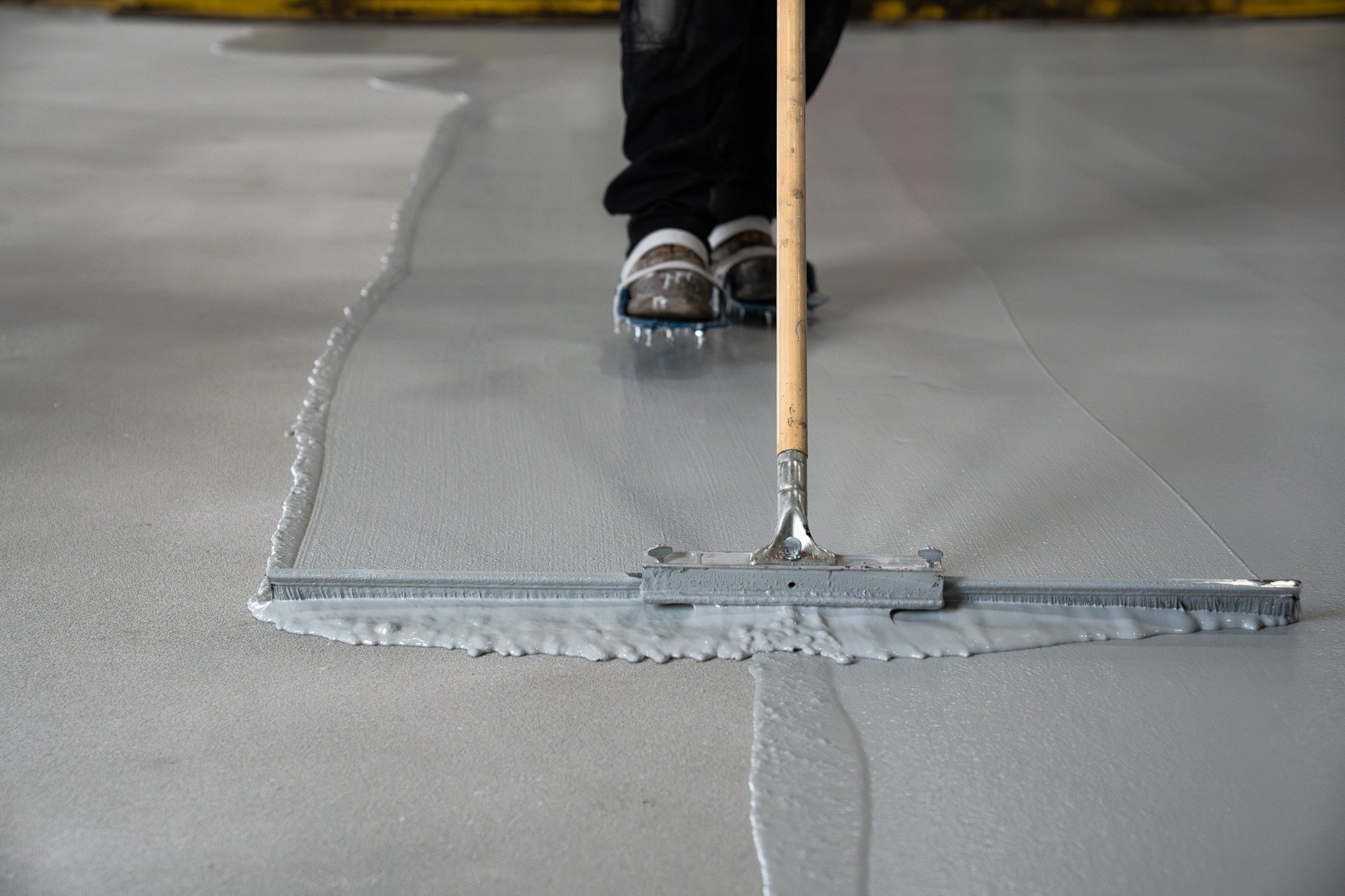
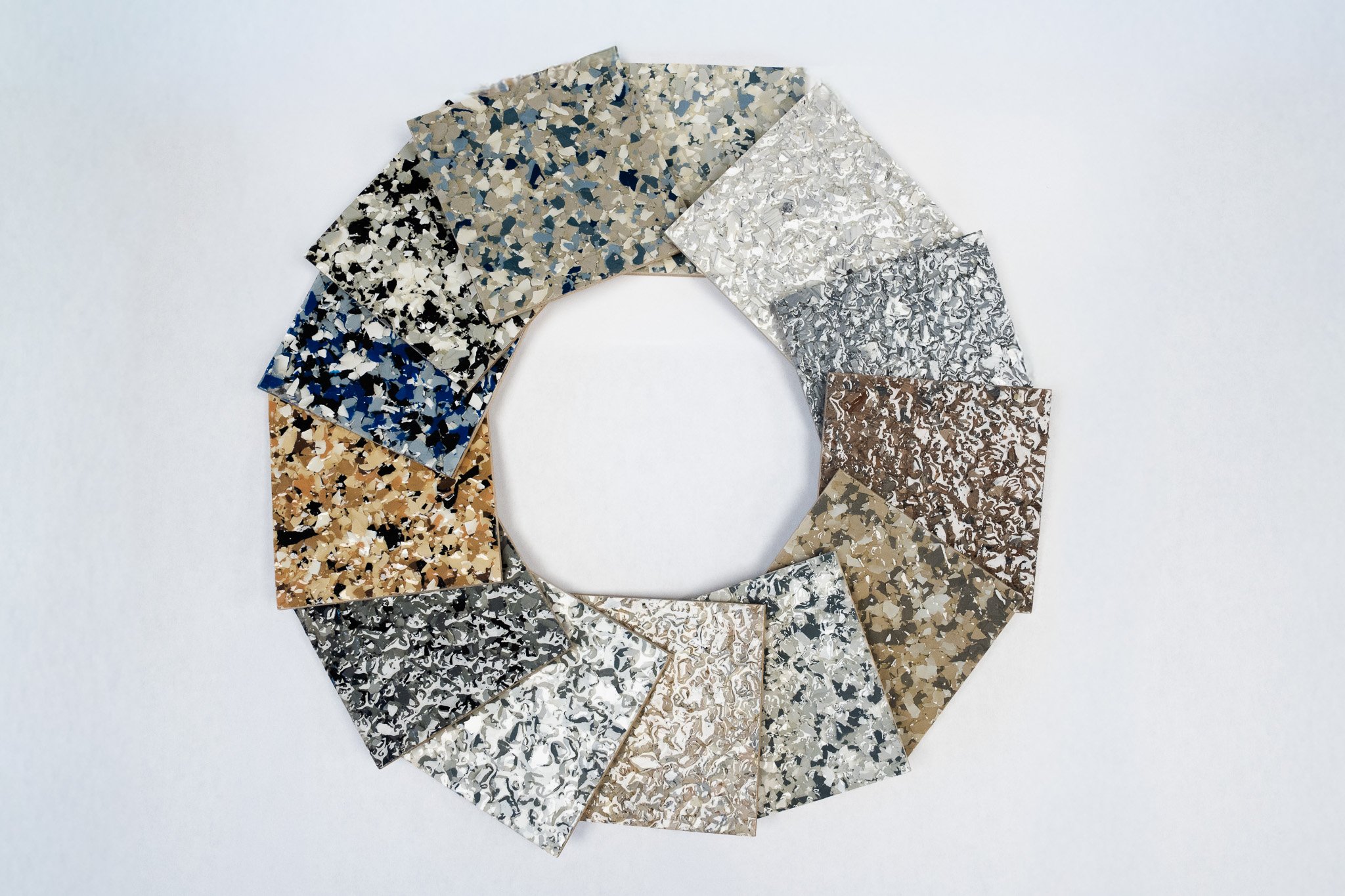
The installation included a double epoxy broadcast process, which uses broadcast aggregate within the coating system to create texture and improve surface performance.
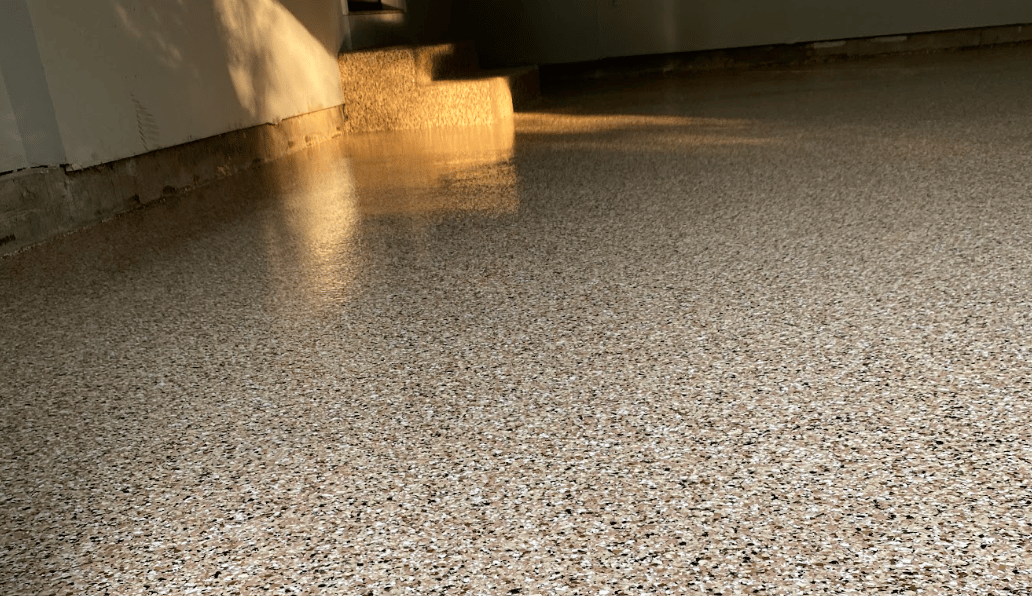
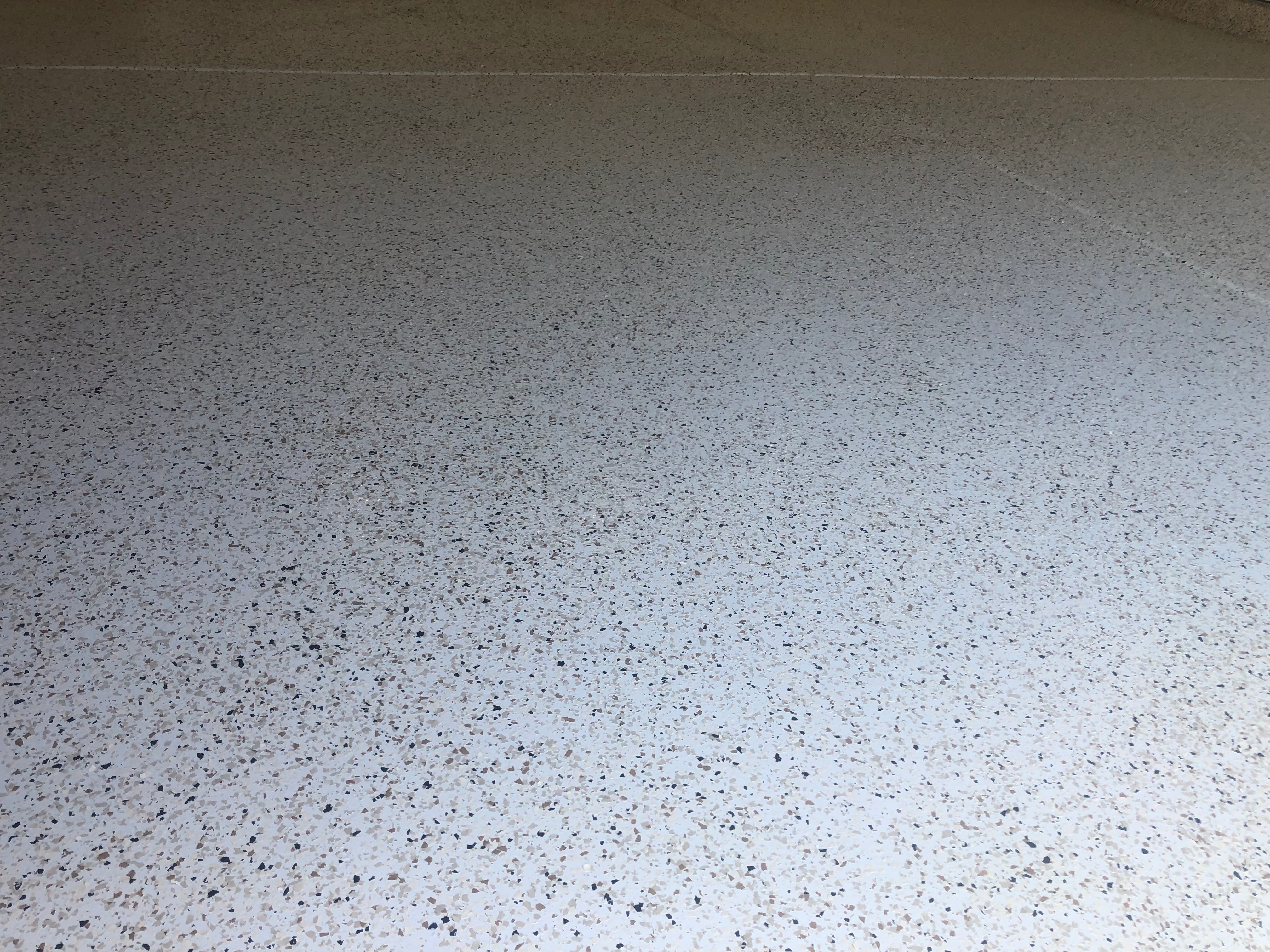
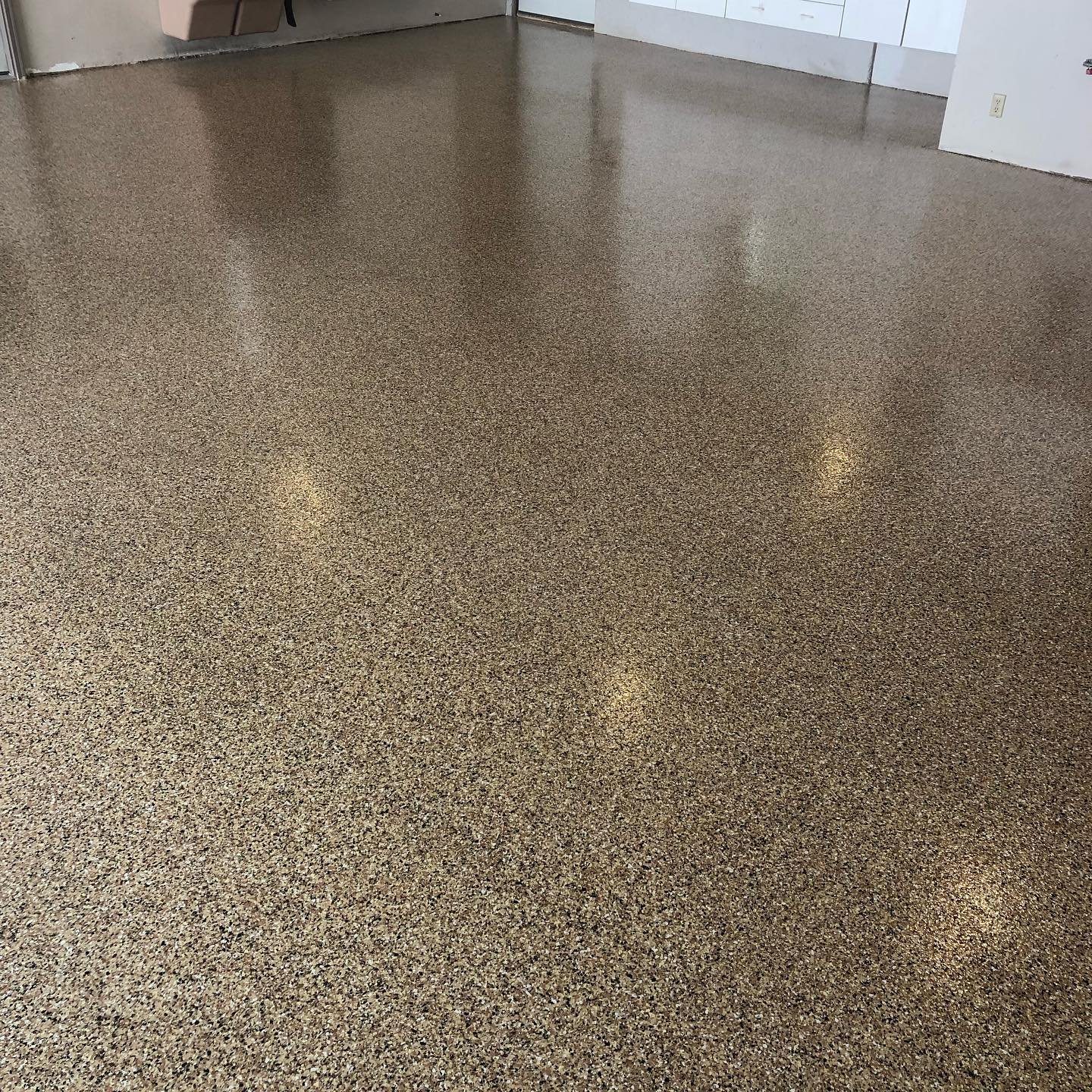
For Rita Corp, a gray epoxy finish with added texture was selected.

Textured epoxy can provide additional traction compared with a smooth finish, depending on the aggregate, application method, and conditions. This can be especially useful in manufacturing facilities where employees regularly move across the floor.

However, texture also affects cleanability. A heavily textured floor may offer greater traction but require more effort to clean than a smoother surface.
The goal is to select a texture that balances the facility's safety and maintenance requirements.
Step 4: Applying the Protective Topcoat
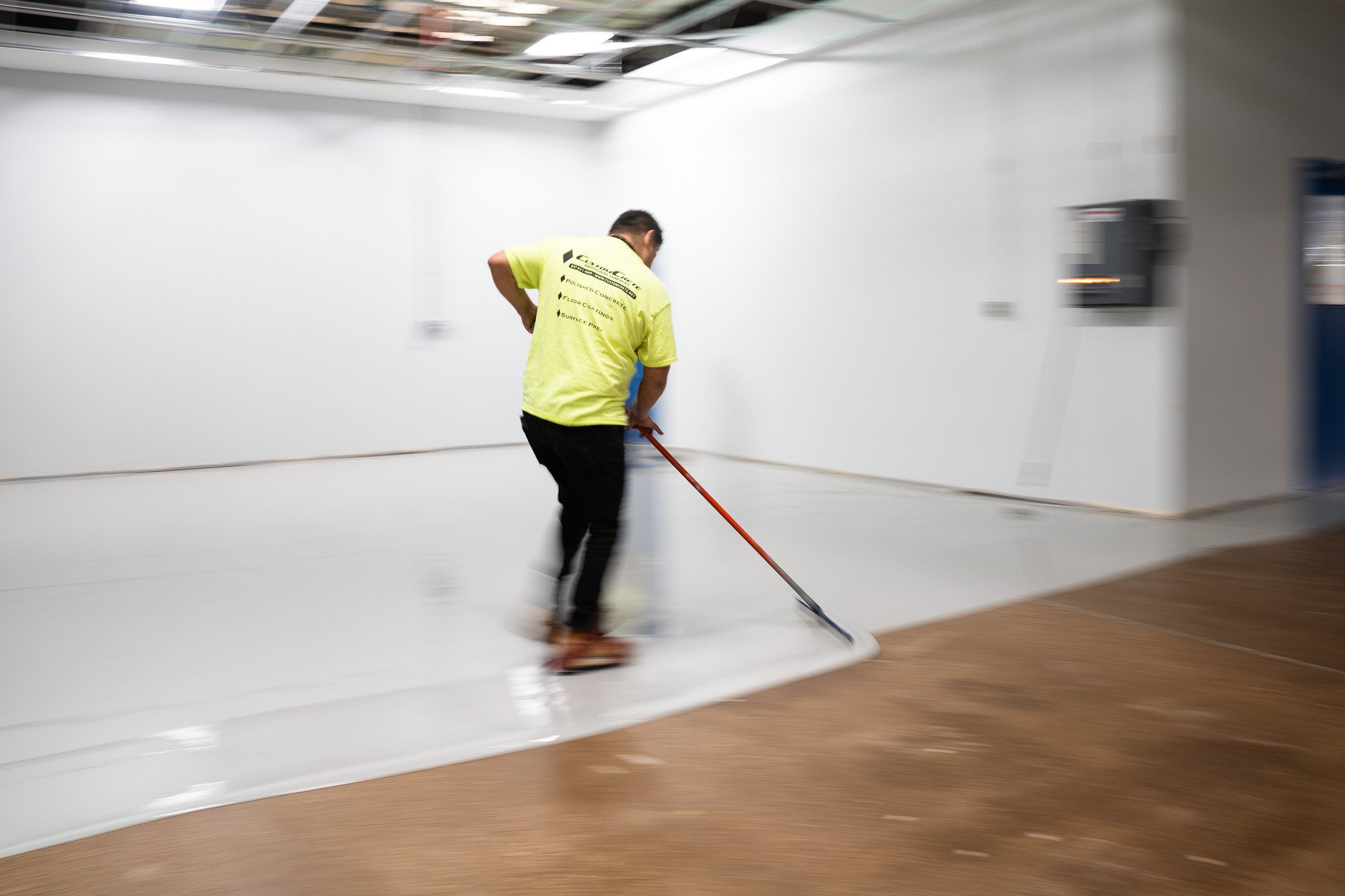
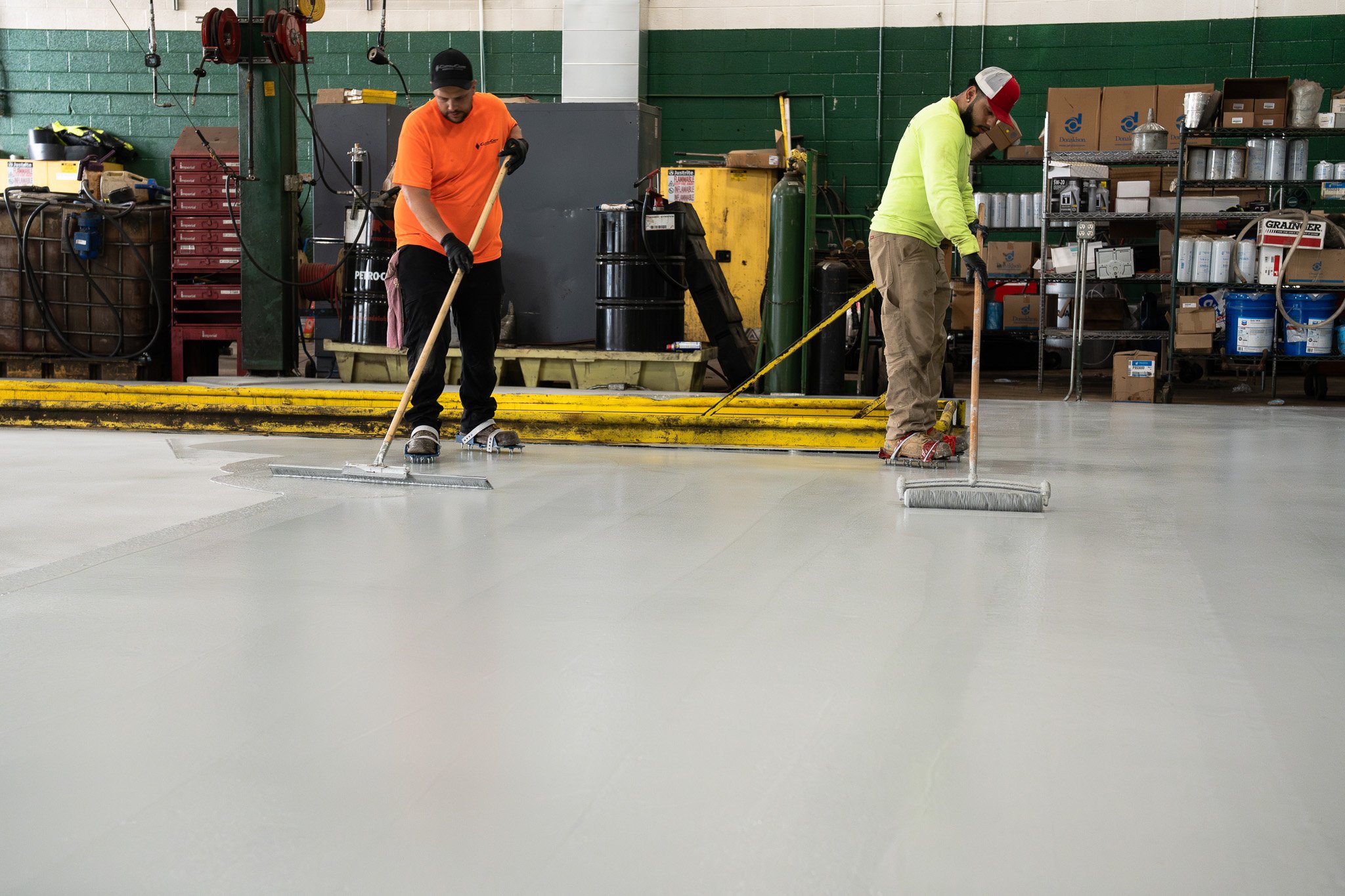
The final stage involved applying a protective topcoat over the epoxy broadcast system.
The topcoat helps seal the system, secure the broadcast aggregate, and provide the finished surface with additional protection against daily wear and compatible chemical exposure.

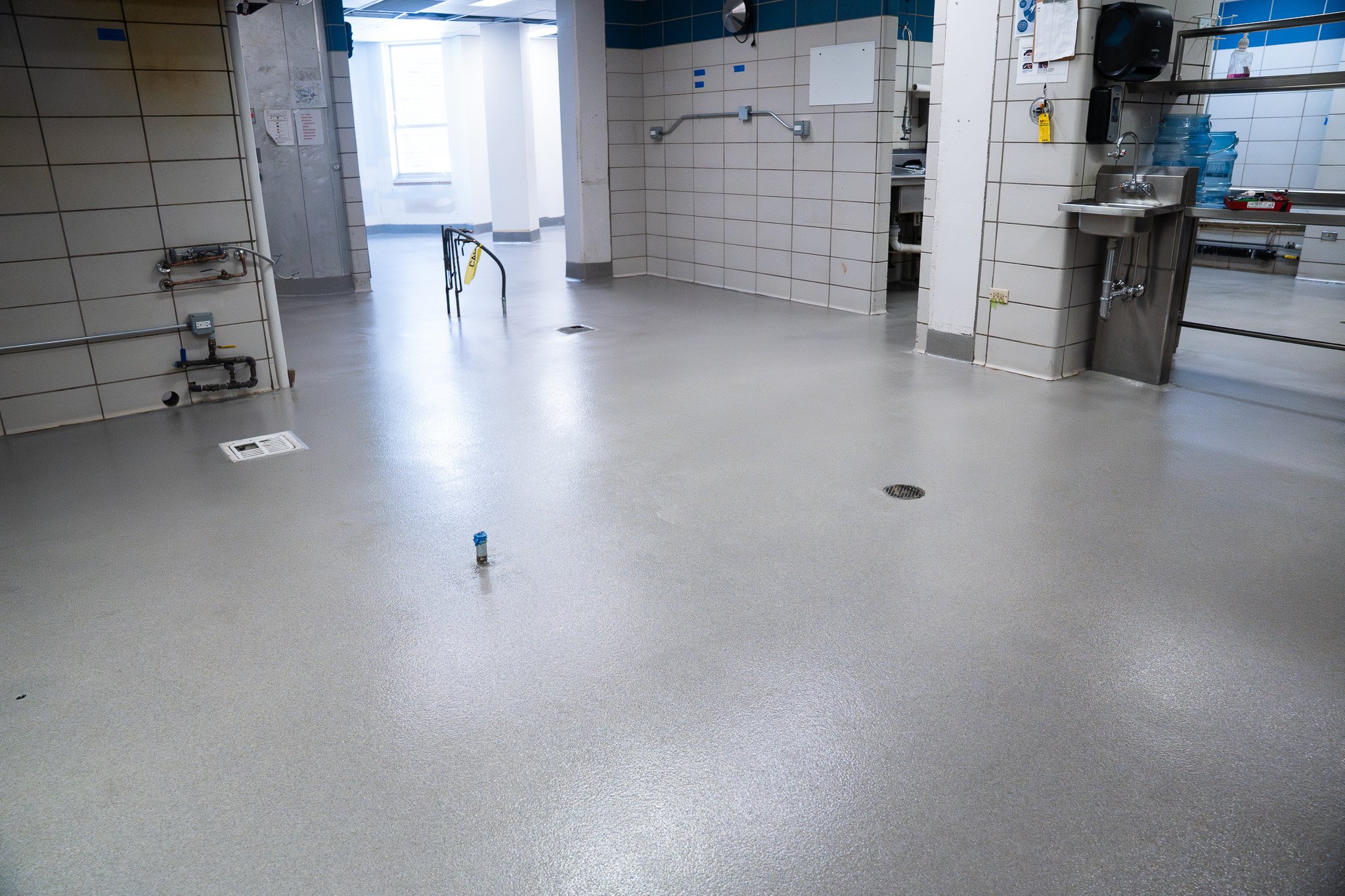
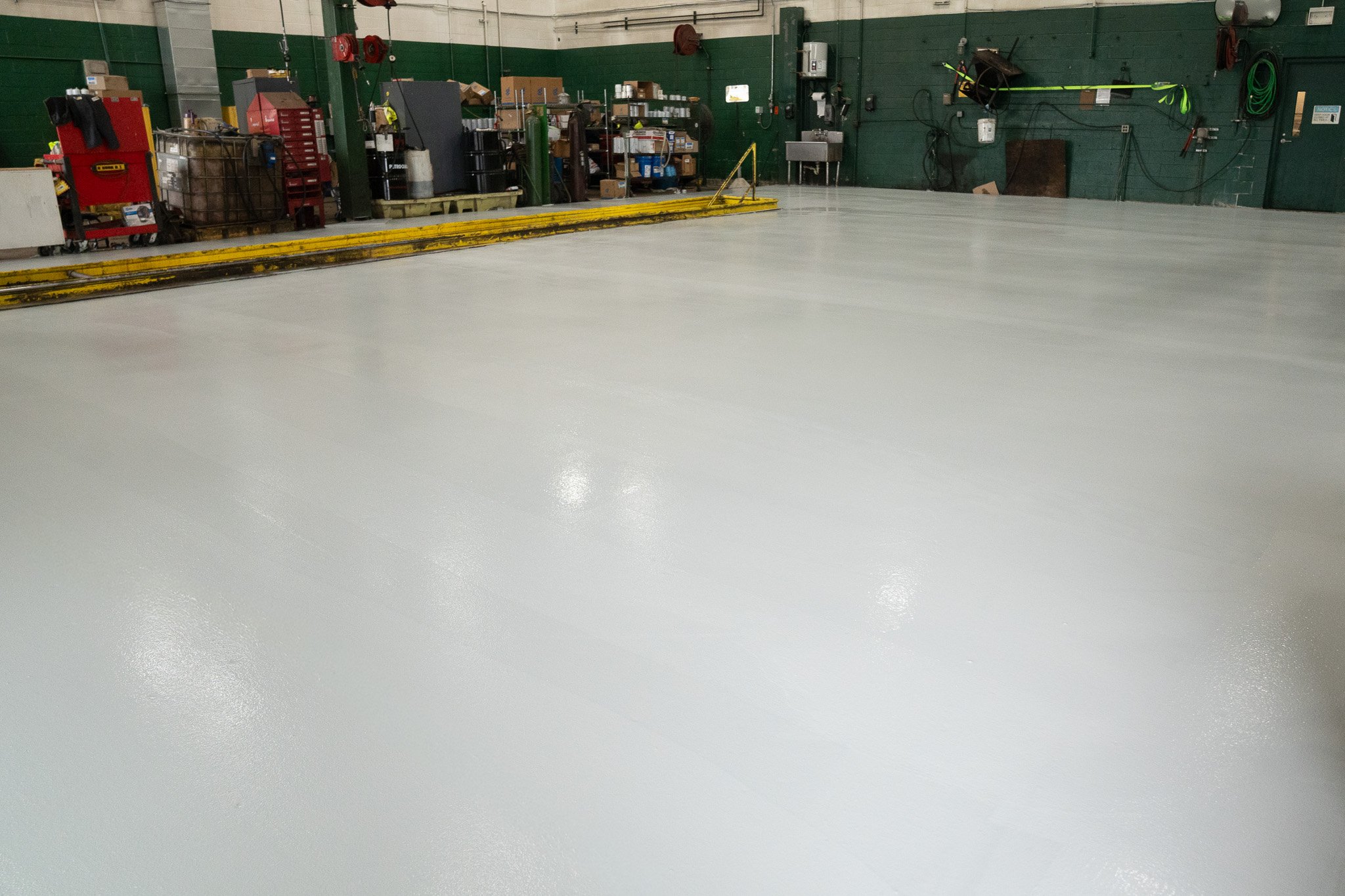
The completed system consisted of four reported layers, creating a gray, textured industrial flooring surface designed for Rita Corp's manufacturing environment.
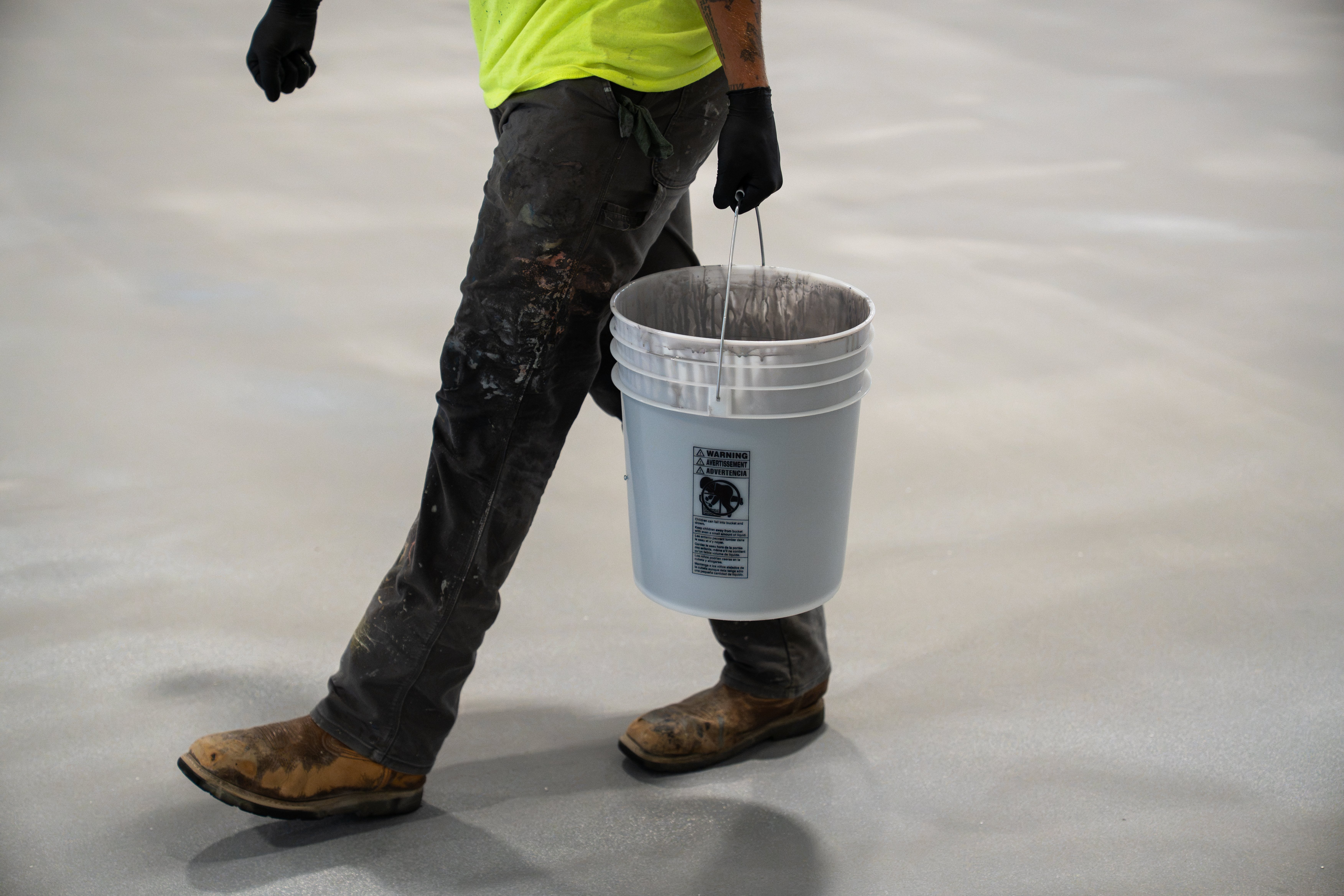
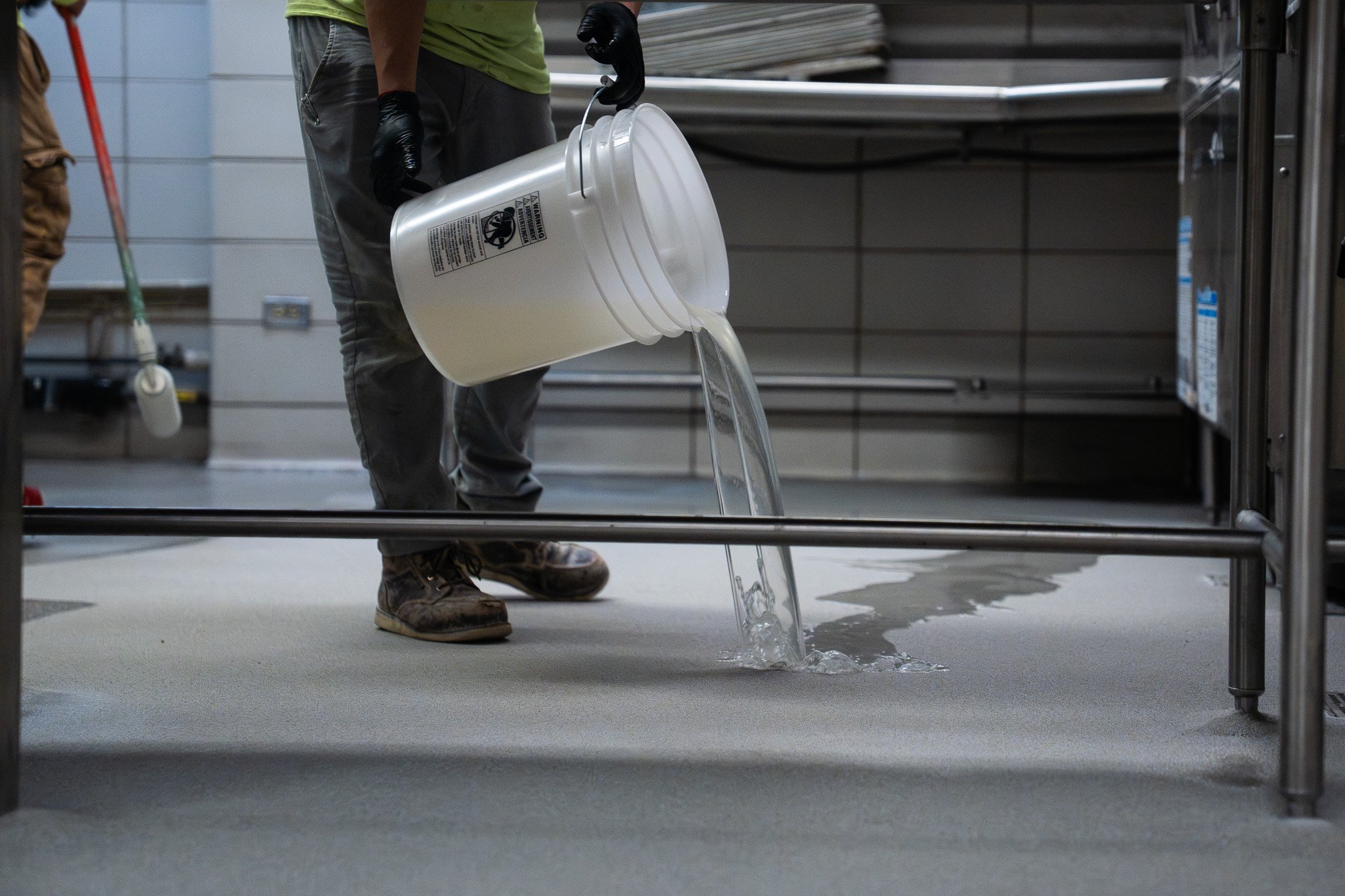
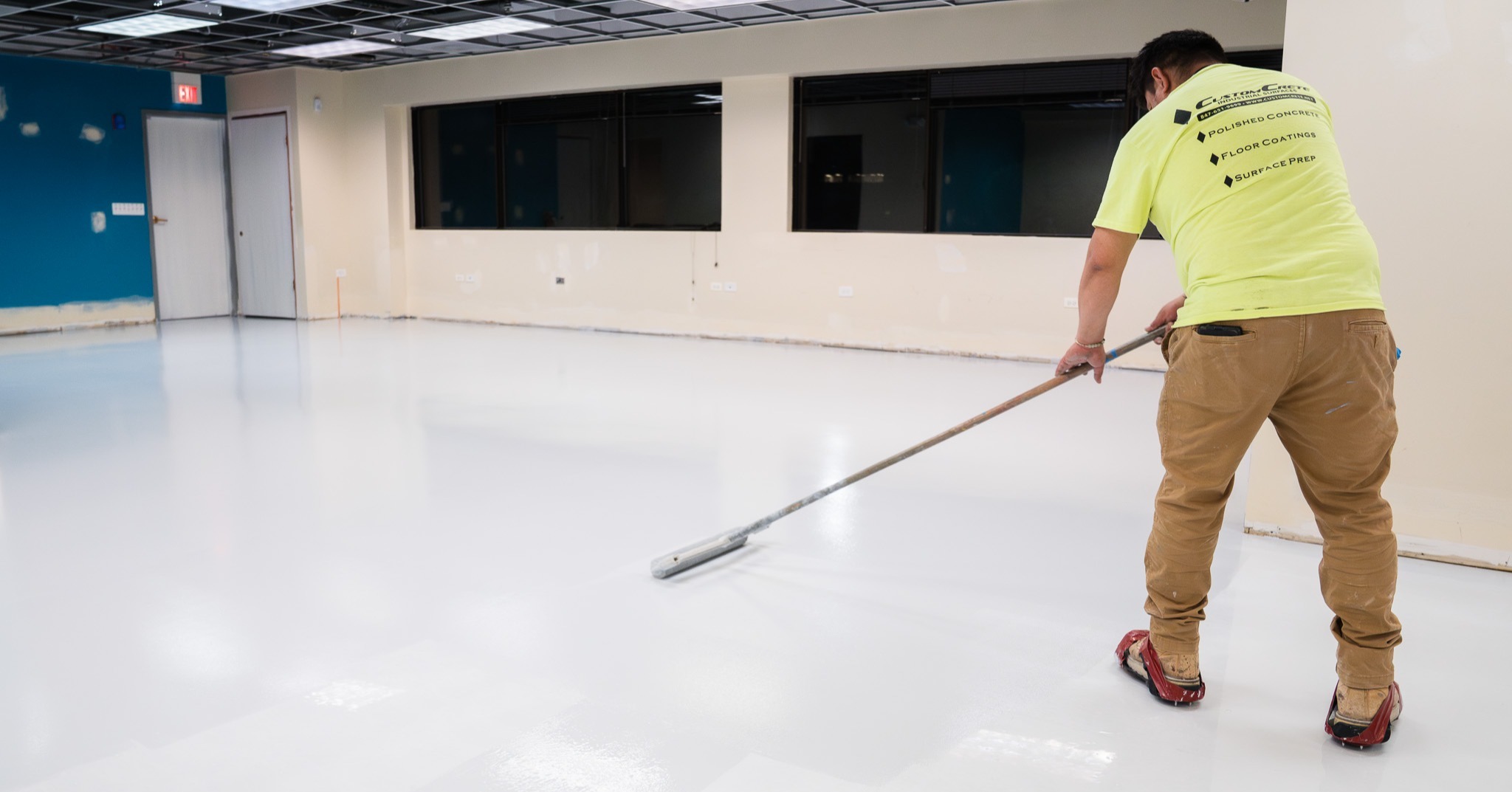
Throughout the installation, the crew used rollers, squeegees, buckets, and other application tools to distribute the materials and create a consistent finish.
The Results: A Renewed Floor Designed for Chemical Manufacturing
The completed project replaced Rita Corp's deteriorating floor coating with a textured epoxy flooring system designed to meet the facility's operational needs.

Rather than removing and replacing the existing concrete, CustomCrete restored the surface through grinding, repairs, and a new protective coating.
The new flooring was designed to provide several practical benefits:
Improved chemical protection: The epoxy system was selected to help protect the underlying concrete against the facility's expected chemical exposure.
Greater durability: The new coating replaced the flaking surface with a system designed for regular foot traffic and manufacturing activity.
Easier routine cleaning: A more continuous surface can reduce the areas where debris and contaminants collect, although the added texture still requires appropriate cleaning methods.
Improved surface traction: The broadcast texture was incorporated to support the facility's traction requirements.
Following the flooring installation, Rita Corp also requested additional line striping work in another area of the facility.

Following the flooring installation, Rita Corp also requested additional line striping work in another area of the facility, expanding the scope of work beyond the original epoxy flooring project.
What Other Chemical Manufacturing Facilities Can Learn From This Project
Rita Corp's project demonstrates that a failing floor coating does not always mean the concrete underneath needs to be replaced.
When the concrete remains structurally sound, removing the deteriorating coating, completing necessary repairs, and installing a new system can be a practical alternative to full concrete replacement.
However, selecting the right flooring system requires more than choosing between epoxy and urethane cement based on price.

Facility managers should consider the chemicals present, frequency of exposure, cleaning methods, surface traction requirements, and expected traffic.
For example, chemical resistant epoxy flooring may be a suitable option for facilities with moderate chemical exposure and routine manufacturing activity. Facilities exposed to extreme temperatures, aggressive chemicals, or frequent thermal shock may need to consider other systems, including urethane cement.
The most effective solution is one that matches the facility's actual operating conditions rather than simply selecting the thickest or most expensive coating.
Rita Corp's project also highlights the importance of surface preparation. Removing a failing coating and properly preparing the concrete creates the foundation for the new system's performance.
Considering an Epoxy Flooring Upgrade for Your Facility?
Peeling coatings, chemical exposure, and difficult-to-clean floors can create ongoing maintenance challenges in manufacturing environments.
Whether your facility needs chemical resistant epoxy flooring, concrete surface preparation, or a complete industrial flooring update, understanding the condition of your existing concrete is the first step toward selecting the right solution.
CustomCrete works with industrial and commercial facilities to evaluate flooring conditions and recommend systems based on operational requirements, maintenance needs, and budget.
Request a Quote to discuss your facility's flooring needs and explore your available options.

Topics: